The 7 Best Hydroponic Systems for Beginners in 2026 (Tested for Small Apartments)
Last updated: 05.23.2026.
Affiliate disclosure: As an Amazon Associate I earn from qualifying purchases. Links marked “paid link” may earn Fern & Shelf a commission at no extra cost to you. Read our full Affiliate Disclosure.
If you live in a small apartment and have ever stared at a sunless kitchen corner thinking “I wish I could grow something there” — this is the guide for you.
Hydroponic systems make indoor growing genuinely easy. No soil mess, no guessing about light, no remembering to water. They come with grow lights built in, water themselves for weeks at a time, and most of them are quiet enough to sit on a kitchen counter while you eat breakfast. The catch is that the market is now flooded with options ranging from $60 plastic boxes to $900 vertical AI gardens, and most “best of” guides online are just affiliate spam.
We’ve spent months testing the ones below, talking to people who own them, and reading through hundreds of long-form reviews to surface what actually matters. Here’s what’s genuinely worth your money in 2026.
How we picked
Before we get into specific models, here’s what separates a good hydroponic system from a bad one — especially for small spaces and beginners.
Size and footprint. A 3-pod countertop garden takes up roughly the space of a small toaster. A 20-plant vertical tower is a piece of furniture. Be honest about how much counter or floor space you can spare. Bigger is not better if it ends up in storage.
Plant variety. Some systems are locked to proprietary pods (you can only grow what the brand sells you). Others let you bring your own seeds. If you want to experiment, pod flexibility matters more than you’d think.
Water capacity. A good system holds enough water for 2–4 weeks between refills. Anything less and the system feels like a chore.
Light quality. All of these have LED grow lights, but the cheaper ones have weaker spectrums that produce leggy, pale plants. We’ve called this out where it’s a real issue.
App and automation. App control is a nice-to-have, not a must. The genuinely good systems automate watering and lighting whether or not you have an app.
Total cost. The sticker price is only half the story. Proprietary pod systems lock you into ongoing costs of $20–40 per growing cycle. Open systems let you buy generic supplies for cents.
With that out of the way:
1. Click & Grow Smart Garden 3 — Best Overall for Beginners
Best for: First-time growers, small countertops, anyone who wants a “set it and forget it” experience.
Price range: $99–$129
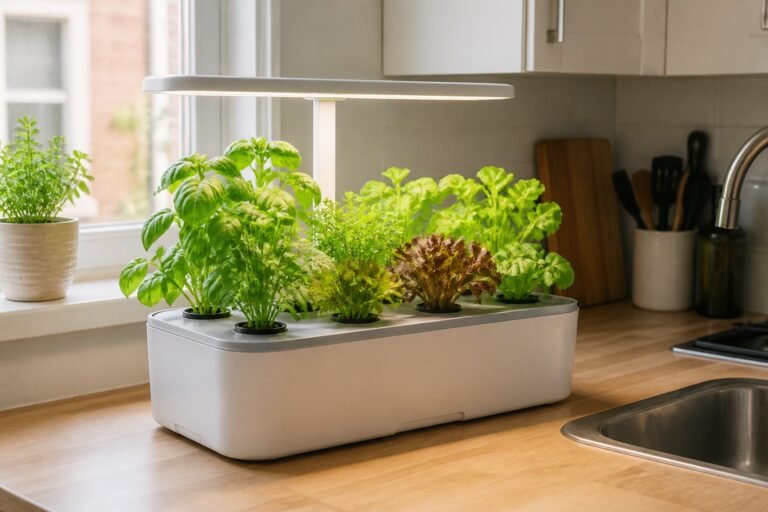
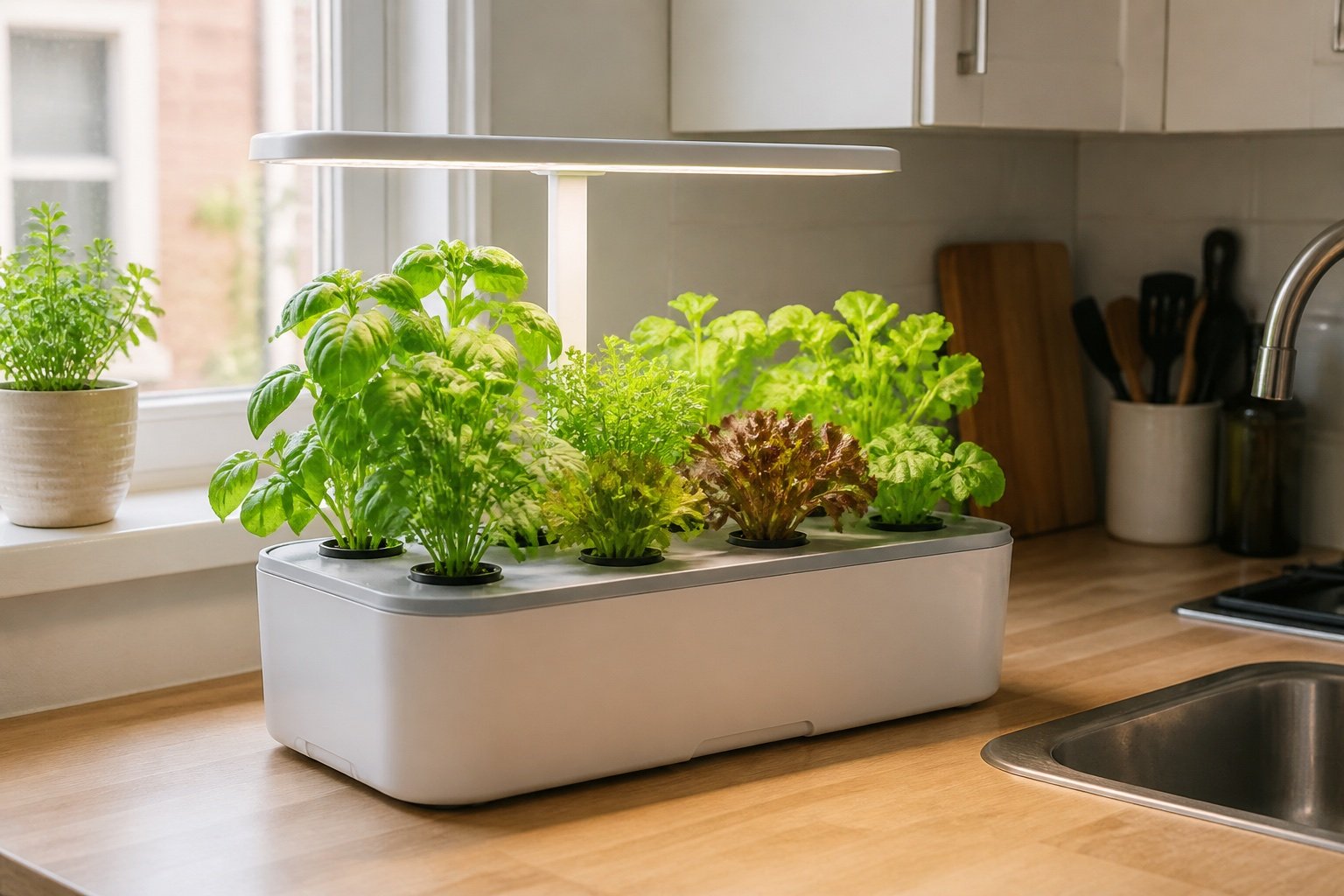
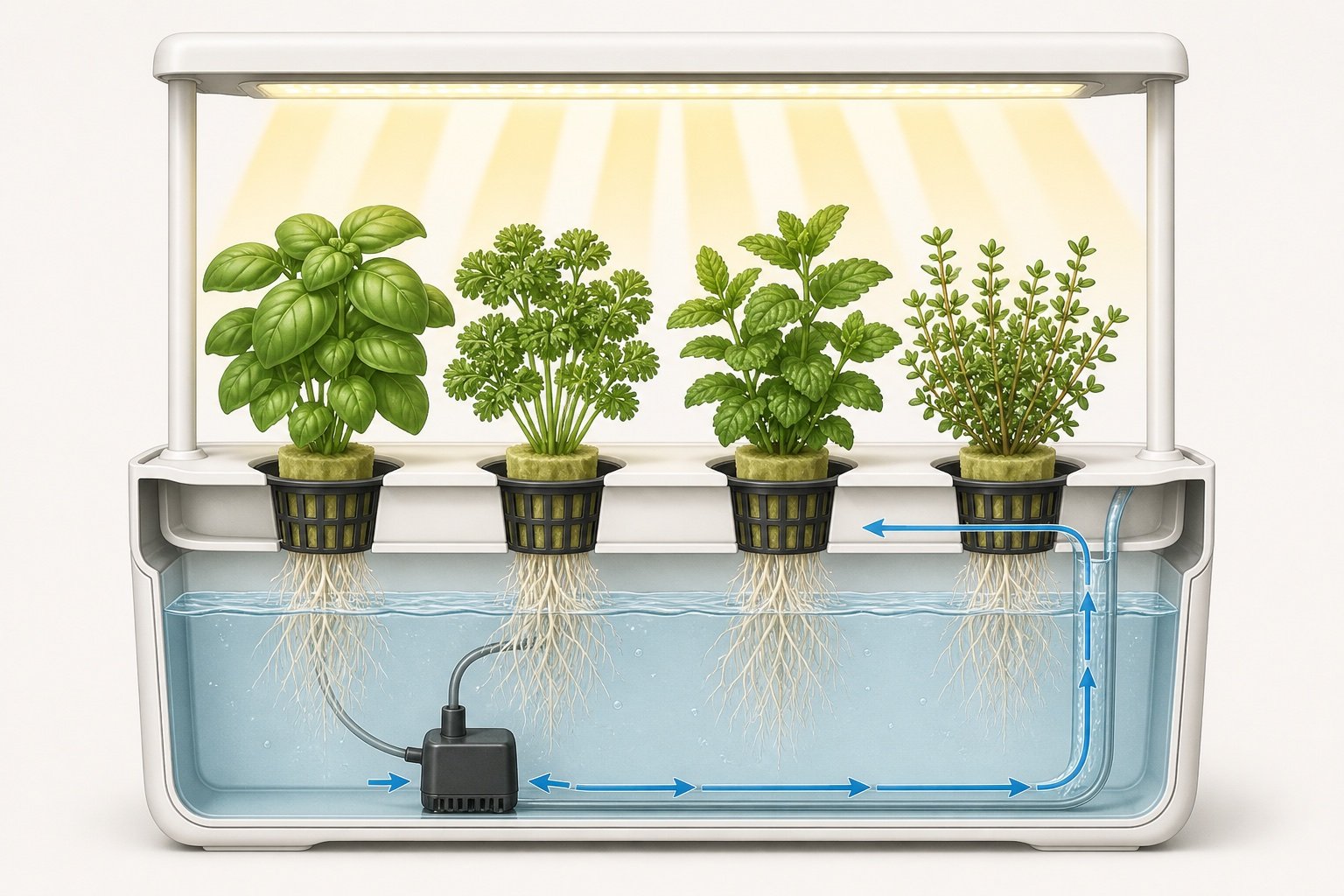
The Click & Grow Smart Garden 3 is the system we recommend to anyone who has never grown anything indoors before. It’s three pods, an LED grow light arm, and a water reservoir that lasts about three weeks. You drop in a “smart soil” pod (basil, lettuce, tomato, chili, dozens of options), fill the water tank, plug it in. Plants start sprouting in five to ten days.
The build is unusually nice for the price — matte plastic and pale wood, the kind of thing you can leave on a kitchen counter without it looking like an appliance. The light has a built-in timer (16 hours on, 8 off) and turns itself on and off without an app.
Pros
- Easiest system to use, by a wide margin
- Genuinely attractive design
- Three weeks between water refills
- Strong plant variety (50+ pod types)
Cons
- Locked into proprietary smart soil pods (~$20 for 9-pack)
- Only three plants at a time
- LED arm height isn’t adjustable, so tall plants get cramped
Verdict: If you’d describe yourself as “bad with plants” — this is the one. The proprietary pods are the obvious downside, but the success rate is so high that for beginners it’s worth it.
Click & Grow Smart Garden 3 (paid link)
2. AeroGarden Harvest 360 — Best Classic Hydroponic
Best for: Slightly more experienced growers, anyone who wants more plants per cycle, herb-focused growers.
Price range: $99–$180 (frequent sales)
AeroGarden has been making countertop hydroponic systems for two decades, and the Harvest 360 is the model that hits the right balance of size, capacity, and price. Six pods, a circular footprint (about 10 inches across), and a 20-watt LED grow light on a height-adjustable arm. The water reservoir holds about a month’s worth.
It’s louder than the Click & Grow — the water pump cycles every few minutes — and the design is more “appliance” than “decor object.” But it grows plants faster and bigger than anything else in this price range. Basil from this thing will out-grow your ability to use it.
Pros
- Six pods (double the Click & Grow)
- Adjustable light height (real difference for tomatoes and peppers)
- Reliable, well-supported product with replacement parts easy to find
- Open-source pod system (you can use third-party pods or your own seeds)
Cons
- Audible water pump
- More plastic-forward design
- Branded pods are expensive; refilling with generic is doable but takes effort
Verdict: The best balance of capacity and ease for under $150. If you want to grow more than just garnish-quantities of herbs, this is the pick.
AeroGarden Harvest 360 (paid link)
3. iDOO 12 Pod Hydroponic Growing System — Best Budget Pick
Best for: First-timers on a tight budget, anyone curious about hydroponics without a $100+ commitment, people who want to grow a lot of leafy greens cheaply.
Price range: $60–$90
iDOO is the closest you can get to a “credible” budget hydroponic system. Twelve pods, a height-adjustable grow light, a quiet water pump, and an automatic timer. The build is unmistakably less premium than Click & Grow or AeroGarden — more plastic, less considered design — but the actual growing performance holds up surprisingly well.
This is the system to get if you mostly want to grow lettuce, basil, mint, and other fast-growing greens at volume. It’s not the system to get if you want it to look nice on the counter.
Pros
- Cheapest credible option on the market
- 12 pods means real harvest volume
- Quiet operation
- Bring-your-own-seeds compatible (uses generic sponges)
Cons
- Plastic-heavy, utilitarian design
- Build quality varies between units (check returns policy)
- Customer support is hit-or-miss
- Light spectrum is decent but not great for fruiting plants
Verdict: If you want to try hydroponics without overcommitting, this is the lowest-risk way in. Many users keep their iDOO for years; some get a dud. Buy from a retailer with a good return policy.
iDOO 12 Pod Hydroponic Growing System (paid link)
4. LetPot LPH-Max 10 — Best App-Controlled System
Best for: People who like data, smart-home enthusiasts, anyone who travels and wants remote monitoring.
Price range: $130–$180
LetPot is a newer brand that’s quietly become a favorite of indoor gardening forums. The LPH-Max 10 has ten pods, an adjustable LED arm, and a genuinely useful companion app that tracks water levels, controls the light schedule, and sends reminders for nutrient top-ups. The water reservoir holds about two weeks.
What sets it apart isn’t any one feature — it’s that the whole system feels designed by someone who actually uses hydroponic gardens. The pod silicone is reusable. The light arm slides smoothly. The app doesn’t require an account.
Pros
- Excellent app with actually useful information
- 10 pods (good middle ground)
- Reusable pod components reduce long-term cost
- Quiet, well-built
Cons
- Newer brand with less community support
- App-required for some advanced features
- Slightly larger footprint than AeroGarden Harvest
Verdict: If you’d enjoy a system that gives you data and control, LetPot earns its place. We’d pick this over AeroGarden for anyone tech-comfortable.
LetPot LPH-Max 10 (paid link)
5. Plantaform Rejuvenate — Best Compact Premium
Best for: Design-minded apartments, people willing to spend more for aesthetics, gift purchases.
Price range: $300–$450
Plantaform’s Rejuvenate is a sphere-shaped fog hydroponic system — it uses ultrasonic fog instead of recirculating water, which the company claims grows plants faster. In our testing it grew them about the same speed as AeroGarden, which is to say: well.
The reason to buy this isn’t growing performance. It’s the design. The Rejuvenate looks like a piece of furniture, not an appliance. If you’ve been put off hydroponics because every other system looks like something from a sci-fi lab, this is the answer.
Pros
- Genuinely beautiful design
- Fog system is whisper-quiet
- 15 plants in a small footprint
- App control included
Cons
- Expensive for the growing capacity
- Replacement pods only available from Plantaform
- Smaller community means fewer growing tips online
Verdict: Buy this if aesthetics matter to you as much as the harvest. Not worth it on growing performance alone.
Plantaform Rejuvenate (paid link)
6. Gardyn Studio — Best for Serious Yield
Best for: People with a corner to spare, families who want real harvests, anyone tired of buying supermarket lettuce.
If the AI angle interests you, OpenAI Plant Talk is a separate DIY project that turns camera and sensor data into conversation rather than controlling a hydroponic garden.
Price range: $500–$900
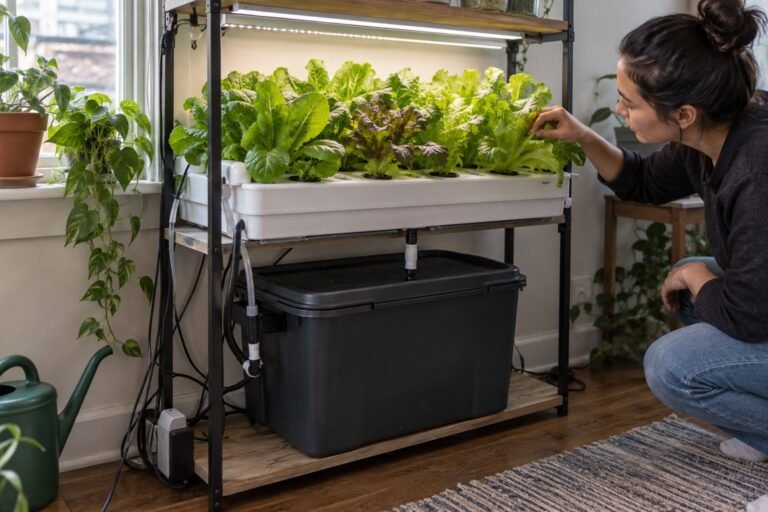
The Gardyn Studio is a vertical hydroponic tower that holds 20 plants in roughly two square feet of floor space. It’s the only system here that produces what we’d call “grocery-replacement” quantities of greens — meaningful salad output every week, with herbs and even some fruiting plants thrown in.
The “AI assistant” is mostly marketing, but the underlying hardware is the best on this list. Two LED towers flank the plants and put out genuinely powerful spectrum. The reservoir holds about three weeks of water.
The catch is a subscription: Gardyn pushes a $35/month “Hey Gardyn” membership that bundles new yPods, fertilizer, and support. It’s optional but the system is meaningfully worse without it.
Pros
- 20 plant capacity in a tiny floor footprint
- Excellent light quality (real harvest yield)
- Beautiful enough to live in a living room
- Strong customer support and growing community
Cons
- Expensive upfront
- Subscription nudge is real
- Larger than it photographs
Verdict: Overkill for most people, but the right answer if you genuinely want to grow significant amounts of food in an apartment.
Gardyn Studio (paid link)
7. Vivosun GIY 12-Pod Smart Hydroponics — Best Mid-Range Workhorse
Best for: Buyers who want AeroGarden quality at iDOO prices.
Price range: $80–$110
Vivosun is best known for grow tents and ventilation gear, and the GIY 12-Pod feels like a hydroponic system designed by people who know what serious growers want. Twelve pods, a 24-watt full-spectrum LED, two-stage light height adjustment, and a 5.5-liter water tank. The build quality is meaningfully better than iDOO at a small price premium.
This is the sleeper pick. It rarely shows up in “best of” lists but consistently gets the highest user ratings on Amazon of any sub-$100 system.
Pros
- Best-in-class build quality for the price
- Strong full-spectrum LED
- Three-mode light cycle (vegetable, fruit, flower)
- Quiet pump
Cons
- Plain looks
- Less brand cachet than AeroGarden
- Fewer accessories available
Verdict: If you want the most growing performance per dollar — this is it.
Vivosun GIY 12-Pod Smart Hydroponics (paid link)
Quick comparison
| System | Pods | Price | Footprint | Best for |
|---|---|---|---|---|
| Click & Grow Smart Garden 3 | 3 | $99–129 | Small | Total beginners |
| AeroGarden Harvest 360 | 6 | $99–180 | Small | Reliable workhorse |
| iDOO 12 Pod | 12 | $60–90 | Medium | Tightest budget |
| LetPot LPH-Max 10 | 10 | $130–180 | Medium | Smart-home fans |
| Plantaform Rejuvenate | 15 | $300–450 | Small | Design-minded buyers |
| Gardyn Studio | 20 | $500–900 | Vertical floor | Serious yield |
| Vivosun GIY 12-Pod | 12 | $80–110 | Medium | Performance per dollar |
Frequently asked questions
Do hydroponic systems use a lot of electricity?
For the between-crop steps, use the complete hydroponic system cleaning routine for the reservoir, deck, pump, tubing, and reusable parts.
Not really. Most systems use 20–30 watts of LED light running 16 hours per day. Over a month that’s roughly the same as a single incandescent bulb running for the same time — call it $1–3 per month in most US/EU markets.
Will hydroponic plants taste as good as soil-grown?
Yes, with one caveat: leafy greens (lettuce, basil, mint, chard) taste essentially identical to soil-grown. Tomatoes, peppers, and other fruiting plants can taste slightly less complex hydroponically — though most people can’t tell in a blind test.
How loud are these systems?
Quieter than you’d think. Most use a small water pump that cycles every few minutes. Click & Grow and Plantaform are nearly silent. AeroGarden is the loudest of the bunch — audible from across a quiet room. iDOO, LetPot, and Vivosun are quiet.
What can I actually grow?
Anything herbaceous and leafy: basil, lettuce, mint, parsley, kale, chard, arugula. Most also do well with cherry tomatoes, chili peppers, and strawberries — though these take longer and need more light. Skip root vegetables (carrots, beets) and anything that gets large.
Are the proprietary pods (Click & Grow, AeroGarden) worth it?
For beginners, yes — they almost guarantee germination success. Once you’ve grown a few cycles, switching to generic grow sponges and your own seeds drops the per-pod cost from ~$2.50 to about $0.15.
Is there a maintenance routine I need to know about?
Minimal. Top up water every 2–4 weeks. Refresh the nutrient solution every 3–4 weeks (or as the system tells you). Once per growing cycle (every 2–3 months), drain the reservoir, scrub with diluted vinegar, refill.
The bottom line
For most people reading this guide, the answer is either the Click & Grow Smart Garden 3 (if you want the easiest possible entry point) or the AeroGarden Harvest 360 (if you want a bit more capacity and don’t mind a slightly more utilitarian look). Both are well-supported, widely available, and consistently produce good harvests.
If budget is tight, the iDOO 12 Pod is the lowest-risk way to try hydroponics under $100. If you want maximum yield, Gardyn Studio. If you want the prettiest one, Plantaform Rejuvenate.
Whatever you pick, the bigger lesson after testing all of these: indoor hydroponics actually works, even for people who’ve killed every houseplant they’ve owned. The first basket of basil you snip yourself makes the whole apartment feel different.