Hydroponic Water Temperature: A Useful Target and Warning Signs
Learn how nutrient-solution temperature affects roots, oxygen, disease risk, nutrient readings, and the practical ways to cool or warm a reservoir.

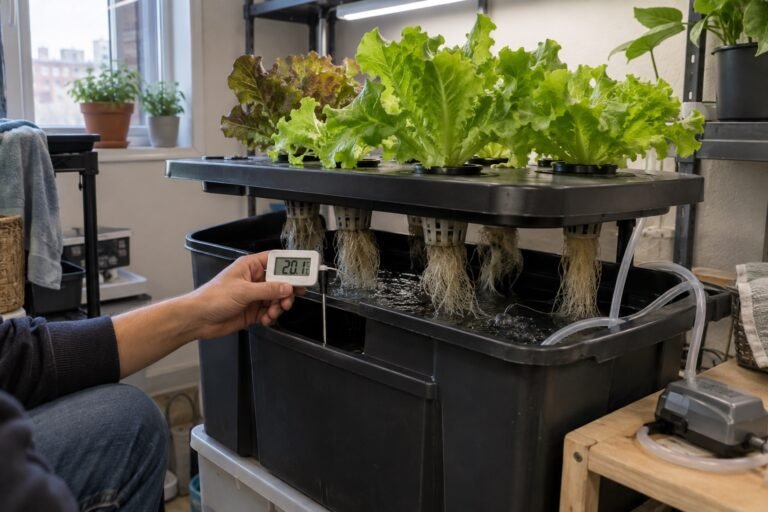
Learn how nutrient-solution temperature affects roots, oxygen, disease risk, nutrient readings, and the practical ways to cool or warm a reservoir.
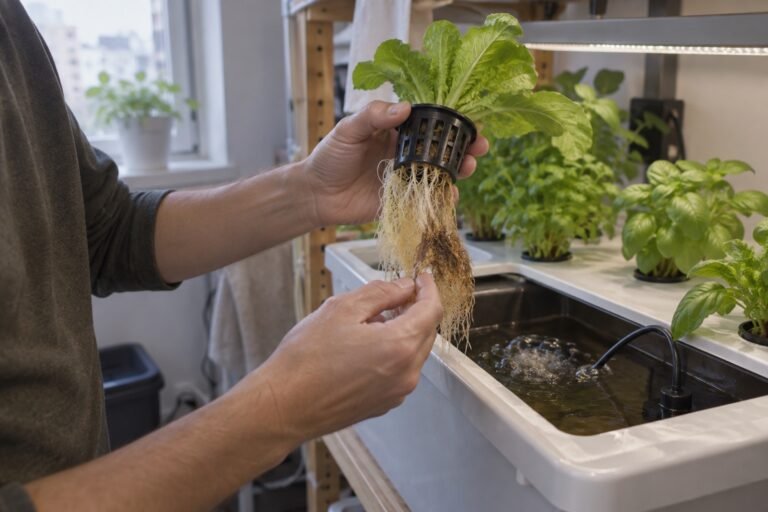
Identify hydroponic root rot by texture, smell, plant response, and system conditions, then stabilize oxygen, temperature, sanitation, and the reservoir.
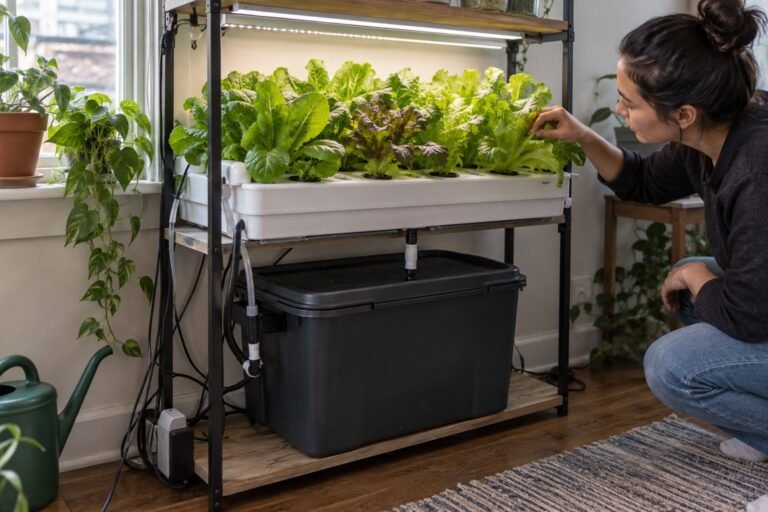
Estimate hydroponic reservoir size by plant count, crop type, system volume, and refill interval, then leave room for circulation and maintenance.
A transparent comparison of three hydroponic pH pens, with official specifications and a repeatable physical test for accuracy, drift, response time, and upkeep.
Compare hydroponic EC meters by calibration accuracy, repeatability, response time, temperature compensation, cleaning, and long-term value.
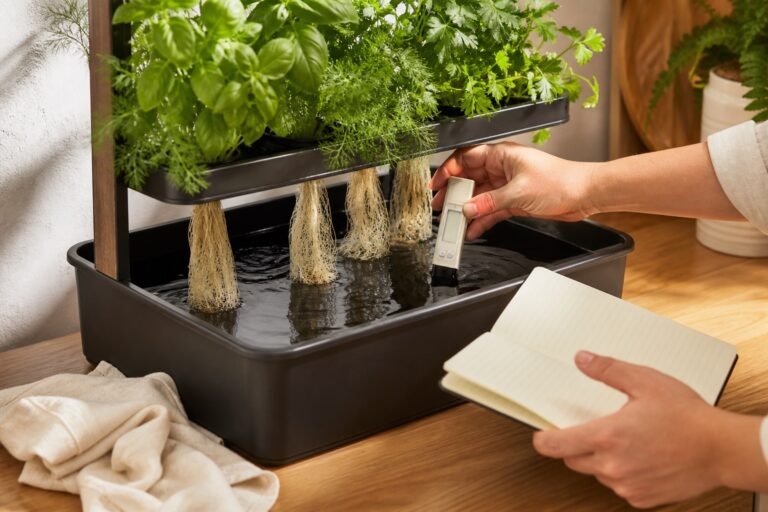
Find out why hydroponic pH keeps rising by checking the meter, source water alkalinity, EC, mixing, roots, reservoir condition, and adjustment method.
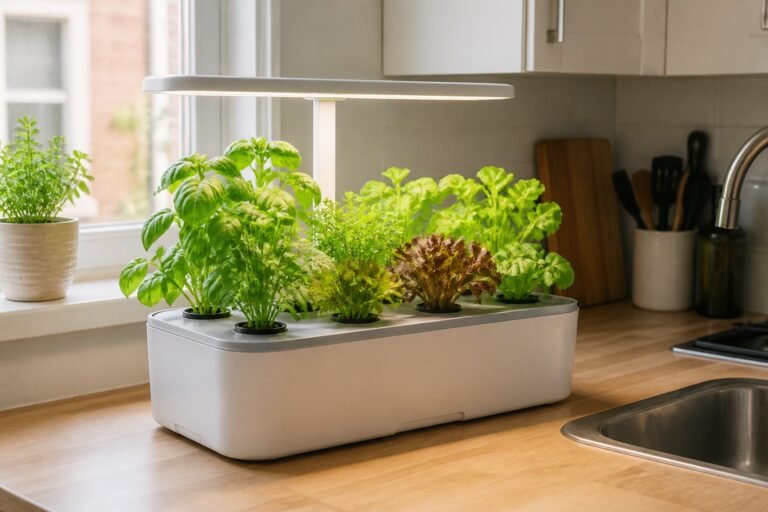
Compare the first-year, later annual, and three-year cost of countertop hydroponic systems. Edit electricity, refills, nutrients, and replacement costs.
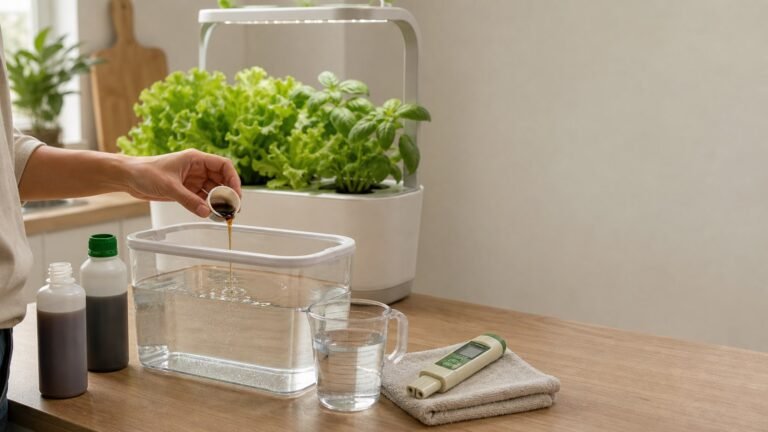
Avoid seven common nutrient mistakes with a label-first process for source water, mixing, pH, EC, top-ups, replacement, and reservoir diagnosis.
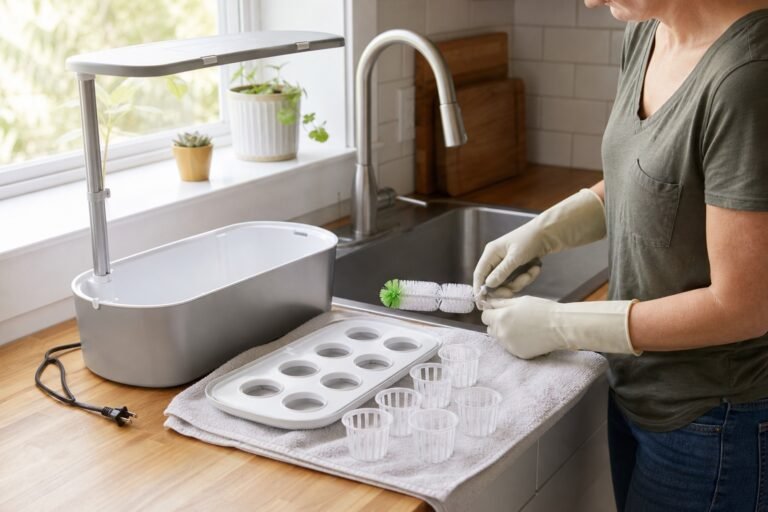
Clean a small indoor hydroponic garden between crops with this practical routine for the reservoir, grow deck, pump, tubing, and reusable parts.
Last updated: 12.07.2026. Smart indoor gardens promise the dream: fresh herbs on your counter with no soil, no mess, and almost no effort. Brands like Click & Grow, AeroGarden, and a wave of cheaper newcomers all sell the same pitch. They do work. But before you spend $100 to $300 on one, it is worth…