Hydroponic Root Rot: How to Diagnose It and Save the System
Affiliate disclosure: As an Amazon Associate I earn from qualifying purchases. Links marked “paid link” may earn Fern & Shelf a commission at no extra cost to you. Read our full Affiliate Disclosure.
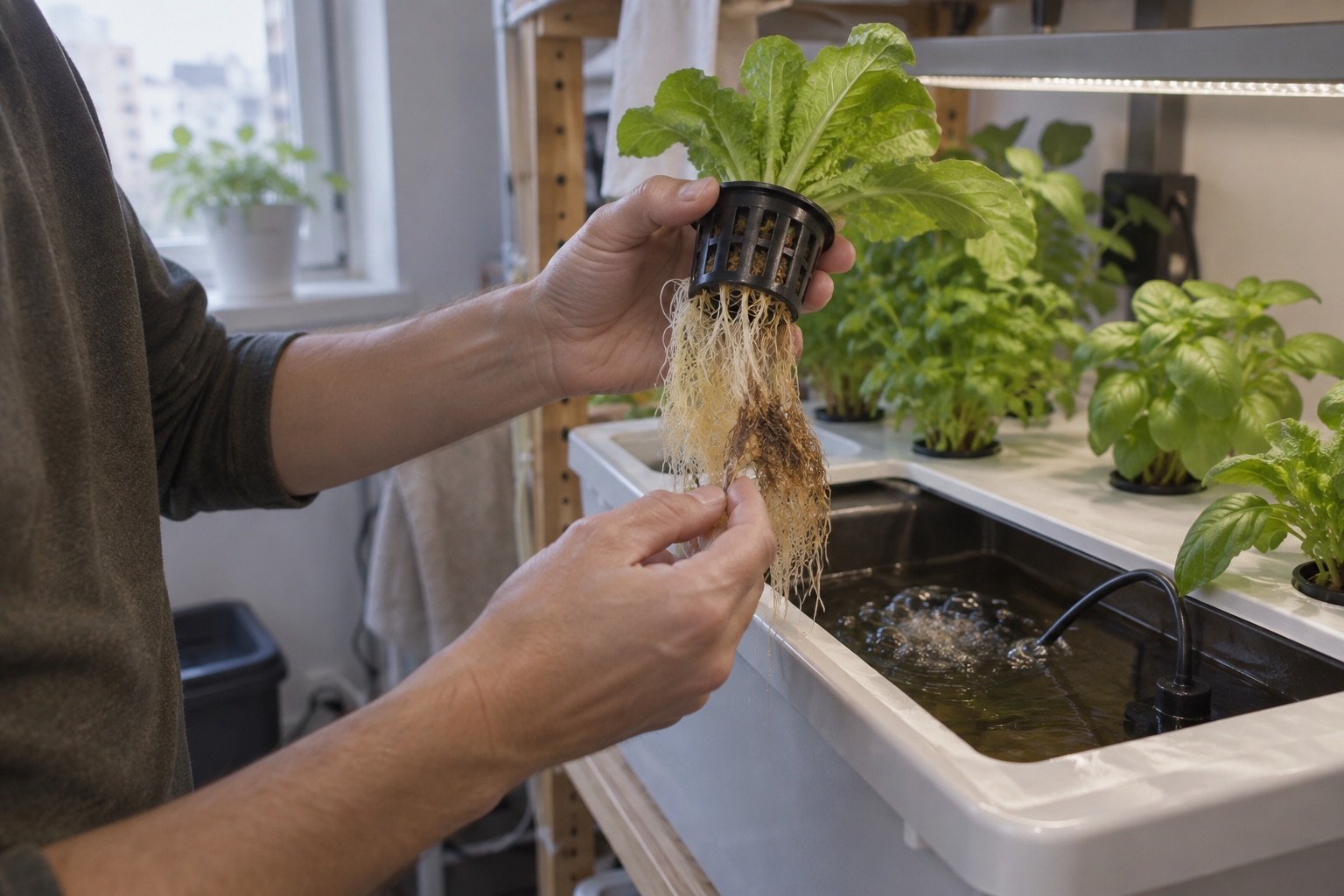
Brown roots do not always mean root rot. Nutrient stains, clay dust, and some additives discolor otherwise firm roots. Rot becomes more likely when roots feel slimy or soft, smell sour, shed their outer tissue, and accompany wilting or stalled growth.
Healthy roots versus damaged roots
| Check | Healthy or stained | Likely rot |
|---|---|---|
| Texture | Firm, branching, intact | Soft, slimy, easily stripped |
| Odor | Neutral or earthy | Sour, swampy, or rotten |
| Plant | New growth continues | Wilting, yellowing, stalled growth |
| Reservoir | Stable temperature and aeration | Warm water, debris, weak flow |
Act on the system first
- Separate affected plants if the design allows it.
- Measure solution temperature, EC, and pH.
- Check that pumps, channels, and air stones are running.
- Remove dead roots with sanitized tools without cutting healthy tissue.
- Replace foul or heavily contaminated solution.
- Clean accessible equipment according to the crop and system manual.
Do not add several treatments at once. That makes the cause harder to identify and can damage surviving roots.
Warm water and low oxygen
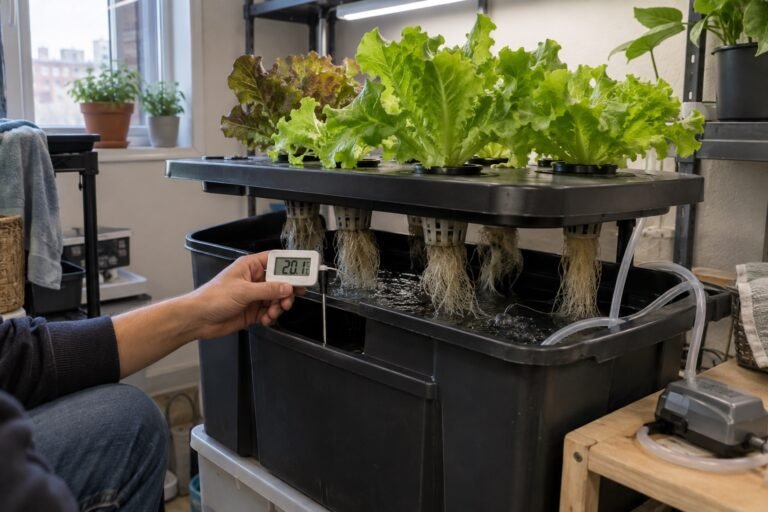
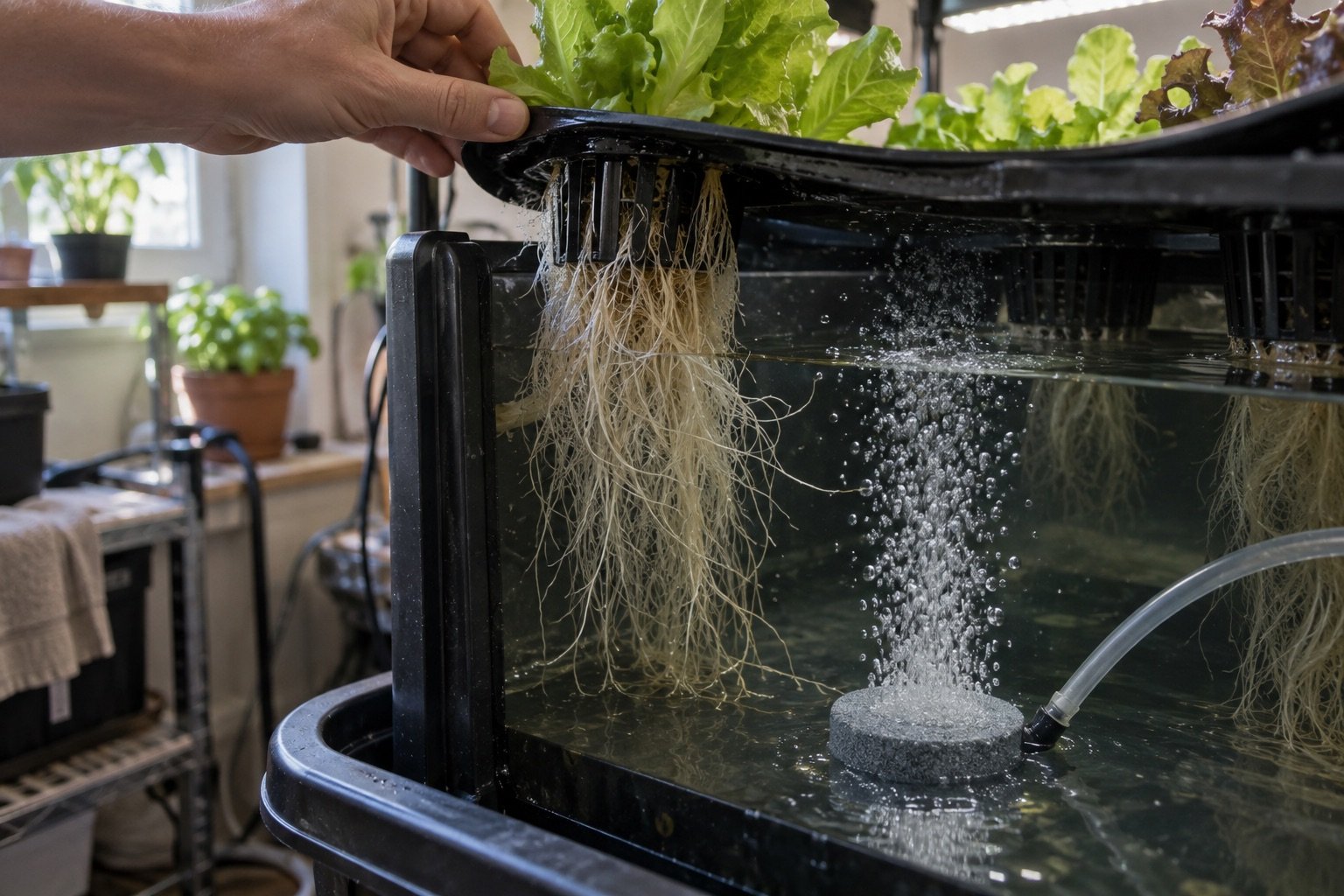
Warm nutrient solution holds less dissolved oxygen. Roots and microbes continue using oxygen, so a small reservoir can deteriorate quickly after a pump failure or hot day. Our hydroponic water temperature guide covers measurement and cooling.
A hydroponic air pump and air stone (paid link) can improve aeration in compatible systems. Match airflow to reservoir size and keep electrical connections away from spills.
Sanitation and dead material
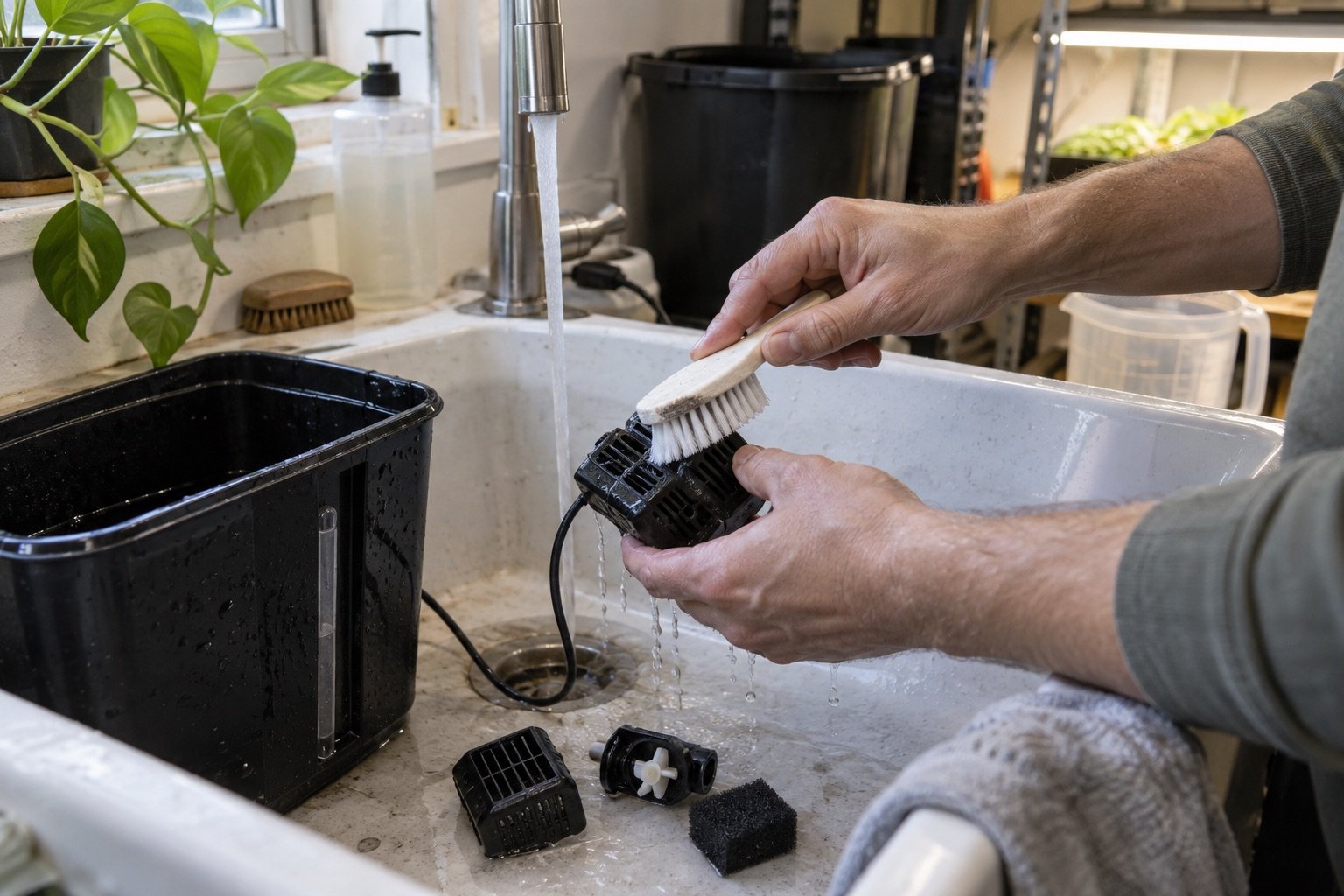
Old roots, fallen leaves, and light leaking into the reservoir feed problems. Remove debris during routine checks and block light with an opaque lid. Between crops, disassemble what the manufacturer permits and clean pumps, tubing, baskets, and tanks. Follow our hydroponic system cleaning guide for the sequence.
Should you use hydrogen peroxide?
Concentration, crop, product strength, and system biology all matter. An improvised dose can burn fine roots and interfere with beneficial microbes. Use only a label-approved product and rate for the intended system, or skip it while you correct temperature, oxygen, and sanitation.
Restarting badly affected plants
A plant with a healthy upper stem may be easier to propagate than to rescue. Take a clean cutting above damaged tissue when the species supports it, then root it in a separate sanitized setup. Discard plants with extensive crown collapse or a continuing foul odor.
Prevention checklist
- Keep the reservoir dark and covered.
- Record water temperature during the warmest part of the light cycle.
- Maintain pumps and replace clogged air stones.
- Do not let dead foliage enter the solution.
- Change solution on the system’s recommended schedule.
- Sanitize between crops and quarantine new starts.
Recovery shows first as clean new root tips and stable new leaves. Old damaged roots may never turn white again, so judge the new growth rather than waiting for the whole root mass to change color.
Sources
- Oklahoma State University Extension: Hydroponics
- Oklahoma State University Extension: EC and pH Guide
Symptom reference: University of Maryland Extension: Root Rots of Indoor Plants.