Hydroponic Water Temperature: A Useful Target and Warning Signs
Affiliate disclosure: As an Amazon Associate I earn from qualifying purchases. Links marked “paid link” may earn Fern & Shelf a commission at no extra cost to you. Read our full Affiliate Disclosure.
Nutrient-solution temperature influences dissolved oxygen, root metabolism, pathogen pressure, and measurement consistency. Oklahoma State Extension gives 72 to 75 F as an optimal water-temperature range in its hydroponic EC and pH guide. Many growers run leafy systems a little cooler when possible, especially where root disease has appeared.
A practical target
| Reading | Interpretation | Action |
|---|---|---|
| 65 to 71 F | Often comfortable for leafy crops | Maintain and watch crop response |
| 72 to 75 F | Within the Oklahoma State optimal range | Maintain aeration and stability |
| 76 to 80 F | Oxygen capacity drops as heat rises | Reduce heat input and inspect roots |
| Above 80 F | Higher stress and disease concern | Cool promptly; do not mask odor |
| Below 60 F | Growth and nutrient uptake may slow | Warm gently if the crop stalls |
Crop and system design matter, so treat the table as a diagnostic guide rather than a universal set point.
Measure where roots live
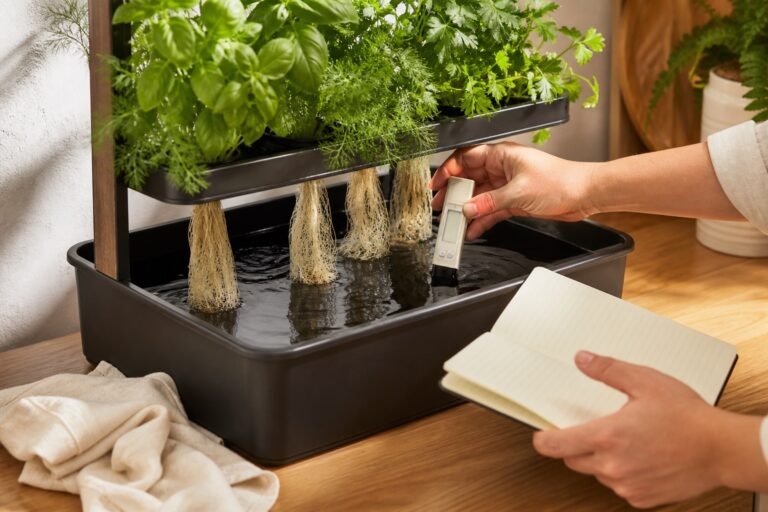
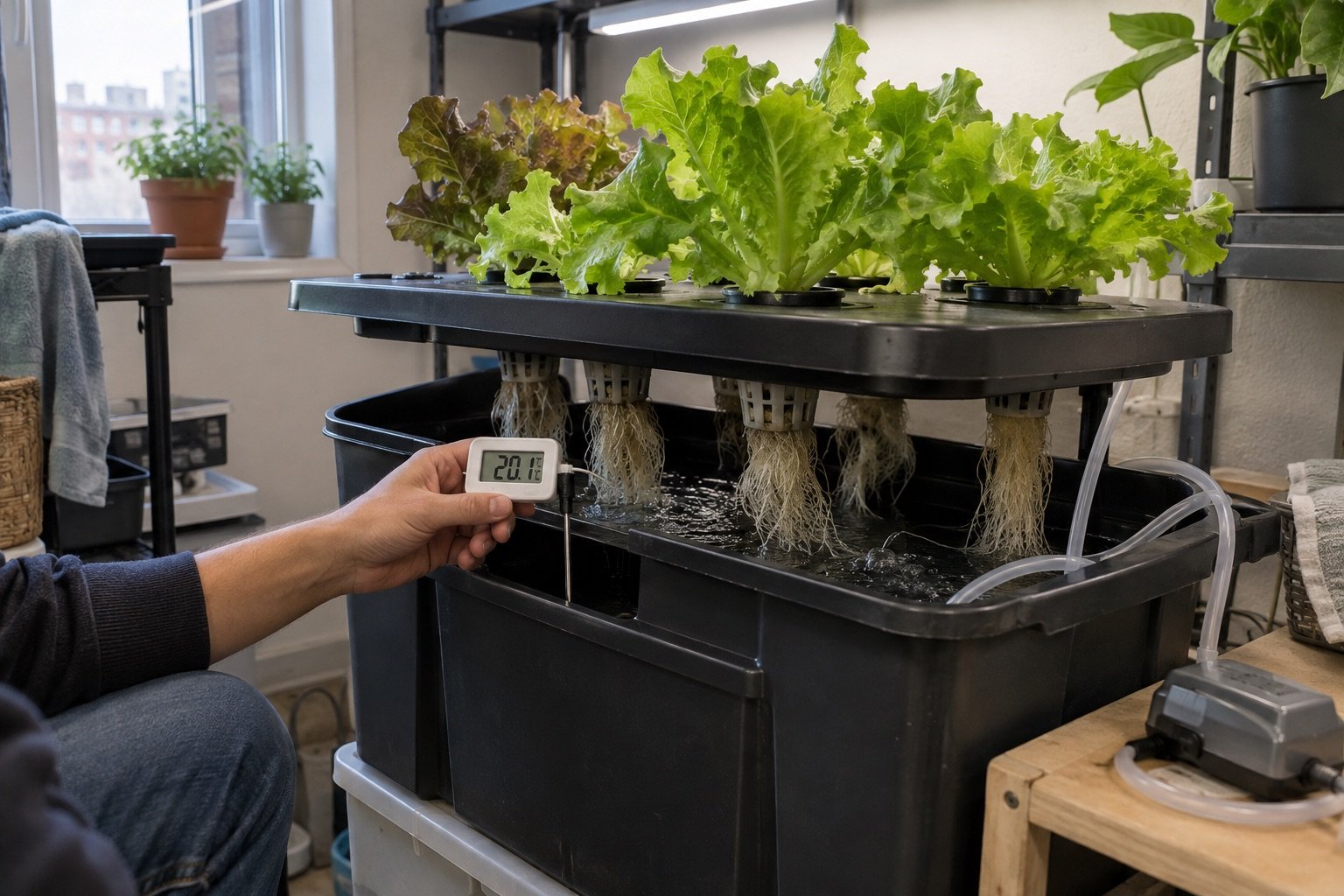
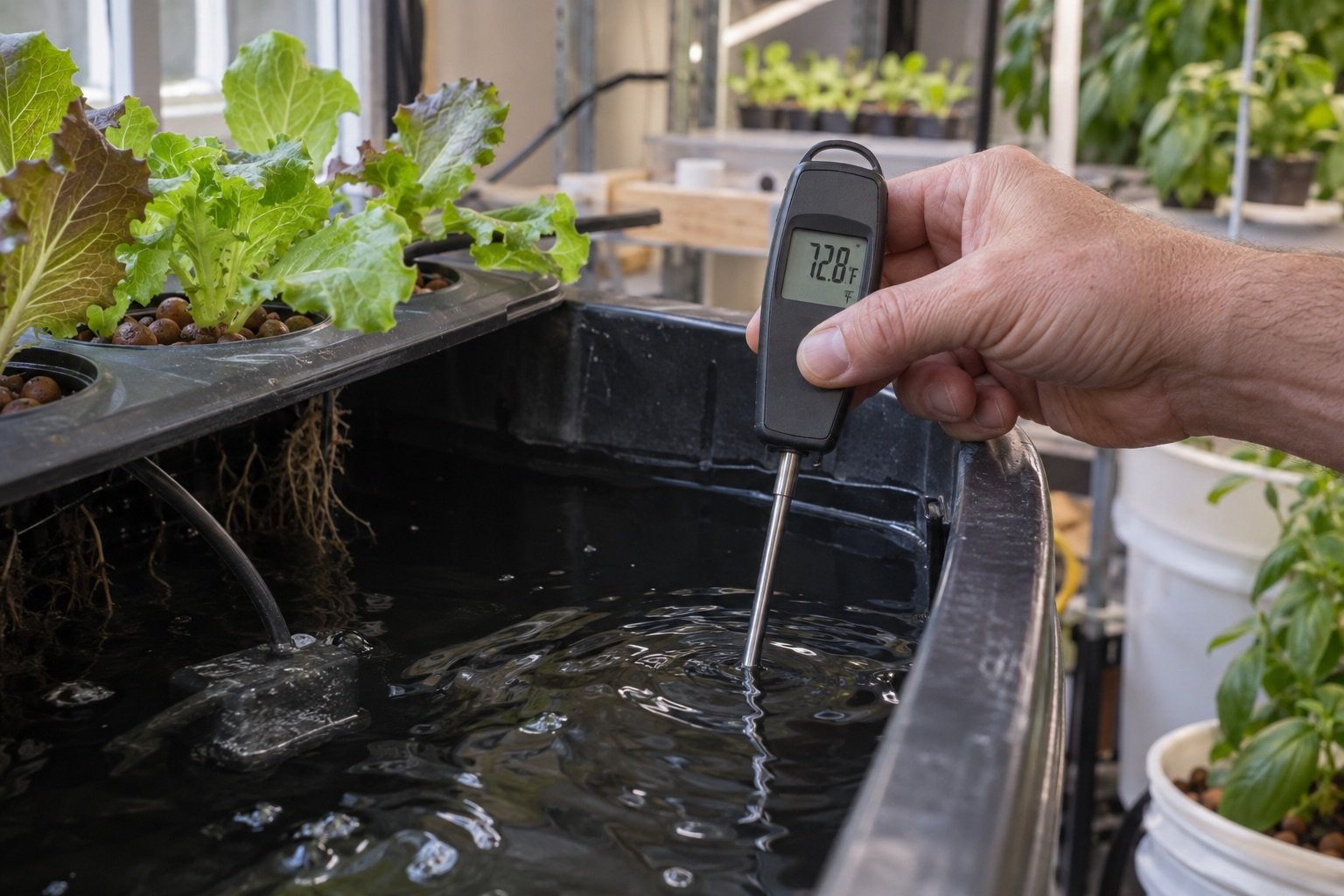
Place a clean probe in the mixed reservoir away from a warm pump outlet. Check after lights and pumps have run for several hours because the daily peak may be higher than the morning reading. A waterproof probe thermometer (paid link) can display the peak without opening the lid repeatedly.
Why warm water causes trouble
Warm water holds less dissolved oxygen than cool water. Roots and microbes still consume oxygen, so a small warm reservoir can become depleted. Brown roots, slime, odor, wilting despite available water, and a sudden pH shift require immediate inspection.
Color alone is imperfect because nutrient stains and some beneficial products tint roots. Healthy roots should feel firm and lack a rotten odor. Our plant diagnostic can organize symptom checks, though hydroponic equipment and water readings still need direct inspection.
Reduce heat before buying a chiller
- Move the reservoir away from window sun and heating vents.
- Use an opaque or reflective lid so light does not heat the solution.
- Place hot air pumps outside enclosed grow cabinets.
- Increase reservoir volume if the current tank changes temperature quickly.
- Run lights during cooler hours if the room allows it.
- Leave ventilation space around drivers and power supplies.
Frozen bottles can provide short-term cooling, but sanitize the outside, rotate them consistently, and avoid swinging the solution by ten degrees in an hour. A chiller makes sense when room heat is persistent and the crop value justifies the cost.
Aeration helps, with limits
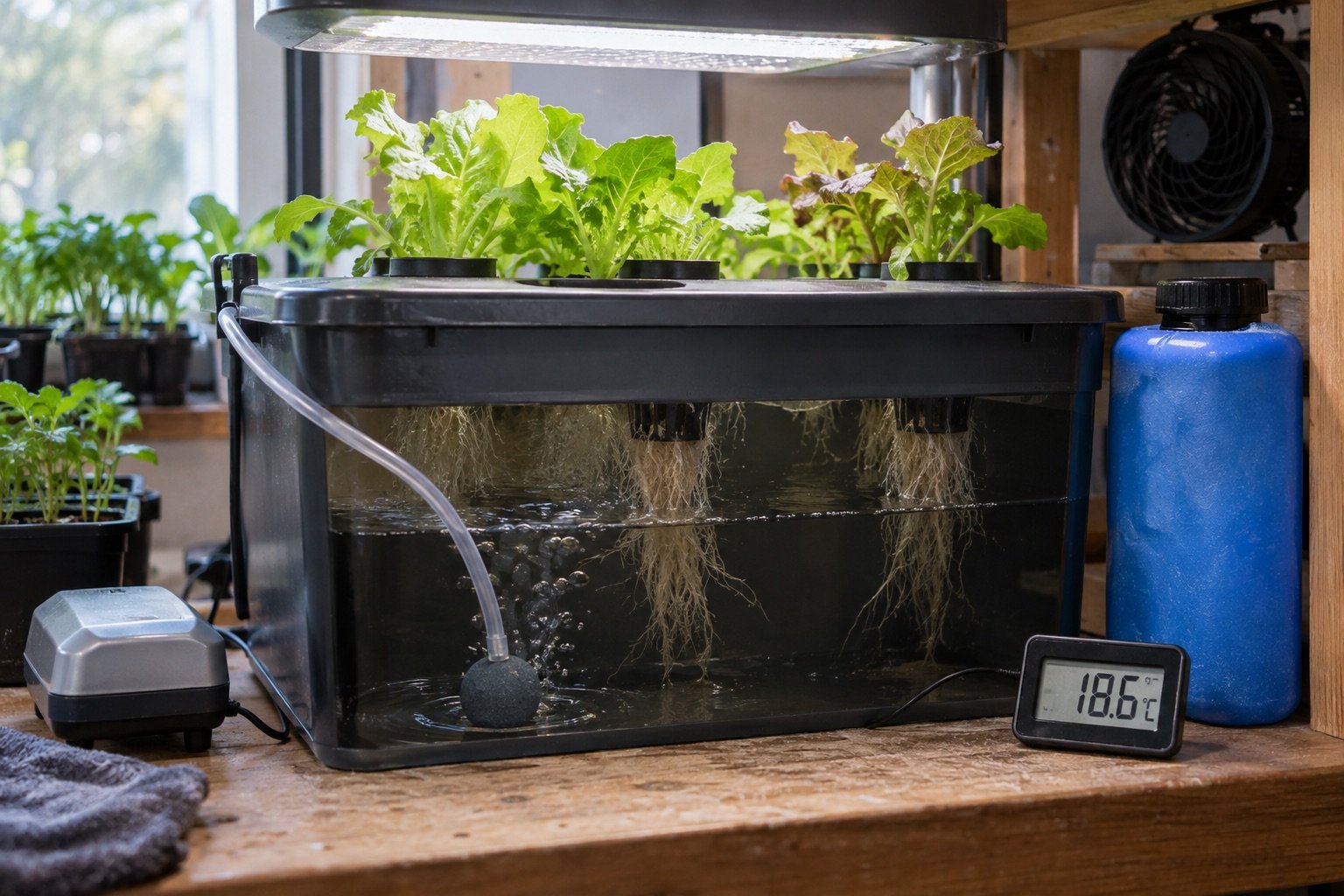
An air stone supports gas exchange but cannot make hot water hold as much oxygen as cool water. Size the pump for the reservoir and keep it where it draws clean, cooler air. Browse hydroponic air pumps and stones (paid link) by rated airflow and noise, not outlet count alone.
Cold reservoirs
A basement floor can keep a small tank too cold, slowing growth and nutrient use. Insulate the tank from concrete before adding a heater. If a heater is needed, choose an adjustable model suitable for the water volume and protect roots from direct contact. Verify it with a separate thermometer.
Record temperature with EC and pH
A number has more value in context. Record solution temperature, room temperature, EC, pH, water added, and root appearance at the same time each day. A slow temperature climb after a pump change is easier to catch in a log than through plant symptoms a week later.
After an overheating event
Cool the solution gradually, inspect and remove dead root material, confirm aeration, and consider replacing the reservoir if it smells or carries heavy debris. Clean equipment according to the crop stage and system instructions. Our hydroponic cleaning guide covers the shutdown process.