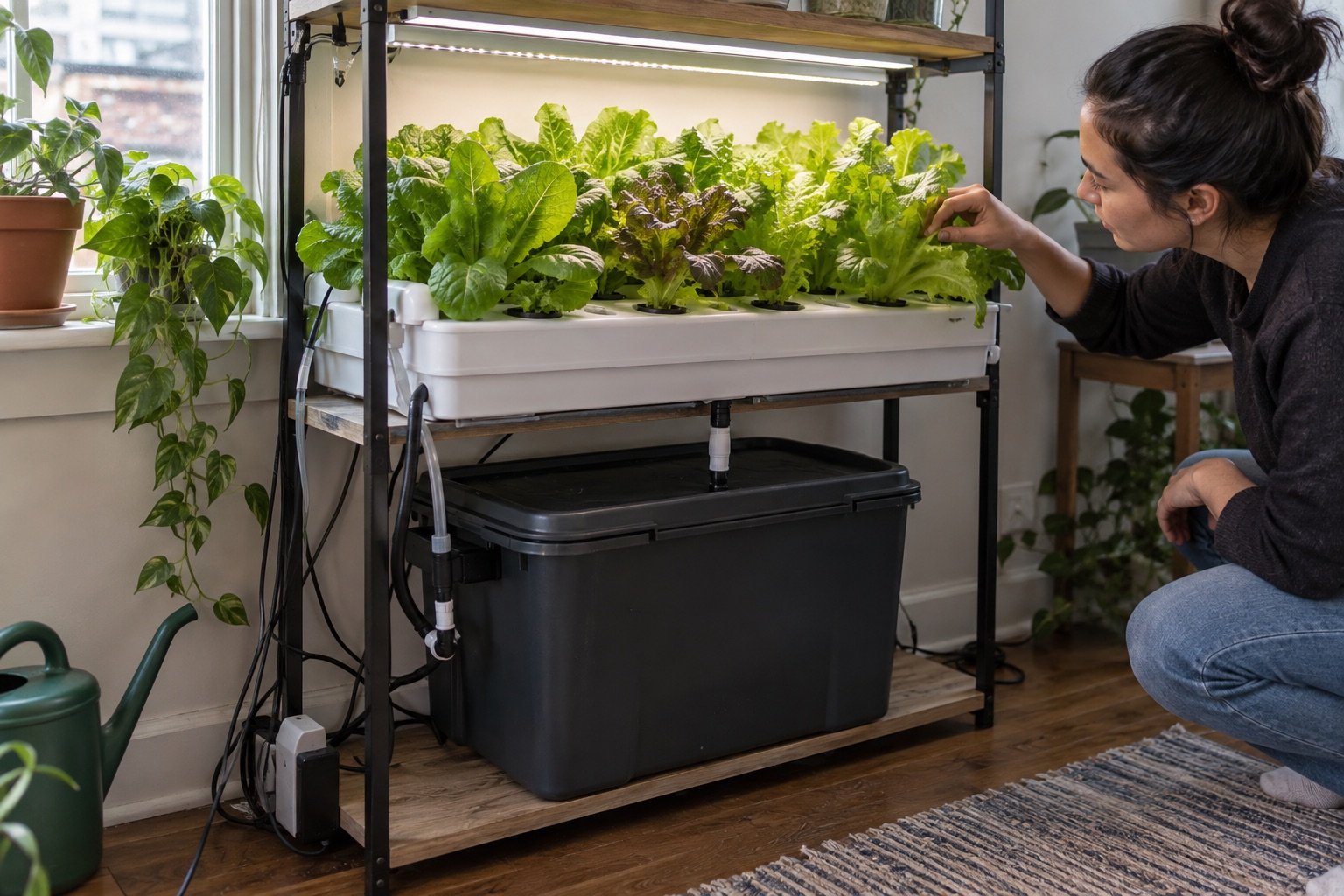
Hydroponic Reservoir Size: How Much Water Does Your Garden Need?
Affiliate disclosure: As an Amazon Associate I earn from qualifying purchases. Links marked “paid link” may earn Fern & Shelf a commission at no extra cost to you. Read our full Affiliate Disclosure.
A reservoir must hold enough solution for roots and pumps while leaving space for drainage, mixing, and daily water use. An undersized tank swings in temperature, EC, and pH. An oversized tank is steadier but heavier, harder to change, and costly to fill.
Starting ranges by garden size
| Garden | Useful starting volume | Main concern |
|---|---|---|
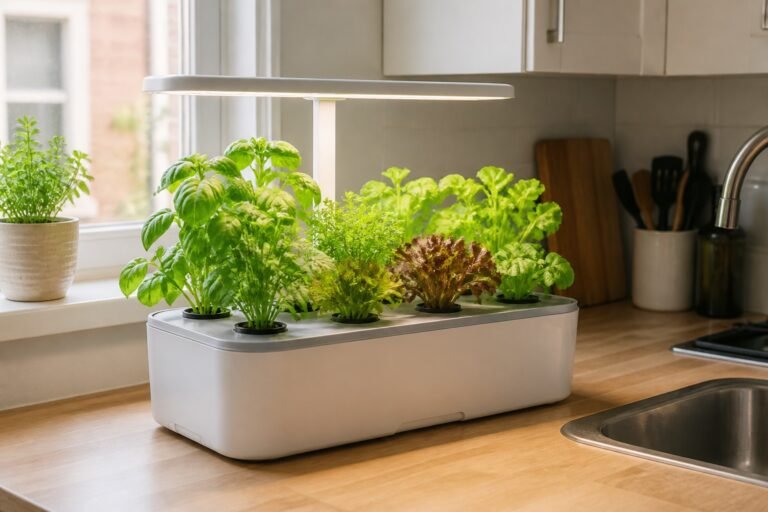
| 4 to 6 small herb sites | 2 to 4 gallons | Rapid daily level change |
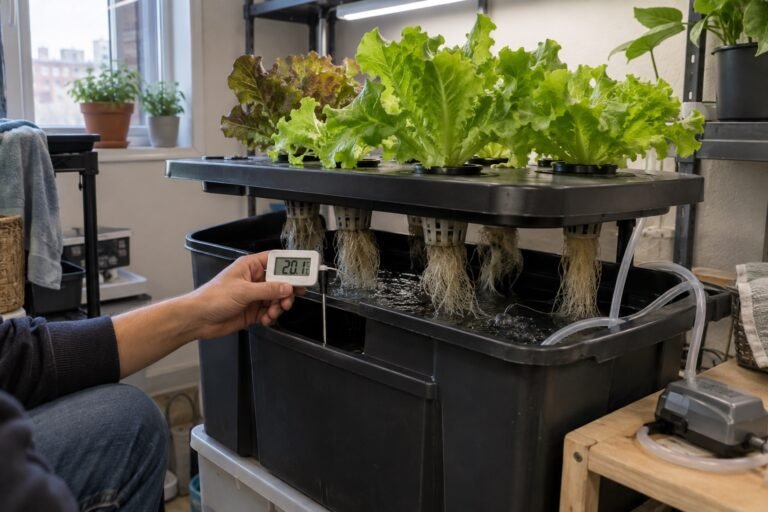
| 6 to 12 lettuce sites | 5 to 10 gallons | Leave pump submersion depth |
| 12 to 24 leafy sites | 10 to 20 gallons | Weight and refill access |
| 4 mature fruiting plants | 15 to 25 gallons | High peak water demand |
These are planning ranges, not engineering limits. Plant size, climate, system design, and plumbing volume can move the answer substantially.
Calculate the working volume
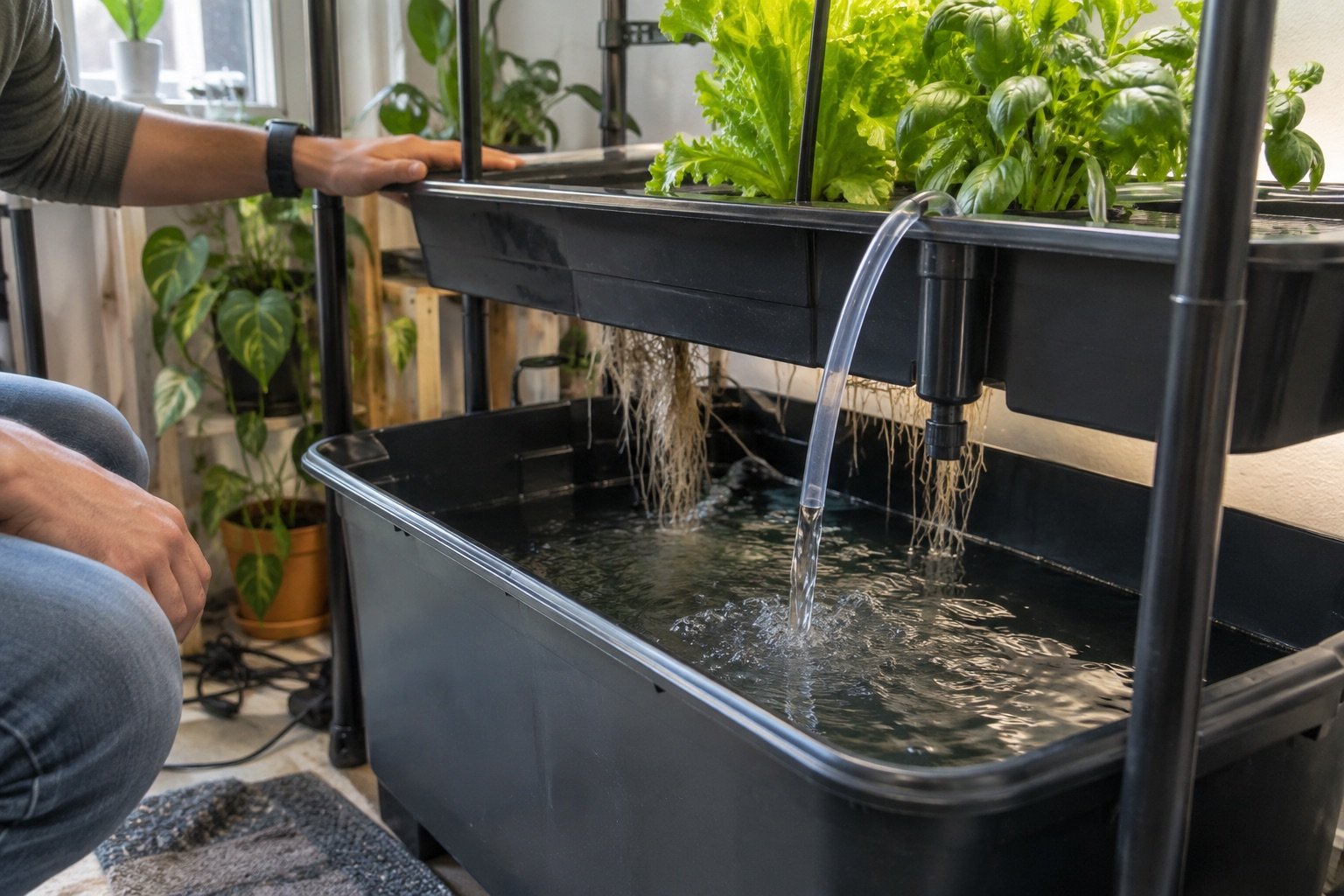
Add the water needed to keep the pump covered, fill channels or beds during operation, and replace plant use between checks. Then add headspace so returning water cannot overflow the tank. For flood-and-drain systems, test a power-off drain-back with plain water before planting.
A simple planning formula is: minimum pump volume + operating system volume + water used between refills + drain-back allowance. Use the largest expected values, then confirm the result in a leak-safe test.
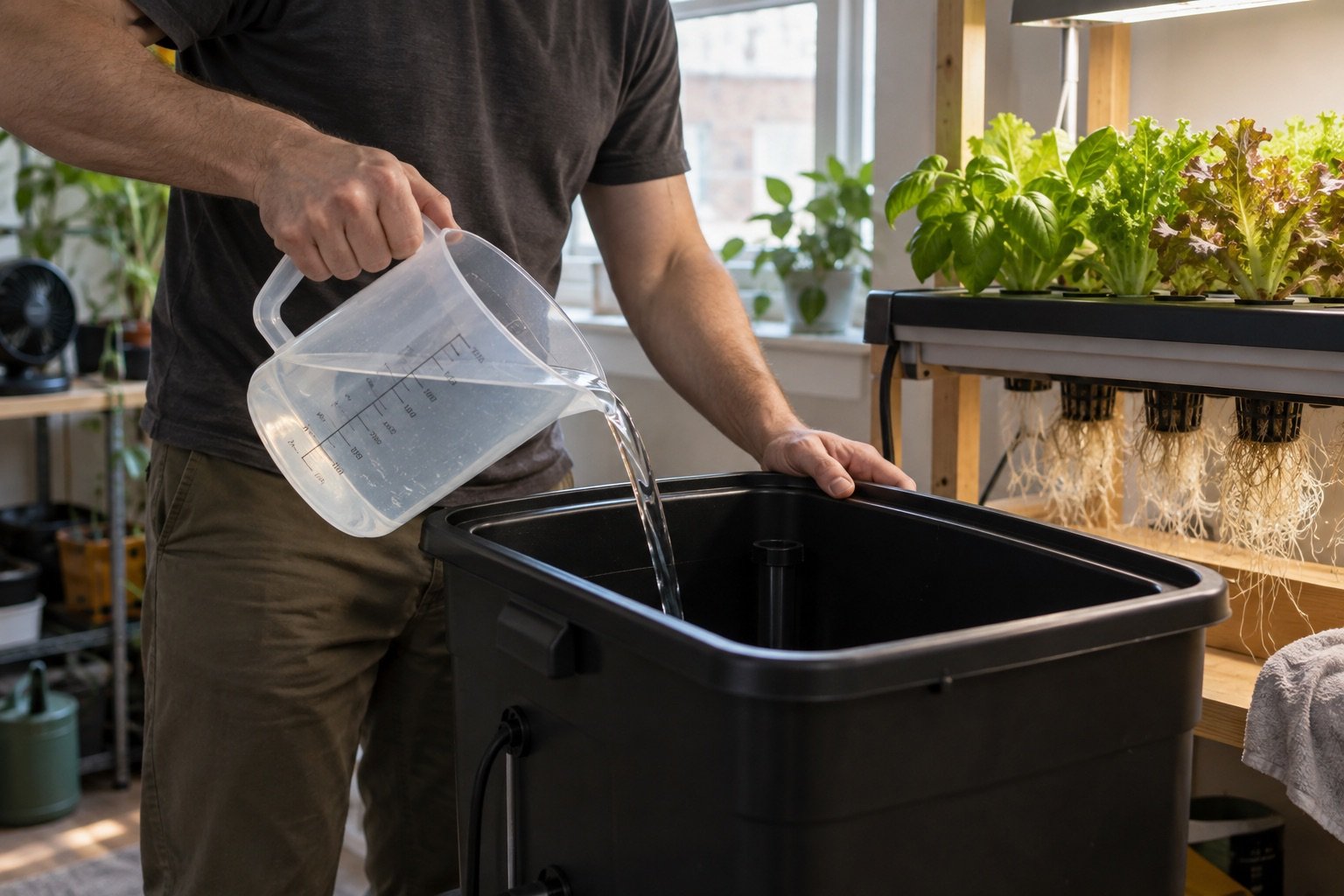
Plant count is only part of the answer
Six mature tomato plants can use far more water than six lettuce starts. Fruiting crops also need stronger support and longer crop cycles. Size for the mature canopy, not the transplant day. A transparent daily log during the first crop will reveal the peak refill requirement.
Stability versus lifting weight
Water weighs about 8.34 pounds per US gallon before the container and equipment are added. A 20-gallon reservoir approaches 167 pounds of water. Confirm shelf and floor capacity, especially in an apartment. Use a low, wide tank where tipping is a concern and keep it accessible for cleaning.
You can compare opaque food-grade reservoirs with lids (paid link). Verify material, actual working capacity, and whether fittings sit above the lowest drain point.
Protect the pump
Mark minimum and maximum working levels inside the tank. The minimum keeps the pump submerged and prevents air from entering lines. The maximum leaves room for returning water. An automatic top-off can help, but it needs a tested float valve and an overflow plan.
Light and temperature
An opaque lid limits algae and slows radiant heat. Keep the tank away from direct sun and hot drivers. Larger water volume changes temperature more slowly, though it cannot overcome a hot room forever. Check our water-temperature guide if daily peaks exceed the crop’s comfortable range.
Reservoir changes and cost
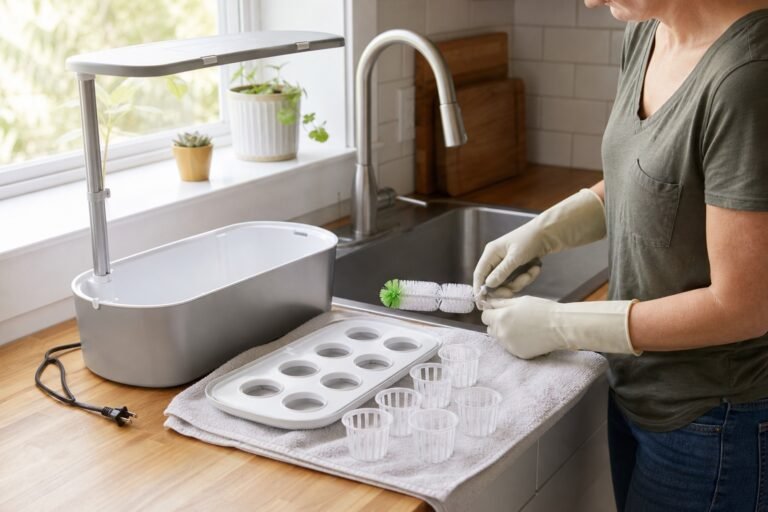
A large tank uses more nutrient and takes longer to drain. Place it where a hose or pump can remove old solution without carrying open buckets across the room. Include replacement solution in the hydroponic cost calculator before choosing the largest container that fits.
Test before planting
- Fill with plain water to the proposed working level.
- Run every pump and valve.
- Turn power off and watch all water return.
- Mark the highest safe level.
- Run for a full light cycle and record temperature.
- Check every fitting and floor surface for leaks.
The correct reservoir is large enough to remain stable between planned checks and small enough that you can clean it on schedule. Ease of maintenance usually matters more than one extra gallon on paper.