Grow Light Color Temperature: 3000K, 4000K, or 6500K?
Affiliate disclosure: As an Amazon Associate I earn from qualifying purchases. Links marked “paid link” may earn Fern & Shelf a commission at no extra cost to you. Read our full Affiliate Disclosure.
Color temperature describes how warm or cool a white light looks to human eyes. A 3000K lamp looks warm and slightly yellow, 4000K looks neutral, and 6500K looks cool or bluish. Kelvin does not measure brightness, PPFD, efficiency, or the amount of light that reaches a leaf.
Color temperature at a glance
| Range | Appearance | Common indoor use |
|---|---|---|
| 2700K to 3000K | Warm white | Living rooms, mixed plant and home lighting |
| 3500K to 4500K | Neutral white | Shelves, offices, herbs, general growth |
| 5000K to 6500K | Cool daylight | Seedling benches and work areas |
Plants use photons, not the Kelvin label
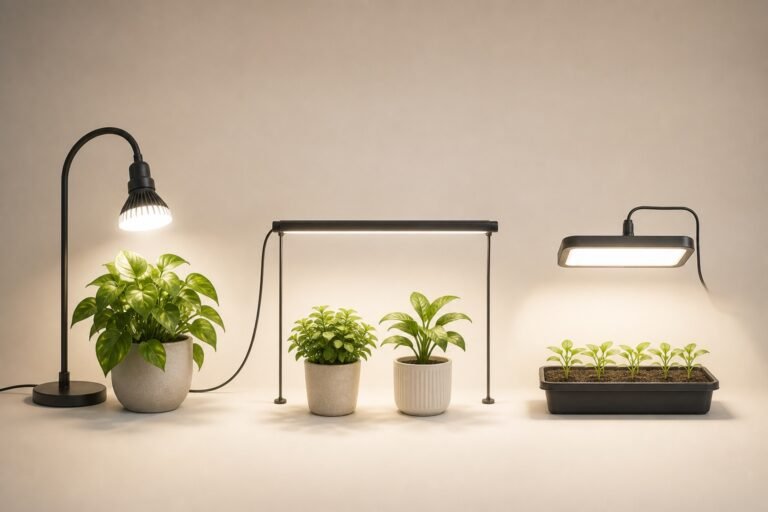
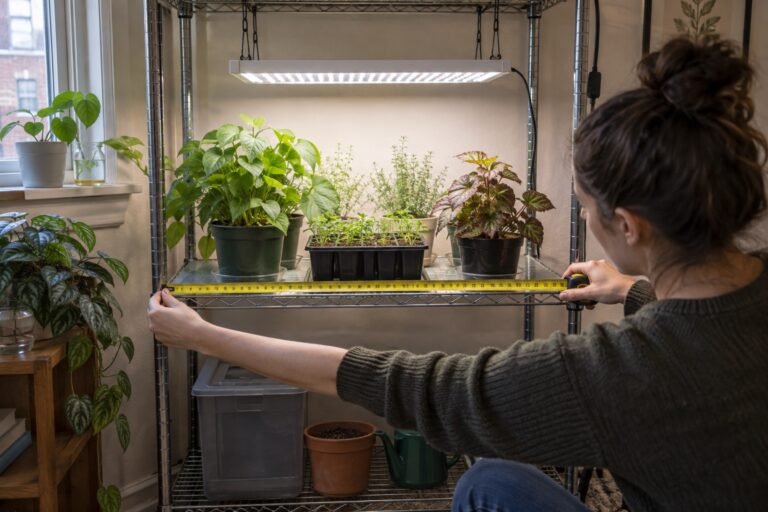
Two 4000K lamps can produce very different plant growth because output, distance, beam shape, and efficiency differ. Look for a PPFD map or credible photon-efficiency data when comparing dedicated fixtures. For ordinary bulbs, measure the canopy and watch plant response.
Use our PPFD and DLI calculator to connect intensity with daily run time. The Kelvin number cannot replace that measurement.
Choosing for houseplants
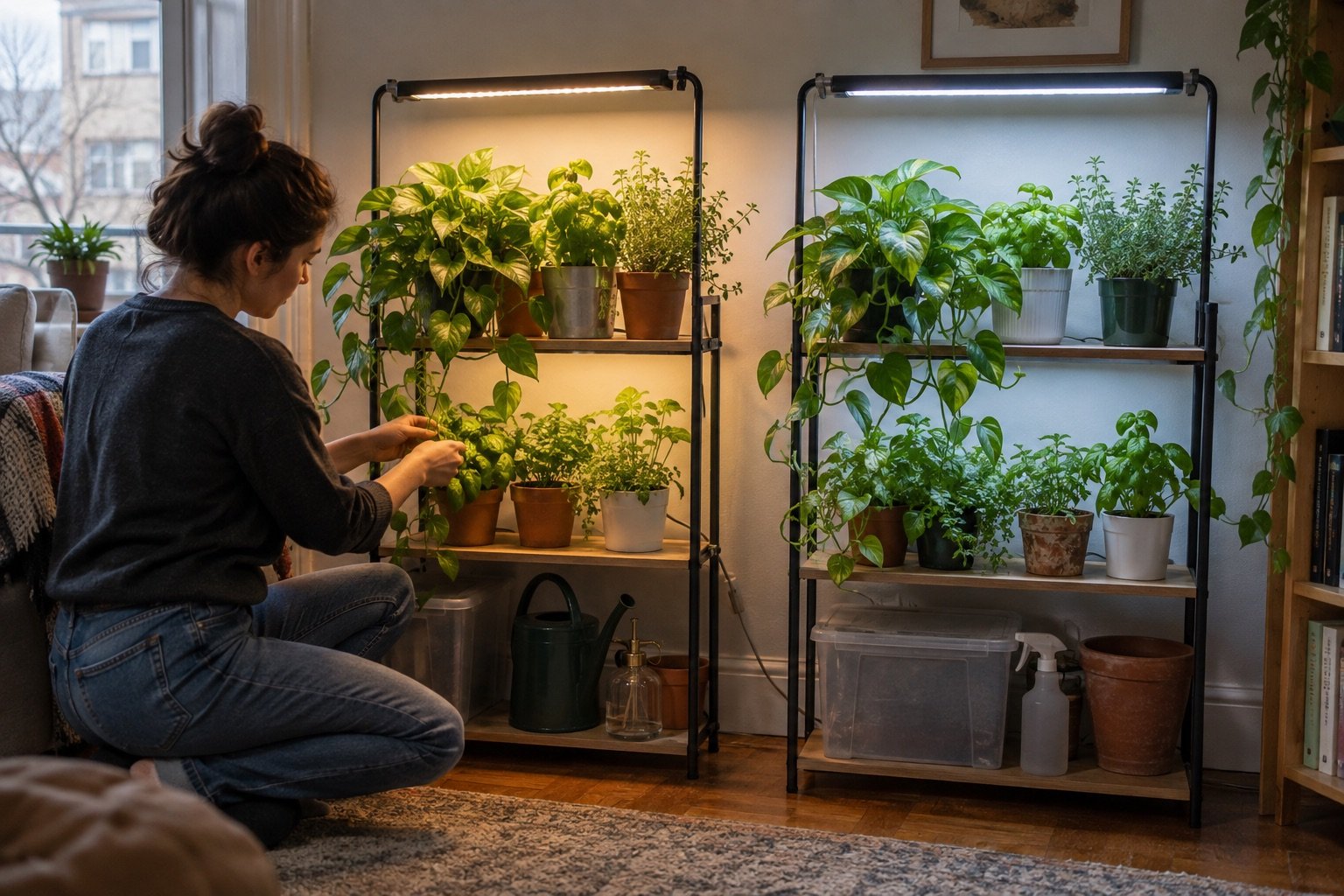
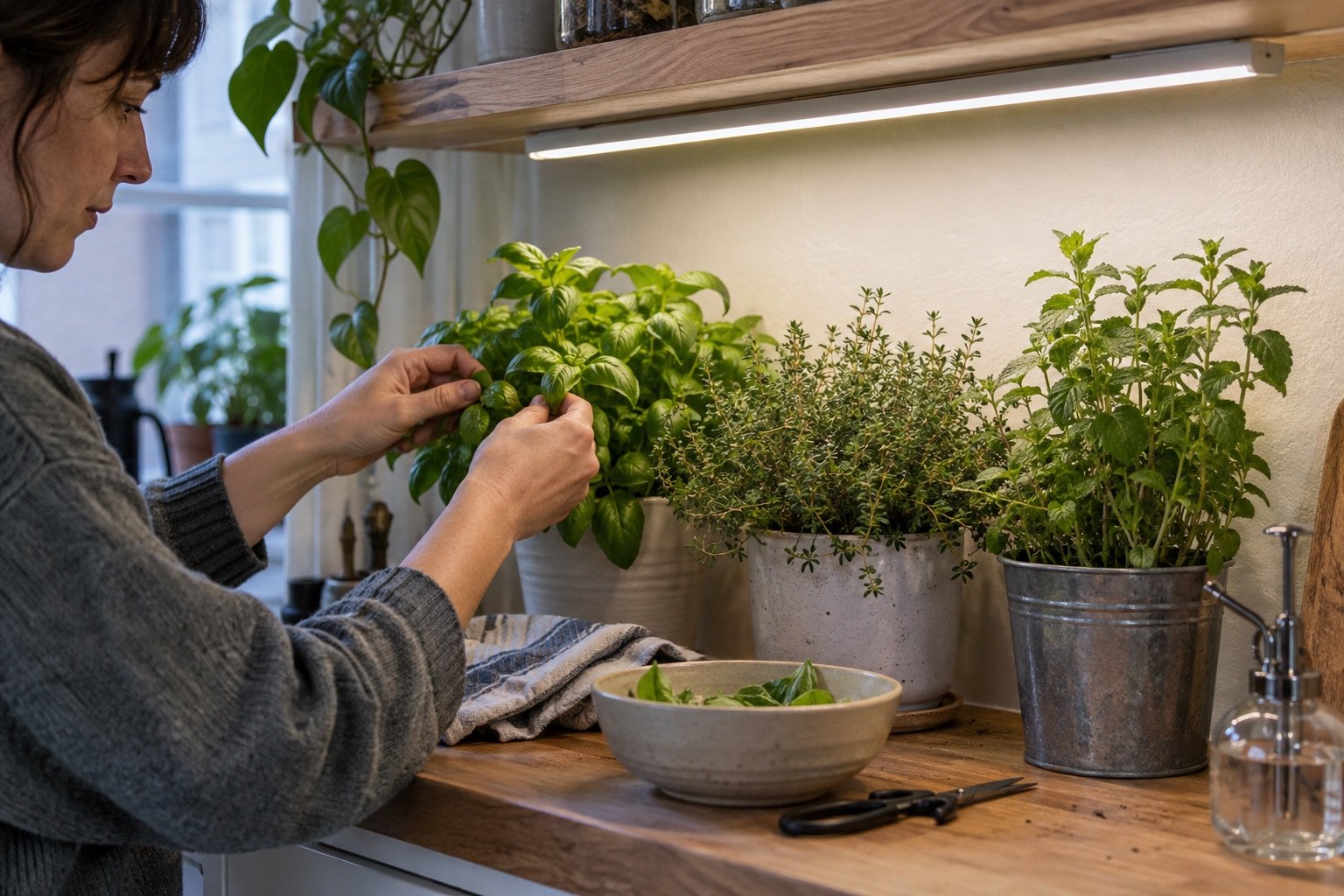
A neutral 3500K to 4000K white is comfortable in a living area and supports foliage when intensity is sufficient. Warm 3000K can also work well. Buy according to output and coverage before chasing a specific tint.
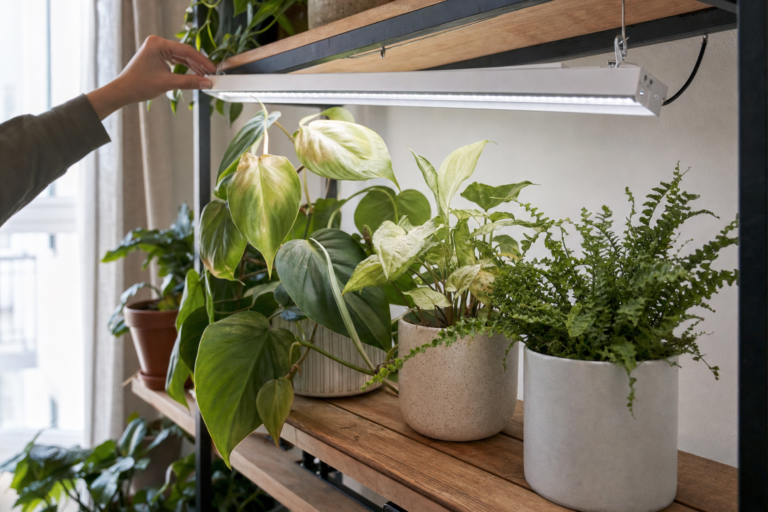
A 4000K grow-light strip (paid link) often blends into a shelf better than purple fixtures. Confirm the fixture is rated for its location and provides a real warranty.
Seedlings and herbs
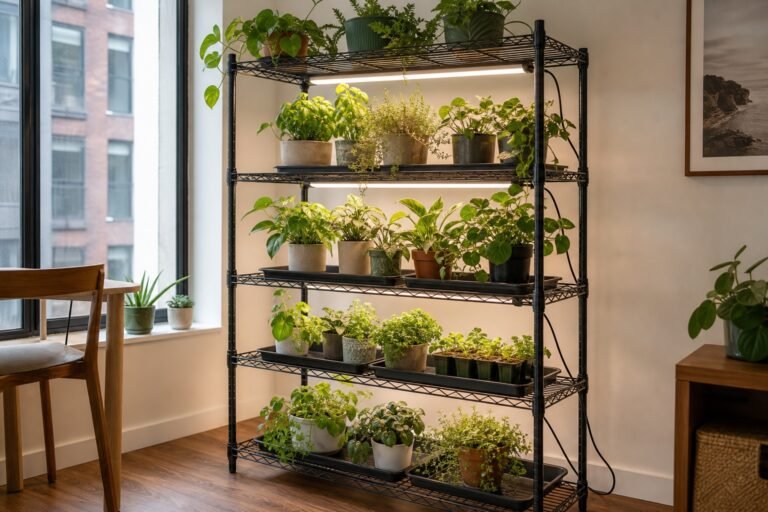
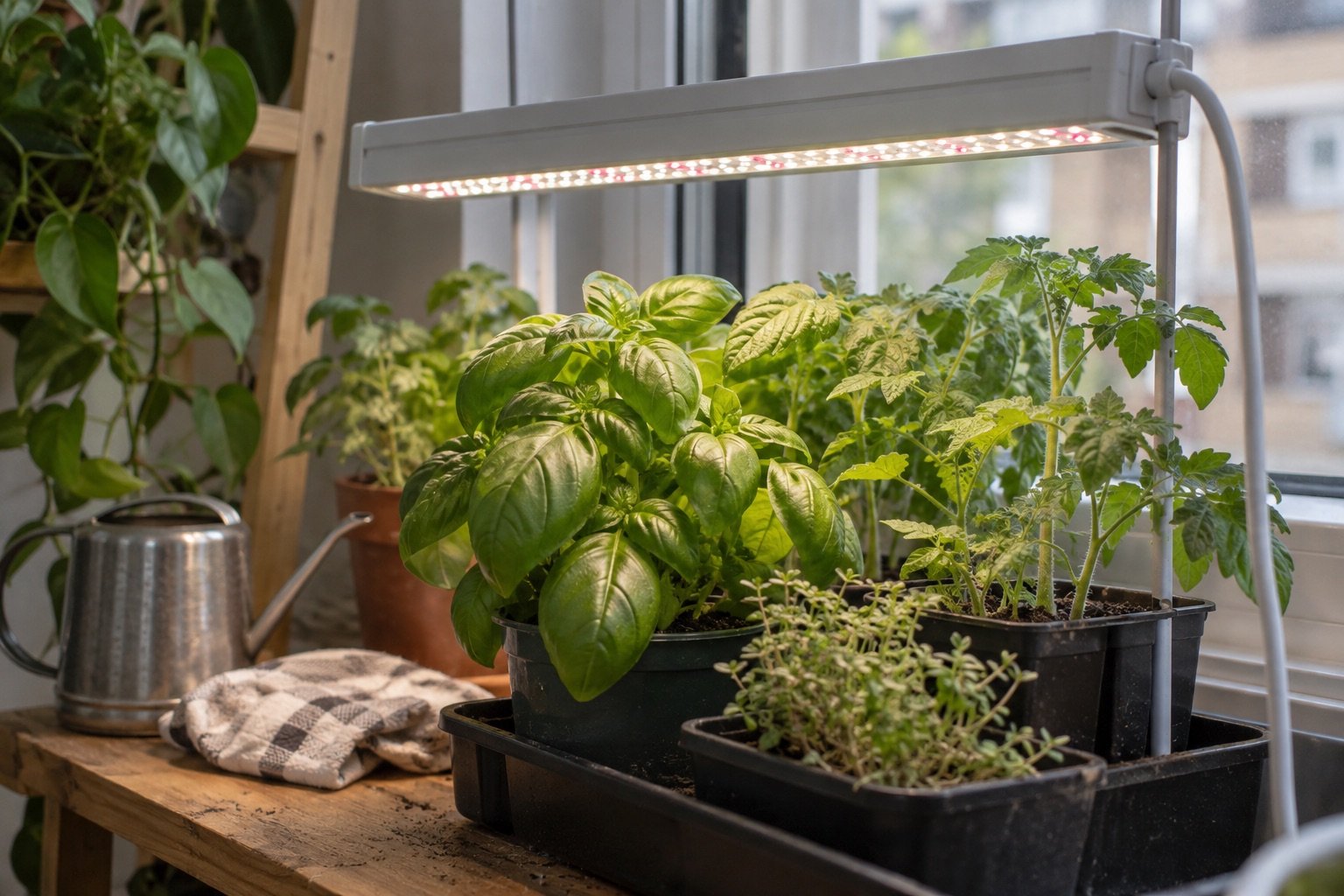
Cool white light is popular over seedlings because it looks bright and makes inspection easy. Compact growth still depends on enough photons near the canopy. A weak 6500K bulb mounted far away can produce leggier seedlings than a stronger neutral-white fixture.
Flowering and fruiting plants
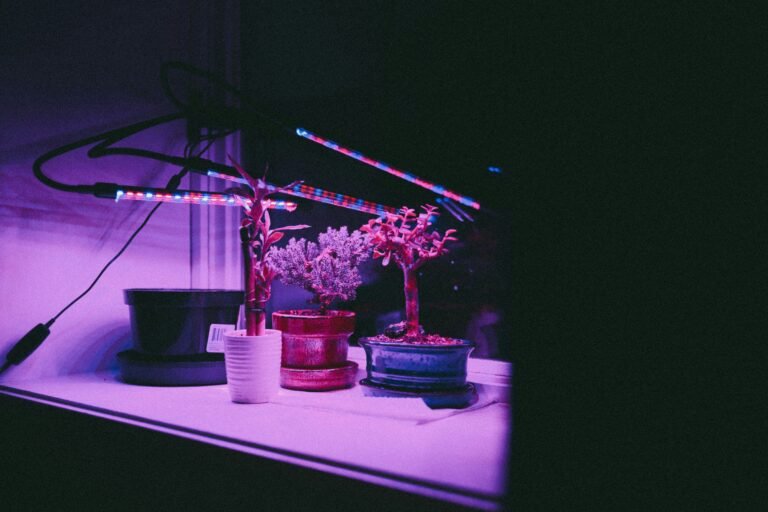
Warm-white LEDs usually contain more red light relative to cool-white models, but color temperature alone does not describe the full spectrum. Tomatoes and peppers also need much more total light than a pothos. Use crop-specific DLI targets and fixture data rather than choosing 3000K solely because the plant flowers.
Full spectrum is not a regulated performance grade
Manufacturers use “full spectrum” broadly. Read the spectrum chart when available and compare measured output, coverage area, power draw, heat, and safety certification. Marketing images of colored peaks do not show how much light reaches your shelf.
Room comfort matters
A light that causes glare may be switched off early, which reduces DLI. Add an opaque shade, mount strips under shelves, and keep bright diodes out of eye level. A warmer white can feel calmer in a bedroom, while cool white makes a workbench easier to inspect.
A good default
For mixed foliage plants in a room you use every day, start near 3500K to 4000K and prioritize measurable output. For seed-starting racks, 4000K to 6500K is practical. Change the choice only when a verified spectrum, crop goal, or visual preference gives you a reason.
Our grow light selector combines plant type, area, and placement so the color decision does not crowd out the important specifications.