The 9 Easiest Indoor Plants for People Who Kill Plants
Last updated: 05.23.2026.
Affiliate disclosure: As an Amazon Associate I earn from qualifying purchases. Links marked “paid link” may earn Fern & Shelf a commission at no extra cost to you. Read our full Affiliate Disclosure.
Start here: For a complete overview, see our Indoor Gardening for Absolute Beginners.
Most “easy indoor plants” lists are written by people who don’t actually kill plants. They include succulents (need more light than you think), peace lilies (dramatic about water), and fiddle-leaf figs (which are a personality test, not a houseplant).
This list is different. Every plant below has been tested by people who will forget to water it, leave it in a dim corner, and not repot it for years. They survive because they’re built to.
If you’ve killed every plant you’ve ever owned and you’re ready to try one more time, start with one of these.
What “easy” actually means
For this list, an “easy” plant needs to meet four criteria:
- It tolerates low light. Not “indirect bright light” — actual dim apartment light.
- It tolerates inconsistent watering. You will forget. The plant should not care.
- It’s not toxic enough to be a real concern if you have curious cats or kids (we flag the exceptions).
- It’s widely available at any nursery, hardware store, or grocery store for under $25.
Here are 9 that pass.
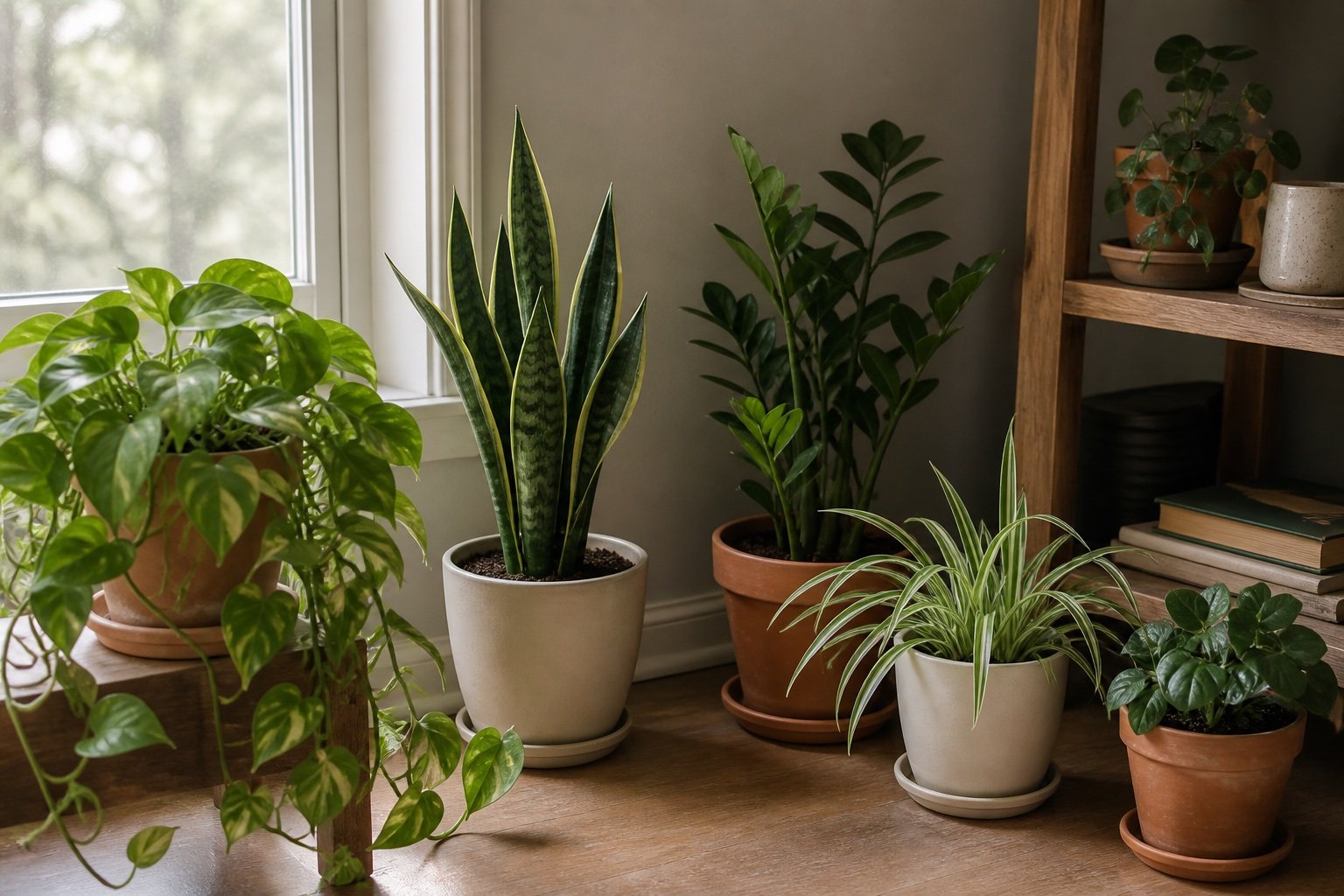
1. Pothos (Epipremnum aureum)
The unkillable champion. Pothos will grow in nearly any light — including the dim hallway nobody else’s plants survive in — and tells you it’s thirsty by drooping dramatically, then perks right back up after watering as if nothing happened.
Light: Anything from bright indirect to surprisingly dim.
Water: Every 7–14 days, or when leaves droop.
Why it’s easy: Forgiveness, fast growth, easy to propagate by snipping a stem and putting it in water.
Watch out for: Mildly toxic to cats and dogs if eaten in quantity.
2. Snake Plant (Dracaena trifasciata, formerly Sansevieria)
Architectural, basically immortal, and looks great in a modern apartment. Snake plants store water in their leaves and would rather you ignored them than overwatered them. They’re also one of the rare plants that genuinely improves air quality in apartments.
Light: Anything. We’ve grown one in a windowless bathroom under fluorescent light.
Water: Every 2–4 weeks. If in doubt, wait longer.
Why it’s easy: Almost impossible to overwater if you let it dry between waterings. Slow-growing, so no repotting drama.
Watch out for: Mildly toxic to pets if chewed.
3. ZZ Plant (Zamioculcas zamiifolia)
If snake plant is unkillable, ZZ plant is unkillable while also being beautiful. Glossy waxy leaves, an architectural silhouette, and a tuberous root system that stores water for weeks. It’s the plant office buildings buy because nobody waters them properly.
Light: Low to medium indirect. Direct sun will burn it.
Water: Every 3–4 weeks.
Why it’s easy: Tubers mean missed waterings barely register. Pest-resistant.
Watch out for: Toxic to pets — skip if you have a chewer.
4. Spider Plant (Chlorophytum comosum)
The retro houseplant that refuses to die. Spider plants produce little baby plants (“spiderettes”) on long stems, which means a single plant becomes a whole family over a year or two. Hanging or shelf-mounted, they thrive on benign neglect.
If a cat or dog has access to the shelf, use the full guide to pet-safe indoor plants before choosing from the rest of this list.
Light: Bright indirect ideally; tolerates lower light.
Water: Weekly, but very forgiving if you forget.
Why it’s easy: Visibly tells you when it’s stressed (browning leaf tips). Easy to propagate the babies.
Watch out for: Non-toxic and pet-safe — one of the few on this list. Cats may chew them for fun, which is harmless but messy.
5. Heartleaf Philodendron (Philodendron hederaceum)
Pothos’s smaller, slightly more elegant cousin. Heart-shaped leaves on trailing vines, grows quickly, and tolerates dim light better than almost anything else. The difference between this and pothos is mostly visual — but heartleaf has a softer, vinier look that suits some apartments better.
Light: Low to medium indirect.
Water: Every 7–10 days.
Why it’s easy: Identical care to pothos.
Watch out for: Mildly toxic to pets.
6. Chinese Evergreen (Aglaonema)
If you want something with more visual interest than the trailing vines and architectural blades above, Chinese evergreen is the answer. The leaves come in dozens of patterns — silver, red, pink, deep green — and it tolerates low light better than any “interesting-looking” plant has a right to.
Light: Low to medium indirect (variegated varieties prefer slightly brighter).
Water: Weekly to every 10 days.
Why it’s easy: Slow-growing, pest-resistant, doesn’t sulk over missed waterings.
Watch out for: Toxic to pets.
7. Cast Iron Plant (Aspidistra elatior)
Named for its sheer stubborn durability. The Victorians grew these in coal-heated, gas-lit drawing rooms and they survived. It will survive your apartment. Slow growth is the only “downside” — you’re not buying this for dramatic transformation.
Light: Low to medium. Genuinely dim is fine.
Water: Every 2–3 weeks.
Why it’s easy: Tolerates neglect, low humidity, cool temperatures, and bad soil.
Watch out for: Non-toxic to pets.
8. Peperomia (multiple species)
A whole genus of small, easy plants that come in dozens of shapes — watermelon-patterned leaves, ripple-textured leaves, succulent-like rounded leaves. Most peperomias are slow-growing, compact, and never get big enough to be a problem.
Light: Medium to bright indirect.
Water: Every 10–14 days. Let it dry out between.
Why it’s easy: Small root system, slow growth, hard to overwater.
Watch out for: Non-toxic to pets.
9. Air Plants (Tillandsia)
Bending the rules, because air plants don’t need soil at all. They live mounted to driftwood, in glass globes, or just sitting on shelves. Once a week you soak them in a bowl of water for 20 minutes, then put them back. That’s it.
Light: Bright indirect.
Water: Soak weekly for 20 minutes; mist between if your apartment is dry.
Why it’s easy: No pots, no soil, no repotting. The most apartment-friendly plant in existence.
Watch out for: Brown crispy tips mean too dry; soggy mushy bases mean too wet.
What you’ll need to get started
You don’t need a starter kit. You need:
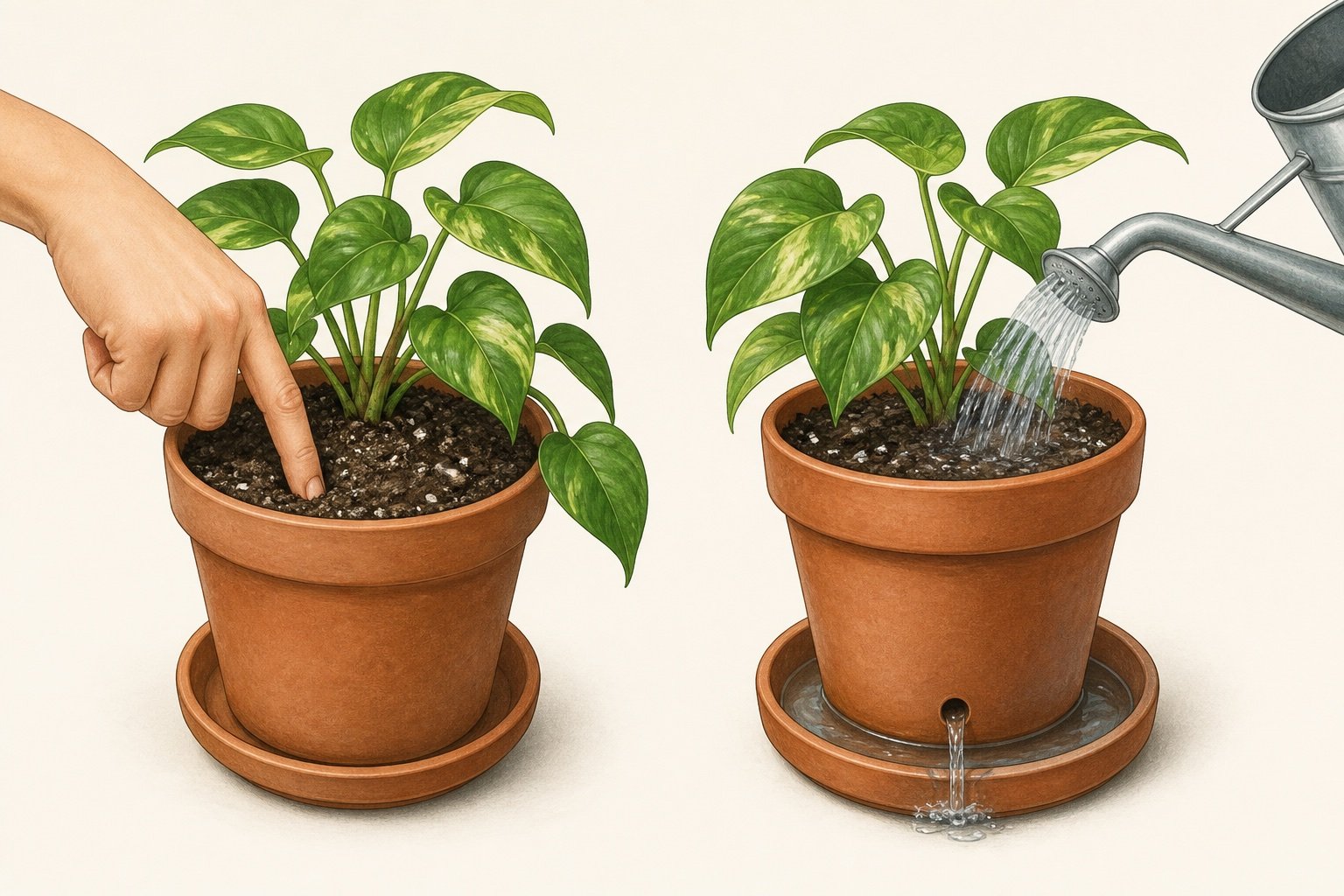
- A pot with drainage. A pot without a drainage hole is the #1 way beginners kill plants. Any cheap terracotta pot works. set of basic terracotta pots with drainage (paid link)
- A bag of standard potting mix. Don’t overthink this. Miracle-Gro Indoor Potting Mix is fine. Miracle-Gro Indoor Potting Mix (paid link)
- A small watering can or a repurposed water bottle. That’s it.
Optional but useful: a soil moisture meter (about $10) to tell you when to water, which solves the #2 way beginners kill plants — overwatering. Soil moisture meter (paid link)
You don’t need fertilizer for the first six months. After that, a few drops of standard liquid plant food every two weeks is plenty.
Frequently asked questions
Which one should I start with?
If you have any natural light at all: pothos. If your apartment is genuinely dim: ZZ plant or snake plant. If you have pets: spider plant, cast iron plant, or peperomia (the only fully pet-safe options on the list).
How do I know when to water?
Stick your finger one inch into the soil. If it feels dry, water. If it feels damp, don’t. This works better than any schedule. Most easy plants prefer being on the dry side of damp.
My plant has yellow leaves. What’s wrong?
Usually overwatering. The single most common cause of houseplant death is killing it with kindness. Cut back on water and let the soil dry out properly between waterings.
Do I need a grow light?
For these specific 9 plants in a normal apartment with at least one window — no. If your space is genuinely windowless (interior bathroom, closet office), a small clip-on LED grow light helps. We have a [forthcoming guide on grow lights for apartment windows].
How often do I need to repot?
Every 2–3 years is plenty for most of these. Snake plants and ZZ plants can go 4–5 years without complaint.
The bottom line
Start with one plant. Resist the urge to buy three. Put it somewhere you’ll see it daily so you’ll remember it exists. Check the soil with your finger weekly. Water only when it’s dry.
In six months, when that plant is thriving, you’ll be ready to add a second. That’s how nearly every successful houseplant collection starts — slowly, with one plant that didn’t die.