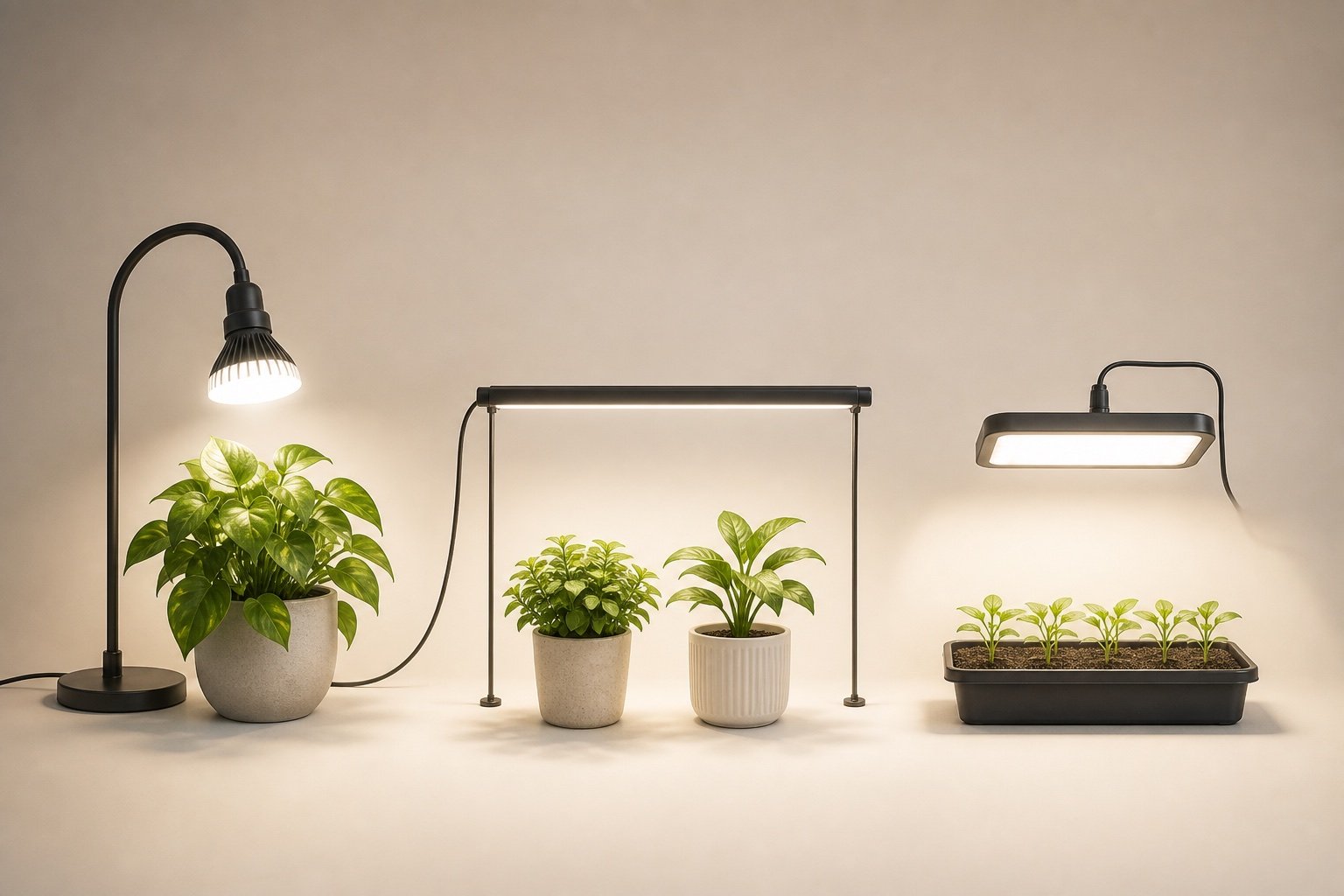
Grow Light Selector: 5 Smart Checks Before You Buy
This grow light selector starts with the plant’s daily light target, canopy size, and available hours, then tells you what a fixture must deliver where the leaves sit. A 20-watt lamp might be useful over one pot and hopeless over a four-foot shelf. Wattage alone cannot settle that.
Grow light selector for your setup
The result is a planning estimate. Confirm it with a PPFD map at the intended height or measure the finished setup.
How the selector sizes a grow light
The tool first converts the chosen daily light target into an average supplemental PPFD:
Required PPFD = (target DLI − measured daylight DLI) ÷ (hours × 0.0036)
It then multiplies PPFD by canopy area to estimate the photon flow that must reach the plants. The fixture PPF estimate allows for light that lands outside the canopy. Iowa State University Extension gives 70 to 80 percent as a typical estimated coefficient and uses 80 percent in its planning example. Real rooms are messier, so the selector lets you choose 70, 75, or 80 percent.
Estimated fixture PPF = required PPFD × canopy area ÷ coefficient
This is useful for narrowing a shopping list, not for approving a product unseen. Optics, mounting height, reflections, dimming, and plant height change the final PPFD. Check the manufacturer’s map, then measure the center and edges after installation. The PPFD to DLI calculator can check your finished schedule.
Which fixture shape fits the space?
| Growing area | Good starting form | What to inspect |
|---|---|---|
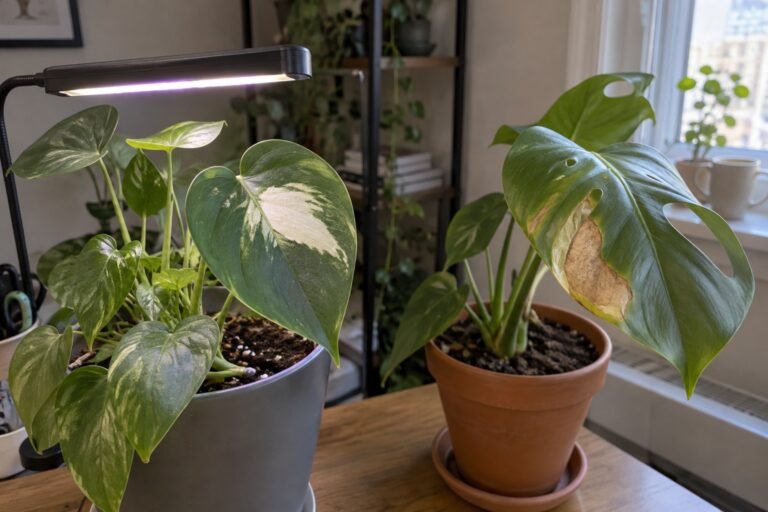
| One small pot | Adjustable plant lamp or compact panel | The PPFD footprint should cover the entire crown, not one bright patch. |
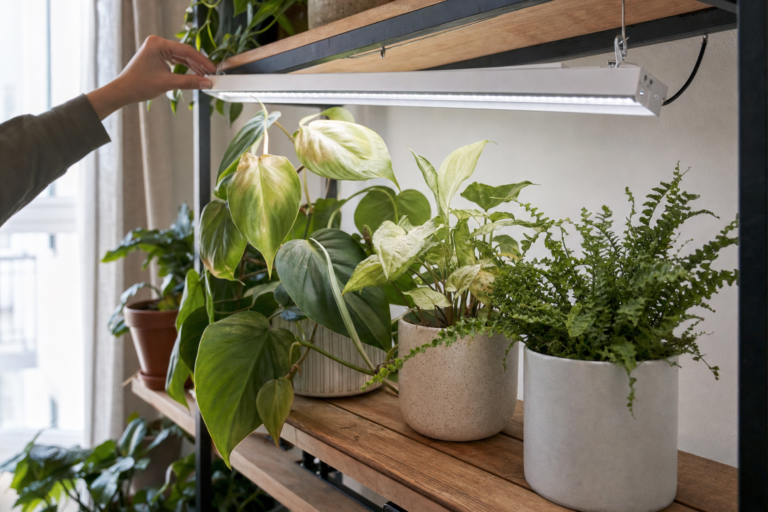
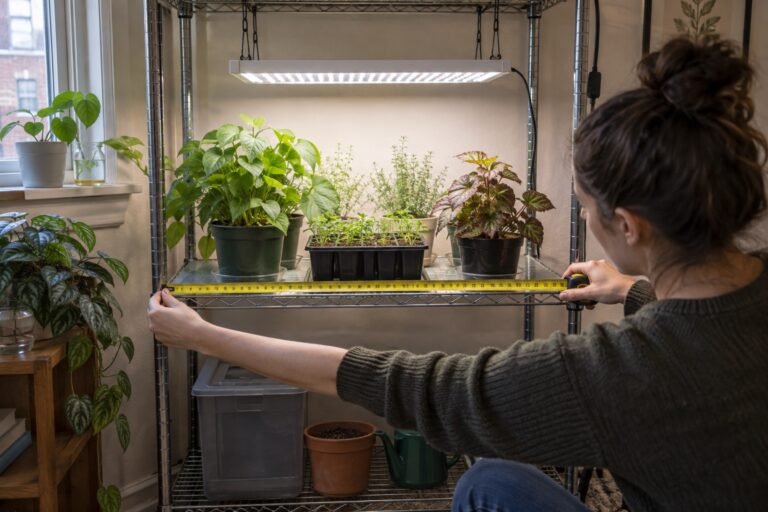
| Narrow shelf or seed tray | Linear LED bars that span most of the shelf | Look for edge-to-edge readings at the exact shelf clearance. |
| Square plant group | Panel or an even grid of bars | Compare the whole map, including corners, at the intended height. |
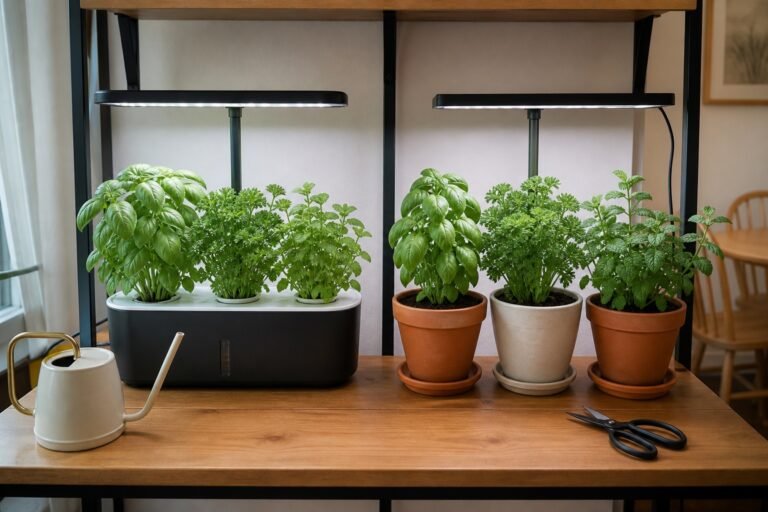
| Tall or uneven collection | More than one adjustable fixture or plants grouped by height | A single hanging height rarely serves a low pot and a tall plant equally. |
What to check before buying
- A PPFD distribution map names the mounting height, dimmer setting, and tested footprint.
- The map reaches your target across the useful canopy, not just at its center.
- A dimmer gives you room to acclimate plants and respond to seasonal window light.
- The fixture physically fits, leaves ventilation space, and can move as plants grow.
- A timer or timer-compatible power supply keeps the schedule consistent.
White or balanced light is comfortable in a living room and suits most plant stages, according to University of Minnesota Extension. Spectrum matters, but a pretty spectrum chart cannot rescue poor intensity or patchy coverage. Read our apartment grow light guide for the buying side and our guide to setting grow light distance once the fixture arrives.
Frequently asked questions
Why does the selector ask for canopy size?
PPFD describes light over an area. A fixture that reaches the right intensity over one pot may spread too thin over a shelf. Width and depth keep the recommendation tied to the plants you need to cover.
What if the product page does not list PPF?
Use a PPFD map that matches your planned height and coverage. If the seller publishes neither PPF nor a useful PPFD map, you cannot make a confident comparison before buying. A return policy and your own meter become much more important.
Is fixture PPF the same as PPF efficacy?
No. PPF is the fixture’s photon output in µmol/s. Efficacy is output per unit of electrical energy, usually µmol/J. One tells you the amount of light produced; the other tells you how efficiently the fixture produces it.
Can I subtract window light from the target?
Yes when you have measured its daily contribution. Do not turn one bright window reading into a daily total by multiplying it by daylight hours. Window light rises, falls, and disappears behind clouds or buildings.
Sources
- Iowa State University Extension: PPFD, area, PPF, and coefficient calculations
- Iowa State University Extension: DLI formula and indoor plant target ranges
- University of Missouri Extension: grow light selection, maps, intensity, and coverage
- Virginia Cooperative Extension: crop DLI references and light management
- University of Minnesota Extension: fixture types, light color, and schedules