Why Your Pothos Keeps Dying (And the Fix That Actually Works)
Last updated: 24.05.2026.
Affiliate disclosure: As an Amazon Associate I earn from qualifying purchases. Links marked “paid link” may earn Fern & Shelf a commission at no extra cost to you. Read our full Affiliate Disclosure.
Start here: For a complete overview, see our Indoor Gardening for Absolute Beginners.
The pothos is supposed to be unkillable. Most “easy houseplants” lists put it at #1 for a reason — it tolerates low light, irregular watering, and casual neglect better than almost any other indoor plant.
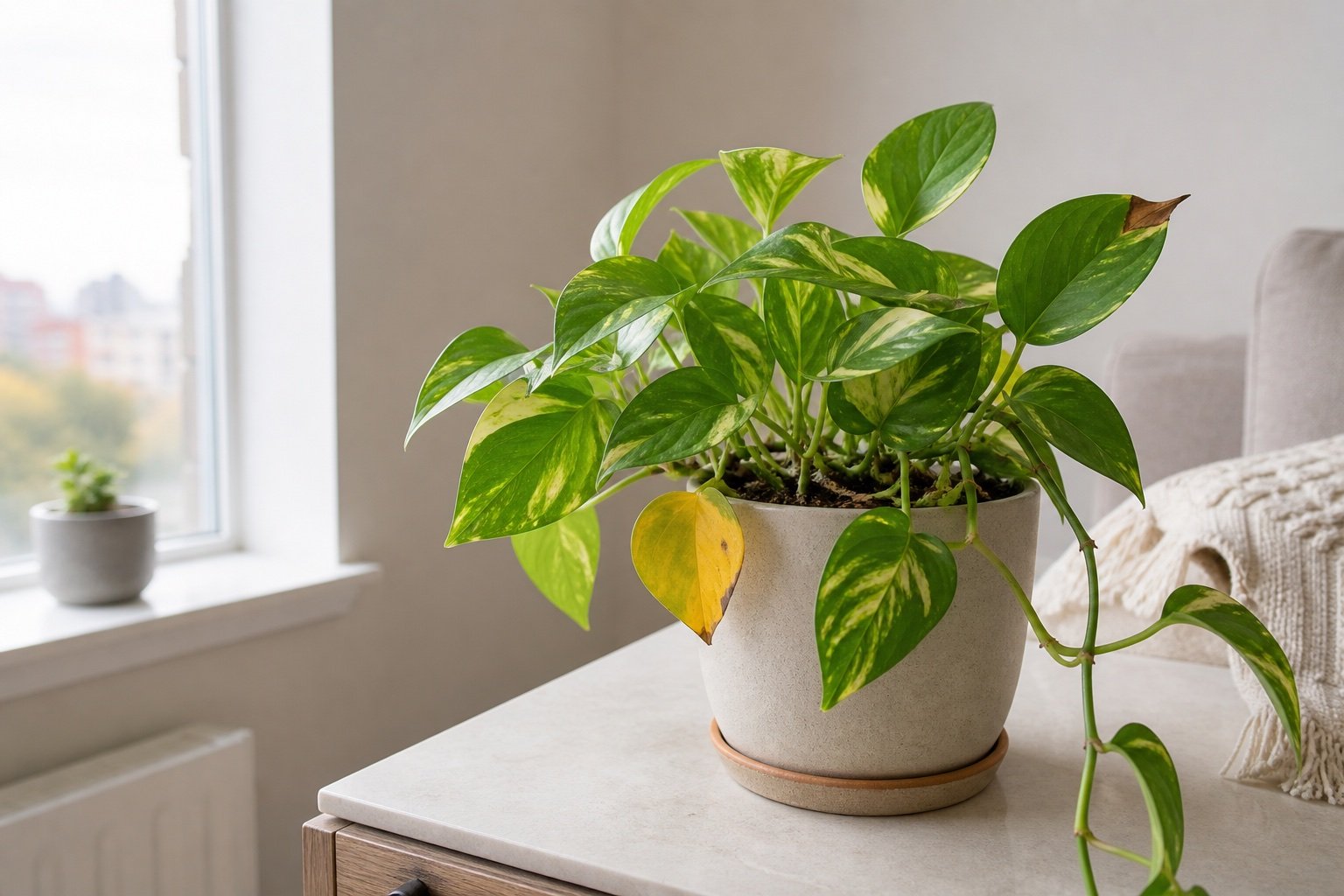
And yet, here you are. With a pothos that has yellow leaves, or brown crispy tips, or droopy vines, or is just slowly losing leaves week by week.
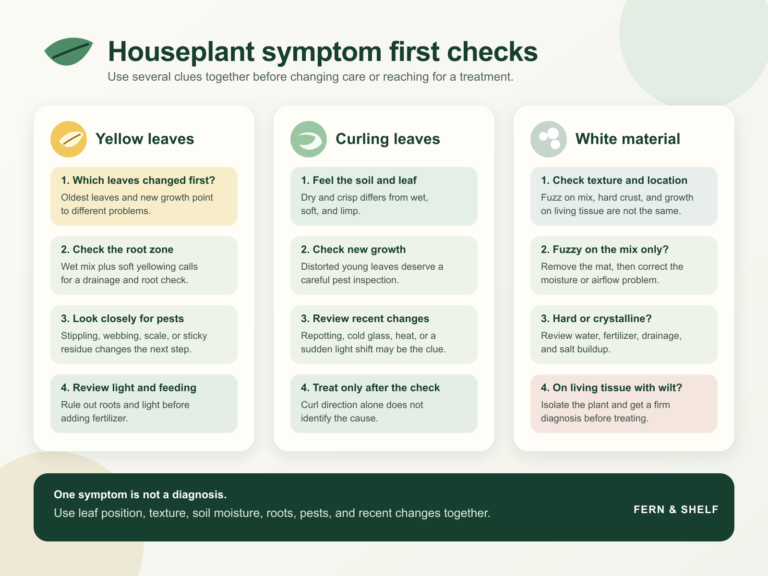
Here’s the truth: pothos rarely die from being hard to grow. They die from one of about six specific problems, each of which has a specific fix. Let’s diagnose what’s happening to yours and what to actually do about it.
First, the most likely answer
About 70% of dying pothos are dying from overwatering. If your pothos has any combination of yellow leaves, mushy stems, a sour smell from the soil, or leaves dropping off without warning — stop reading and check the soil.
Stick your finger one inch into the soil. If it feels damp, wet, or cool — your pothos is overwatered. Do not water it again until that top inch is completely dry.
If that didn’t describe your problem, keep reading.
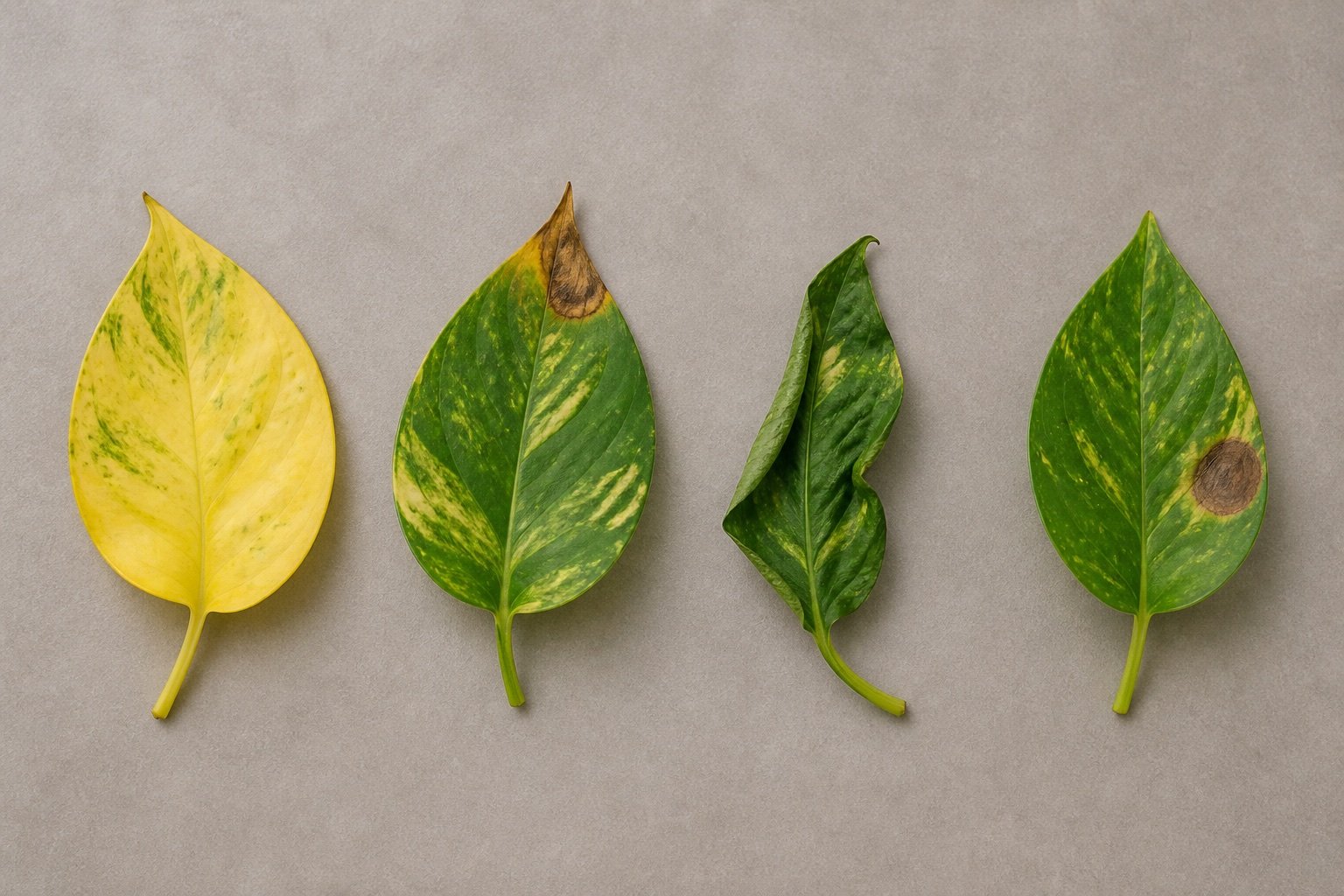
Problem 1: Yellow leaves
What it looks like: One or more leaves turning fully yellow, often starting from the oldest leaves at the base of the plant.
Most likely cause: Overwatering. By a wide margin.
Less common causes: Severe underwatering (the plant has been dry for weeks, not days), nutrient deficiency in long-uncared-for plants, normal aging of the oldest leaves (one yellow leaf every few months is fine).
The fix: Let the soil dry out completely. Don’t water until the top 2 inches of soil are dry to the touch. Going forward, water only when that test passes, not on a schedule. Most pothos in apartments need water every 10–14 days, not every week.
If the pot has no drainage hole — that’s the root cause. Repot into a pot with drainage immediately. A pot without drainage is the single most common reason pothos die. [AMAZON LINK — terracotta pots with drainage holes (paid link)]
Problem 2: Brown crispy leaf tips
What it looks like: Leaf tips and edges turning brown and crispy, while the rest of the leaf stays green.
Most likely cause: Low humidity, especially in winter when heating dries out the air. Or chlorine/fluoride in tap water.
The fix: Two options:
- Switch to filtered or rainwater. Tap water sensitivity is real for pothos. Filling a watering can and letting it sit out for 24 hours before watering also helps (lets chlorine evaporate).
- Boost humidity. Move the pothos to the bathroom (showers raise humidity), group it near other plants, or use a small humidifier. [AMAZON LINK — small bedroom humidifier (paid link)]
Don’t trim the brown tips — they’re cosmetic, and trimming damages the leaf further. Just address the cause.
Problem 3: Drooping vines, soft leaves
What it looks like: Whole plant looks deflated, vines hang limp, leaves feel soft and floppy.
Most likely cause: Underwatering. (Yes, underwatering — overwatering would make leaves yellow and mushy, not soft and droopy.)
The fix: Water thoroughly. Pour water until it drains from the bottom of the pot, then let it stop draining and discard whatever’s in the saucer. Within 4–8 hours, your pothos should perk back up dramatically. If it doesn’t perk back up within 24 hours, the roots may be damaged — check Problem 5 below.
Going forward, water before the leaves droop. The leaves drooping is the plant telling you “you’re cutting it close.”
Problem 4: Leggy growth, sparse leaves
What it looks like: Long stretches of bare stem between leaves. Leaves smaller than they used to be. Plant looking “stringy.”
Most likely cause: Not enough light. Pothos can survive in low light, but it doesn’t thrive there. In genuinely dim apartments, they produce minimal new leaves and stretch toward whatever light exists.
The fix: Move it to a brighter spot. East or north-facing windows are perfect; a few feet back from a south-facing window is also good. If you genuinely don’t have a brighter spot, add a small grow light — a single full-spectrum bulb in any nearby lamp is enough. [AMAZON LINK — Sansi grow light bulb (paid link)]
For the existing leggy growth: you can prune the bare stems back to a node (the bump where a leaf used to attach). Within a few weeks, new growth will emerge from that node, denser and more compact than before.
Problem 5: Black or brown spots, smelly soil
What it looks like: Black or dark brown spots on leaves or stems. A sour, swampy smell from the soil. Leaves dropping in clumps.
Most likely cause: Root rot. This is the late-stage version of chronic overwatering.
The fix: This requires intervention.
- Take the plant out of its pot. Brush off as much soil as possible.
- Look at the roots. Healthy roots are white or light tan and firm. Rotten roots are black or dark brown, mushy, and may smell.
- With clean scissors, cut off every rotten root until you’re left with only healthy ones. Don’t be timid — a pothos can survive losing 50% of its roots.
- Repot in fresh, dry potting mix. Pot with drainage hole. Smaller pot is fine.
- Wait a full week before watering. The plant is in shock; let it stabilize.
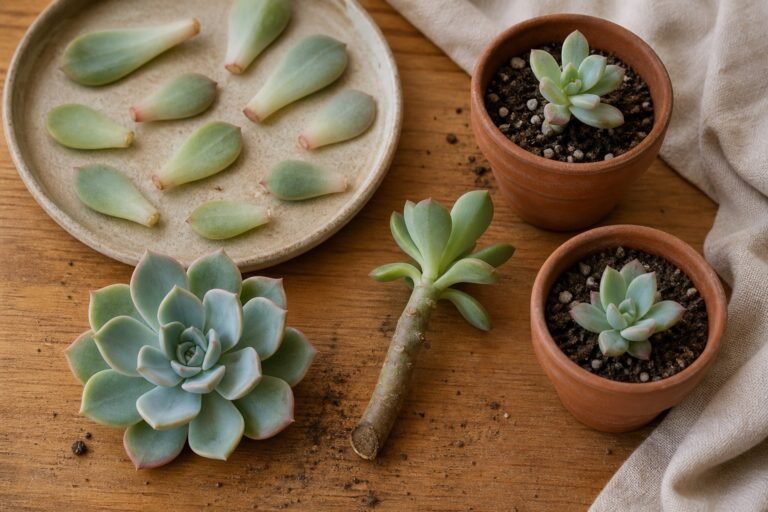
If the rot has reached the main stem, the plant may not survive — but you can save genetic material by taking cuttings (healthy stems, 4–6 inches long) and propagating them in water. Within a few weeks you’ll have new pothos plants from the same parent.
Problem 6: White powder on leaves, sticky residue, tiny insects
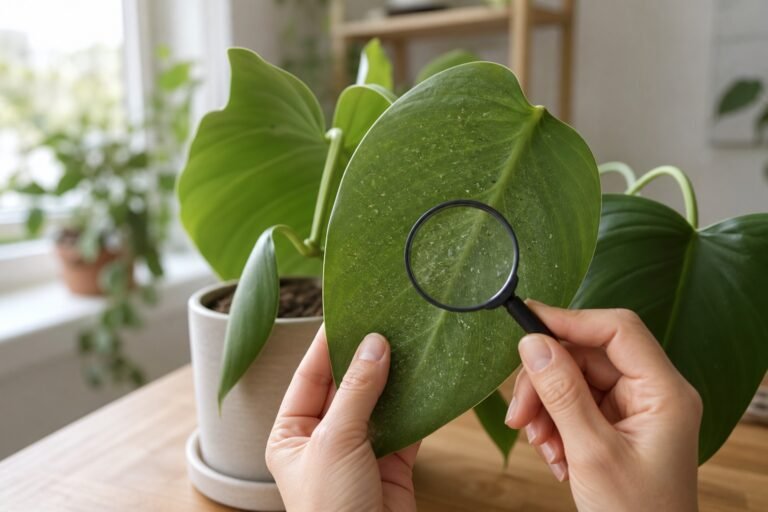
What it looks like: White powdery coating on leaves (powdery mildew), or sticky residue on leaves and surfaces near the plant (insect honeydew), or tiny moving dots on the underside of leaves.
Most likely cause: Pests. Common pothos pests: mealybugs (look like tiny cotton balls), spider mites (tiny dots with fine webbing), scale (small brown bumps that don’t move).
The fix: First, isolate the plant from other plants. Then:
- Wipe down every leaf (top and bottom) with a cloth dipped in soapy water (a few drops of dish soap per liter).
- Spray weekly with neem oil for 3 weeks. [AMAZON LINK — neem oil concentrate (paid link)]
- Check other plants in the same area — pests spread fast.
For powdery mildew specifically (the white coating): improve airflow around the plant, reduce humidity, and treat with a 1:10 milk-and-water spray weekly until gone.
Prevention: the watering rule that solves 90% of problems
Stop watering on a schedule. Water when the top 2 inches of soil are dry. Use the finger test, or use a $10 soil moisture meter to remove the guesswork. [AMAZON LINK — soil moisture meter (paid link)]
For a pothos in a typical apartment, this usually means watering every 10–14 days in summer, every 14–21 days in winter. Adjust based on the soil, not the calendar.
Frequently asked questions
Can I save a pothos that’s lost all its leaves?
Sometimes. If the stems are still firm and green, yes — give it good light, water properly, and wait. New growth often emerges from old nodes within a month. If the stems are brown and mushy, it’s gone — but cuttings from any remaining healthy stem can be rooted in water and started again.
How often should I fertilize?
Every 4–6 weeks during spring and summer with a diluted liquid fertilizer is plenty. Don’t fertilize in winter, and don’t fertilize a stressed plant — feed it only once it’s growing healthily again.
Should I repot my pothos?
Only if (a) you can see roots growing out of the drainage hole, (b) water runs straight through with no absorption, or (c) the plant looks visibly cramped. Pothos actually prefer slightly tight pots; over-repotting can stress them.
Why are some leaves yellow but the plant looks otherwise healthy?
One yellow leaf every few months on an older plant is normal — leaves age out. Multiple yellow leaves at once means something is off, almost always watering.
The bottom line
The pothos didn’t betray you. The two most common causes of pothos death are overwatering (70%) and “wrong pot, no drainage” (15%). Fix those two, water by feel rather than schedule, give it any reasonable amount of light, and your pothos will outlive most of your other belongings.
If you’ve already lost yours, start again. Pothos cuttings root in plain water in 2–3 weeks. Buy a small one for $8, give it the right pot, and apply the lessons above. This time it’ll work.