How to Stop Killing Your Snake Plant (Every Problem, Fixed)
Last updated: 25.05.2026.
Affiliate disclosure: As an Amazon Associate I earn from qualifying purchases. Links marked “paid link” may earn Fern & Shelf a commission at no extra cost to you. Read our full Affiliate Disclosure.
Start here: For a complete overview, see our Indoor Gardening for Absolute Beginners.
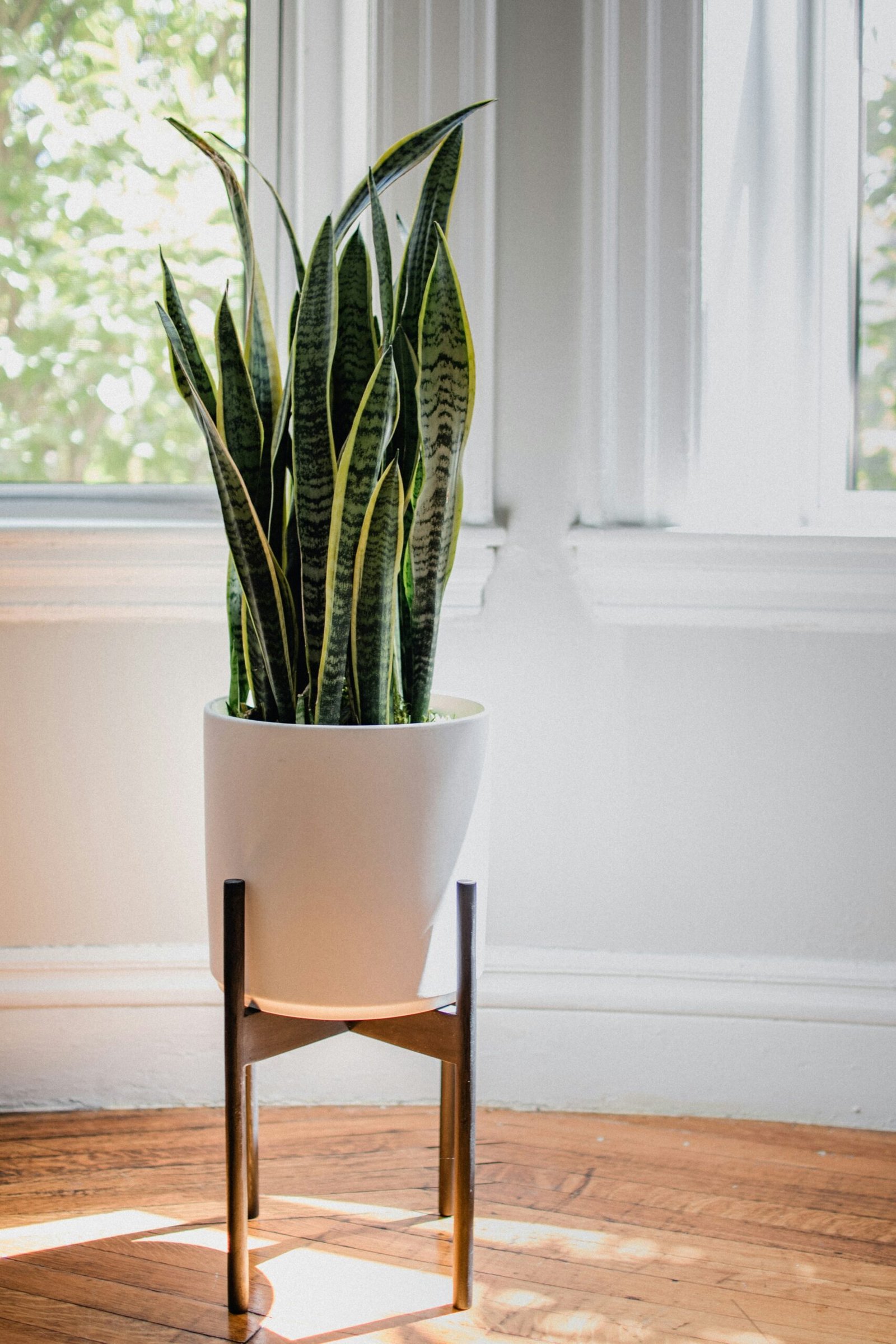
Snake plants (officially Dracaena trifasciata, formerly Sansevieria) are famously indestructible — featured on every “easiest houseplants” list, recommended as the perfect beginner plant, marketed as nearly impossible to kill.
And yet, here you are. With a snake plant that’s drooping, yellowing, mushy at the base, or just slowly fading.
Here’s the truth: snake plants are extremely hardy, but they’re hardy in a specific way — they survive neglect, low light, and dry conditions almost forever, but they die quickly from one thing: too much water. About 85% of failing snake plants have the same underlying cause. Let’s diagnose what’s actually happening to yours.
The single most common cause: overwatering
Before we get into specific symptoms — if your snake plant has any combination of yellow leaves, mushy stems, leaves falling over at the base, or a sour smell from the soil — stop reading and check the soil moisture.
Stick your finger two inches into the soil. If it feels damp, wet, or cool — your snake plant is overwatered. Pull back on watering immediately and do not water again until the soil is fully dry at least 3 inches down.
For everyone else, work through the specific symptoms below.
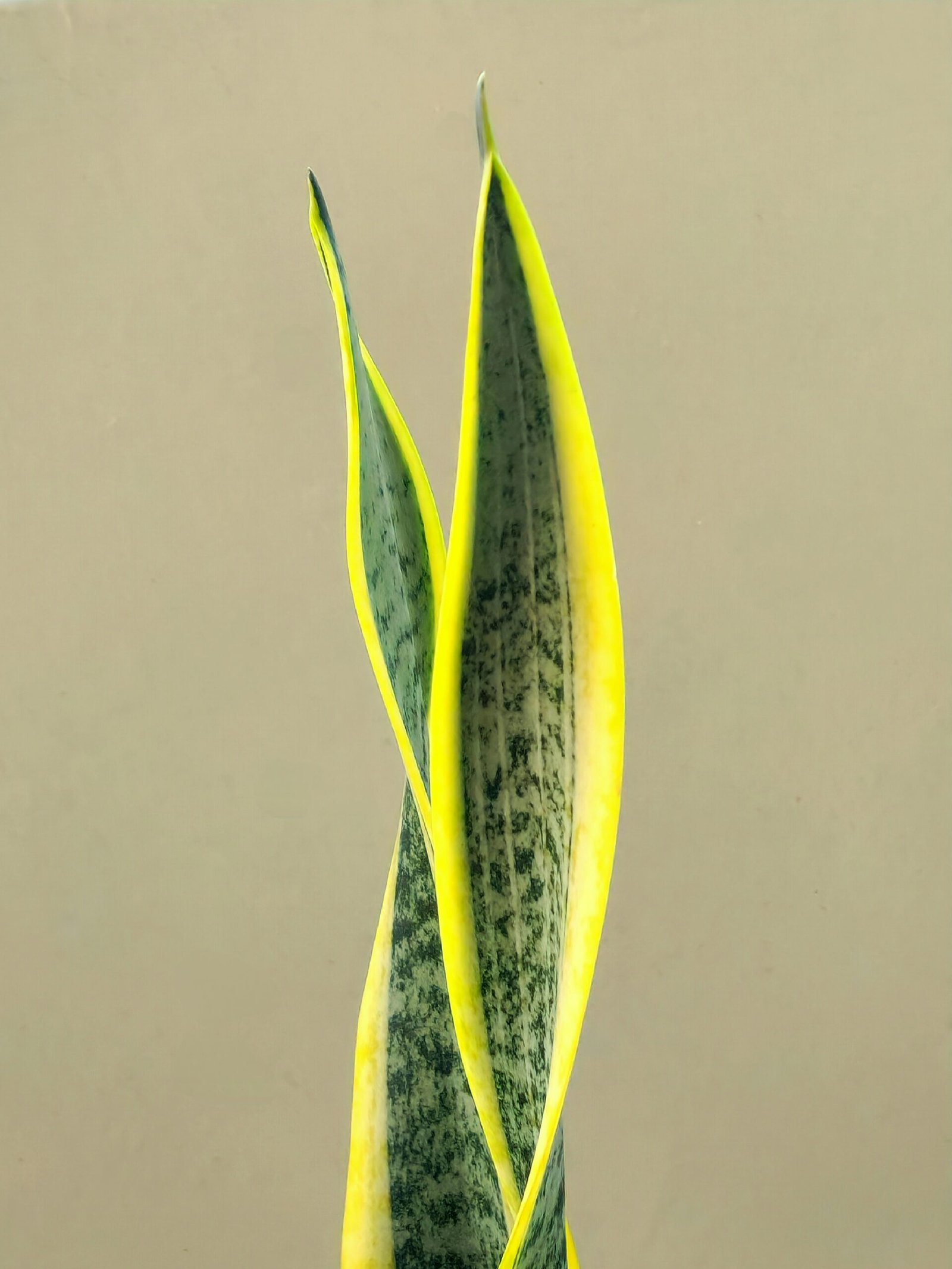
Problem 1: Yellow leaves
What it looks like: One or more leaves turning yellow, often from the tip downward or from the base upward.
Most likely cause: Overwatering. Almost always.
Less common causes: Severely rootbound plant (roots have nowhere to go), or rare nutrient deficiency in plants that haven’t been repotted in 5+ years.
The fix:
- Stop watering. Don’t water again until soil is completely dry 3+ inches down.
- Check the pot — if it has no drainage hole, repot into one that does, immediately.
- Going forward, water every 3–4 weeks at most, and only when soil is fully dry.
If the yellowing has spread to most leaves and there’s also mushiness at the base, skip to Problem 4 (root rot).
Problem 2: Brown crispy leaf tips
What it looks like: Tips of leaves turning brown and crispy while the rest of the leaf stays green and healthy.
Most likely cause: Fluoride or chlorine in tap water; occasionally cold drafts.
Less common causes: Severely dry air over months.
The fix:
- Switch to filtered water, rainwater, or tap water left out for 24 hours (lets chlorine evaporate).
- Don’t trim the brown tips — trimming damages the leaf further. Leave cosmetic damage and prevent new damage.
- Move the plant away from any cold draft sources (window ledges in winter, AC vents).
This is purely cosmetic and doesn’t threaten the plant’s life.
Problem 3: Drooping or falling-over leaves
What it looks like: Leaves leaning outward, flopping over at the base, no longer upright.
Most likely cause: Overwatering — the base of the leaf has softened from rot.
Less common causes: Plant is severely rootbound and unstable; the plant has grown extremely tall and is naturally falling outward (especially in low-light situations where it stretches).
The fix:
- Check the base of the leaves. If they’re soft, brown, or mushy where they meet the soil — it’s rot. Proceed to Problem 4.
- If the base is firm and the leaves are simply leaning — give it more light (this prevents the stretching that causes weakening). A spot near a brighter window or a small grow light fixes this over months. Find a Sansi grow light bulb → (paid link)
- If extremely rootbound, repot into a slightly larger pot.
Problem 4: Mushy base, foul smell, leaves falling
What it looks like: Brown or black mushy area at the base where leaves meet soil. A sour, swampy smell. Leaves dropping or pulling out of the soil with a gentle tug.
Most likely cause: Root rot. This is the late stage of chronic overwatering.
The fix: Aggressive but doable.
- Take the plant completely out of its pot. Brush off all soil.
- Look at the rhizome (the thick underground stem that the leaves grow from). Healthy parts are firm and white or pale yellow. Rotten parts are mushy, brown, and smelly.
- With a clean sharp knife, cut away all rotten material. Cut until you reach completely healthy white tissue.
- Let the cut surfaces air-dry for 2–3 days before replanting. This forms a callus that prevents further rot.
- Replant in fresh dry potting mix in a pot with drainage. Use cactus or succulent mix rather than standard potting soil — it drains far better. Find cactus and succulent mix → (paid link)
- Do not water for two weeks. The plant is in shock; let it recover.
If the rhizome is completely rotted but you have one or two healthy leaves, you can propagate them. Cut a healthy leaf into 3-inch sections, let cuts callus for a few days, then stand the sections (right-side-up) in dry soil. New plants emerge in 6–10 weeks.
Problem 5: Wrinkled, curling leaves
What it looks like: Leaves becoming thinner, slightly wrinkled or curling inward.
Most likely cause: Underwatering. (Yes — this is the one symptom that means not enough water.)
Less common causes: Severe sunburn (from sudden direct sun exposure).
The fix:
- Water thoroughly. Pour water until it drains from the pot’s bottom, then discard whatever’s in the saucer.
- Wait 24 hours. Leaves should plump back up.
- Going forward, water just slightly more often — every 3 weeks instead of every 4 weeks.
Most snake plants are killed by overwatering, but it is possible to underwater one if you ignore it for many months. Wrinkled leaves are the warning sign.
Problem 6: Pale yellow or whitish patches on leaves
What it looks like: Sections of leaf turning pale yellow, whitish, or bleached-looking.
Most likely cause: Sunburn from direct sun exposure.
Less common causes: Spider mite infestation (look for fine webbing).
The fix:
- Move the plant out of direct sunlight. Snake plants tolerate low light extremely well and can be damaged by direct sun, particularly afternoon western light.
- Bright indirect light is ideal. Tolerated: from very dim to morning sun. Avoided: harsh afternoon sun.
- If spider mites are the issue (check the undersides of leaves for tiny moving dots), wipe leaves with diluted neem oil weekly for 3 weeks.
Problem 7: Plant isn’t growing
What it looks like: Plant looks the same it did a year ago. No new leaves emerging.
Most likely cause: Low light. Snake plants tolerate low light — they don’t thrive in it.
Less common causes: Plant is severely rootbound; the dormant winter season (snake plants barely grow in winter).
The fix:
- Wait until spring or summer — snake plants only push new growth in warm months.
- Move the plant to a brighter spot if you can. Even brighter indirect light dramatically increases growth rate.
- Fertilize lightly once during the growing season with a balanced houseplant fertilizer.
Slow growth in low light isn’t a problem to fix — it’s a snake plant being a snake plant. They survive everywhere, thrive in fewer places.
How to water a snake plant correctly (the only rule that matters)
The single most important thing to internalize: snake plants want to dry out completely between waterings. Not slightly dry. Completely dry, top to bottom.
In practice:
- Summer: Water every 2–3 weeks.
- Winter: Water every 4–6 weeks.
- In a pot without drainage: Don’t. Repot into one with drainage immediately.
- In a very small pot: Slightly more often (soil dries faster).
- In a very large pot: Less often (soil dries slower).
- Always: Check the soil first. If it’s even slightly damp, wait.
A $10 soil moisture meter takes the guesswork out of this completely. Find a soil moisture meter → (paid link)
Frequently asked questions
Can I save a snake plant if all its leaves are gone?
If the rhizome is healthy, yes — new leaves will emerge over months. If the rhizome is rotted, no. But you can save a single healthy leaf via leaf cuttings.
Should I repot my snake plant?
Only every 3–5 years. Snake plants actually prefer being slightly rootbound. Over-repotting can shock them into root rot.
What pot material is best?
Terracotta is ideal — it wicks moisture away from soil between waterings, which is exactly what snake plants want. Plastic and glazed ceramic also work as long as they have drainage and you adjust your watering frequency accordingly.
Will snake plants survive air conditioning?
Yes, easily. They tolerate dry air, low humidity, and temperature variability extremely well.
Are snake plants safe for pets?
No — mildly toxic if chewed. Symptoms in pets include nausea and drooling, usually self-resolving but unpleasant. Keep out of reach of curious cats and dogs.
The bottom line
The snake plant didn’t betray you. The plant is genuinely as hardy as advertised — but its hardiness is toward neglect, not toward attention. If you water it as often as a normal houseplant, you’ll kill it. If you ignore it for weeks at a time, it’ll thrive.
The simple working rule: water every 3–4 weeks, less in winter, only when soil is fully dry, in a pot with drainage. Anything else is detail. Get the watering right and a snake plant will outlive your apartment.