Winter Houseplant Care: Keeping Plants Alive Through the Dark Months
Last updated: 08.06.2026.
The first winter I had real plants, I killed three of them by being too attentive. I kept watering on the same summer schedule, kept fussing, and watched them yellow and drop leaves while I did everything I thought was right. Nobody told me the rules change in winter. They very much do.
Start here: For a complete overview, see our Indoor Gardening for Absolute Beginners.
From roughly November through March in most of the US, UK, and Germany, your plants are dealing with less light, dry heated air, and colder windows. Most of them respond by slowing way down, almost dormant. Care for them like it’s July and you’ll overwater, overfeed, and lose them. Here’s what actually changes and what to do about it.
Water far less (the big one)
This is the mistake that kills the most plants over winter. Less light means slower growth, which means the soil dries out much more slowly and the roots drink far less. Keep watering on your summer rhythm and the soil stays soggy, the roots suffocate, and the plant rots from below.
The fix is simple: check before you water, every time. Stick a finger into the soil. If the top inch or two (2 to 5 cm) is still damp, wait. Many plants that wanted water twice a week in summer want it every two or three weeks in winter. When in doubt, wait another few days. The full method is in how often to water indoor plants, and winter is exactly when it matters most. Overwatering in the dark months is behind a lot of dead pothos and rotted snake plants.
Fight the dry air from heating
Central heating, radiators, and forced air dry indoor air to desert levels in winter. Tropical houseplants hate it. The signs are crispy brown leaf edges and tips.
A few fixes, cheapest first:
- Group plants together. They release moisture and create a slightly humid microclimate around each other.
- Move humidity-lovers to the bathroom or kitchen. These rooms stay damper. The bathroom-humidity plant list is basically a winter-survival list for ferns and calatheas.
- Use a pebble tray. A shallow tray of water and pebbles under the pot adds local humidity as it evaporates.
- Run a small humidifier. The most effective option. A compact cool-mist humidifier costs about $25–45 (£20–36, €23–42) and helps you as much as the plants. Keep radiators and the dry updraft of a German Altbau’s heating in mind when you place plants, since the spot right above a radiator is the worst in the house.
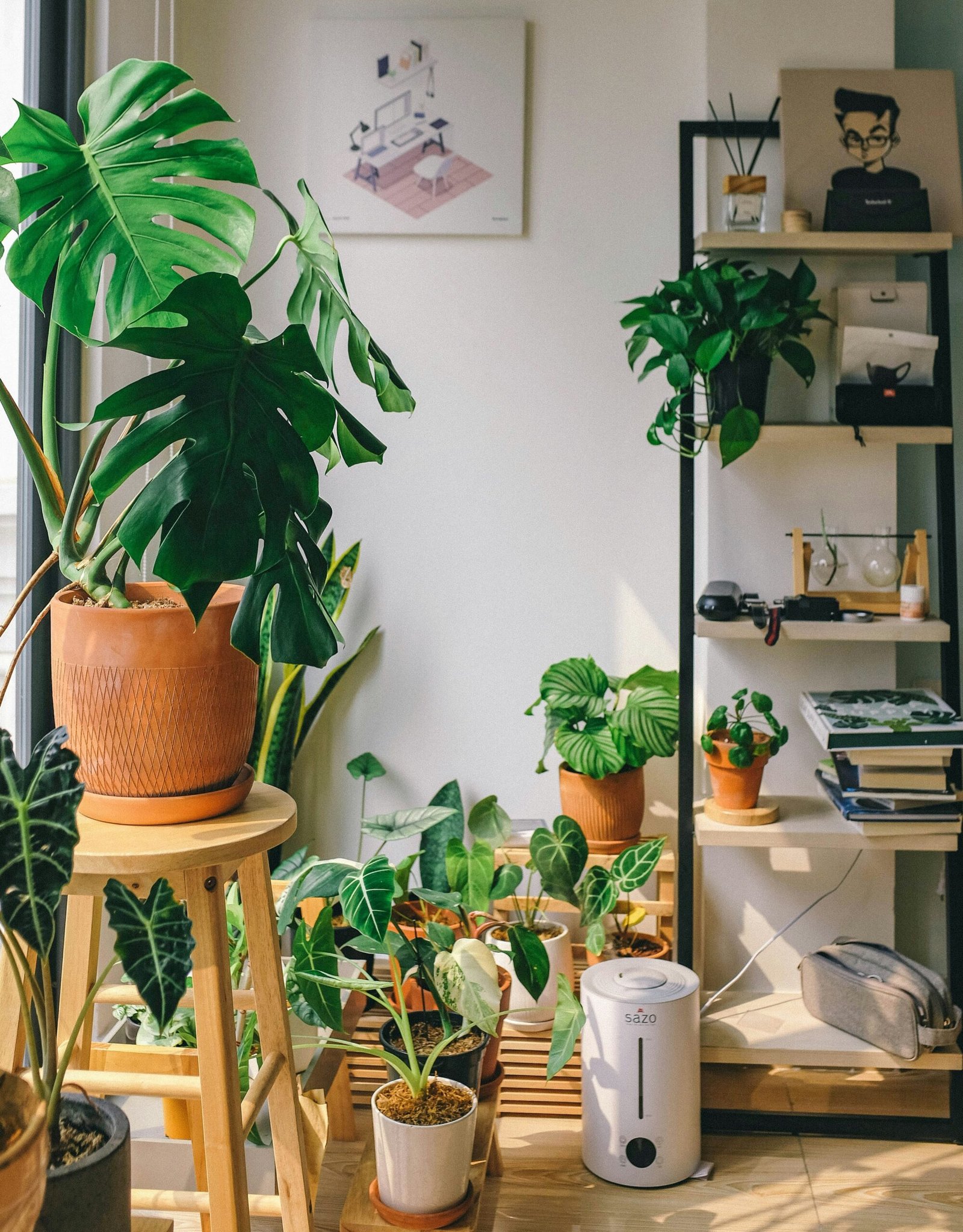
Maximize what little light there is
Winter days are short and weak, especially in northern latitudes. A windowsill that was perfect in July is dim by December.
- Move plants closer to windows. A spot that was too bright in summer is often just right in winter. South- and west-facing windows become prime real estate.
- Clean the windows and the leaves. Dust on both blocks precious light. Wipe broad leaves with a damp cloth.
- Rotate pots so plants don’t grow lopsided reaching for the weak light.
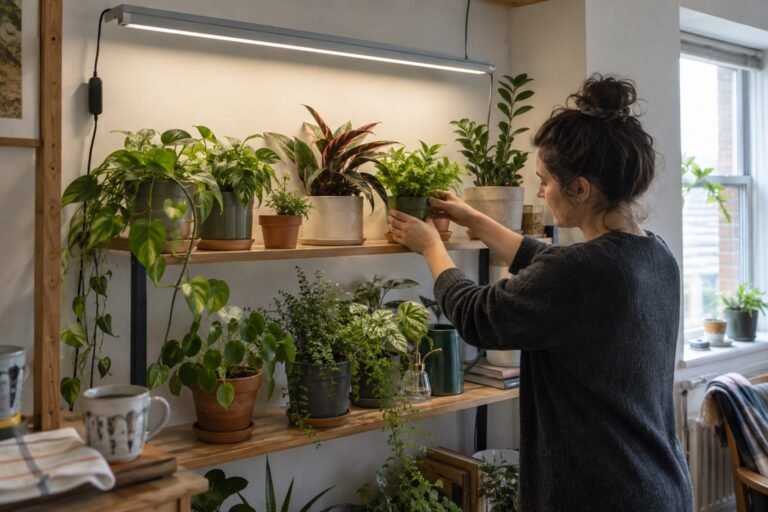
- Add a grow light if a room goes truly dark. Winter is when most apartments cross from “dim” into “needs a light,” so it’s worth reading do you need a grow light. A full-spectrum bulb in a normal lamp is enough for most, and how long to leave a grow light on covers the schedule. If you want a proper fixture, the best grow lights for apartment windows has the picks.
Stop fertilizing
Most houseplants barely grow in winter, so they don’t need feeding. Fertilizing a near-dormant plant just builds up salts in the soil that can burn the roots. Stop feeding from around late autumn and start again in spring (March or so) when you see new growth. This is one of the easiest wins: do nothing.
Watch out for cold windows and drafts
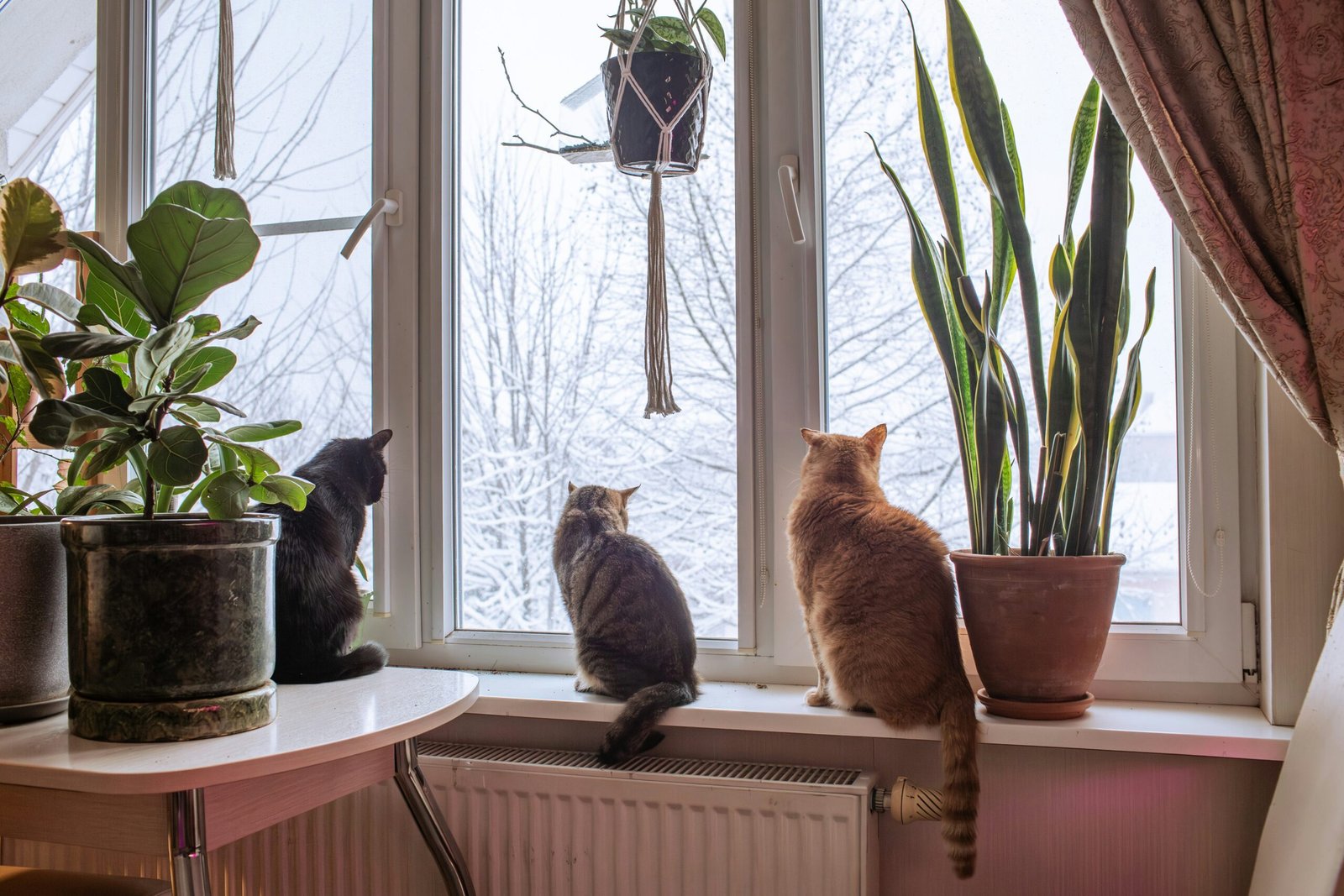
A leaf touching freezing window glass overnight can get cold-damaged, showing up as mushy black or brown patches. Pull tender plants back a few inches from the glass on the coldest nights. Keep plants away from drafts too, both the cold draft of a leaky window and the hot blast of a heating vent. Sudden temperature swings stress plants more than steady cool.
A consistent room temperature of about 60 to 75°F (15 to 24°C) suits most houseplants through winter. Avoid letting them sit anywhere that drops below 50°F (10°C).
Expect some drama, and don’t panic
Here’s the part that calms new plant owners: some leaf drop and slower growth over winter is completely normal. A plant shedding a few lower leaves or simply sitting still is not dying, it’s resting. Don’t respond by watering more or repotting, which only adds stress. Resist the urge to fix a plant that’s just dormant.
Hold off on repotting and major pruning until spring, when the plant is actively growing and can recover quickly. Winter is a season to do less, not more.
That was the lesson my three dead plants taught me. In winter, the best care is mostly restraint: less water, no fertilizer, more light, a bit more humidity, and patience. Get those right and your plants coast through to spring. If you’re still building your collection, the easiest indoor plants to keep alive and the low-light champions are the ones that handle a dark winter best of all.