Best Potting Soil for Indoor Plants: 7 Reliable Mixes (2026)
Last updated: July 18, 2026.
Affiliate disclosure: As an Amazon Associate I earn from qualifying purchases. Links marked “paid link” may earn Fern & Shelf a commission at no extra cost to you. Read our full Affiliate Disclosure.
Start here: For a complete overview, see our Indoor Gardening for Absolute Beginners.
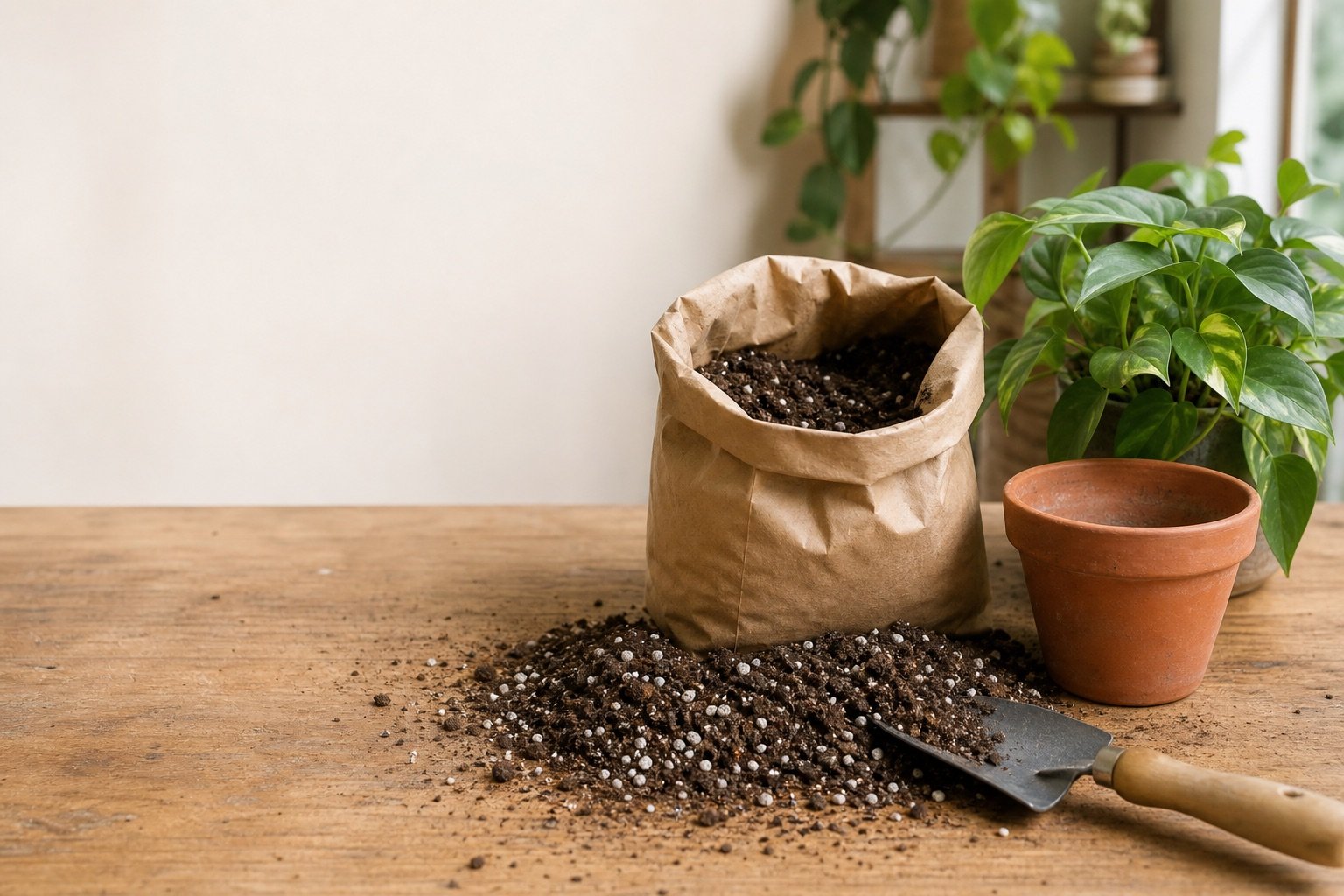
The best potting soil for indoor plants depends on the roots going into it. Pothos usually cope with an airy all-purpose mix; orchids need chunky bark, and cacti need a root zone that dries faster. Your watering habits matter too.
For a straightforward foliage plant, Miracle-Gro Indoor Potting Mix for All Plants is the easiest starting point in this guide. Back to the Roots is the simpler peat-free alternative. Rosy Soil is the premium peat-free option, and the last two picks cover succulents and orchids that should not be pushed into an ordinary all-purpose mix.
How we chose these mixes
Fern & Shelf did not run a controlled grow trial for this update. We compared current manufacturer labels and product pages for ingredients, intended plant types, peat content, built-in fertilizer, package sizes, and US availability. We then checked those specifications against university Extension guidance for indoor container media.
Published specifications can only take the comparison so far. The same bag may behave differently in a hot terracotta pot, a cool apartment, or the hands of a generous waterer. Formulas change as well. The label on the bag you receive takes priority over this guide.
We checked product specifications on July 17, 2026 and left out prices and stock because they change too quickly.
Best potting soil for indoor plants at a glance
| Mix | Best fit | Peat status | Added fertilizer | Main caveat |
|---|---|---|---|---|
| Miracle-Gro Indoor Potting Mix for All Plants | An uncomplicated mix for common foliage plants | Contains peat | Yes | The maker’s feeding claims and feeding directions need to be read together |
| Back to the Roots Organic Indoor Potting Mix | A peat-free general mix with a short ingredient list | Peat-free | Yes | The linked product page states neither an NPK analysis nor a precise feeding duration |
| Espoma Organic Potting Mix | Buyers who want an organic, naturally amended general mix | Contains peat | Organic amendments | Unsuitable when peat-free is a requirement |
| FoxFarm Ocean Forest | Established, vigorous foliage plants and growers who want a rich mix | Contains peat | Yes | Richer than many plants need, so avoid casual extra feeding |
| Rosy Soil Houseplant Soil | A premium peat-free mix built around biochar and compost | Peat-free | Nutrient-bearing ingredients | Premium price tier; the linked page gives no NPK schedule |
| Miracle-Gro Indoor Cactus & Succulent Mix | Cacti and succulents that need a separate formula | Contains peat | Yes | Not a universal houseplant mix and not peat-free |
| Espoma Organic Orchid Mix | Epiphytic orchids that need bark and large air spaces | No peat listed | No fertilizer charge listed | It is an orchid medium, not ordinary potting soil |
What a good indoor potting mix has to do
Roots need water, but they also need oxygen. University of Maryland Extension describes a useful container medium as one that holds water and nutrients, allows air around the roots, and drains freely. Those jobs pull in opposite directions, which is why texture matters more than the marketing on the front of the bag.
Because the container changes how fast the mix dries, choose the right pot for an indoor plant before blaming the soil alone.
A fine, moisture-retentive mix can be useful in a warm room or a small terracotta pot. Put the same mix into a large decorative pot with no drainage hole and it may stay wet far too long. A very chunky mix is forgiving around water, but it can dry quickly in a small pot. There is no ingredient list that cancels out the pot, the room, and the person holding the watering can.
Do not substitute soil dug from a garden. It can compact in a container, drain poorly, and bring weeds, pests, or disease organisms indoors. The full potting soil versus garden soil guide explains why the two products are not interchangeable.
1. Miracle-Gro Indoor Potting Mix for All Plants: an easy general choice
This is the least complicated choice for pothos, philodendrons, peace lilies, spider plants, and other familiar foliage plants. The current manufacturer page lists sphagnum peat moss, coir, and perlite. It is made without compost or bark, which Miracle-Gro says makes it less prone to fungus gnats.
The claim has limits. A wet pot can still support an infestation, and gnats can arrive with plants or other damp organic material. On paper, the mix has a sensible general-purpose structure: peat and coir hold moisture while perlite creates larger air spaces.
There is one odd bit of label reading to do. Miracle-Gro lists an NPK analysis of 0.25-0.13-0.19 and says the mix feeds for up to six months. On the same page, it recommends starting a regular feeding program after 30 days. Treat the product label and the plant’s response as the final instructions. Do not stack a full fertilizer dose on top just because a calendar says it is time.
This mix contains peat. Buyers avoiding peat should choose Back to the Roots or Rosy Soil instead.
Check Miracle-Gro Indoor Potting Mix for All Plants on Amazon (paid link)
2. Back to the Roots Organic Indoor Potting Mix: peat-free and straightforward
Back to the Roots replaces peat with coconut coir. Its published formula also includes perlite, yucca extract, dolomitic limestone, organic plant food, and mycorrhizae. The company lists no bark or compost in this specialty indoor blend.
Coir supplies most of the moisture retention, perlite opens the mix, and limestone adjusts pH. Together they give Back to the Roots a practical ready-to-use formula for buyers avoiding peat. The linked product page states neither an NPK analysis nor a precise feeding duration, so “contains plant food” cannot supply a universal fertilizer schedule.
Peat-free mixes do not all behave alike. Coir can feel dry on top while the center of a larger pot is still moist. Check below the surface and learn the weight of the pot instead of assuming that peat-free always means fast-drying.
Check Back to the Roots Organic Indoor Potting Mix on Amazon (paid link)
3. Espoma Organic Potting Mix: organic and still peat-based
Espoma belongs on this list as a peat-based product. The current Espoma product information lists sphagnum peat moss alongside processed forest products, perlite, humus, limestone, worm castings, alfalfa meal, kelp meal, feather meal, yucca, and mycorrhizae.
The long list of naturally derived amendments is the appeal. Espoma’s directions say to begin monthly feeding two weeks after planting during active growth. Read the exact bag before following that schedule because directions can change with a reformulation.
Choose it for an organic general mix with peat. Buyers avoiding peat should skip it.
Check Espoma Organic Potting Mix on Amazon (paid link)
4. FoxFarm Ocean Forest: a richer mix for active growth
FoxFarm Ocean Forest is the heavily amended option in this group. Its label information lists aged forest products, sphagnum peat moss, perlite, and sandy loam, plus ingredients such as fish emulsion, crab meal, shrimp meal, earthworm castings, bat guano, and oyster shell. The listed analysis is 0.30-0.45-0.05.
Ocean Forest carries a heavier nutrient charge than the other general mixes here. It fits an established foliage plant in active growth better than a slow plant in a dim room. FoxFarm’s own FAQ says the initial charge lasts roughly three to four weeks before an appropriate fertilizer may be needed.
If you tend to add plant food whenever a leaf looks tired, a rich mix creates another variable to misread. Light, cold roots, poor drainage, and watering are often the real problem. The formula suits a deliberate choice, not a reflexive upgrade.
Check FoxFarm Ocean Forest Potting Soil on Amazon (paid link)
5. Rosy Soil Houseplant Soil: premium, peat-free, and built around biochar
Rosy takes a different route from coir-led peat-free mixes. The Houseplant Soil formula lists biochar, mycorrhizae, worm castings, compost, and pine bark fines. The company explicitly states that the mix is peat-free and contains no synthetic additives.
This is the premium choice for a buyer who wants a textured, living-soil style formula without peat. The ingredient list is unusual, but it cannot show whether Rosy will outperform a cheaper bag. Fern & Shelf has not run that comparison. The linked product page also gives neither a simple NPK analysis nor one precise feeding schedule.
Compost is also worth noticing. It adds organic material, but no compost-based mix should be marketed as immune to gnats. Let the plant’s root zone approach its appropriate level of dryness and keep the bag sealed between uses.
6. Miracle-Gro Indoor Potting Mix for Cactus & Succulent: a dedicated dry-side formula
Cacti and most succulents should not be treated as slightly thirstier pothos. They need a root zone that drains promptly and dries more thoroughly between waterings. Miracle-Gro’s current indoor cactus and succulent mix lists forest products, sphagnum peat moss, sand, and perlite, with an NPK analysis of 0.06-0.02-0.04.
The bag is convenient, yet rot remains possible when the pot is oversized, poorly drained, or kept too wet in weak light. It also contains peat. Particle size, drainage, temperature, and watering still shape how quickly the root zone dries.
For gritty alternatives, amendment ratios, and species-specific caveats, use the separate guide to the best soil for succulents and cacti indoors. That page owns the detailed succulent-soil question.
Check Miracle-Gro Cactus & Succulent Potting Mix on Amazon (paid link)
7. Espoma Organic Orchid Mix: bark-based medium for orchids
An epiphytic orchid needs much larger air spaces than an ordinary foliage plant. Espoma’s Organic Orchid Mix lists aged pine bark, horticultural charcoal, perlite, limestone, and yucca extract. Peat does not appear in the current ingredient list, although Espoma does not market the product with a peat-free certification on that page.
This medium is chunky by design. Water runs through it quickly, and air reaches roots that would struggle in a dense general mix. That same structure makes it a poor standalone choice for a peace lily, fern, or most ordinary tropical foliage plants.
Orchid bark is sometimes used as one ingredient in a custom aroid blend. If that is your goal, the guide to perlite, bark, coir, and other soil amendments is more useful than treating a whole bag of orchid mix as a shortcut.
Check Espoma Organic Orchid Mix on Amazon (paid link)
How to match a mix to the plant and the room
When choosing the best potting soil for indoor plants, start with the plant category. Orchids and succulents get their own media. For most foliage plants, look at your conditions before getting lost in ingredient lists.
If the room is cool or dim, the plant will use water slowly. A huge pot or a cachepot that traps runoff makes that worse. An airier mix can give you more margin, but it cannot fix a pot with no drainage or a plant placed too far from useful light.
If the room is warm, the pot is small, or terracotta dries quickly, an extremely chunky formula may turn watering into a constant job. A balanced general mix can be easier. The watering guide for indoor plants helps separate the plant’s actual signal from a fixed weekly routine.
Your habits count too. People who routinely water early usually benefit from a more open structure and a smaller step up in pot size. Chronic under-waterers may prefer a mix with more moisture buffering. Neither group should buy a “moisture control” label without reading what is inside the bag.
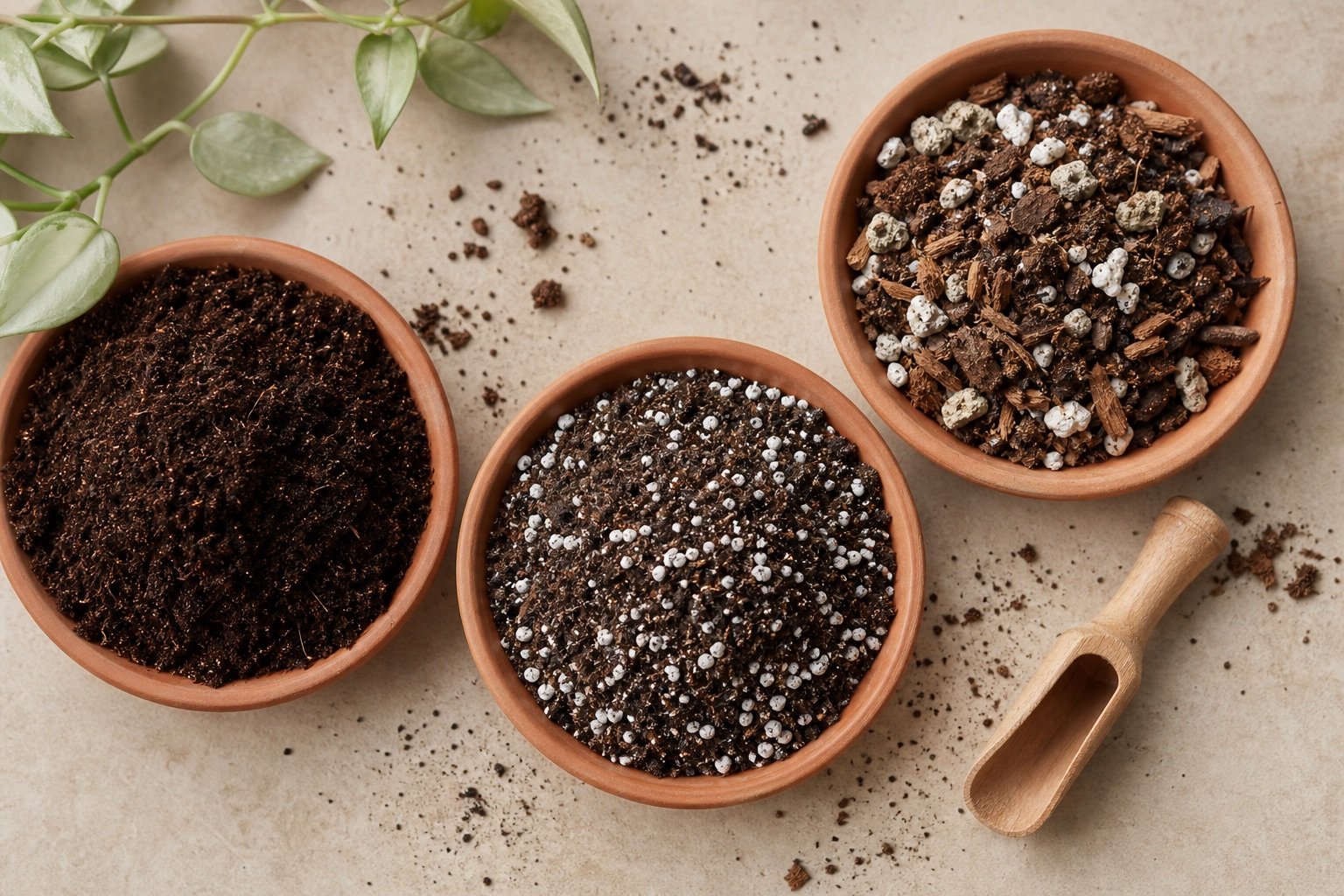
The three textures above are not a quality ranking. Fine mixes usually hold water longer. Balanced mixes combine smaller particles with perlite or a similar aeration material. Chunky media trade some water retention for larger air spaces. A good choice depends on the roots going into it.
Should you add perlite or bark to a bagged mix?
Sometimes. Measure amendments by volume and write down the ratio. A random handful is difficult to repeat and may change how water moves through the pot. Perlite adds pore space without feeding the plant. Bark creates larger chunks but breaks down over time. Coir changes moisture behavior and has different properties from peat.
If a bag repeatedly stays wet too long in your setup, first check pot size, drainage, light, and watering. Then adjust the mix deliberately. The diagnostic guide to potting soil that is not draining covers those causes, while the DIY potting mix guide is the better place for full recipes.
Built-in fertilizer changes the first few weeks
Several picks in this guide contain fertilizer or nutrient-rich organic ingredients. Adding a full liquid feed immediately after repotting can give a plant more salts than it can use, especially in low light.
University of Minnesota Extension gives a broad two-to-six-week window before regular feeding, but the right timing depends on the medium, plant, water, and rate of growth. Follow the label first. Wait longer when the plant is not producing new growth, and do not use fertilizer as a cure for soggy roots or inadequate light.
Potting mix and fungus gnats
Fungus gnats are associated with moist organic growing media. Miracle-Gro says its indoor mix is less prone to gnats because it contains no compost or bark. Moist media can still support larvae, especially when the surface stays damp.
Let the top of the mix dry as far as the plant safely allows, empty standing water, and store unused mix sealed and dry. If gnats are already present, switching brands is not a complete treatment. Use the fungus gnat control guide for the full routine.
Can you reuse old potting soil?
Yes, sometimes. The old version of this article said never to reuse it, which was too absolute. Oklahoma State University Extension says used mix can be refreshed when porosity and fertility are restored, while soil from diseased plants carries a pathogen risk. A sour smell, collapsed structure, obvious salt crust, root-rot history, or active infestation is a reason to be more cautious.
The decision depends on where the soil came from and what will grow in it next. The guide to reusing old potting soil walks through the safe cases and the ones worth discarding.
Frequently asked questions
What is the best potting soil for most indoor plants?
For common foliage plants, the best potting soil for indoor plants is usually an airy all-purpose mix that balances water retention with visible aeration material. Miracle-Gro Indoor Potting Mix for All Plants is the straightforward mainstream choice here. Back to the Roots is the simpler peat-free option. The pot and your watering habits still matter as much as the brand.
Is potting mix the same as potting soil?
Retailers use the terms loosely. Many products sold as potting soil contain no mineral soil at all. Read the ingredient list and intended use instead of choosing by the word on the front. UK retailers often use “potting compost” for a similar container product.
Is peat-free potting soil better for indoor plants?
Peat-free describes an ingredient choice, not automatic plant performance. A good peat-free mix can support healthy roots, but coir, bark, compost, biochar, and wood fiber all behave differently. Choose for the plant and learn how quickly the mix dries in your pot.
Does Espoma Organic Potting Mix contain peat?
Yes. Espoma’s current ingredient information lists sphagnum peat moss. Its Organic Potting Mix should not be presented as a peat-free recommendation.
Can I use one potting soil for every houseplant?
Not sensibly. A broad indoor mix can cover many foliage plants, but orchids and most cacti or succulents need different root environments. Even within foliage plants, a thirsty fern and a drought-tolerant ZZ plant will not use the same mix at the same speed.
Should I replace nursery soil as soon as I buy a plant?
Not by default. Repot when the medium is failing, roots are crowded, drainage is poor, or the plant has a clear problem that requires access to the roots. An unnecessary repot adds stress. When the timing is right, use the step-by-step houseplant repotting guide.
Does fresh potting mix prevent root rot?
No. A suitable mix can improve the root environment, but root rot can still follow persistent saturation, an oversized pot, weak light, cold conditions, or blocked drainage. Soil is one part of the system.
Related guides and tools
The short version
For most foliage collections, the best potting soil for indoor plants is a balanced general mix. Miracle-Gro Indoor Potting Mix for All Plants is the easy baseline. Pick Back to the Roots if peat-free matters and you want a simple ready-made bag. Rosy Soil is the more expensive peat-free formula, Espoma is the organic peat-based choice, and Ocean Forest suits someone deliberately looking for a richer mix.
Then stop trying to make that same bag suit every root. Use a cactus mix for succulents and a bark-based orchid medium for epiphytic orchids. The best bag is the one that fits the plant, the pot, and the room rather than the loudest promise on the label.