How Much Does It Cost to Start a Microgreens Business in 2026? (Real Numbers from Actual Setups)
Last updated: 27.05.2026.
Affiliate disclosure: As an Amazon Associate I earn from qualifying purchases. Links marked “paid link” may earn Fern & Shelf a commission at no extra cost to you. Read our full Affiliate Disclosure.
Start here: For a complete overview, see our How to Start a Microgreens Business.
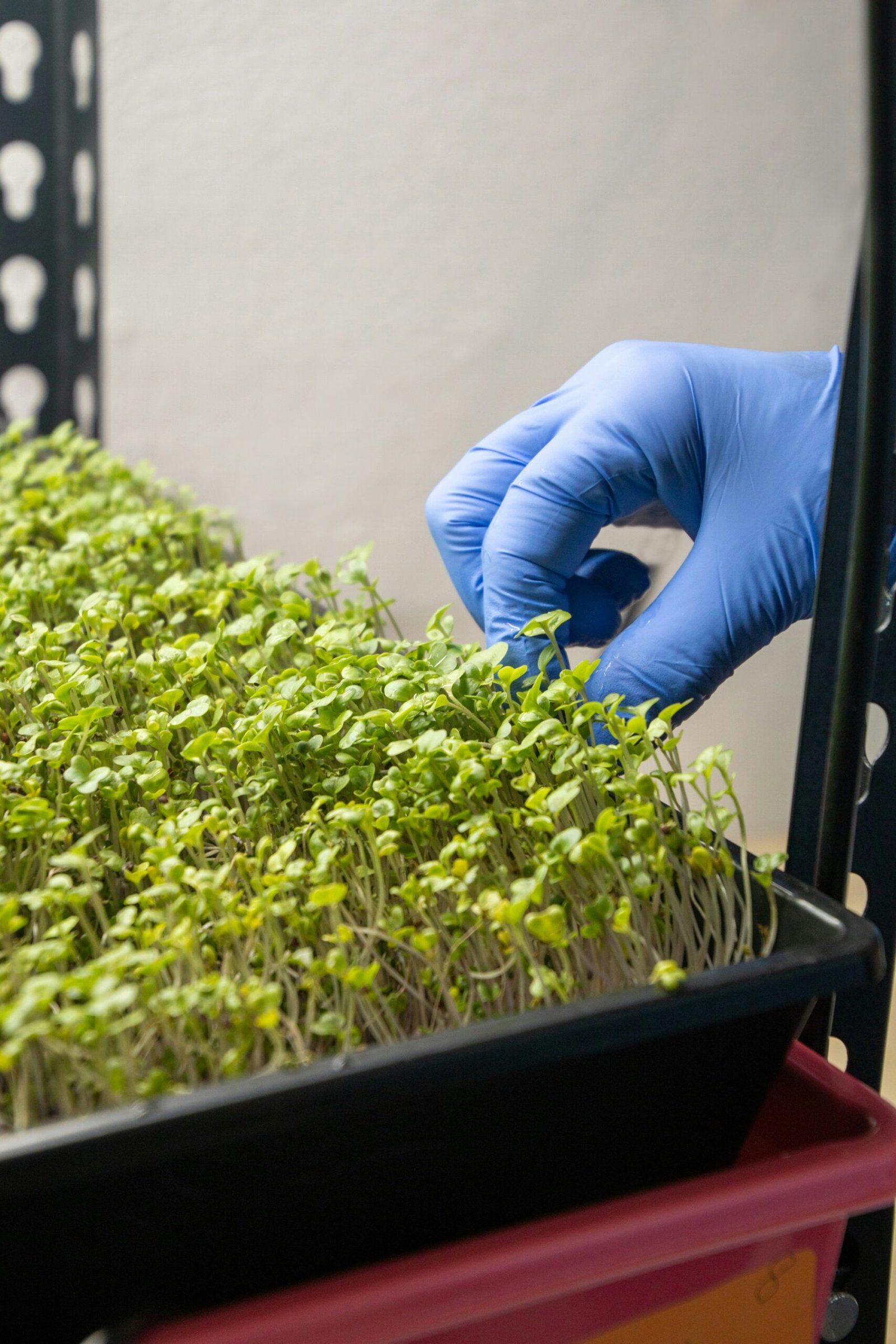
If you’ve been watching microgreens YouTube videos for the past month and trying to figure out what it’d actually cost you to start — here are real numbers, not the hand-wavy “you can start for under $100!” claims that pad most articles on this topic.
I’ll break this into three honest tiers: bootstrap (test the waters from an apartment), serious starter (real side-hustle production), and commercial scale (restaurant-supplying volume). Then the hidden costs nobody mentions, the realistic payback timeline, and the part of this business that actually matters most — which isn’t the growing.
If you read nothing else: expect to spend $250–$500 to start small, $800–$1,500 for a real operation, $3,000–$6,000 to scale to commercial-restaurant supply. Each tier has a different payback timeline and a different lifestyle attached.
Tier 1 — Bootstrap ($250–$500)
This is the “I want to see if I’m actually going to do this” setup. Fits in a 4×4 foot section of an apartment or basement corner. Produces 5–15 trays per growing cycle (roughly weekly). Realistic output: 5–15 pounds of microgreens per week.
You’re going to be the labor, the marketing, the delivery driver. This tier is for testing demand and proving you can grow consistently before investing more.
What you actually need at this tier:
| Item | Cost | Notes |
|---|---|---|
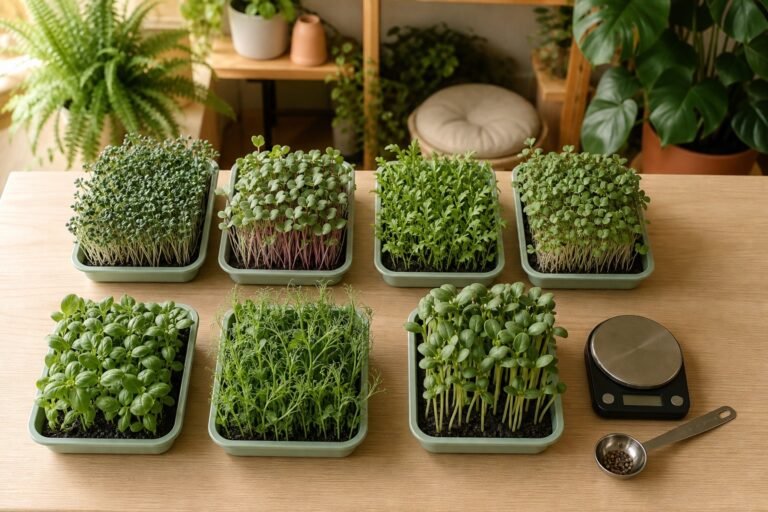
| 10–20 standard 1020 trays (with holes and without) | $40–80 | Half perforated bottoms (for the seeds), half solid (for water reservoirs). |
| 4-tier wire shelving unit | $60–90 | Standard chrome wire rack from any hardware store works fine. |
| Basic LED grow light (1–2 panels) or T5 fluorescent shop light | $60–120 | Don’t go cheap on light. Anemic light = anemic microgreens = no repeat customers. |
| Starter seed inventory (broccoli, pea, radish, sunflower) | $40–80 | Buy small bags first to test which sells. |
| Coconut coir or potting mix (5–10 bags) | $20–40 | Coco coir is cleaner, less mess; soil is cheaper. |
| Spray bottle and scissors | $10–20 | Basic harvesting kit. |
| Packaging (clamshell containers, bags, labels) | $30–60 | Buy 50–100 to start; you’ll iterate on packaging fast. |
| Small kitchen scale (for selling by weight) | $15–25 | Critical for selling to restaurants by the pound. |
Total: roughly $275–$515.
Where to find each piece:
- Wire shelving: any hardware store, around $60–80 for a 4-tier 18″ deep unit. Standard wire shelving on Amazon → (paid link)
- Trays: cheapest from Bootstrap Farmer (commercial quality, made to last hundreds of cycles), but if you’re truly testing, Amazon basic trays work for the first few months. 1020 microgreens trays on Amazon → (paid link)
- Grow lights: a Mars Hydro TS 600 or Spider Farmer SF-1000 (covered in our grow lights guide) is overkill for one rack but useful if you scale.
- Seeds: True Leaf Market is the industry standard. Small bags of each type, around $8–15 each, last 4–6 weeks of growing.
Realistic capacity at this tier: 10 trays per week × ~1 lb microgreens per tray = 10 lb/week. At $25/lb wholesale to restaurants, that’s $250/week revenue, around $200/week net after materials.
That’s $800/month side-hustle territory. Not life-changing, but real money if you can sell what you grow.
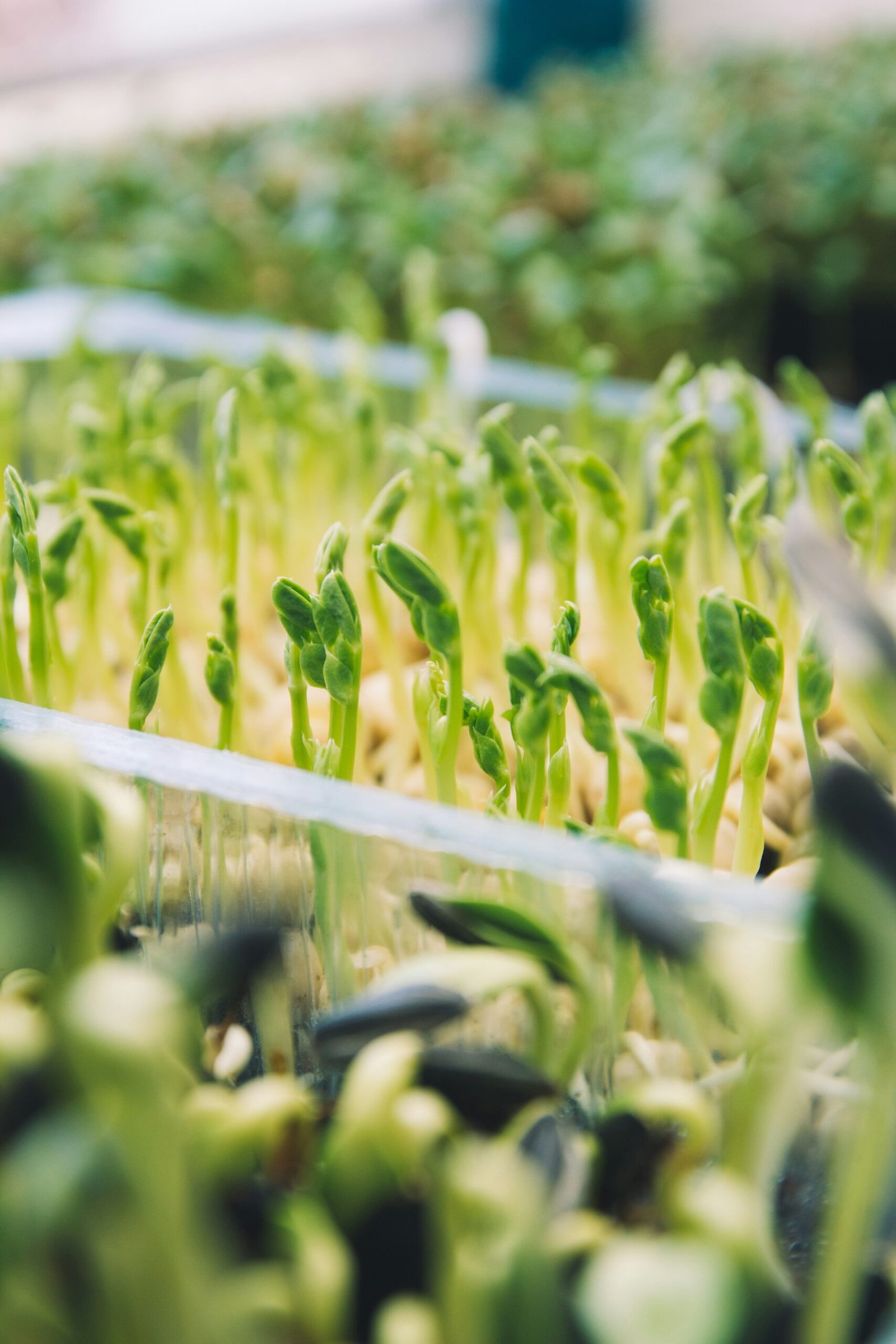
Tier 2 — Serious starter ($800–$1,500)
This is where most successful side-hustle microgreens businesses end up by month 3–6. Fits in a 6×8 foot dedicated space (spare bedroom, basement, garage). Produces 30–60 trays per cycle, around 30–60 lb of microgreens per week.
You’re not just testing anymore. You have repeat customers. You’re producing weekly. The bigger investment pays back in roughly 4–8 weeks if you have steady demand.
What changes from Tier 1:
| Item | Cost | Notes |
|---|---|---|
| 40–80 1020 trays (commercial grade) | $200–400 | At this scale, Bootstrap Farmer’s heavy-duty trays last 5+ years. Worth the investment. |
| Commercial 2-tier grow rack (or two cheap ones) | $300–500 | Bootstrap Farmer’s microgreens-specific racks are the standard. |
| 2–4 LED grow light panels (proper full-spectrum) | $200–400 | Spider Farmer SF-1000 or Mars Hydro TSW 2000 territory. |
| Larger seed inventory + variety expansion | $100–200 | Add specialty greens — kohlrabi, basil microgreens, red cabbage — that restaurants pay premium for. |
| Coconut coir in bulk (single large block) | $30–50 | Compressed coir blocks expand to weeks of medium. |
| Misting system or commercial spray bottles | $40–80 | Manual watering becomes a time sink at 40+ trays. |
| Better packaging + custom labels | $80–150 | First-impression matters for restaurant accounts. |
| Commercial kitchen scale | $30–60 | More accurate, faster than a kitchen scale at volume. |
| Heat mats (for winter germination) | $40–80 | Only relevant in cold spaces or winter months. |
Total: roughly $1,020–$1,920.
At this tier, equipment selection matters more. Specifically:
Trays: This is the upgrade I’d prioritize. The flimsy $4 Amazon trays warp, leak, and need replacing every 20–30 cycles. Bootstrap Farmer’s heavy-duty 1020s cost $8–10 each but last 5+ years of daily use. Over 3 years the math heavily favors the commercial trays.
Grow rack: Same logic. A wire rack from Home Depot works at Tier 1; at Tier 2, the slightly-flexing wire becomes a real issue when you’re moving 50 lb of wet trays across it. Bootstrap Farmer’s microgreens racks are purpose-designed.
Grow lights: Don’t skimp here. Underlit microgreens have weak stems and bland flavor. Chefs reject pale microgreens. The difference between a $50 cheap LED and a $200 Spider Farmer panel is the difference between a tray you can sell and a tray you can’t.
Realistic capacity at this tier: 40–50 trays per week × ~1 lb each = $1,000–1,250/week revenue at wholesale, $700–1,000/week net. Real $3K–$4K/month side income.
Tier 3 — Commercial scale ($3,000–$6,000)
This is restaurant-supplying, multi-account commercial operation. Fits in a dedicated 200–400 sq ft space (full garage conversion, basement room, leased commercial kitchen). Produces 150–300 trays per cycle, 150–300 lb of microgreens per week.
At this scale, you have multiple restaurant accounts on retainer, weekly farmers market presence, and possibly distribution to specialty grocery stores. It’s not a side hustle anymore — it’s a job, with maybe 20–30 hours per week of growing/packing/delivery work.
Major investments at this tier:
| Item | Cost | Notes |
|---|---|---|
| 150–300 commercial 1020 trays | $1,200–2,400 | Bootstrap Farmer or similar. Buy in bulk for discount. |
| Commercial multi-tier rack system (full setup) | $1,000–2,000 | Bootstrap Farmer’s microgreens production rack. |
| Professional LED lighting array | $600–1,200 | Multiple panels, full spectrum, dimmable. |
| Automated misting / irrigation system | $300–600 | At 150+ trays per cycle, hand-misting becomes unsustainable. |
| Bulk seed inventory (multiple varieties) | $400–800 | Buy 5–10 lb bags of common varieties for major cost savings. |
| Commercial growing medium (bulk) | $100–200 | Larger volume = lower per-tray cost. |
| Commercial scale + heat sealer for packaging | $200–400 | Heat-sealed clamshells extend shelf life, look more professional. |
| Branding, labels, business cards | $200–500 | Custom packaging signals you’re a real operation. |
| Initial insurance + licenses | $300–800 | More on these below. |
Total: roughly $4,300–$8,900.
At this scale, the cost of professional equipment isn’t an expense — it’s a productivity investment. Manual misting at 200 trays takes 2 hours daily; automated misting takes 5 minutes. Cheap wire racks fail at this volume; commercial racks last decades.
Realistic revenue at this tier: 150 trays/week × ~1 lb × $25/lb = $3,750/week wholesale = $15K/month gross. Net after materials, labor, packaging, distribution: $8K–$12K/month is realistic for a one-person operation.
The hidden costs nobody mentions
The startup costs above are the equipment. The actual cost of running this business includes things that don’t show up in any “microgreens startup cost” article on YouTube.
Cottage food / agricultural permits. In most US states, selling microgreens requires either a cottage food law license or a commercial kitchen designation. Costs vary wildly — California cottage food permit is free; some states charge $50–500. Sprouts (different from microgreens, though commonly confused) require FDA-level food safety compliance and are far more regulated. Check your specific state’s department of agriculture.
Liability insurance. If a restaurant gets sick from your microgreens, you want coverage. Basic product liability insurance for a small food producer runs $300–600/year. Non-negotiable if you’re selling commercially.
Packaging supplies (recurring). Clamshell containers, bags, labels run $50–150/month at Tier 2 scale, more at Tier 3.
Marketing / customer acquisition. Building restaurant accounts takes either time (cold outreach, in-person visits with sample trays) or money (paid local ads, professional website). Budget for at least one of these. A simple website (which you already have, lucky you) plus 4–6 in-person restaurant visits per week is the typical sales motion.
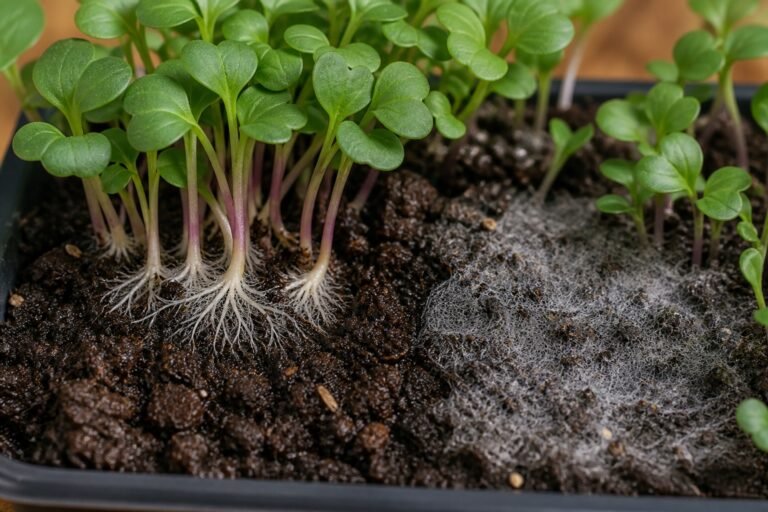
Failed cycles. First-year microgreens growers typically lose 10–20% of their cycles to mold, poor germination, or contamination. Budget for waste — it’s part of the math.
Time, the largest hidden cost. Tier 1 takes ~5–10 hours/week. Tier 2 takes 15–25 hours/week. Tier 3 takes 30–40 hours/week or part-time help. The labor cost adds up even if you’re not paying yourself yet.
The honest payback timeline
Assuming you can sell what you grow (the giant assumption — see below), here’s roughly when each tier breaks even on initial investment:
- Tier 1 ($300 startup, $200/week net): Payback in roughly 6–8 weeks.
- Tier 2 ($1,200 startup, $750/week net): Payback in roughly 7–10 weeks.
- Tier 3 ($5,000 startup, $2,500/week net): Payback in roughly 8–12 weeks.
These look fast. They are fast. They’re also wildly optimistic because they assume you can sell everything you grow from week 1, which almost nobody can.
A more realistic timeline includes 8–16 weeks of building customer relationships before you’re selling at full capacity. That pushes real payback into the 4–6 month range for Tier 1, 5–8 months for Tier 2, 6–12 months for Tier 3.
The part of this business that actually matters
I’ll close with the unsexy truth that nobody puts on the cover of their YouTube videos.
Growing microgreens is the easy part. Selling them is the entire business.
The growers who succeed at this aren’t the ones with the best grow lights or the fanciest racks. They’re the ones who can walk into 20 restaurants in their city in a month, drop off sample trays, follow up consistently, and build relationships with executive chefs and farmers market customers.
If you’re an introvert who hates cold calling, this business will be very hard regardless of how technically skilled you become at growing. If you’re naturally good at sales and customer relationships, you can start at Tier 1 with $300 and be at Tier 3 within a year.
Before spending $5,000 on commercial equipment, spend $300 on Tier 1 equipment and three weeks proving you can sell 10 trays of broccoli microgreens to local restaurants. If you can, scale. If you can’t, you’ve lost $300, not $5,000.
Frequently asked questions
What’s the highest-margin microgreen?
Sunflower microgreens and pea shoots — both grow fast, sell for $25–40/lb wholesale, and have low seed cost. Avoid trendy specialty greens until you have steady customers for the basics.
Do I need a commercial kitchen?
Depends on your state. Most US states allow microgreens to be grown in a home space under cottage food laws, but selling to commercial restaurants may require additional licensing. Check with your state agriculture department before assuming.
Can I really make $5K/month from a 200-square-foot setup?
Yes — but only after 6–12 months of customer acquisition. The math works; the sales pipeline takes time to build.
Will Amazon/Costco/Whole Foods buy from me?
Eventually possible but unlikely at Tier 1–2 scale. Their volume requirements typically need 50–200 lb/week guaranteed supply, which is upper Tier 3 territory.
What if my apartment landlord finds out?
Microgreens production doesn’t generate noise, odor, or visible activity from outside. Most apartment-based operations stay invisible to landlords. That said: check your lease for “no commercial activity” clauses if you’re worried.
The bottom line
Skip the Tier 3 fantasy until you’ve proven Tier 1. Spend $300 on basic equipment, grow your first ten trays, walk them into local restaurants. If you sell them, you have a business worth scaling. If you can’t, you have a hobby — which is also fine.
The microgreens business is one of the rare cases where the unit economics genuinely work. A single tray costs $2 in materials and sells for $20–50 to the right customer. The catch is finding the right customer, consistently, every single week.
That’s the actual business. Everything in this article is just the equipment cost of being allowed to play.