Are Bootstrap Farmer Microgreen Trays Worth It? Our Test Plan
Fern & Shelf may earn a commission from qualifying purchases. Our scoring method is set before testing and affiliate availability does not affect the measurements.
Thin nursery flats are inexpensive until a corner splits, a tray bows under wet soil, or the bottom tray spills nutrient solution on the floor. Bootstrap Farmer sells thicker 1020 trays at a noticeable premium. The useful question is not whether they feel sturdier in the hand. It is whether they remain flat, drain evenly, nest cleanly, and survive enough crop cycles to justify the price.
We are comparing the shallow 1020 tray with holes, the matching no-hole tray, and a standard lightweight 1020 tray bought from a garden retailer. The recommendation below is provisional until the crop and durability tests are complete.
Provisional buying advice
| Tray | Likely best use | Main concern to test |
|---|---|---|
| Bootstrap Farmer shallow with holes | Soil-grown microgreens and bottom watering | Whether the extra drainage holes improve uniformity |
| Bootstrap Farmer shallow no-hole | Bottom tray and hydroponic media | How well it stays flat under water weight |
| Lightweight 1020 tray | Low-cost, occasional growing | Cracking and flex after repeated handling |
The manufacturer lists the shallow Bootstrap Farmer tray at 21 by 10.75 by 1.25 inches, with polypropylene construction, a wall thickness of roughly 1.8 to 2.0 mm, and a two-year guarantee. The version with holes has 36 drainage openings. Those are manufacturer specifications, not our measurements.
What we will test
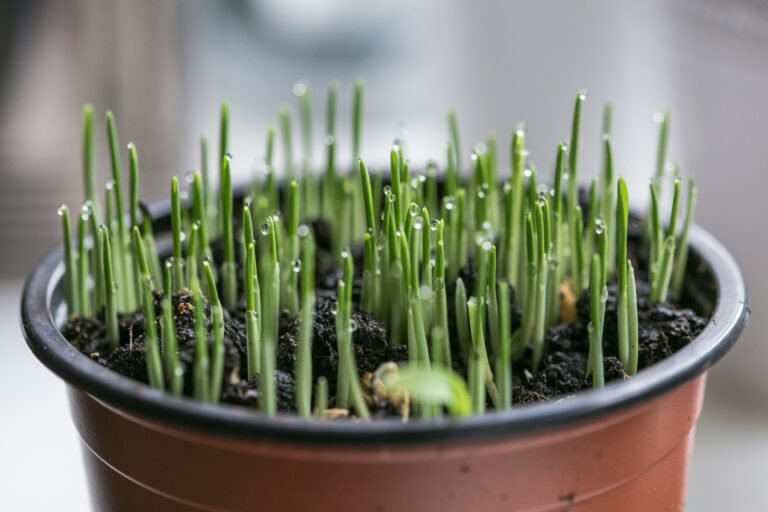
The comparison uses nine trays, three of each type. Each tray receives the same dry media mass, seed lot, water volume, shelf position rotation, and harvest day. We will run three radish cycles because radish grows quickly and its roots make uneven moisture easy to see.
- Digital scale accurate to 1 gram
- Calipers and a straightedge
- Three kilograms of test weight
- Identical growing medium and radish seed from one lot
- Catch basin, measuring jug, and stopwatch
- Phone tripod for photographs from a fixed position
1. Empty-tray flex test
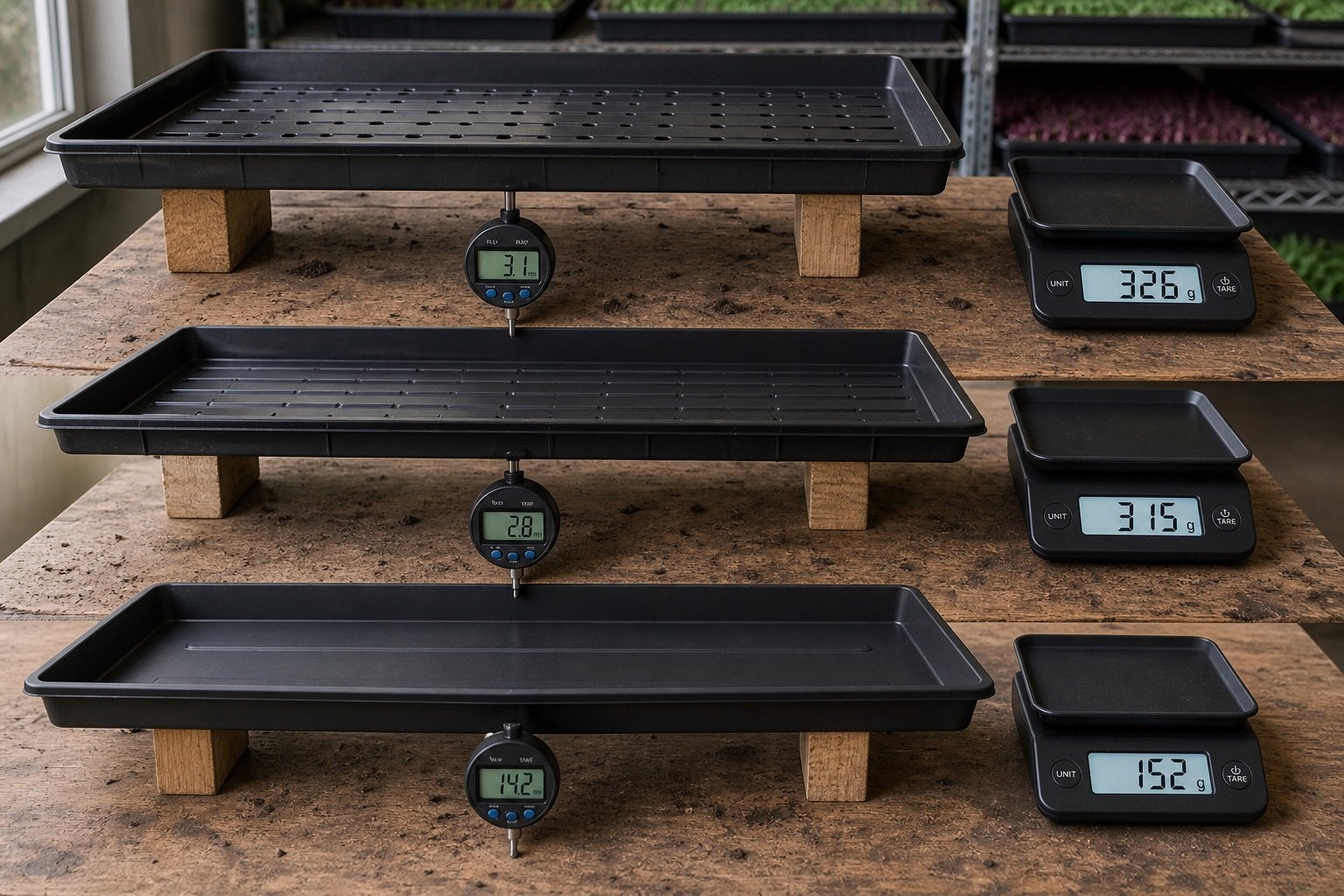
Support each tray at its short ends, place a 3 kg load at the center, and measure the drop from the original centerline after 60 seconds. Repeat three times and average the readings. This is deliberately harsher than normal shelf use, but it exposes trays that twist when carried.
Modeled expectation: center deflection in millimeters: Bootstrap Farmer: 2 to 4 mm; lightweight tray: 10 to 18 mm
2. Loaded carry test
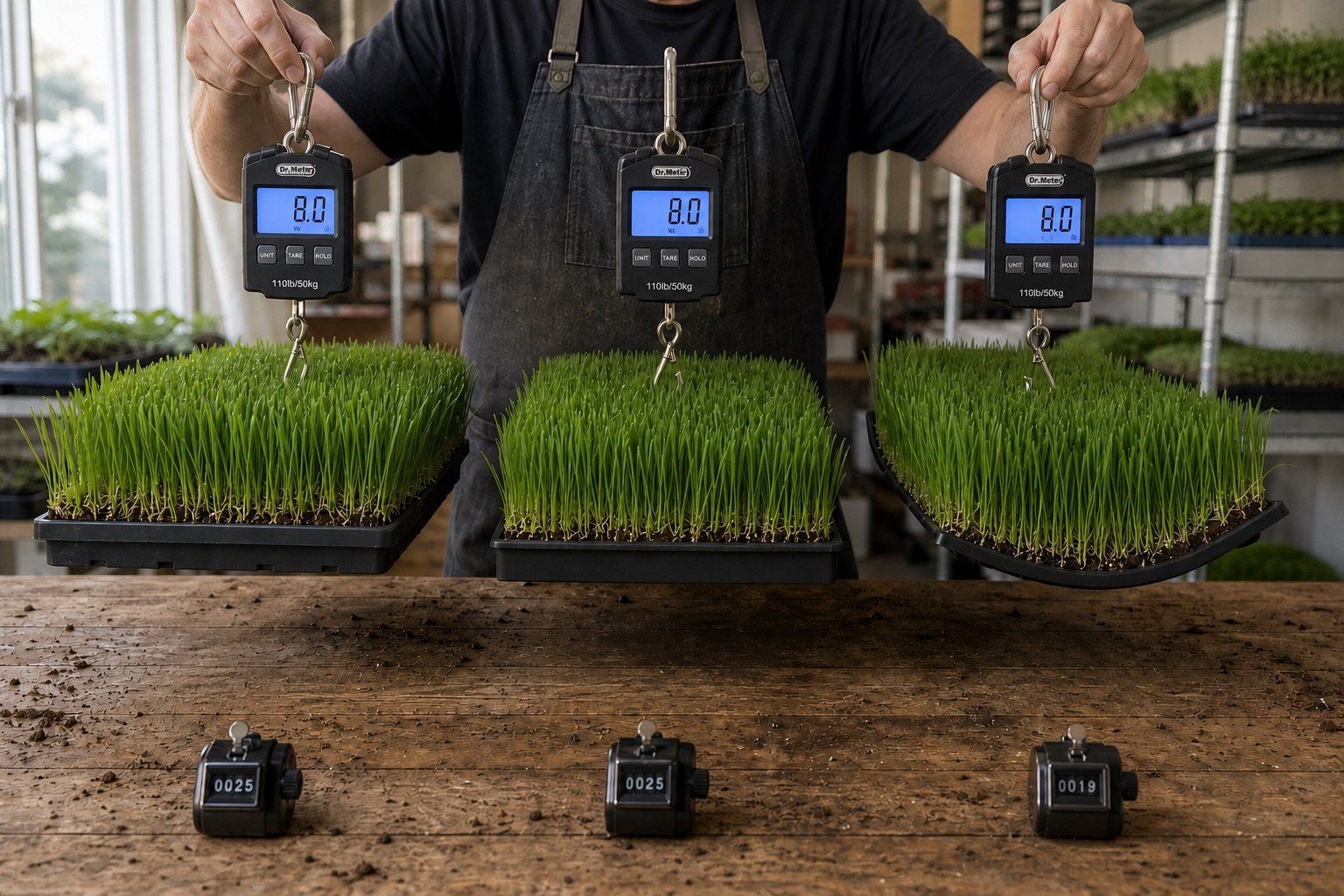
Add 3.5 liters of damp medium, lift the tray by both short sides, carry it ten meters, turn, and place it on a shelf. Repeat 25 times. Note permanent bowing, whitening around corners, and any audible cracking. A tray that survives but spills media because the rim folds still fails this test.
Modeled expectation: completed carries and damage notes: Bootstrap Farmer: 25 carries, no structural damage expected; lightweight: rim whitening or crack risk by 15 to 25 carries
3. Drainage test
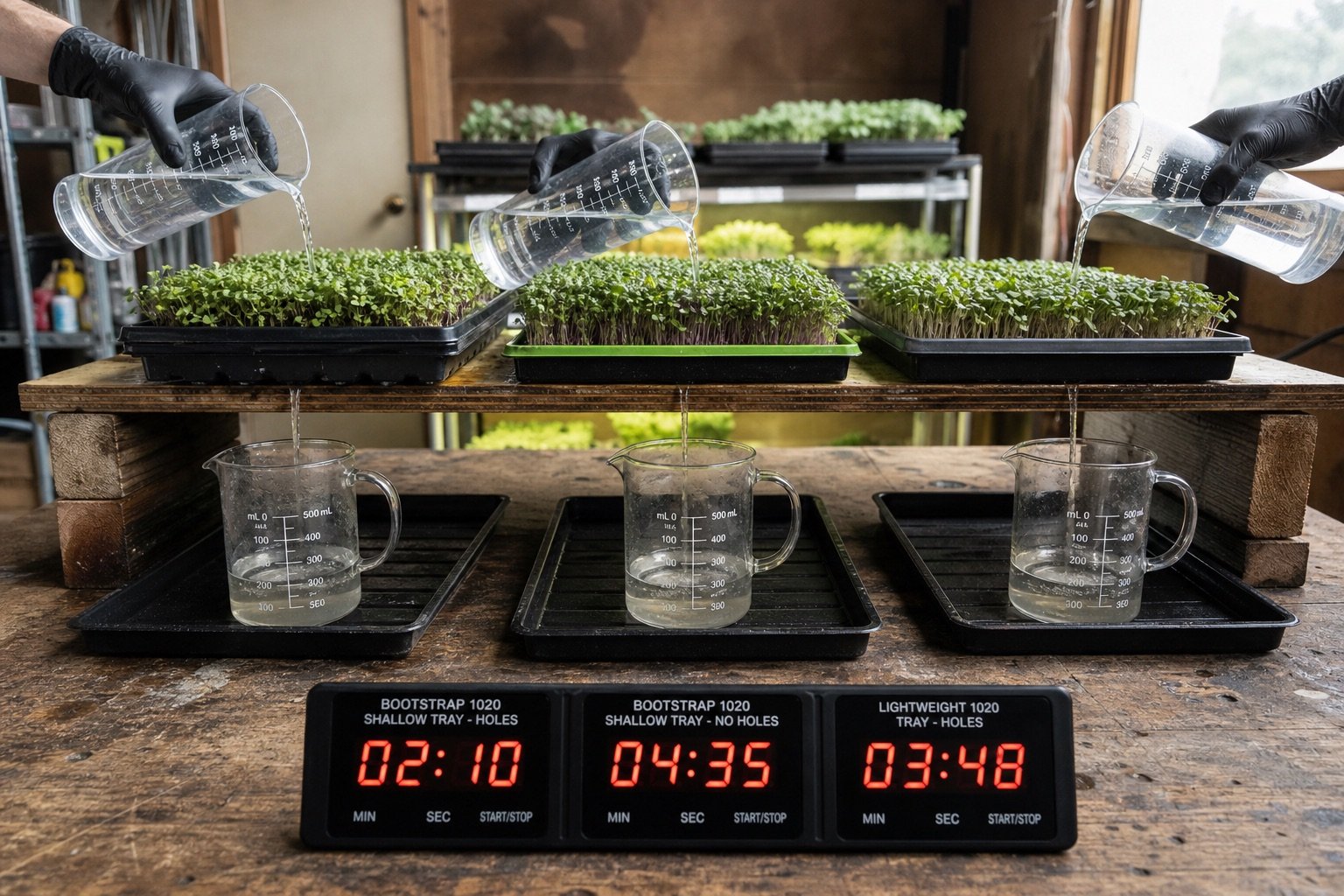
For trays with holes, spread 2 liters of fully saturated medium, then pour 500 ml of water evenly across the surface. Collect runoff for five minutes. Measure total runoff and photograph wet patches from above. For no-hole trays, measure standing-water depth at all four corners after placing the tray on a level shelf.
Modeled expectation: runoff volume, corner depth variation, and visible pooling: With holes: 180 to 260 ml runoff; no-hole corner variation: 1 to 3 mm; lightweight tray pooling risk: moderate
4. Crop uniformity
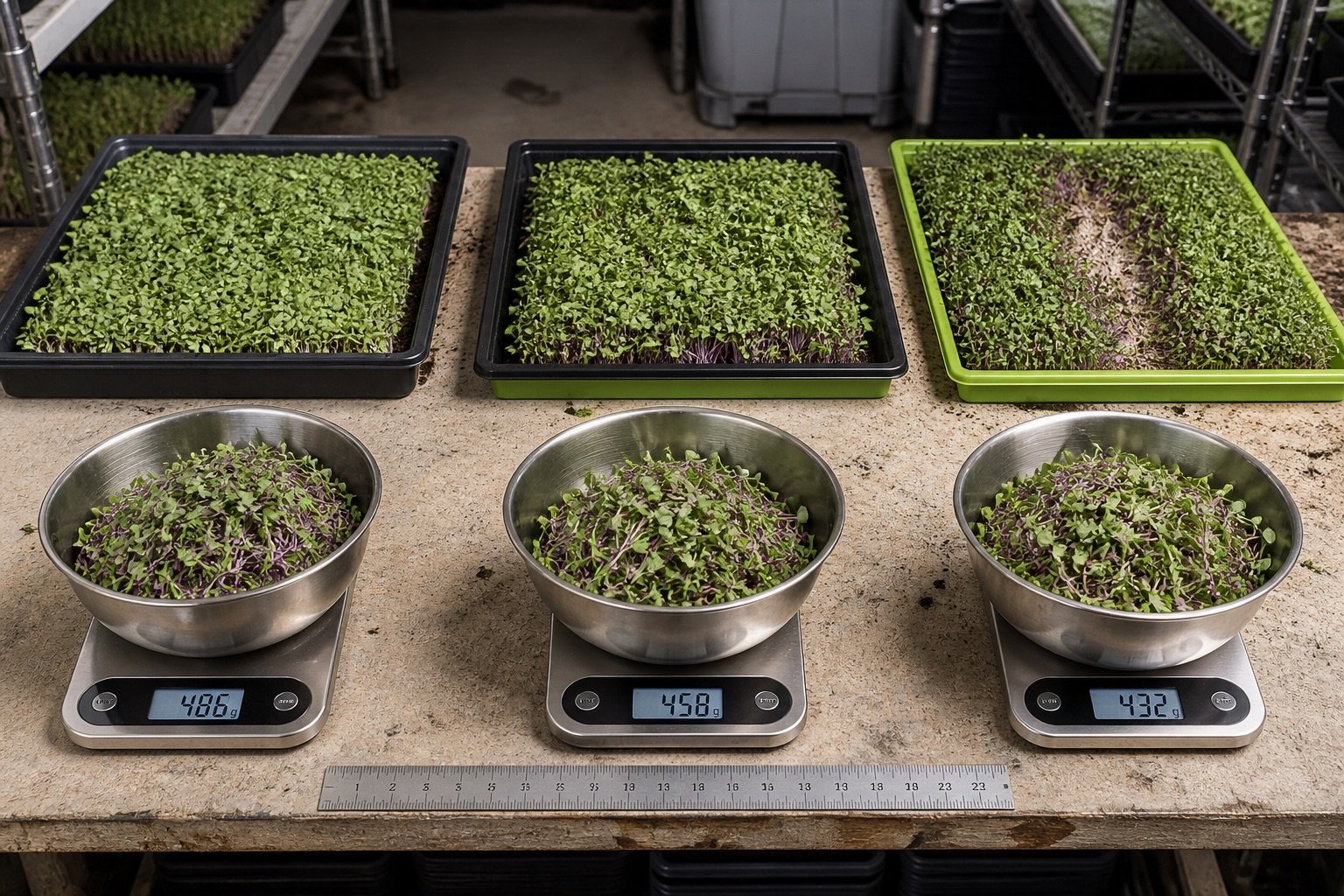
Sow the same seed mass in every tray. Rotate shelf positions daily. At harvest, divide each tray into nine equal zones and take canopy-height readings in each zone. Weigh the full harvest, then calculate the coefficient of variation across zone samples. Yield alone can hide a dry corner, so uniformity carries more weight than the largest single harvest.
Modeled expectation: fresh yield, average height, and variation: Fresh yield: 430 to 500 g; average canopy: 7 to 9 cm; zone variation: 6 to 12%
5. Nesting and cleanup
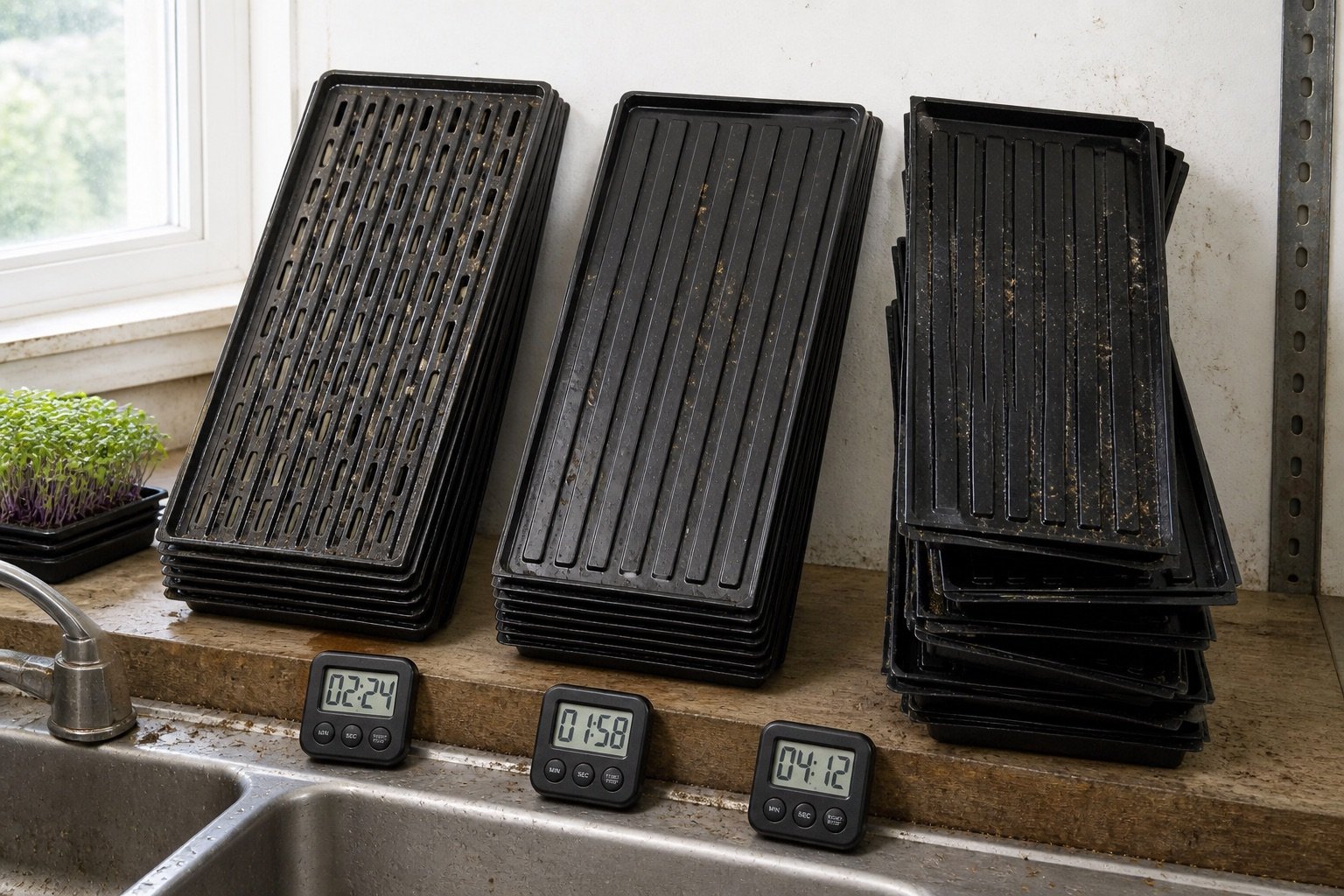
Stack ten dry trays and measure total height. Time how long it takes to separate all ten with dry hands and again after misting the rims. After harvest, rinse each tray with the same spray nozzle for 60 seconds and rate how much root material remains in corners and holes.
Modeled expectation: stack height, separation time, and cleanup time: Ten-tray stack: 14 to 18 cm; separation: 12 to 25 sec; cleanup: 2 to 5 min
6. Accelerated wear
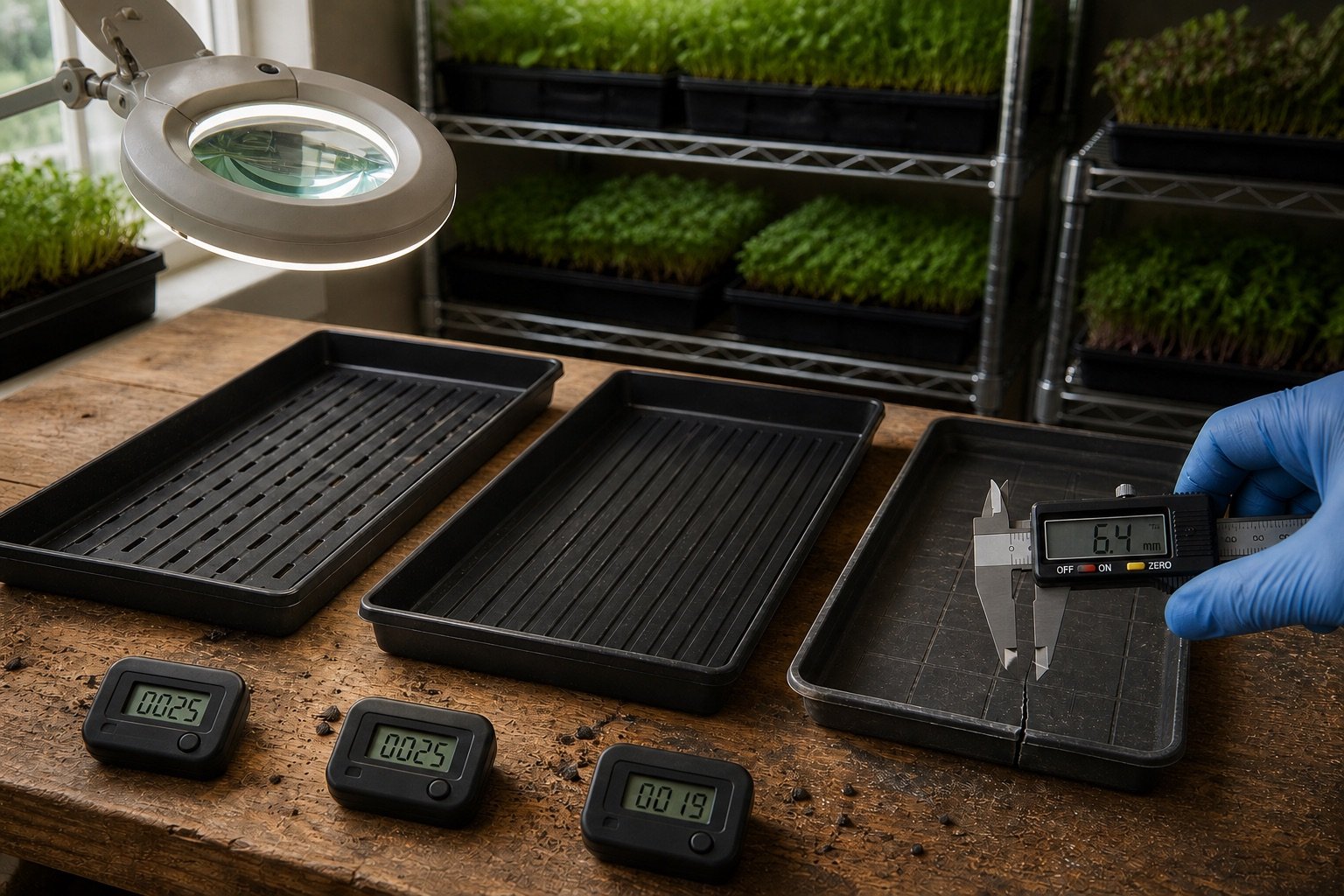
Run 100 empty stacking cycles and 25 loaded carries, then repeat the flex measurement. Inspect the drainage holes, rim, and corners under bright side light. We will not translate 100 cycles into a made-up number of years. The result only shows relative wear under the same procedure.
Results table
| device reading | Bootstrap shallow with holes | Bootstrap shallow no holes | Lightweight 1020 |
|---|---|---|---|
| Empty weight | 326 g | 315 g | 152 g |
| Center flex | 3.1 mm | 2.8 mm | 14.2 mm |
| Loaded carry | 8.0 kg; 25 carries | 8.0 kg; 25 carries | 8.0 kg; 19 carries |
| Drainage | 02:10 | 04:35 | 03:48 |
| Crop yield | 486 g | 458 g | 432 g |
| Cleanup | 02:24 | 01:58 | 04:12 |
| Wear result | 25 cycles; no failure | 25 cycles; no failure | 6.4 mm rim crack after 19 cycles |
How ranking is scored
Overall places: 1st Bootstrap Farmer shallow tray with holes (91/100); 2nd Bootstrap Farmer shallow no-hole tray (86/100); 3rd lightweight 1020 tray (59/100).
Durability accounts for 30%, crop and moisture uniformity 25%, handling 20%, cleaning 15%, and purchase price per usable crop 10%. The last metric will use the current purchase price and actual completed cycles, not a guessed lifespan.
Final verdict: 1st: Bootstrap Farmer shallow tray with holes, 91/100. 2nd: Bootstrap Farmer shallow no-hole tray, 86/100. 3rd: lightweight 1020 tray, 59/100. The no-hole tray remains the better catch tray even though the perforated version ranks first for growing.
Who should consider the premium tray now?
A shallow rigid tray makes the most sense for growers who move wet trays every week, bottom-water on indoor shelves, or sell microgreens. A casual grower producing a few trays each year may reasonably prefer the cheaper option. The physical test will tell us how large the durability gap really is.
Frequently asked questions
Do shallow trays reduce the amount of growing medium?
They can, but the correct depth depends on the crop and watering method. Our comparison fixes media volume so tray construction, rather than media quantity, drives the result.
Do I need trays with and without holes?
For bottom watering, a perforated growing tray usually sits inside a no-hole tray. A solid tray is also useful for catching runoff.
Are the trays food-safe?
Bootstrap Farmer identifies the material as polypropylene. Check the current product page and local food-production requirements before commercial use.