How to Grow Basil Indoors Year-Round (December Basil That Tastes Like July)
Last updated: 14.06.2026.
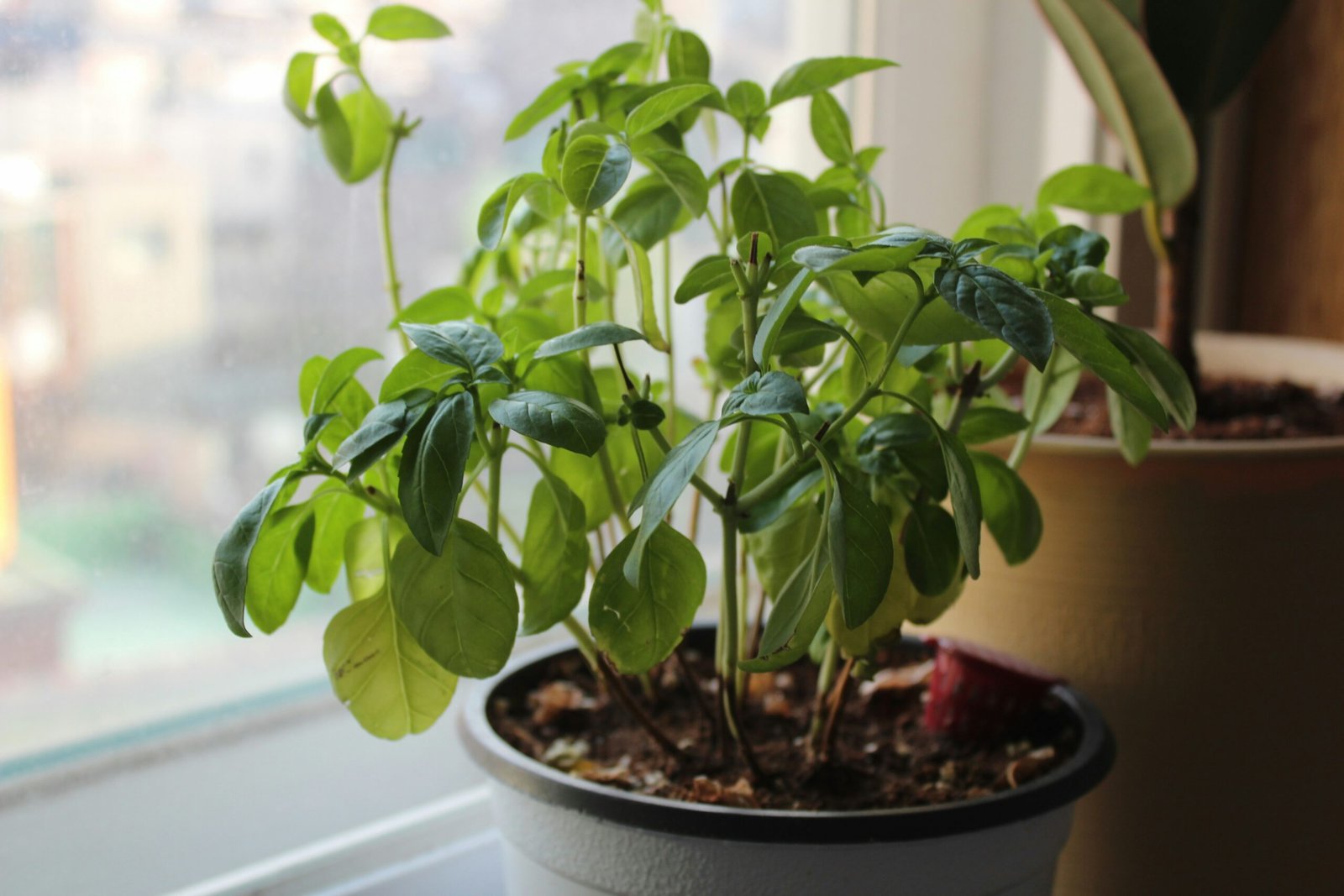
Fresh basil in February, snipped from a pot two feet from the stove, is one of the small luxuries of growing food indoors. It also tastes dramatically better than the sad plastic clamshell of basil from the supermarket that goes black in the fridge within days. December basil that tastes like July basil. That is the whole pitch, and it is very achievable.
Basil is also the herb most people fail with indoors, usually for one or two fixable reasons. So here is the honest guide: how to actually keep an indoor basil plant alive, productive, and bushy year-round, not the leggy, flowering, half-dead thing most windowsills produce.
Why supermarket basil dies (and why that is useful to know)
That living basil pot from the grocery store is not one plant. It is dozens of seedlings crammed into one tiny pot, grown fast and forced to look full for sale. They are competing for the same scrap of soil and light, so they exhaust themselves and collapse within a week or two at home.
Knowing this tells you what basil actually wants: space, light, and not being crowded. Give it those and it thrives. Buy one of those crammed supermarket pots and you can even rescue it by splitting the seedlings into a few separate pots, which most people never realize.
The two things basil needs most: light and warmth
Basil is a Mediterranean sun-lover, and this is where indoor basil lives or dies.
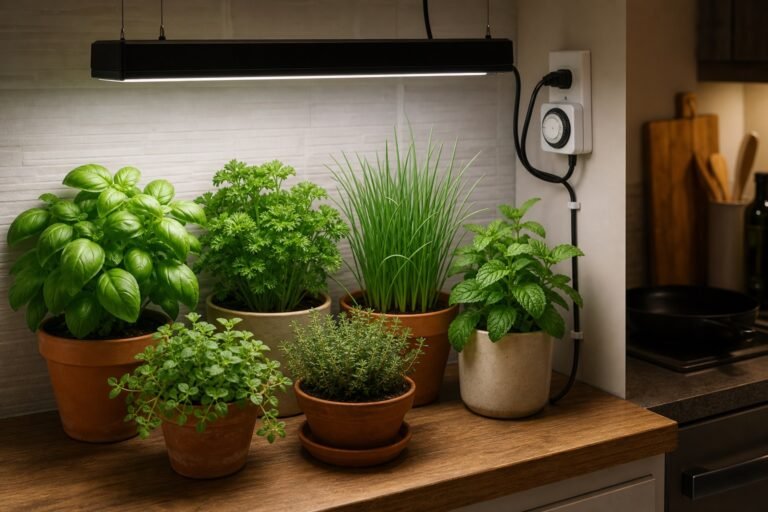
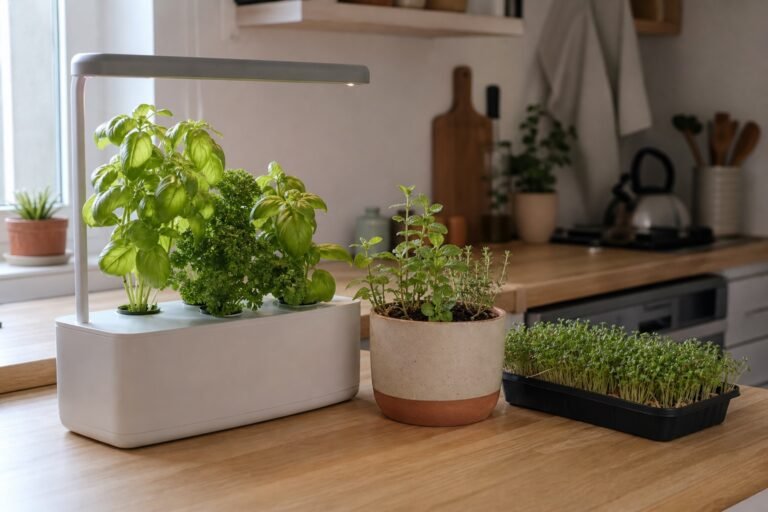
Light. Basil wants a lot, around 6 to 8 hours of bright light a day. A south-facing or west-facing windowsill in summer can just about do it. In winter, or in a north-facing London flat or a shaded Berlin Altbau, natural light is not enough and the plant gets pale and leggy, stretching toward the window. That is a light problem, full stop. A simple full-spectrum grow light fixes it, and the do you need a grow light guide helps you decide. Basil does well under about 12 to 14 hours of grow light, covered in how long to leave a grow light on.
Warmth. Basil hates cold. It wants 65 to 75°F (18 to 24°C) and sulks below about 50°F (10°C). Keep it away from cold windowpanes in winter and away from drafts. A warm kitchen is ideal, which is convenient, since the kitchen is where you want it anyway.
Starting from seed or from a plant
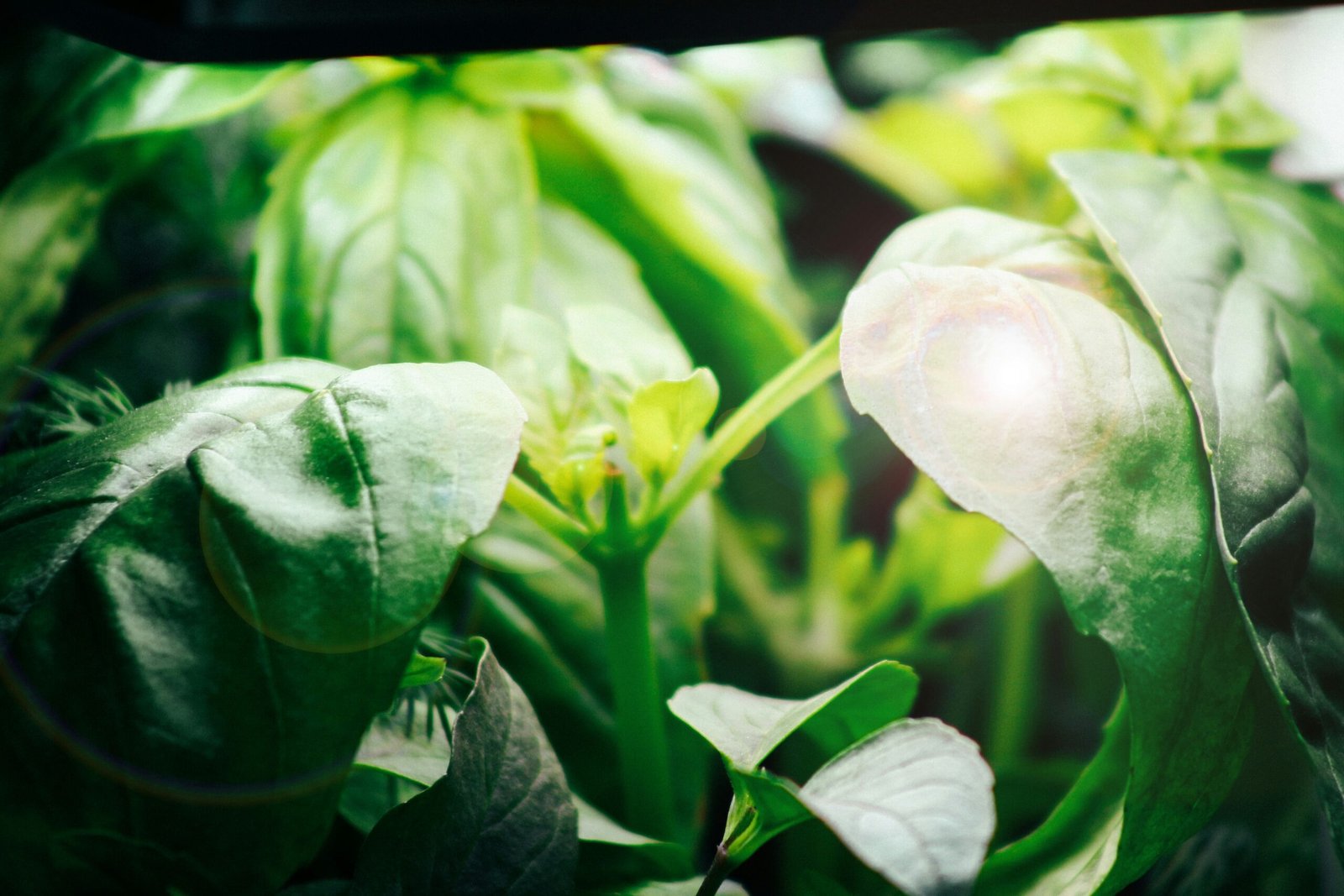
Both work. From seed is cheap and satisfying:
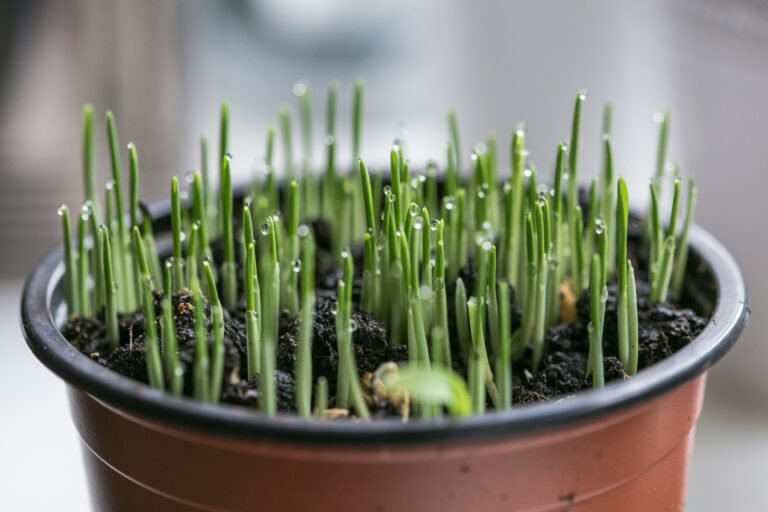
- Sow a few basil seeds in a small pot of organic potting mix, barely covered, kept warm and moist. They germinate in 5 to 10 days.
- Thin to the strongest two or three seedlings per pot so they are not crowded.
From a plant is faster. Buy a healthy starter, or rescue a supermarket pot by gently separating the mass of seedlings into two or three pots with fresh soil so each has room to grow. A pot of seeds costs a couple of dollars (£2, €2) at any garden centre, US, UK, or German.
Use a pot at least 6 inches (15 cm) wide with a drainage hole. Basil roots resent sitting in water.
Watering: the part people get wrong
Basil likes consistent moisture but hates wet feet. The sweet spot: water when the top inch (2 to 3 cm) of soil feels dry, then water thoroughly until it drains, and never let the pot sit in a saucer of water. Soggy soil rots basil fast, which is the same overwatering and root rot trap that kills most houseplants. Basil tends to dramatically flop when truly thirsty and perks back up after a drink, so it tells you clearly when it has gone too dry.
In a warm, bright spot basil drinks more than you expect, so check often, but always check rather than water on a fixed schedule. The general approach is in how often to water indoor plants.
The secret to bushy basil: pinch, pinch, pinch
This is the single thing that separates a lush basil plant from a tall, sad, flowering stick.
Harvest from the top, often. Pinch off the top set of leaves just above a pair of lower leaves, and the plant splits into two new stems at that point. Do this regularly and your basil becomes bushy and full instead of tall and leggy. Counterintuitively, the more you harvest correctly, the more basil you get.
Pinch off flower buds the moment you see them. When basil flowers (bolts), it stops putting energy into leaves and the leaves turn bitter. Snip any flower buds off immediately to keep it producing tender, sweet leaves for months longer.
Start harvesting once the plant has several sets of leaves, and never strip more than about a third at once.
Which basil to grow
Genovese (sweet) basil is the classic for cooking and the easiest to find. For something different, try Thai basil (anise notes, great in stir-fries), purple basil (striking color, good in salads), or compact Greek basil (small leaves, naturally bushy, perfect for a small windowsill). Growing a couple of varieties in separate pots gives you range and looks great lined up on the sill.
Quick troubleshooting
- Leggy and pale: not enough light. Move it brighter or add a grow light.
- Flopping: usually thirsty (it recovers) or, if the soil is wet, overwatered (more serious).
- Yellowing lower leaves: often overwatering, sometimes needs feeding. See the yellow-leaf guide.
- Flowering: pinch the buds off and harvest more often.
- Slow or stunted in winter: light and warmth. Basil genuinely needs help in the dark months.
For a slower, drier-growing contrast, the indoor rosemary care guide covers the setup that basil does not. For a faster windowsill project while the next basil cutting roots, try growing green onions indoors from scraps. If you want another cooking herb with a slower start and a cooler preference, the indoor parsley guide is the better next project.
Indoor basil is not hard once you accept what it is: a sun-loving plant that wants bright light, warmth, room to grow, and regular pinching. Give it those and you get fresh basil through the winter while the supermarket version costs a fortune and dies in a week. If basil goes well, the same approach scales to a whole windowsill, and the broader playbook is in how to grow herbs indoors without sunlight.