How to Grow Parsley Indoors: 7 Simple Steps
Last updated: July 22, 2026.
Affiliate disclosure: As an Amazon Associate I earn from qualifying purchases. Links marked "paid link" may earn Fern & Shelf a commission at no extra cost to you. Read our full Affiliate Disclosure.
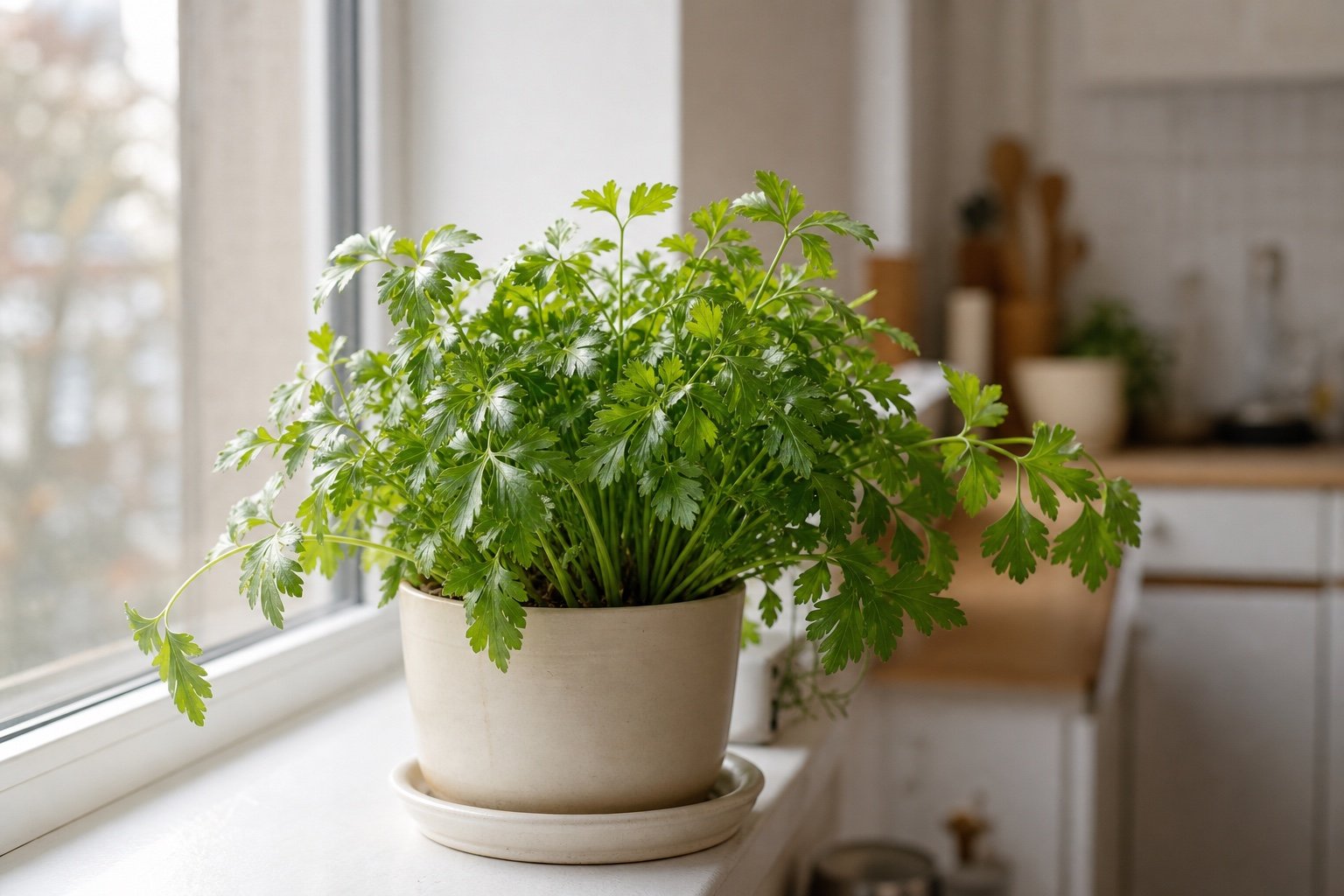
Learning how to grow parsley indoors takes more patience than special equipment. Give one plant a draining pot, moist but airy mix, and your brightest window. If the stems lean and stretch, add a small grow light. The awkward part is waiting for the seeds, which can sit quietly for weeks before the first green hooks appear.
Once parsley is growing, the routine is pleasantly ordinary. Check the mix instead of watering by the calendar, feed lightly, and cut whole outer stalks near the base. That last detail matters. Snipping just the leafy tops leaves bare stems behind and gives you a weaker next harvest.
The quick indoor parsley setup
| Decision | Practical starting point | Why it matters |
|---|---|---|
| Parsley type | Flat leaf for cooking or curly for a compact plant | Both grow indoors; flat leaf usually has the stronger flavor |
| Container | One plant in a pot at least 6 inches wide, with a drainage hole | A tiny nursery pot dries quickly and crowds the roots |
| Potting mix | Fresh, well-draining container mix | Garden soil can become dense in a pot |
| Light | 6 to 8 hours of direct sun, or a grow light when the window falls short | Weak light produces thin, stretched growth |
| Water | Check when the top half inch feels dry, then soak the mix and drain the excess | Parsley dislikes both a bone-dry root ball and standing water |
| Fertilizer | Half-strength liquid fertilizer every 4 to 6 weeks during active growth | More fertilizer does not compensate for weak light |
| Harvest | Cut the oldest outer stalks close to the mix | The center stays intact and keeps producing leaves |
These are starting points, not a weekly contract. A plant under a lamp in January and one beside an open window in July will not dry at the same speed.
Flat leaf or curly parsley?
Flat leaf parsley, often sold as Italian parsley, is the easy choice when the pot is headed for the kitchen. Its leaves are quick to chop, and University of Minnesota Extension describes its flavor as stronger and sweeter than curly parsley. It can also grow taller and looser, so allow it a little room.
Curly parsley stays denser and usually looks neater on a windowsill. The same University of Minnesota guide lists a typical height of 8 to 14 inches. The flavor is milder, but it is still useful for salads, sauces, and garnishes.
Both are forms of Petroselinum crispum and need much the same care. Pick the leaf you expect to use.
How to grow parsley indoors in seven steps
1. Start with fresh seed or a sturdy transplant
A healthy nursery plant gives you leaves sooner. Check its stems, leaf undersides, pot rim, and mix before placing it beside other herbs.
Seed is cheaper and offers more varieties, but freshness counts. Parsley seed germination can take two to five weeks, according to University of Minnesota Extension. Old seed may be even less dependable. Check the packet date, and sow more than one seed rather than betting the entire pot on a single speck.
Search Amazon for flat leaf parsley seeds (paid link)
2. Use a real pot, not a decorative cup
Illinois Extension recommends at least a 6-inch diameter pot with a drainage hole for indoor herbs. For one parsley plant, a 6- to 8-inch pot is a sensible starting size. A saucer protects the sill, but empty it after watering so the root ball does not sit in runoff.
Fill the pot with a fresh container mix that drains freely while holding some moisture. Do not pack garden soil into a windowsill pot. If the mix stays swampy or lets water race down the sides, the potting soil drainage guide can help you find the cause.
Parsley develops a taproot. When moving a transplant, support the root ball and disturb it as little as practical. Set the plant at the same depth it occupied in its nursery container.
Search Amazon for 6-inch herb pots with drainage (paid link)
3. Sow shallowly and keep the surface from crusting
Soaking parsley seeds in warm water for up to 24 hours may shorten the wait. It is optional, not a guarantee. Sow the seeds about 1/8 inch deep, which is the depth given in the University of Minnesota parsley guide, then press the mix gently and water with a fine stream.
Keep the upper layer evenly moist while you wait. A clear cover can slow evaporation, but air it and remove it when seedlings emerge. Keep a sealed tray out of hot direct sun.
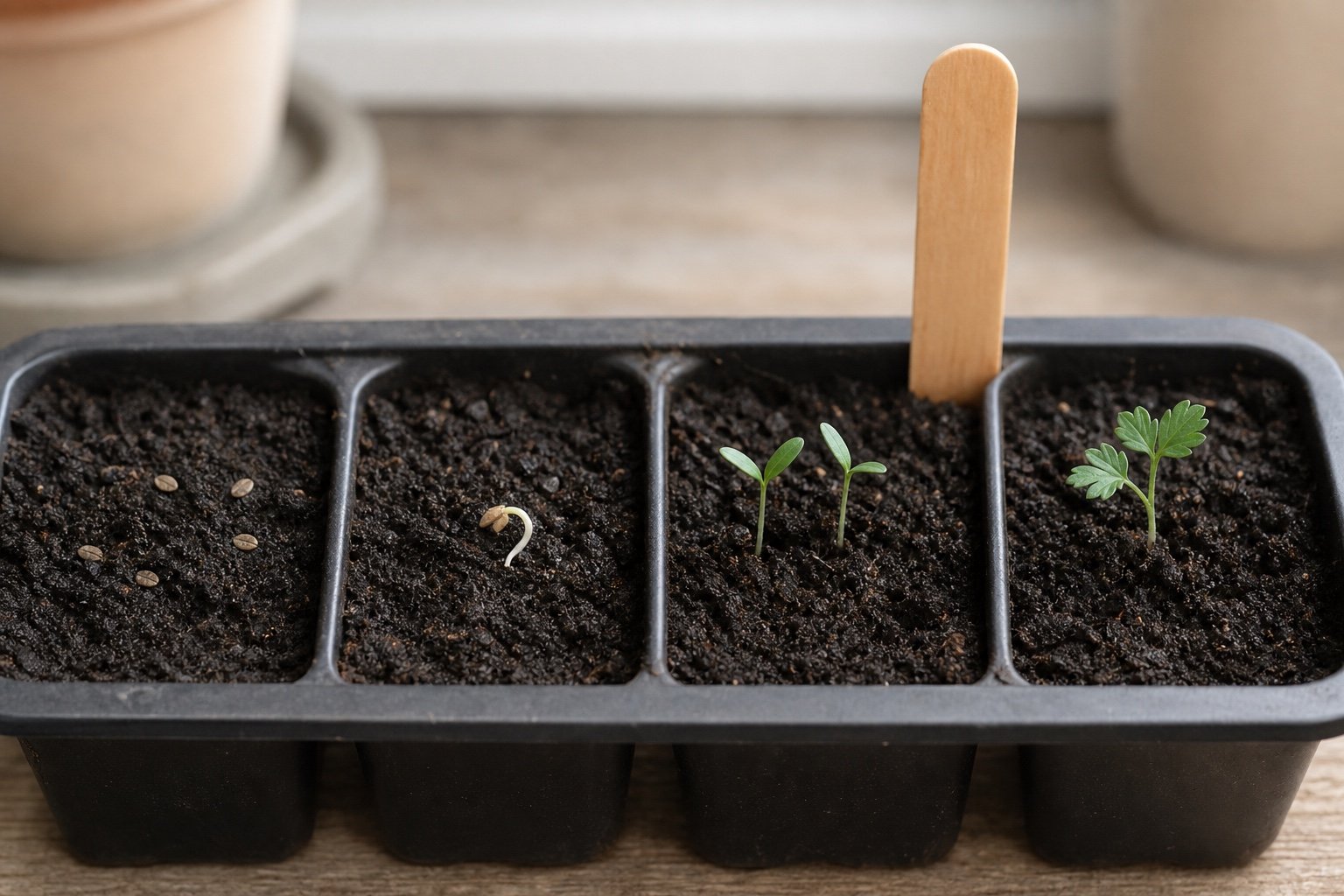
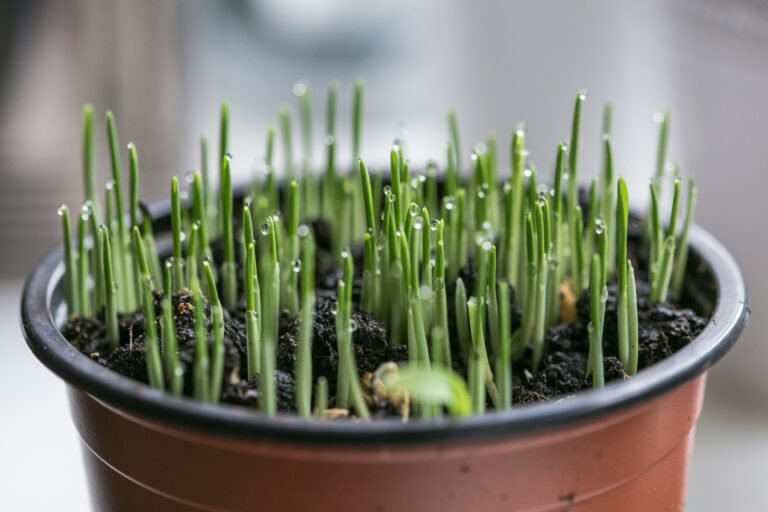
Parsley seedlings first appear with two narrow seed leaves and can look like grass. Once they have true leaves, keep the strongest one in a 6-inch pot. Cut extras at the surface if pulling them would disturb its roots.
4. Give the leaves enough light to stay compact
Anyone figuring out how to grow parsley indoors should treat light as the main limiting resource. The species can live in partial shade outdoors, but indoor light is weaker. University of Minnesota recommends a bright location and notes that indoor plants may become spindly when light levels are low.
A sunny southern or western window is the best natural starting place in much of the United States. Turn the pot every few days if the leaves lean hard toward the glass. Watch for cold glass and heating vents too. Illinois Extension says indoor parsley does best with high light and a cool growing location.
If the plant stretches, use a white or balanced grow light. A timer makes a 14- to 16-hour daily schedule easy, which matches Penn State Extension's guidance for herbs under fluorescent lights. LED intensity and optics vary, so follow the fixture directions and judge the plant, not wattage alone. Our guides to grow light duration and distance from the leaves cover the setup in more detail.
Search Amazon for a small grow light with a timer (paid link)
5. Water the mix, then let the pot drain
Push a fingertip about half an inch into the mix. If that layer feels dry, water slowly until a little drains from the bottom. Empty the saucer. If it still feels damp, check again later.
Parsley should not be allowed to dry out completely, but constant saturation is not safer. Roots still need air. Pot size, room temperature, leaf growth, and season all change the interval, so a recurring phone reminder should prompt a check rather than an automatic pour. The broader guide to watering indoor plants explains why pot weight and mix feel beat a rigid schedule.
Small sips tend to wet only part of the root ball. When watering is due, moisten the whole mix and let the excess escape. If the pot remains heavy for many days or smells sour, look at drainage, light, and container size before adding more water.
6. Feed lightly during active growth
Parsley in a container eventually uses the nutrients in its mix. University of Minnesota recommends a liquid fertilizer at half the label strength every four to six weeks for parsley grown indoors. Start after the seedling has true leaves and is growing steadily, not while you are waiting for germination.
Pause or reduce feeding when growth nearly stops in a dark winter location. Pale, stretched stems usually point to weak light rather than a fertilizer shortage. Pushing more nitrogen into a dim setup often leaves you with softer growth, not a better herb.
7. Harvest whole outer stalks
Wait until the plant has enough foliage to spare a few mature stalks. Then cut the oldest outer stalks close to the surface of the mix. Leave the small center growth alone.
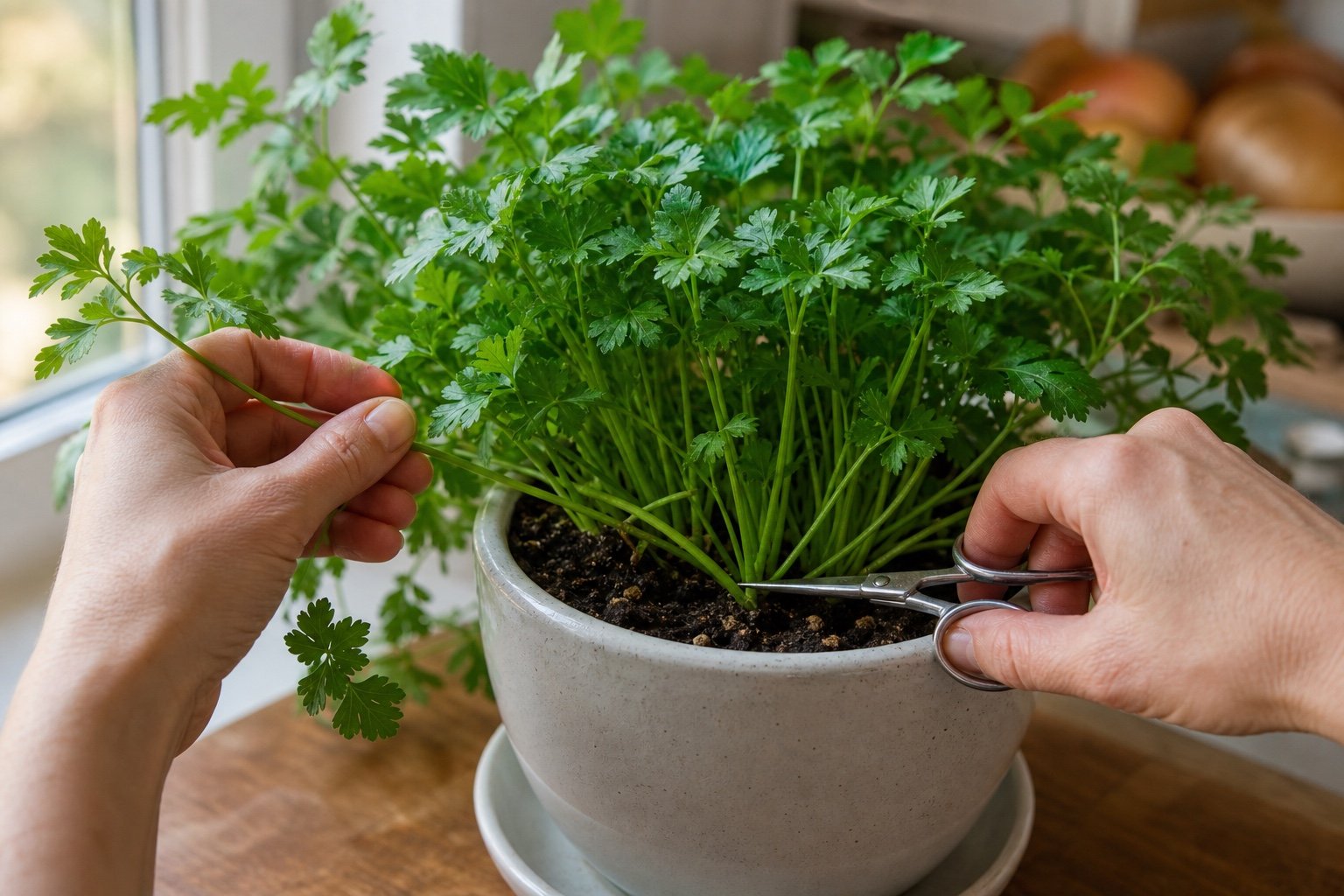
University of Minnesota Extension warns that removing only the leafy tops leaves petioles behind and makes the plant less productive. Clean scissors also bruise fewer stems than twisting a handful loose.
Take a modest harvest, let the plant replace it, then cut again. Wash the leaves before cooking and refrigerate what you will use soon. Freezing softens the texture but saves a surplus.
What weak indoor parsley is trying to tell you
Common problems blamed on "bad seed" or "a fussy herb" come back to light, water, or an impatient seed tray. When people ask how to grow parsley indoors after a disappointing first pot, these are the clues worth checking first.
| Symptom | Likely possibilities | What to check next |
|---|---|---|
| Nothing sprouts after two weeks | Normal slow germination may still be underway | Keep the surface moist, confirm warmth and seed age, and wait through the published two-to-five-week window |
| Long, pale, leaning stems | Too little usable light | Move to a brighter window or add a lamp; rotate a window pot |
| Yellowing while the mix stays wet | Poor drainage, frequent watering, or root stress | Check the drainage hole, saucer, pot weight, and smell before watering again |
| Wilting with a dry, light pot | The root ball dried too far | Water the whole mix slowly and let it drain |
| Small dark flies around the mix | Possible fungus gnats in persistently moist organic media | Confirm the insect and use the fungus gnat guide |
| Coarse leaves and a rising flower stalk | The biennial plant is entering its seed-producing phase | Start a replacement pot for better leaf quality |
Yellow leaves do not name one cause by themselves. Look at the wetness of the mix, root condition, light, and which leaves changed first before choosing a fix.
Keeping a useful supply on one windowsill
Parsley is a biennial. It makes leaves during its first season, then tends to send up a flower stalk in its second year. The foliage becomes tougher and more bitter as the plant shifts toward seed production. Indoors, most people get better kitchen results by treating it as a long-lived annual and replacing it when quality drops.
One pot can supply occasional garnishes, but it will not refill overnight after a large harvest. If you use parsley every week, stagger two pots. Sow the second while the first is established, then retire the older plant after the younger one fills out.
Keep parsley separate from sprawling mint, which can crowd it in a shared container. Basil and cilantro follow different harvest rhythms too. Separate pots let you care for each herb on its own terms. For a broader setup, see how to grow herbs indoors without sunlight.
Frequently asked questions
How long does parsley take to grow from seed indoors?
Germination alone may take two to five weeks. Fresh seed, steady moisture, and optional soaking can improve the odds, but they do not turn parsley into a quick sprouter. Harvest timing varies with variety, light, temperature, and care, so use the plant's size rather than a promised calendar date.
Can parsley grow indoors without direct sunlight?
It may stay alive in a bright room, but reliable leaf growth needs more light than most people expect. Add a grow light if the stems become thin, pale, or strongly tilted. A lamp is especially useful during short winter days.
Is it difficult to learn how to grow parsley indoors from seed?
No. It is slow rather than technically difficult. The common mistake is letting the shallow seed layer dry while waiting. Keep it evenly moist, give the seedlings strong light as soon as they emerge, and thin crowded sprouts without tearing up the keeper's roots.
How often should indoor parsley be watered?
There is no dependable number of days. Check the top half inch of mix and the weight of the pot. Water thoroughly when that upper layer feels dry, then empty the saucer. Heat, light, pot size, and plant size change the interval.
Does parsley grow back after cutting?
Yes, if you cut mature outer stalks near the base and leave the younger center intact. Do not remove nearly all the foliage at once. The plant needs working leaves and time to replace what you harvested.
Why is my indoor parsley bitter?
Older plants become more bitter when they enter the second-year flowering stage. Heat stress, drought, or neglected care can also hurt eating quality. If a thick central stalk rises and the leaves turn coarse, starting a fresh pot is usually more useful than trying to reverse the plant's life cycle.
A patient start pays for itself in fresh leaves
Once you know how to grow parsley indoors, the plant asks for very little drama. The pot must drain, the leaves need real light, and the mix should stay gently moist rather than soaked. Wait out the slow germination, harvest outer stalks from the base, and start a second pot before the first one bolts. That is enough to keep fresh parsley within reach without turning the windowsill into a full indoor farm.
Sources and further reading
- University of Minnesota Extension: Growing parsley in home gardens
- University of Minnesota Extension: Growing herbs in home gardens
- Penn State Extension: Growing herbs indoors
- Illinois Extension: Parsley
- Illinois Extension: Herbs all winter, grow them indoors
- University of Minnesota Extension: Lighting for indoor plants and starting seeds