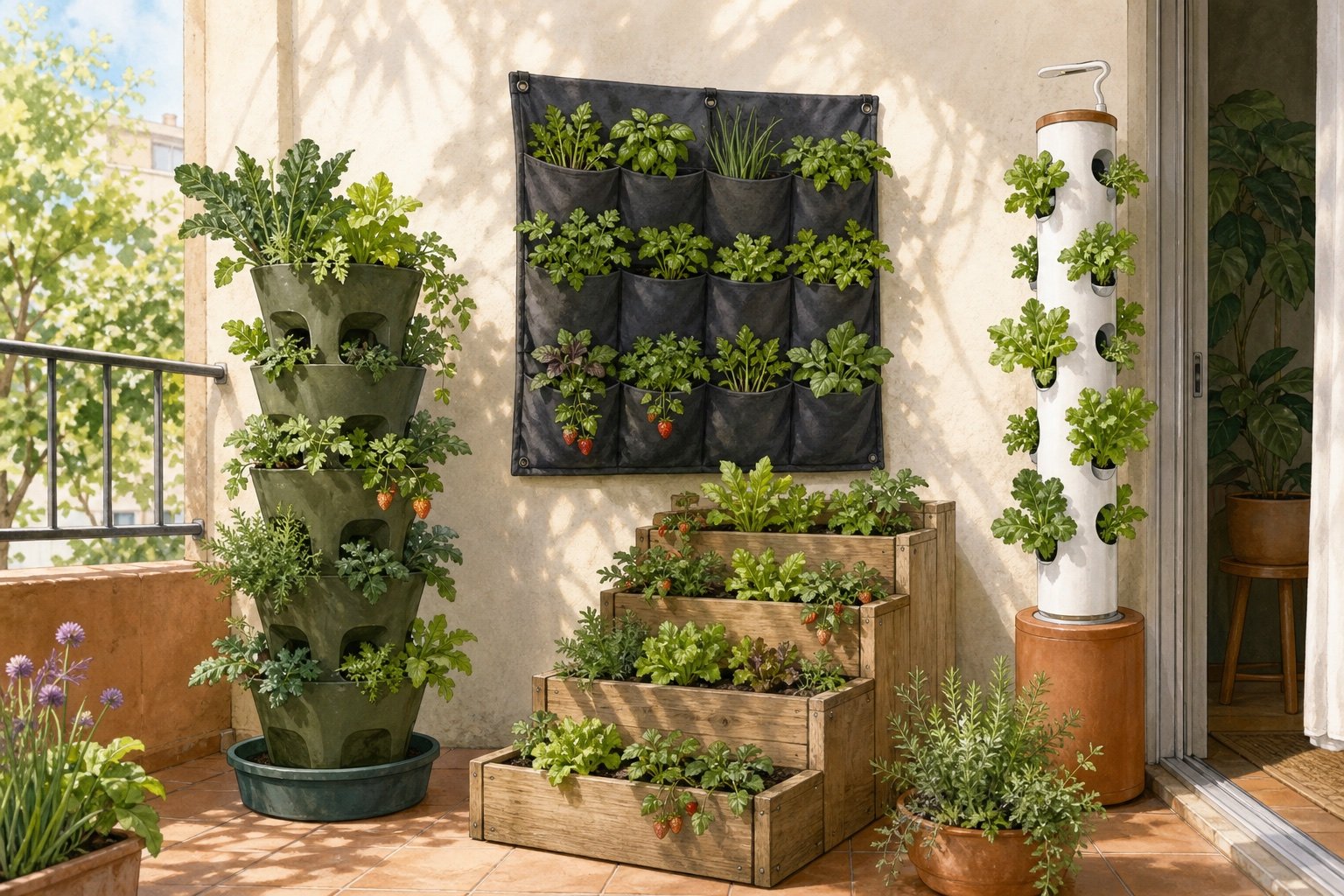
Garden Tower Alternatives: 6 Cheaper Ways to Grow Vertically
Last updated: July 22, 2026.
Garden Tower alternatives make sense when you want vertical growing but not every premium feature. Garden Tower 2 is a clever planter, yet its current $399 sale price also buys 50 planting pockets, a rotating base, and a central vermicomposting tube. If you do not need all three, there are cheaper ways to grow upward.
Start here: For a complete overview, see our 7 Best Hydroponic Systems for Beginners in 2026.
The best Garden Tower alternative for most people is the GreenStalk Original. Its current five-tier version has 30 pockets and costs $149. A Mr. Stacky five-tier kit is a much cheaper $36.95 experiment for a sunny patio. Fabric pockets and DIY builds cost less still, but they give up soil volume, even watering, durability, or all three.
This guide compares the function you get for the money alongside the number of usable planting pockets. Prices and official product specifications were checked on July 22, 2026.
Official specification sources: Garden Tower Project’s Garden Tower 2 page, GreenStalk’s 5-Tier Original page and 7-Tier Basic collection, and the Mr. Stacky 5-Tier product page. These links document current figures; they are not affiliate buying links.
If you have not decided whether a tower belongs in your space at all, start with whether vertical garden towers are worth it. This list is for someone who likes the format but would rather not spend $399.
Garden Tower alternatives at a glance
| Alternative | Verified price or price status | Capacity | What you give up | Best use |
|---|---|---|---|---|
| GreenStalk Original, 5 tier | $149 | 30 pockets | No compost core, rotation accessory separate | Best overall value |
| Mr. Stacky, 5 tier | $36.95 | 20 planting sites | Less soil, no built-in rotation or composting | Budget balcony starter |
| Generic stackable pots | Varies by size and seller | Varies | Build quality and watering consistency vary | Trying the idea cheaply |
| Fabric pocket planter | Varies by size and seller | Varies | Small soil volume and faster drying | Wall or railing with no floor room |
| DIY vertical planter | Depends on safe materials and hardware | Custom | Your time, design work, and maintenance | An awkward or unique space |
| Indoor hydroponic system | From compact budget units to four figures | Model-specific | Soil growing, lower equipment cost | A room without useful sunlight |
The $399 Garden Tower 2 benchmark
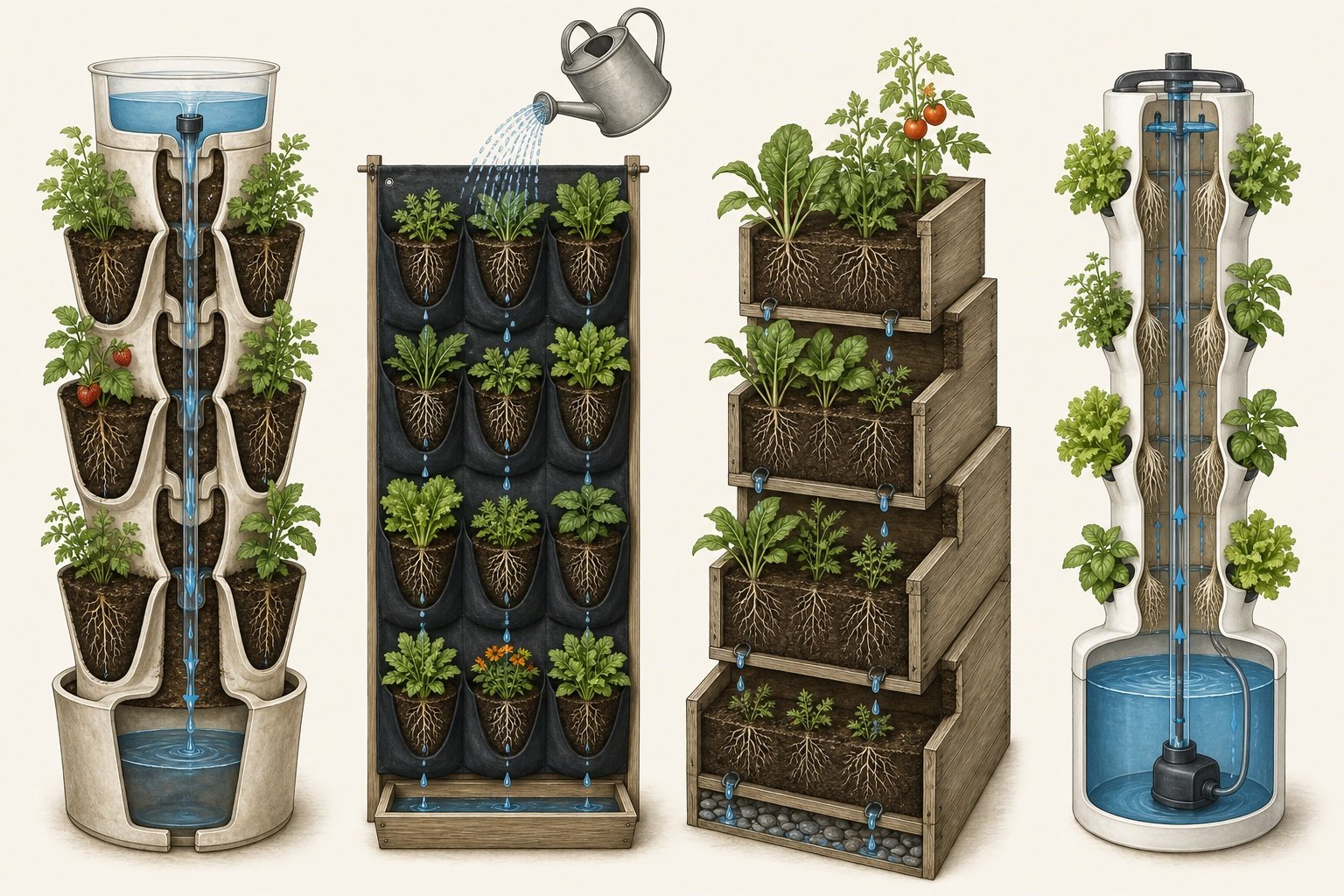
It helps to be precise about what the alternatives are replacing. Garden Tower 2 currently offers 50 side pockets plus the top, 5.5 to 6 cubic feet of soil capacity, a 360-degree rotating base, and a central compost tube. The unit measures 43 inches tall by 24.5 inches wide. Garden Tower Project estimates a working weight of about 220 pounds with moist soil.
The $399 figure was a sale price, reduced from $519, when checked. Our full Garden Tower 2 review explains where the premium feels justified after a season of use.
A cheaper planter does not need to imitate every feature to be a good alternative. It needs to preserve the part you care about. For most balcony gardeners, that part is simply many soil pockets in a small footprint. That is why GreenStalk comes first.
If a tower is only one part of the plan, use our small balcony crop guide to match vegetables with the sun, wind, and container depth you actually have.
1. GreenStalk Original: the best-value true alternative
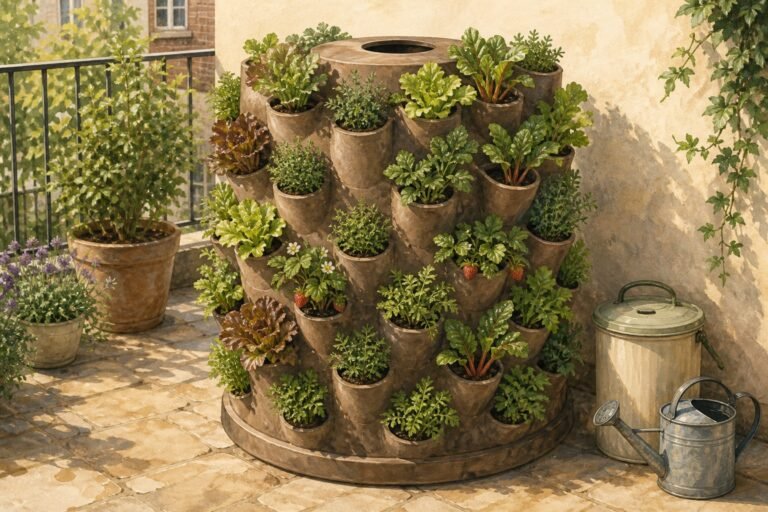
GreenStalk is the closest like-for-like choice. It stacks round planter tiers, each with six deep pockets, below a top reservoir. Water moves through a disk in each level instead of passing through one uninterrupted barrel of soil.
The current Basic Original line starts at $109 for three tiers and 18 pockets. The five-tier version is $149 for 30 pockets. A seven-tier Basic Leaf model has 42 shallower pockets and starts at $169. The five-tier Original measures 19 inches across and 55 inches high, with 40 gallons of soil capacity.
What you lose is Garden Tower 2’s central composting tube and included rotating base. GreenStalk offers separate base accessories, but those increase the final price. You also get fewer pockets in the five-tier version. What you keep is a serious, long-term soil tower with deep pockets, a five-year warranty, and a much lower entry price.
This is the alternative I would choose for most first-time tower gardeners. The complete GreenStalk vs Garden Tower comparison covers watering, soil volume, capacity, and movement in more detail.
- Best match: a close tower substitute, deep pockets, modular sizes, and better value.
- What it gives up: built-in vermicomposting and 50 pockets in one unit.
2. Mr. Stacky 5-Tier: the concrete budget pick
Generic stackable pots are everywhere, which makes it difficult to compare one vague marketplace category with a named $399 product. Mr. Stacky gives the budget section a real reference point. Its current 13-inch five-tier kit costs $36.95, weighs 5 pounds empty, and has 20 planting sites.
You fill the tiers with potting mix and water from the top. It has no pump, built-in light, compost tube, or included rotating mechanism. The smaller soil volume means less buffer against hot, windy weather than a large tower, so herbs, strawberries, flowers, and leafy greens are more natural candidates than thirsty full-size crops.
This is not a forty-dollar Garden Tower 2. It is a useful way to learn whether you enjoy planting and maintaining a vertical stack before buying something ten times the price.
- Makes sense for: a sunny balcony, small crops, and a low-risk first season.
- Not designed for: maximum soil reserve, composting, or a hands-off watering system.
Search stackable planter towers on Amazon
3. Generic stackable pot towers: cheapest way to test the shape
A basic stack of interlocking pots preserves the central idea: several planting levels occupy the floor space of one pot. Prices, dimensions, plastic thickness, and watering design vary widely, so I would not pretend there is one honest price range for every Amazon result.
Check the assembled height, base width, pocket depth, drainage path, and whether the listing includes a stable base. Count actual planting pockets, not the number of pieces. A five-piece set can have fewer or more usable openings depending on the design.
The common weakness is limited soil per pocket. That makes the stack lighter and cheaper, but it also makes moisture swing faster. On an exposed balcony, you may water much more often than someone using a 40-gallon GreenStalk or a Garden Tower 2 with nearly six cubic feet of mix.
- Good use: herbs, lettuce, strawberries, flowers, and a first experiment.
- Weak fit: an exposed site where daily moisture checks are unrealistic.
4. Fabric pocket planters: best when floor space is zero
A fabric pocket panel uses a wall or railing rather than floor space. It folds for storage, weighs little when empty, and can put herbs or greens within easy reach. For a renter with a tiny balcony, that can solve a problem no freestanding tower solves.
The compromise is root-zone volume. Small fabric pockets can dry quickly and can stain or drip onto the surface behind them. A wet panel is also much heavier than the empty product in your hand. The wall, rail, anchors, and fasteners all need to support the filled load and weather exposure. Do not hang one over a neighbor’s balcony or a surface that cannot tolerate runoff.
Look for replaceable or washable liners, clear dimensions for each pocket, and a mounting method suited to your actual surface. If the listing says only “large” without measurements, keep scrolling.
- Choose one when: a wall or strong rail is the only available space for shallow-rooted crops.
- Avoid one when: you want large vegetables, infrequent watering, or a wall that must stay dry.
Search fabric vertical grow bags on Amazon
5. A DIY vertical planter: best fit for an awkward space
Building your own makes sense when commercial planters waste the only space you have. A narrow ladder shelf with independent pots, a freestanding frame, or securely mounted containers can fit a corner, railing, or recess precisely.
DIY is not automatically free or safe. Containers need drainage. The frame needs to resist tipping when wet plants catch wind. Materials that touch soil and edible crops should be appropriate for that use. Pallets of unknown treatment history are a poor default, and wall-mounted systems need hardware rated for the loaded weight and wall material.
Our DIY vertical garden guide walks through a renter-conscious indoor version. The same planning questions apply outdoors, with extra attention to wind, rain, UV exposure, and runoff.
- Worth building for: a custom footprint, reusable pots, and control over every level.
- Not a shortcut for: anyone who still needs to research structure, drainage, and materials.
6. An indoor hydroponic system: the right alternative for a dark room
Garden Tower 2, GreenStalk, and stackable soil pots are outdoor-first products because a full circle of plants needs strong light. Placing a tower beside a dim apartment window does not turn it into an indoor garden.
If the intended space lacks useful sun, compare indoor systems with integrated or purpose-built lights. They cost more than plastic pots and add pumps, nutrients, cleaning, and electricity, but they solve the actual missing-light problem. Our guide to the best indoor vertical garden systems compares current capacities and light packages.
- The right problem: year-round greens in a room without enough sun.
- The wrong priority: the lowest purchase price or a preference for ordinary soil gardening.
How to choose among the alternatives
Choose GreenStalk if you want a true tower for less
It is the closest match in durability, soil capacity, and long-term intent. The five-tier Original costs $149 and leaves enough budget for quality potting mix and plants. You lose the compost core and included rotation, not the basic vertical-garden function.
Choose Mr. Stacky or generic pots if you are still experimenting
Start small if you do not yet know how much sun the balcony receives or how often the stack will need water. A less expensive planter lets you learn without turning the first season into a referendum on a $399 purchase.
Choose fabric only when the wall is the advantage
Fabric pockets are not a better Garden Tower. They are a different answer to zero floor area. Their small root zones and faster drying are worthwhile only when vertical wall space is what you actually have.
Choose hydroponics if the problem is light, not price
An indoor hydroponic system is not necessarily cheaper. Its advantage is that the right package supplies water circulation and plant lighting for a room where a soil tower would struggle.
Frequently asked questions
What is the closest cheaper alternative to Garden Tower 2?
GreenStalk Original. The five-tier model has 30 pockets and 40 gallons of soil capacity for $149. It lacks the Garden Tower compost core and included rotating base.
What is the cheapest named stackable planter here?
The Mr. Stacky 13-inch five-tier kit was $36.95 on the manufacturer’s site when checked. It has 20 planting sites and weighs 5 pounds before soil and plants.
Can I use a Garden Tower alternative indoors?
Only with enough correctly positioned light, safe drainage, and a floor that supports the filled weight. A purpose-built indoor system is usually easier than trying to light every side of a tall soil tower.
Do cheaper towers save money after soil?
Usually, but compare soil volume and accessories. A $149 GreenStalk still needs 40 gallons of potting mix. A mover, spinner, supports, covers, plants, and shipping can raise the total. A small stackable pot needs less soil but also offers less moisture reserve and root room.
The bottom line
GreenStalk is the Garden Tower alternative I would point most people toward first. It keeps the part most buyers want, a lot of soil-grown plants in a compact footprint, while the five-tier Original costs $250 less at current base prices.
Mr. Stacky and generic stacks are better for a first inexpensive season. Fabric pockets make sense when a wall is the only spare surface. DIY wins when the space is unusual. A lit hydroponic system is the honest answer indoors.
If none of those compromises appeals to you, that tells you something useful: Garden Tower 2’s capacity, rotation, and compost core may be the features you were trying to buy all along. The goal is not to find the cheapest object with pockets. It is to pay only for the system you will actually use.
The Amazon links in this article are untagged search links, not confirmed Fern & Shelf affiliate links.