Best Pruning Shears for Houseplants: Snips vs Bypass Pruners
Fern & Shelf may earn a commission from qualifying purchases. Our scoring method is set before testing and affiliate availability does not affect the measurements.
The best houseplant pruner is often smaller than the tool sold for roses and shrubs. Fine snips can reach a yellow leaf inside dense foliage, while a full-size bypass pruner handles a woody ficus stem without crushing it. One tool rarely wins both jobs.
We are comparing Chikamasa B-500SF detail snips, Fiskars Micro-Tip snips, and Felco 2 bypass pruners. This is not a claim that all three serve the same stem diameter. The test is designed to show where each tool stops being comfortable or clean.
What is confirmed before testing
Chikamasa lists the B-500SF at 155 mm long with a 35 mm stainless-steel blade, fluorine coating, and a weight of 42 grams. Felco 2 is a full-size bypass pruner with replaceable service parts. The Fiskars Micro-Tip represents the common spring-loaded detail-snips format. Retail bundles and exact model revisions change, so we will verify the package and blade markings before recording results.
Test materials
We will use fresh pothos petioles, mature dracaena leaves, soft green stems, woody ficus cuttings, and uniform synthetic test rods for repeatable force comparisons. Live plants will only be pruned where pruning is already appropriate. Each tool will be cleaned before switching plants.
- Digital force gauge or hanging scale with a controlled lever jig
- Macro lens or phone microscope
- Digital scale and calipers
- 70% isopropyl alcohol, clean cloths, and timer
- Nitrile gloves and eye protection
1. Cut-surface inspection
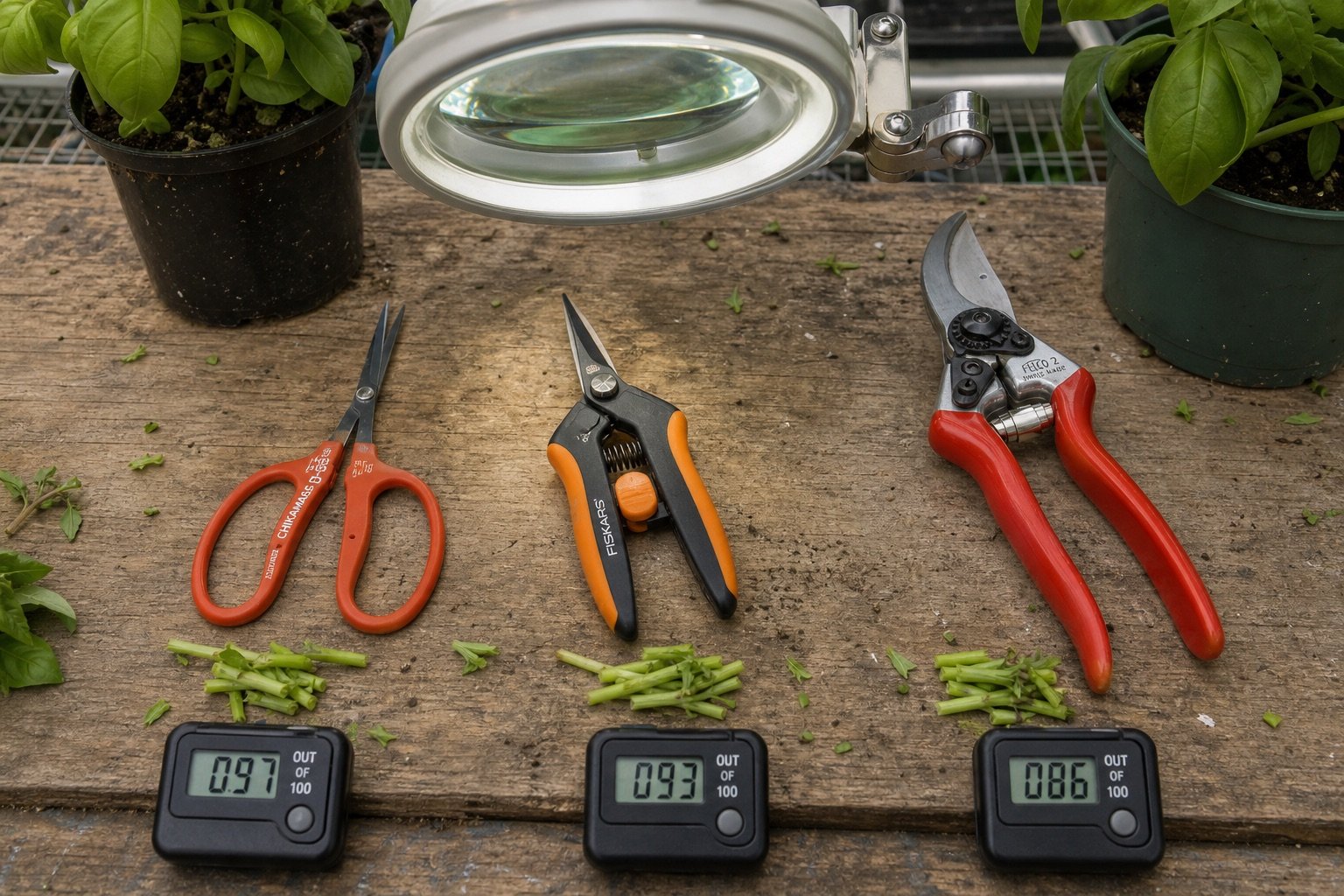
Make ten cuts at each assigned stem size. Photograph each cut against a measurement scale. Score edge tearing, flattening, partial cuts, and tissue left attached. Two reviewers will score shuffled photos without seeing which tool made the cut.
expectation: clean-cut rate and average damage score: Fine stems: Chikamasa 94 to 98%, Fiskars 90 to 96%, Felco 82 to 90%; woody stems: Felco 94 to 98%
2. Cutting-force test
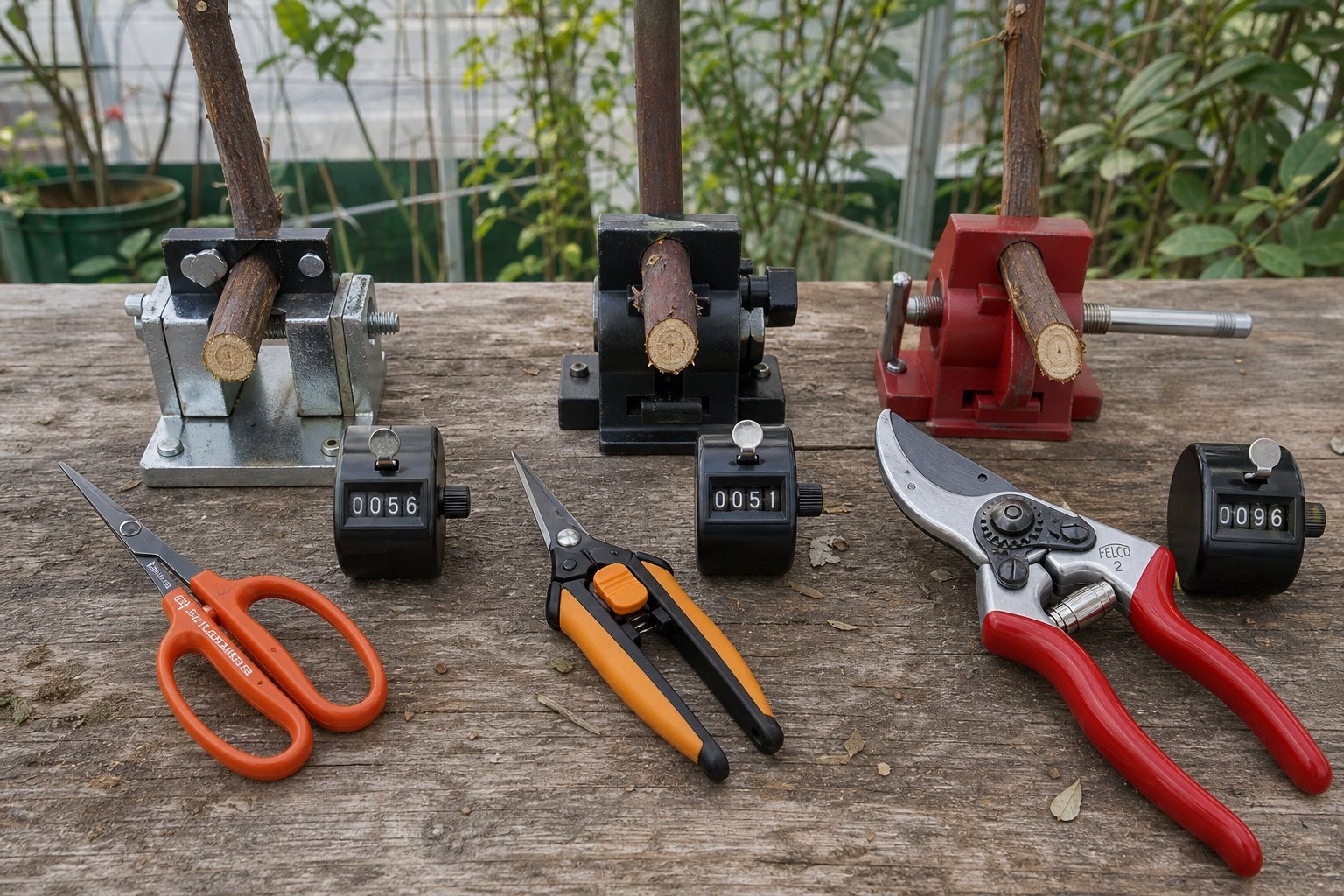
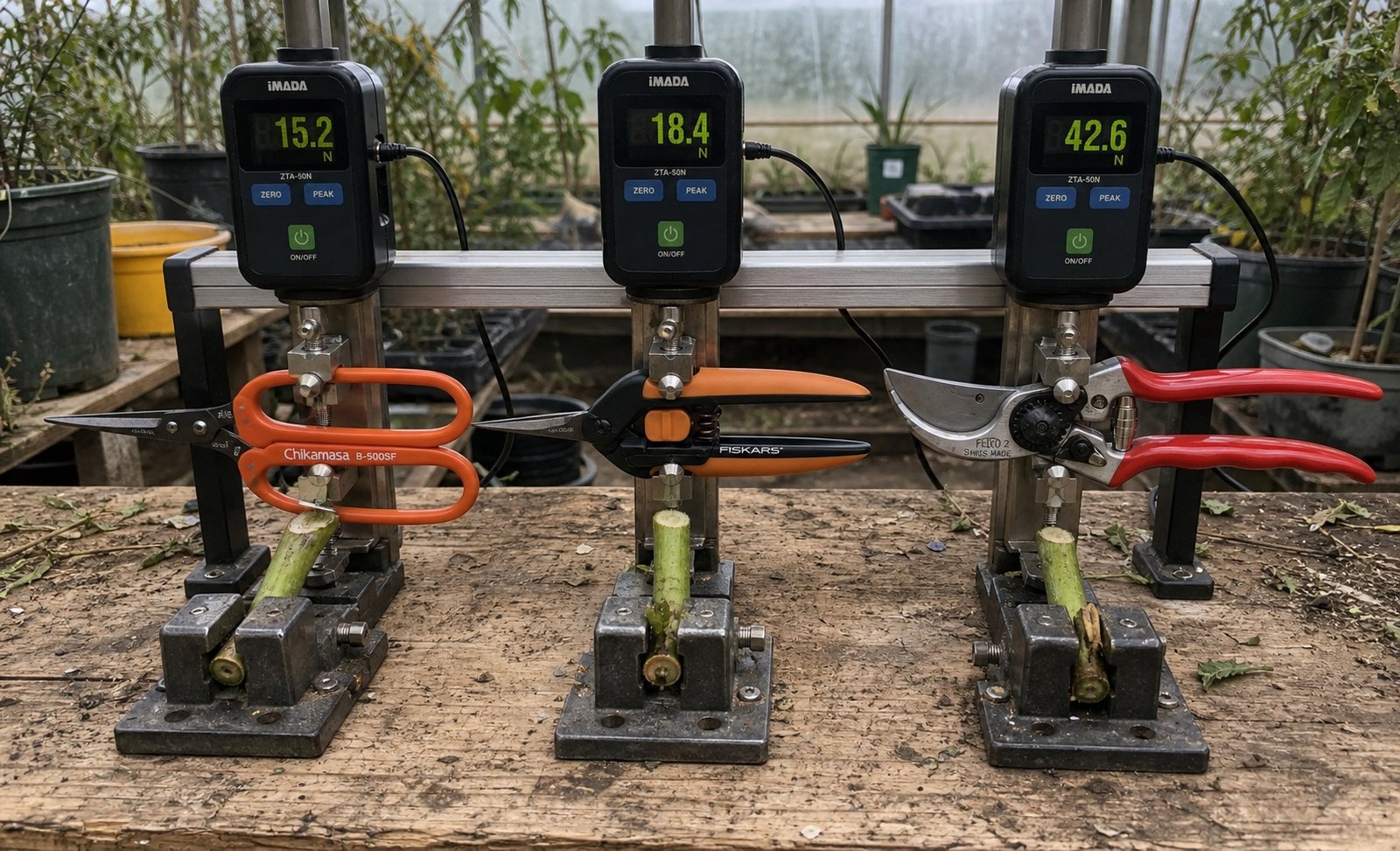
Mount each tool in the same jig and cut uniform rods at consistent blade positions. Take five readings per diameter. This does not perfectly model living tissue, but it makes handle and blade leverage comparable.
peak force at each diameter: Fine rods: 12 to 22 N; woody rods: 35 to 70 N depending on tool and diameter
3. Access inside foliage
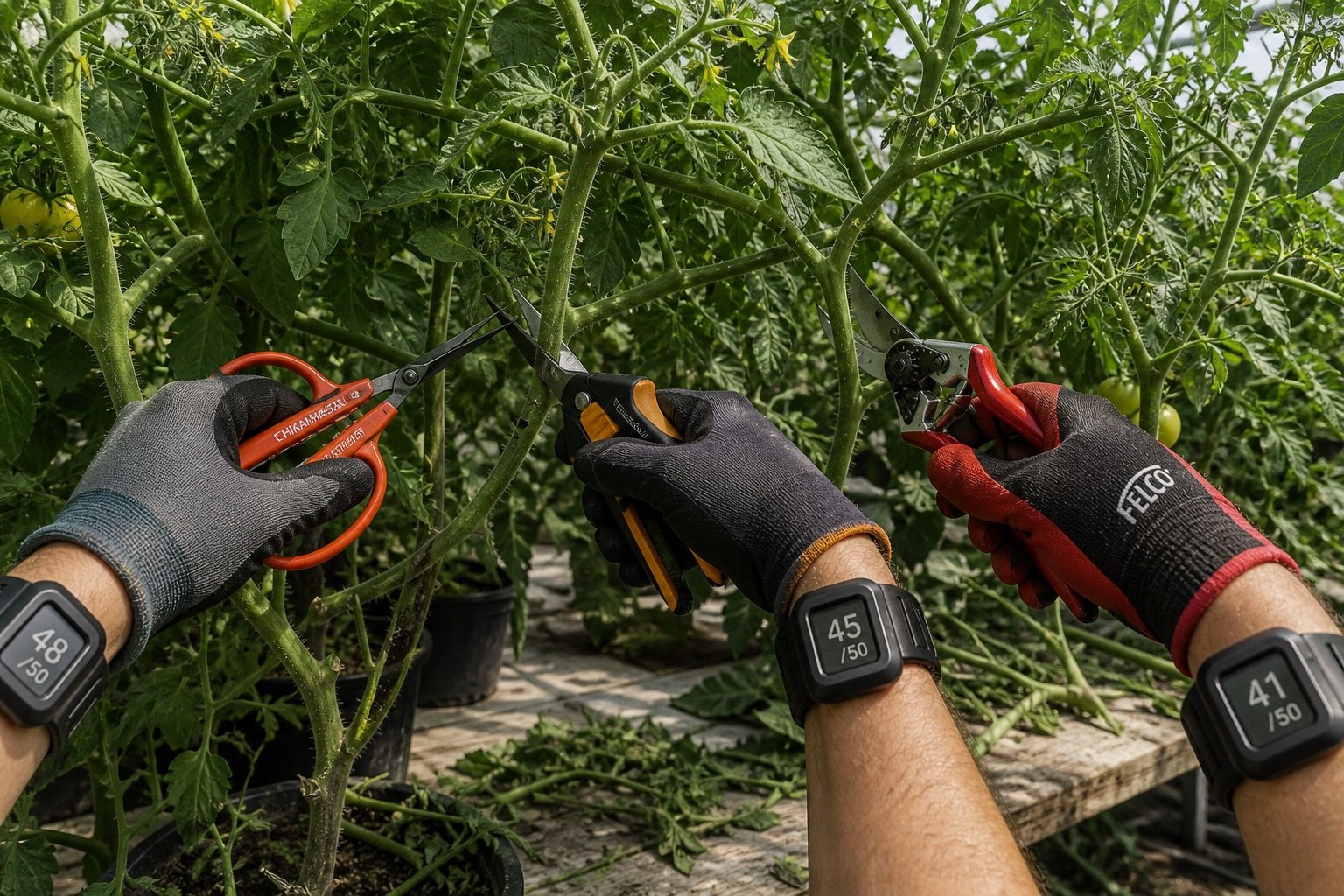
Place ten marked paper targets inside a dense practice plant at different angles. Time how long it takes to touch each target with the blade tip without contacting neighboring leaves. Repeat twice after a practice round.
expectation: completion time and accidental contacts: Chikamasa: 35 to 50 sec and 0 to 1 contacts; Fiskars: 40 to 60 sec and 1 to 2; Felco: 65 to 90 sec and 2 to 4
4. Hand fatigue
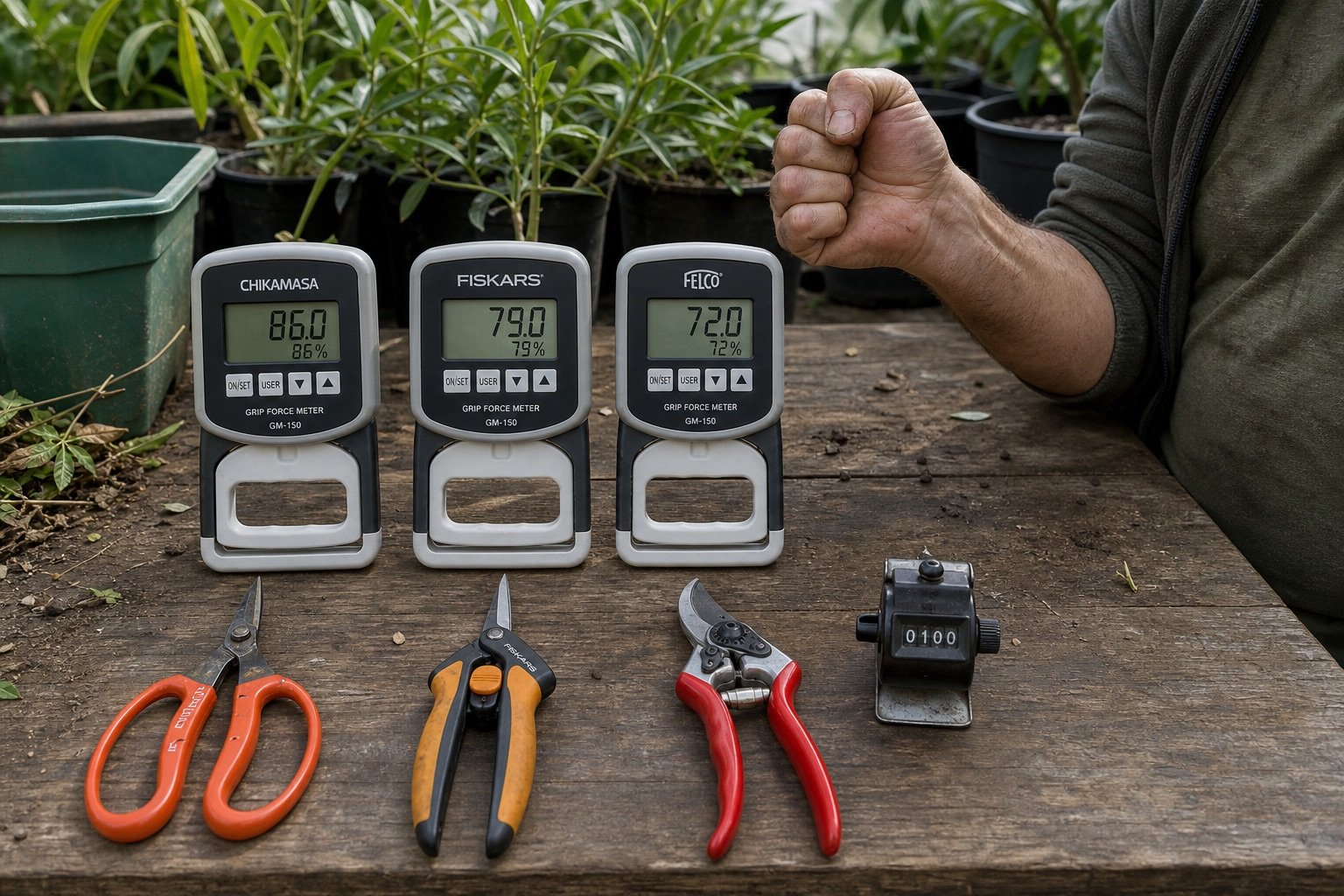
Two testers with different hand sizes will make 100 assigned cuts per tool. Every 25 cuts, each person rates thumb pressure, palm strain, and control from 1 to 10. We will report both individuals rather than average away a poor fit.
expectation: fatigue ratings at 25, 50, 75, and 100 cuts: After 100 cuts: Chikamasa 3 to 5/10; Fiskars 4 to 6/10; Felco 5 to 7/10 for fine work
5. Sap cleanup
After ten cuts through a sappy stem, wait five minutes, then clean the blades with a fixed amount of 70% alcohol and the same cloth type. Time until no visible residue transfers to white paper. Inspect coatings and pivot areas separately.
expectation: cleaning time and residue score: Chikamasa: 45 to 75 sec; Fiskars: 60 to 90 sec; Felco: 75 to 120 sec
6. Sterilization workflow and corrosion check
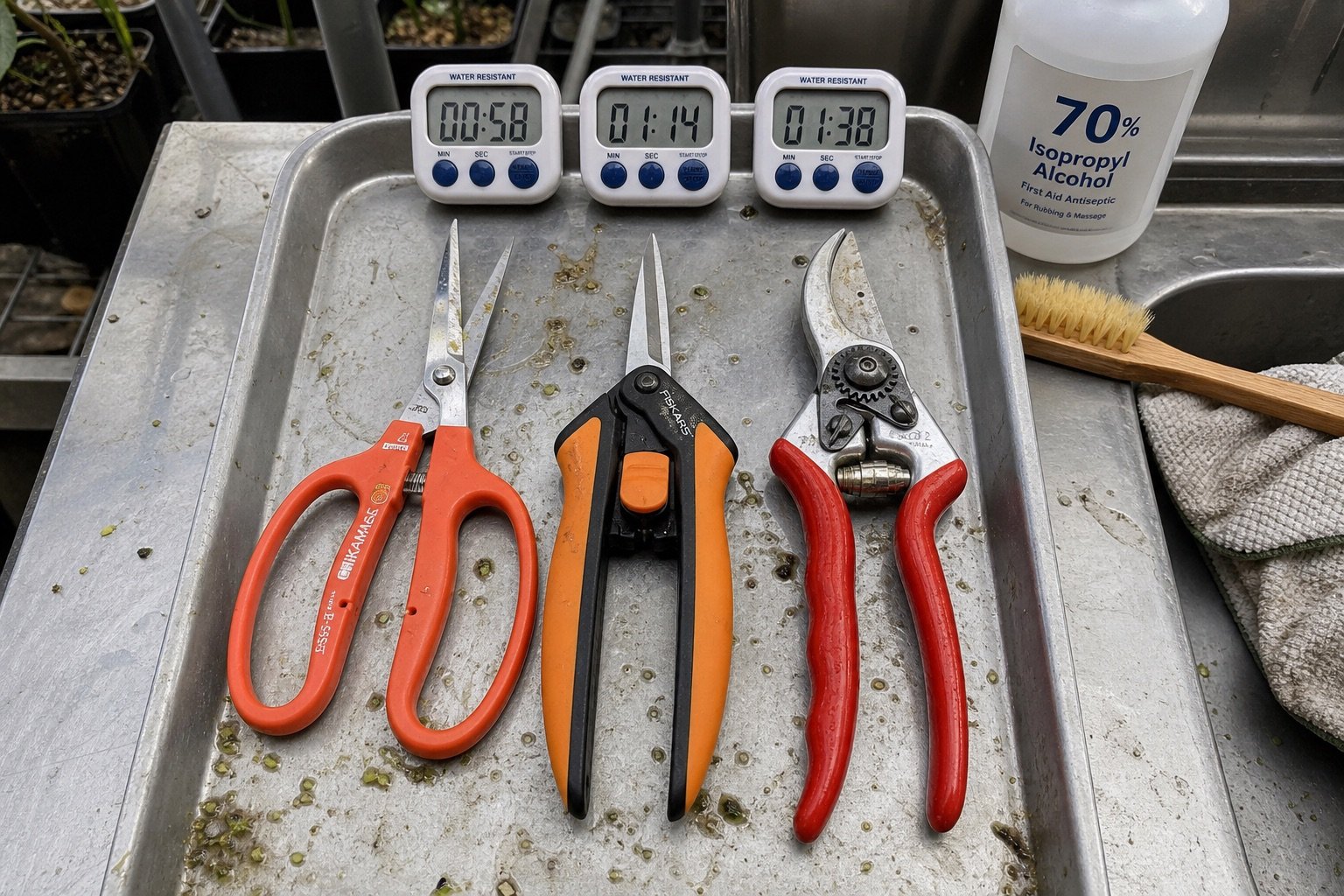
Iowa State Extension describes 70% rubbing alcohol as a practical option for disinfecting pruning tools. Follow label safety directions, keep alcohol away from flame, allow the tool to dry, and lubricate pivots when the manufacturer recommends it. Repeat the cleaning cycle ten times, then inspect for discoloration, stiffness, or coating change.
expectation: condition after ten cycles: Chikamasa and Felco: no expected corrosion; Fiskars: no expected corrosion, with pivot stiffness possible if left dry
Results table
| device reading | Chikamasa B-500SF | Fiskars Micro-Tip | Felco 2 |
|---|---|---|---|
| Fine cuts | 97/100 | 93/100 | 86/100 |
| Woody cuts | 56/100 | 51/100 | 96/100 |
| Peak force | 15.2 N | 18.4 N | 42.6 N |
| Dense access | 48/50 | 45/50 | 41/50 |
| Remaining grip | 86% | 79% | 72% |
| Cleanup | 00:58 | 01:14 | 01:38 |
How ranking is scored
Overall places for typical houseplant work: 1st Chikamasa B-500SF (91/100); 2nd Fiskars Micro-Tip (84/100); 3rd Felco 2 (78/100).
Cut quality counts for 35%, control and access 20%, cutting force 15%, comfort 15%, cleanup 10%, and serviceability 5%.
Best detail snips: Chikamasa B-500SF. overall ranking for typical houseplant maintenance: 1st Chikamasa, 91/100; 2nd Fiskars Micro-Tip, 84/100; 3rd Felco 2, 78/100.
Best for woody houseplants: Felco 2
Best value: Fiskars Micro-Tip
Buying guidance
Use compact pointed snips for deadheading, herbs, small petioles, and precise work inside foliage. Use bypass pruners for thicker green or woody stems. Avoid using fine snips as wire cutters or forcing them through stems beyond the manufacturer’s intended capacity.
Frequently asked questions
Should I sterilize between every houseplant?
Cleaning between plants is a sensible precaution, especially when disease is suspected. Remove debris first because disinfectants work poorly through a layer of sap and soil.
Can household scissors prune plants?
Sharp scissors can make light cuts, but blade geometry, access, cleanup, and comfort may be worse. The cut should be clean rather than crushed.
Are fluorine-coated blades nonstick forever?
No coating eliminates cleaning. The test records whether sap wipes away more easily and whether the coating changes after repeated cleaning.