
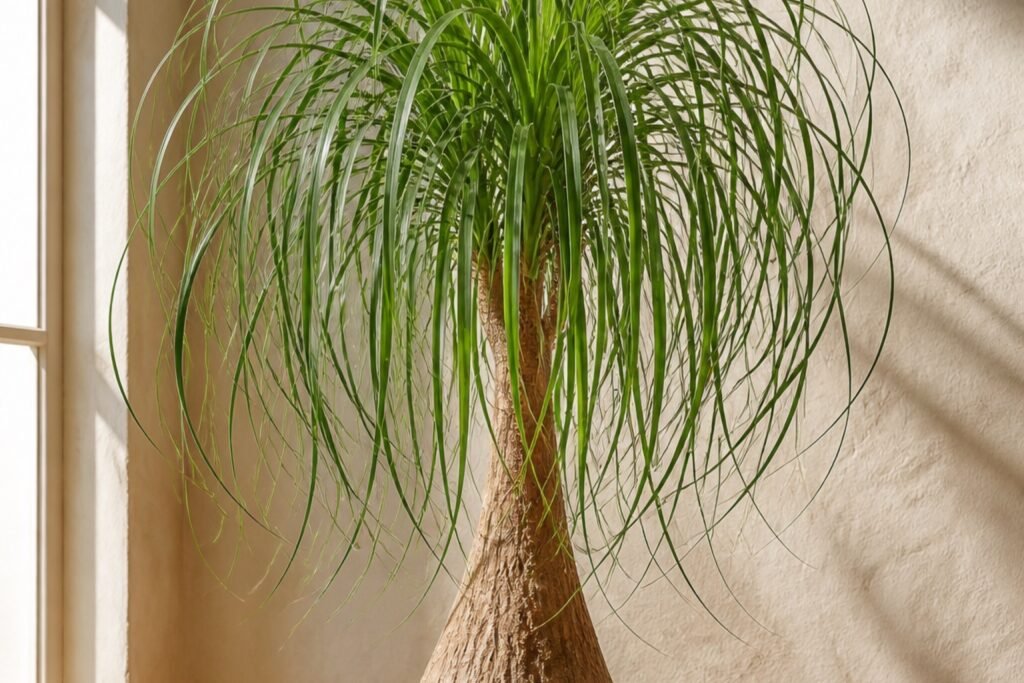
Ponytail palm care indoors makes more sense once the common name is ignored. Beaucarnea recurvata is not a palm. It is an asparagus-family succulent with a swollen water-storing base called a caudex and a fountain of narrow leaves. Treating it like a thirsty tropical palm is the fastest route to a soft base.
The older botanical name Nolina recurvata still appears in books and plant records. Bottle palm and elephant-foot tree are other trade names. The broad, firm caudex is the best identification clue.
Ponytail palm care indoors snapshot
| Care point | Practical indoor target |
|---|---|
| Light | A sunny window after gradual acclimation |
| Water | Dry the root zone fully, then soak and drain |
| Soil | Coarse cactus or succulent mix |
| Humidity | Low to average indoor humidity |
| Temperature | Roughly 50 to 85 F |
| Mature indoor size | Often 2 to 8 feet over many years |
| Growth rate | Slow |
| Pet safety | ASPCA lists it as non-toxic to cats and dogs |
Put the caudex in real window light
A south or west window is often the best indoor position. An east window can work if the plant sits close to the glass and the room is otherwise bright. Acclimate a store-grown plant before exposing it to several hours of direct sun. The narrow leaves scorch less easily than many tropical foliage plants, but a sudden jump still causes damage.
Low light produces pale floppy growth and keeps the root ball wet for too long. Do not solve that by watering even less while leaving the plant in a dark corner. Improve the light. The guide to whether a grow light is needed helps assess a window through the dim part of the year.
Rotate the pot occasionally because a heavy crown will lean toward the strongest light. Keep the caudex above the soil line. Burying it for stability holds moisture against tissue that should stay dry.
Let the entire pot dry
Check the mix at the bottom through a drainage hole or use a wooden skewer. Lift the pot. Water only after the root zone is dry, the container feels light, and the caudex is still firm. Then soak all of the mix and let runoff escape.
The caudex may shrink slightly during a long dry interval. That is a more useful clue when paired with dry mix than a date on the calendar. A soft or dark caudex over damp soil is different. It suggests rot and needs inspection, not another drink. The process in how often to water indoor plants explains why several physical cues are safer than one.
Reduce water sharply in cool, low-light winter conditions. A large specimen in a small clay pot beside a sunny window will dry much faster than a young plant in glazed ceramic. There is no honest universal number of days.
Use a snug pot with a coarse root zone
Choose a container only a little wider than the root mass, with a reliable drainage hole. A coarse succulent mix helps water spread and then leave. Dense peat in an oversized decorative pot stays wet around the caudex even when the surface looks dry.
The guide to soil for indoor succulents explains why gravel under dense soil does not repair the root zone. Air has to remain throughout the mix.
Repot when roots pack the pot, the mix collapses, or the plant becomes unstable. Handle the caudex rather than pulling the leaf crown. Keep it at the same depth. Repotting a houseplant gives a sensible pot-sizing check for top-heavy specimens.
Feed sparingly during active growth. A slow-growing plant cannot use repeated heavy doses, and unused salts collect in the pot.
Do not cut the top to make a new plant
Ponytail palms are usually raised from seed. A mature plant may form offsets, but separate one only if it has roots of its own. Cutting an unrooted side shoot is uncertain, and cutting through the main caudex risks the parent.
The long leaves naturally fray and brown at their tips. Trim only the dead end if appearance matters. Do not shear the whole crown into a straight haircut; cut leaf blades keep a blunt brown end.
Common ponytail palm problems
| Symptom | Likely checks | First sensible move |
|---|---|---|
| Soft caudex near soil | Wet mix, cold, or rot | Stop watering and inspect roots promptly |
| Brown dry tips | Age, salts, drought, or physical wear | Check new growth and the root ball |
| Pale floppy leaves | Weak light | Increase window light gradually |
| Firm shrinking caudex | Extended dry interval | Confirm dry mix, then water fully |
| White cottony patches | Mealybugs | Inspect the crown and base |
Brown tips alone are not an emergency. Older leaves drag against walls, pets, and people, and the ends dry with age. Widespread browning on new leaves deserves a check of water quality, roots, and heat.
Mealybugs hide where narrow leaves emerge. Isolate the plant and use the mealybug identification and control guide before reaching for a random spray.
If the base is soft, unpot it. Remove rotten roots and keep only firm tissue. A severely decayed caudex may not recover. Saving an overwatered plant helps judge whether enough sound tissue remains.
Keep non-toxic in perspective
ASPCA lists Beaucarnea recurvata as non-toxic to cats and dogs. Chewing any fibrous plant may still cause stomach upset, and the long leaf edges can scratch. Keep the pot stable so a curious animal cannot pull over a heavy caudex.
The common name creates confusion with true palms, including species with very different safety profiles. Match the scientific name before relying on a pet-safe indoor plant guide.
Frequently asked questions
Why is my ponytail palm base soft?
Soft tissue at the soil line usually points to persistent moisture, cold, or rot. Stop watering, remove the pot, and inspect roots and the caudex. Healthy tissue feels firm.
Can I water a ponytail palm from the swollen trunk?
The caudex stores water, but water enters through roots. Soak dry potting mix thoroughly, let it drain, and wait for the root zone to dry before repeating.
Does a ponytail palm need a small pot?
It prefers a relatively snug pot, not a root-crushing one. Choose a container just large enough for the roots and broad enough to keep the top-heavy plant stable.