
How to Actually Sell Microgreens at a Farmers Market (From Someone Who Bombed the First One)
Last updated: 01.06.2026.
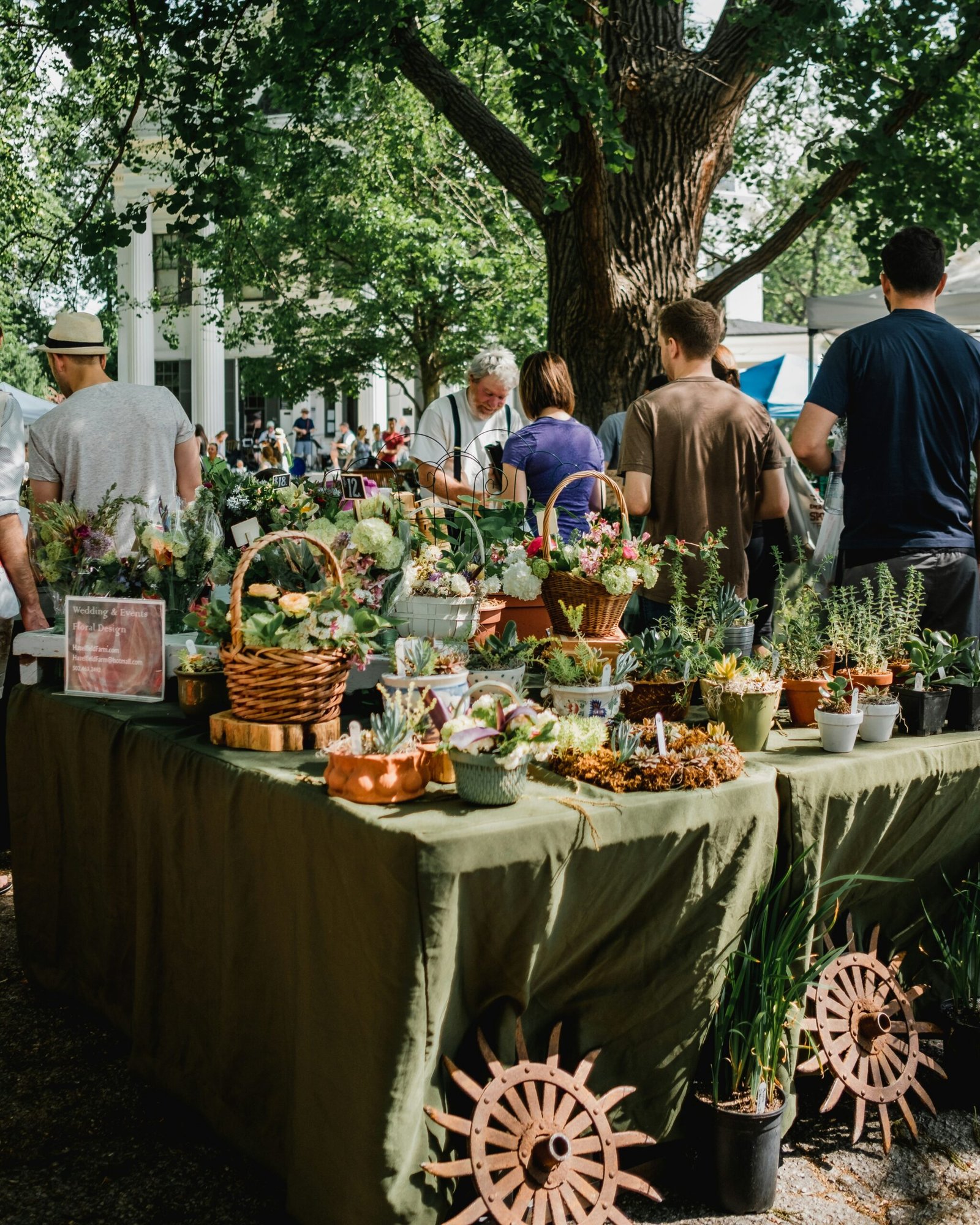
My first market, I sold four clamshells. Four. I’d grown maybe thirty, the rest wilted under a folding table in the July sun while I stood there smiling at people who would not make eye contact. I made $18. I’d spent $40 on the booth fee.
So. Let’s talk about what I got wrong, and what finally worked, because selling microgreens at a market is a completely different skill from growing them. The growing part you’ve probably figured out — and if you haven’t, start with most profitable microgreens to grow. This is the other half.
The booth fee math nobody tells you
Markets charge a stall fee. In the US it runs roughly $25–60 a day depending on the market’s foot traffic; in the UK expect £20–45; in Germany the Wochenmarkt stall fees land around €25–50. That’s your break-even line drawn before you’ve sold a single thing.
Here’s the number that matters: if a clamshell of microgreens sells for $5 (£4, €4.50) and the fee is $40, you need to move at least 8 just to cover the table. Plus your seeds, your trays, your time, the gas to get there. Realistically you want to clear 25–30 units in a four-hour morning to make it worth the alarm clock.
I didn’t do that math the first time. I do it now, every time, before I commit to a market. If you haven’t pinned down your real per-tray cost yet, the microgreens startup cost breakdown is where to start.
Pick the right market, not the closest one
This was my actual first mistake. I picked the market two blocks from my apartment because it was convenient. It was also tiny — eleven stalls, mostly jam and crocheted things, and the customers were there for a stroll, not for groceries.
What you want is a produce-forward market where people arrive with tote bags and a plan to cook that week. Bigger isn’t always better, but serious-food-shopper energy is everything. A busy Saturday market in a dense neighborhood — think a Portland farmers market, a London Borough-style food market, a Berlin Kollwitzplatz Wochenmarkt — will outperform a sleepy craft fair ten times over, even if the stall fee is higher.
Go visit as a customer first. Walk it. Count the produce stalls. Watch whether people are actually buying or just sampling. Twenty minutes of scouting saves you a wasted Saturday.
Sell the harvest, not the seedling
Microgreens have one problem at a market: most people don’t know what they are or what to do with them. You’re not selling lettuce. You’re selling a thing they have to be taught to want.
So I stopped saying “microgreens” first. I started leading with the food. “These go on top of avocado toast.” “Pea shoots — sweet, crunchy, your kids will actually eat them.” “Spicy radish, great on tacos.” Suddenly people get it. The word “microgreens” comes second, after they already want the thing.
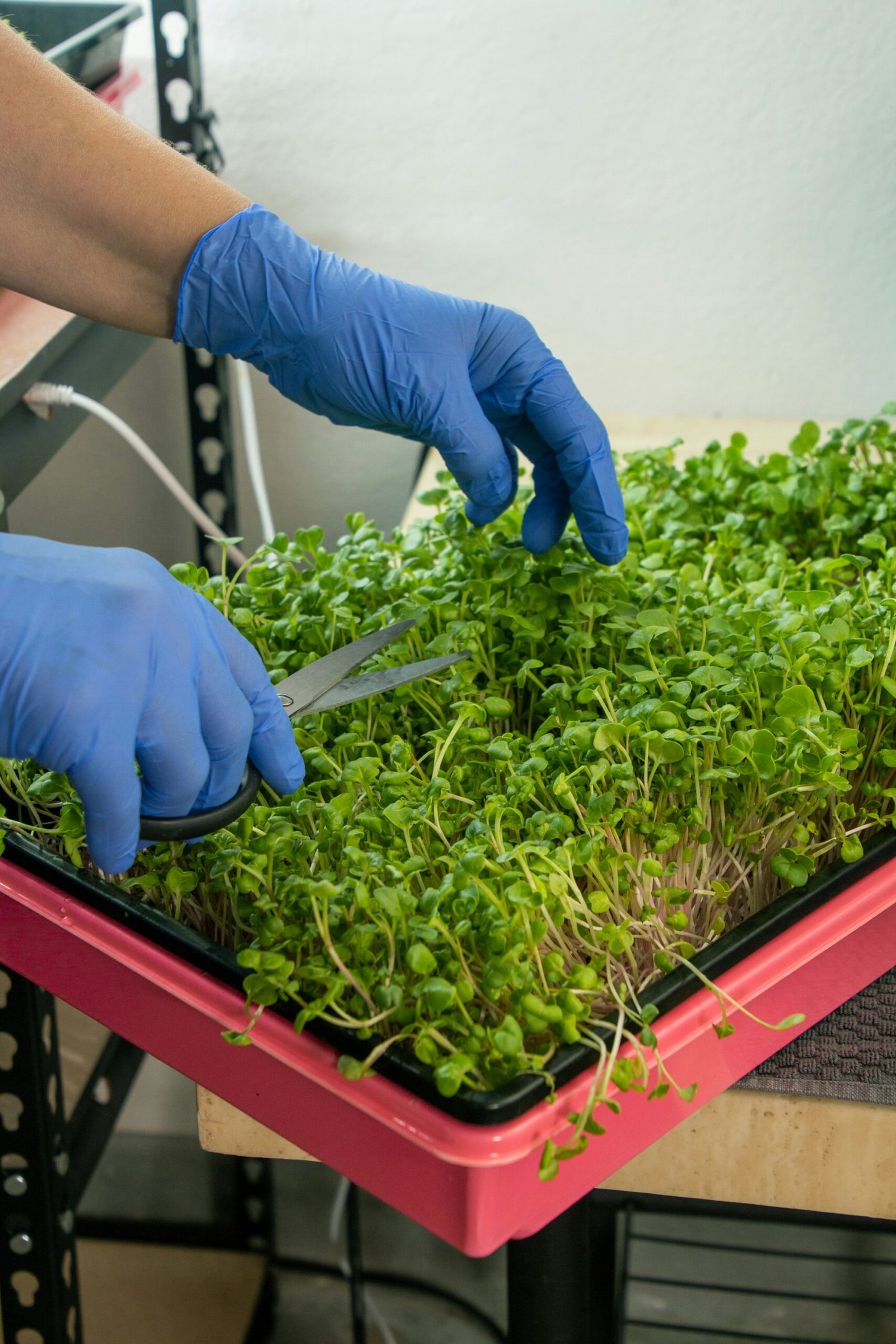
Cut a tray live at the booth. The smell of fresh-snipped cilantro — coriander, for any UK readers leaning over the table — does more selling than any sign. And hand out samples. A toothpick with three pea shoots converts more skeptics than a price tag ever will. I keep a tray of sunflower shoots open purely as bait. People taste, their eyebrows go up, they buy.
Packaging that survives a market and a fridge
Two things matter: the greens have to look alive at 1 p.m. after sitting out, and they have to survive the trip home in someone’s bag.
I sell in clear clamshells so the product is the marketing — people buy with their eyes. The compostable clamshell containers (nofollow, sponsored) cost more than plastic but they earn a “oh, nice” at a market where shoppers care about that stuff, and most of them do. Slap a simple label on top: name of the green, your farm name, harvest date, and a one-line “store in fridge, eat within a week.” I print mine on cheap waterproof label sheets (nofollow, sponsored) because regular paper labels turn to mush the first humid morning.
Living trays are the other option — sell the whole tray uncut so the customer snips at home and it stays fresh for two weeks. Some markets love this. It photographs well, it lasts, and it justifies a higher price. Downside: trays are bulky, heavier to haul up from a parking spot, and you can fit fewer on the table.
Keep everything cool. A cheap cooler with ice packs under the table on a hot day is non-negotiable. I learned that the wilted-July way.
Price like you mean it
New sellers underprice out of nerves. I did. Don’t.
Microgreens are a premium product and the people buying them at a market already know that — they’re not comparison-shopping against the supermarket. A 2 oz (about 55 g) clamshell sells comfortably for $5–7 in most US markets, £4–6 in the UK, €5–7 in Germany. Specialty stuff — wasabi mustard, popcorn shoots — goes higher. Round numbers move faster at a market because nobody wants to fish for change, so I price at $5 or 3 for $12, not $4.75.
Bundles work. “Any three, $12” nudges the person who came for one clamshell into buying three. My average sale roughly doubled the week I put up that sign.
The legal bit (boring, important, varies by where you live)
Before you sell a single tray, check the rules where you are. In the US this is cottage food law and it’s set state by state — some states wave microgreens through easily, others want a kitchen inspection; your state Department of Agriculture is the place to check, and the FDA sets the broader food-safety backdrop. UK sellers register as a food business with their local council and follow Food Standards Agency guidance. In Germany, food-trade rules and your local Lebensmittelüberwachung office govern market sales, with the BLE overseeing the agricultural side.
It’s usually less scary than it sounds — microgreens are low-risk — but markets often ask for proof you’ve registered before they give you a stall. Sort it first. A market manager turning you away at 6 a.m. for missing paperwork is a bad morning.
What I’d tell first-market me
Bring more than you think you’ll sell, but not wildly more — fresh product you can’t move is just compost. Bring a float of small change and a phone card reader, because half of everyone pays by tap now. Bring a folding portable table (nofollow, sponsored) and a weight for your sign because wind exists. Show up early enough to set up calm instead of frantic.
And talk to people. The single biggest jump in my sales wasn’t a better tray or a nicer label — it was me getting over the awkwardness and actually offering samples instead of standing back hoping. Microgreens sell on taste and on the grower standing right there, slightly sunburned, clearly proud of the thing. That’s the whole pitch.
The four-clamshell morning still stings a little. But I go back to that same market now and clear the table by noon most weeks. It’s learnable. The first one’s just rough.
Once the market is humming, the next move is wholesale to restaurants — steadier money, no 6 a.m. setup. And if you want a second product line on the same table, edible flowers sell to the same crowd at a higher margin.