Best AeroGarden Alternatives: 5 Picks Compared for 2026
Last updated: September 5, 2026.
Best AeroGarden alternatives now compete with a brand that is active again. ScottsMiracle-Gro says AeroGarden is back in business, and its current shop lists gardens, seed kits, and accessories. Another system needs to fit your space, budget, or routine better. Being available is no longer enough.
Start here: For a complete overview, see our 7 Best Hydroponic Systems for Beginners in 2026.
LetPot is worth a look if refilling and feeding are the chores you want to reduce. For a few herbs, Click & Grow is the simpler format. Gardyn and Rise give you more planting space, though the larger purchase brings more plants to manage.
Choose an AeroGarden alternative by space and upkeep
| Your priority | Shortlist | Check before buying |
|---|---|---|
| Automatic refill and dosing | LetPot LPH-Max | Space for the garden and its external water supply; cleaning access |
| Lower upfront cost | iDOO 12-pod range | Exact model, light clearance and included accessories |
| A few herbs with passive watering | Click & Grow Smart Garden 3 | Three growing positions and the ongoing Plant Pod budget |
| A floor-standing tower | Gardyn Home 4 | Room around the plants and optional membership costs |
| Expandable horizontal growing levels | Rise Garden 3 | Number of levels and trays included in the quoted price |
The growing observations in this article come from a gardener known personally to the publisher, who shared his experience with us. The author did not conduct these trials. We separate that account from current manufacturer specifications and illustrative cost calculations. This is not a controlled five-system yield comparison. Product listings and US prices were checked on September 5, 2026; verify your variant and checkout total.

How we chose the best AeroGarden alternatives
We considered planting space, feeding and refill routines, recurring costs and access for cleaning. A pod count alone tells you little about how much mature basil will fit. The reported growing experience informs our recommendations, but it does not establish comparable germination or yield measurements for all five systems.
Prices below are snapshots from official US product pages checked on September 5, 2026. Amazon prices move faster.
1. LetPot LPH-Max: the automation pick
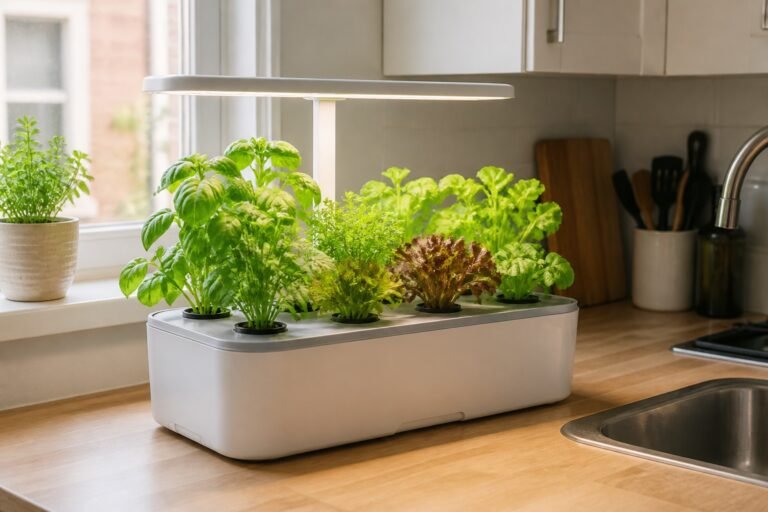
The gardener who shared his observations with us preferred LetPot after a six-month comparison, particularly for the routine it took off his hands. That is his account of use, rather than a test performed by this article’s author. The LetPot LPH-Max is our current automation pick. The current Max has a 21 pod tray, a 36W light, screen and app controls, plus automatic water refilling and nutrient dosing. LetPot listed it at $251.99 on the check date.
The smaller current model is the LetPot LPH-SE, which LetPot also calls its Senior system. It has 12 pod positions, a 24W light, and app controls. The official price started at $119.99 on the check date. Choose it when you want the app and taller light arm but do not need the Max’s automatic refill and nutrient features.
Our LetPot, AeroGarden, and Click & Grow comparison compares the systems and their upkeep in more detail. Check the model generation before applying any comparison to a current purchase.
2. iDOO 12 pod: the budget workhorse
The iDOO 12 pod is the unit I point people toward when budget matters more than app polish. It is simple, compact, and better suited to herbs and leafy greens than a serious tomato crop.
There is one catch. iDOO’s current official lineup includes several 12 pod models, and the light, tank, fan, and app features vary. Check the model number on the listing instead of assuming every product called “iDOO 12 pod” is the same machine.
3. Click & Grow Smart Garden 3: the low-effort option
The Click & Grow Smart Garden 3 is the one I’d hand to someone who wants fresh herbs with very little thought. The same gardener reported using a Smart Garden 3 for the better part of a year and found that it mostly did what he expected. Our separate Click & Grow value review covers the purchase decision. The current model uses three Plant Pods and includes three basil pods. Click & Grow listed it at $124.95 when checked.
The tradeoff is still the capsule system. It is tidy and easy, but your cost per plant runs higher than it does with reusable baskets and generic sponges. If your shortlist is only these two brands, use our AeroGarden vs Click & Grow comparison. It handles that decision in full.
4. Gardyn Home 4: the premium tower
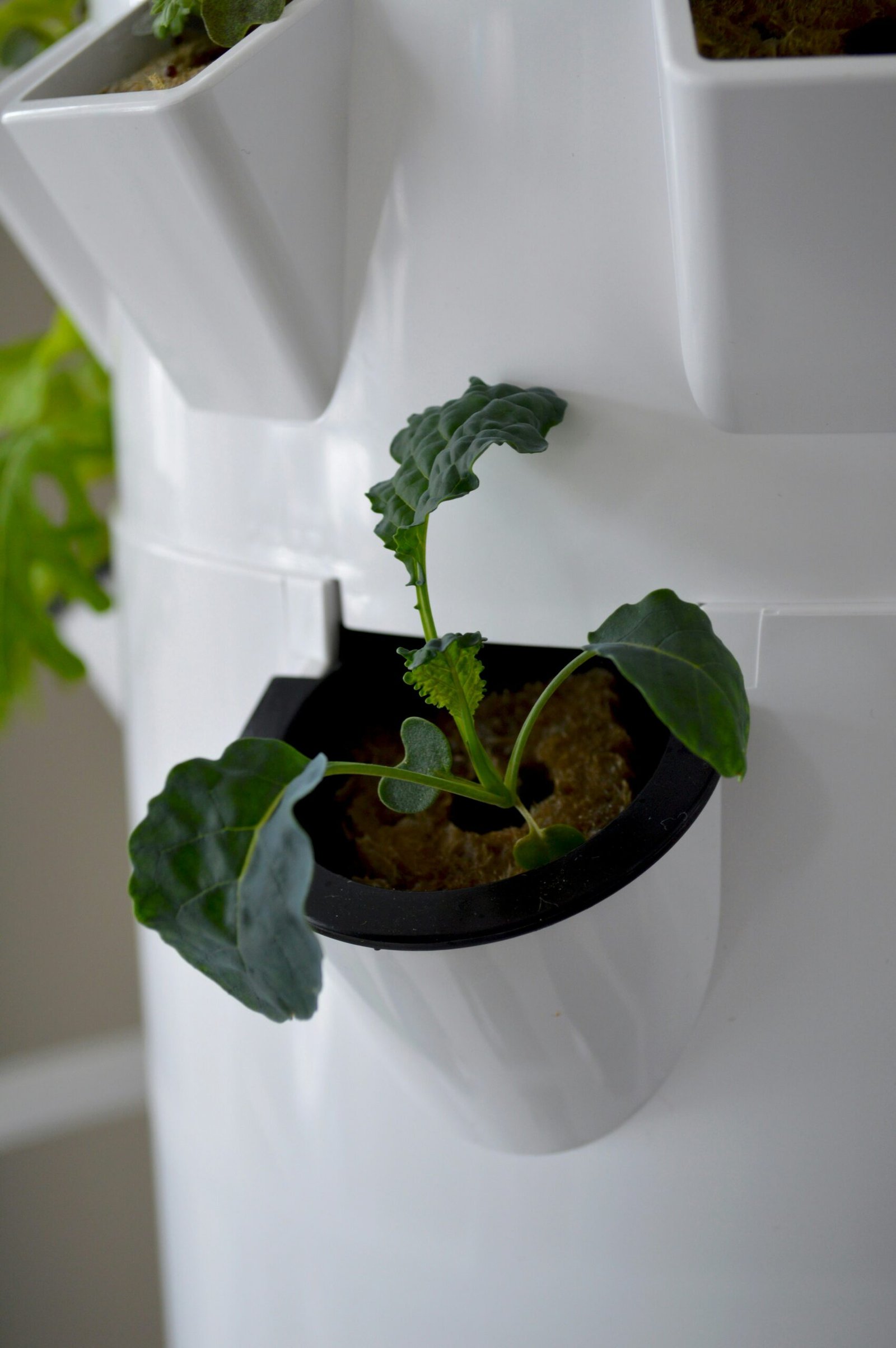
The Gardyn Home 4 grows 30 plants in about 2 square feet, according to Gardyn. The current model was listed at $899. It has automated lighting and watering, plus cameras that support Gardyn’s plant coaching features.
A membership is optional. Gardyn listed the monthly plan at $39, with lower monthly rates on longer commitments, when checked. You can run the garden without it, but some coaching, plant credits, and premium app features sit behind the membership. Compare the ongoing plant and membership costs with the towers in our indoor vertical garden systems guide.
5. Rise Garden 3: furniture-grade and modular
Rise Garden 3 is the current floor-standing option from Rise. The official store listed it at $899, with one to three levels. Rise’s specification table lists 12 to 36 growing positions per level, depending on configuration, up to 108 across three levels. The same page also advertises 16 plants per level, so confirm the included tray configuration before ordering. Maximum pod counts are not a promise that full-size crops will fit every position. Allow space to reach every level for pruning and cleaning.
Rise also sells the $349 Personal Rise Garden, but that is a separate countertop model and it is not modular. Choose the Garden 3 when the system will be part of the room and you want space to expand. Choose the Personal model when counter space and a lower starting price matter more.
AeroGarden is still an option
Do not write AeroGarden off. Its current official garden catalog includes Harvest, Bounty, Sprout, and Farm models. The same ScottsMiracle-Gro site also sells seed kits and accessories. A Harvest or Bounty is a live choice again, not orphaned hardware.
This article compares complete garden systems. For pods or replacement parts, check your exact model against AeroGarden’s current catalog and manuals. Broad compatibility claims are not useful when a pump, grow deck, or power supply changes between model families.
Switching from AeroGarden: what can you reuse?
Keep usable untreated seed, labels and a clean measuring jug. Check baskets, sponges and support accessories against the new garden’s dimensions before reusing them. Click & Grow Plant Pods are a different growing format; do not assume an AeroGarden basket will fit. Pumps, lights and power supplies require an exact manufacturer-approved match. A similar connector does not establish electrical compatibility.
Use the new system’s nutrient instructions. A leftover bottle can have a different concentration or dosing schedule, and passive Plant Pods do not use the same feeding routine as a circulating nutrient reservoir.
Budget for the first year, not just the garden
Add the device, shipping and tax, then the seeds or pods you expect to replace, nutrients, electricity and any subscription you choose. Price the same number of growing cycles for each candidate. Our hydroponic system cost calculator lets you enter your own assumptions; the result is a budget scenario, not a measured cost per harvest.
For example, four additional three-pod refills at Click & Grow’s listed $14.95 each total $59.80, before shipping, tax and electricity. That example does not assume four harvests or a particular crop lifetime. An optional Gardyn subscription at $39 a month would add $468 for twelve paid months; account for any trial or prepaid plan separately.
Which system fits your routine?
The best AeroGarden alternatives here solve different problems. Choose the LetPot LPH-Max for automation, the iDOO 12 pod for a basic budget setup, or the Click & Grow Smart Garden 3 for the least fuss. Gardyn Home 4 and Rise Garden 3 make sense when you want a larger system that looks intentional in the room. If you already like the AeroGarden workflow, a current Harvest or Bounty may still make more sense than switching ecosystems.
If you are still deciding whether a smart garden belongs in your apartment at all, our guides to growing herbs indoors without sunlight and the best indoor herb garden kits cover that first decision.
Official product and refill checks
- LetPot LPH-Max specifications and current device prices.
- iDOO model lineup: Home Garden Kit listed at $129.99 and Translucent Garden 12 Pods at $99.99 on the check date. These are separate products.
- Smart Garden 3 specifications and Plant Pod prices.
- Gardyn Home 4 and membership terms.
- Rise Garden 3 configurations.