Can You Use a Garden Tower Indoors? (Yes, With Three Big Caveats)
Last updated: June 12, 2026.
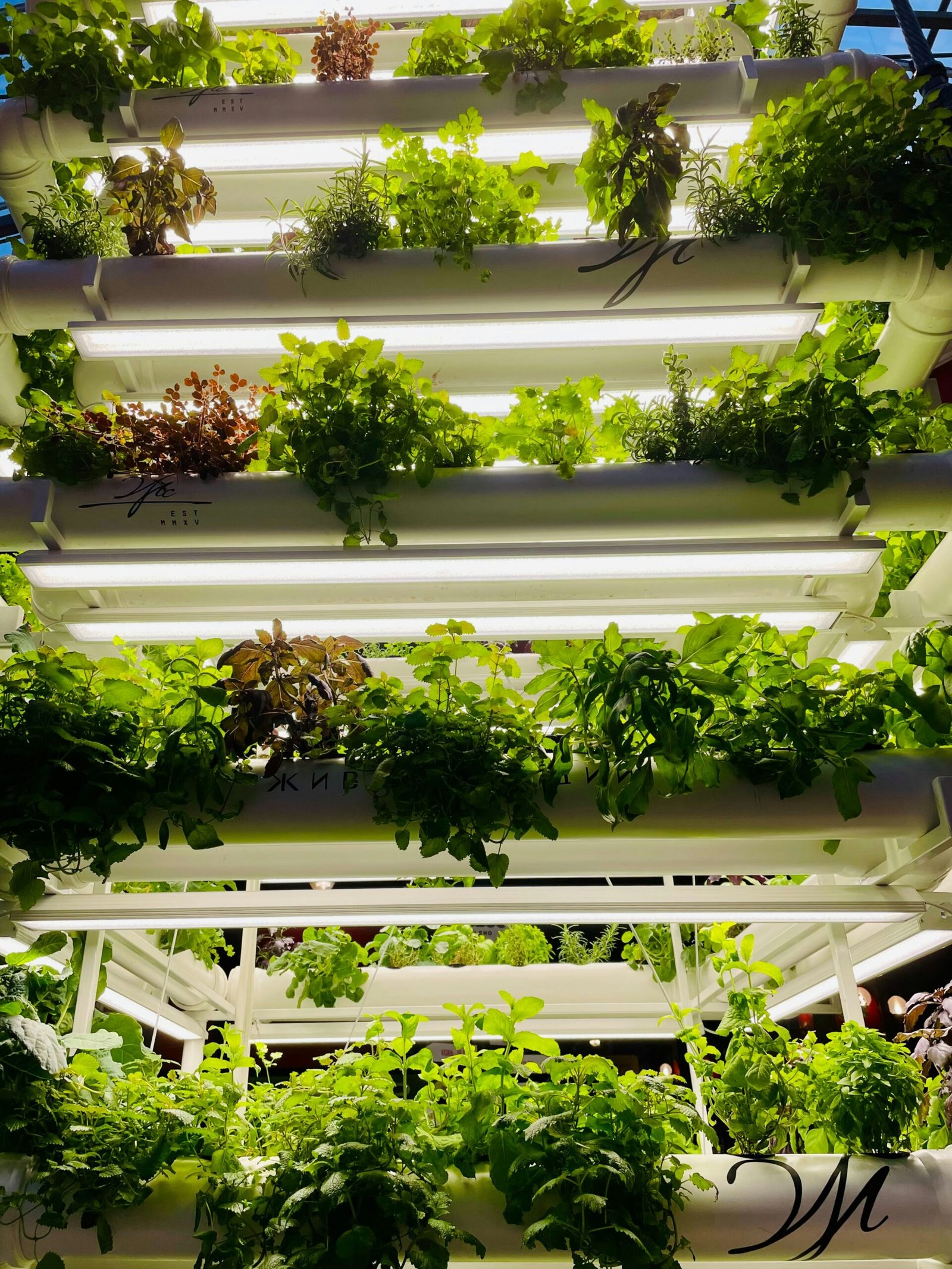
Every so often someone asks me a version of this question: “I love the garden tower idea, but I live in a fourth-floor apartment in Boston with no balcony. Can I just… put one in the living room?”
Start here: For a complete overview, see our 7 Best Hydroponic Systems for Beginners in 2026.
Short answer: yes, people do it, the manufacturer says it works, and a tower of fresh greens in your apartment in January is genuinely glorious. Longer answer: there are three caveats, and each one has ended somebody’s indoor tower dream. Walk through them honestly before you spend Garden Tower money on the experiment.
Caveat 1: The light problem (the big one)
A Garden Tower or GreenStalk outside gets thousands of foot-candles of free sunshine wrapped around it. Indoors, even a glorious south-facing window delivers a fraction of that, from one direction, to one side of a cylinder.
Vegetables and herbs are sun addicts. Lettuce limps along at low light; tomatoes and peppers don’t even pretend. Park a 50-pocket tower by a window and you’ll get one productive stripe facing the glass and 35 pockets of pale disappointment. Rotating helps distribute the inadequacy evenly, but it can’t create photons.
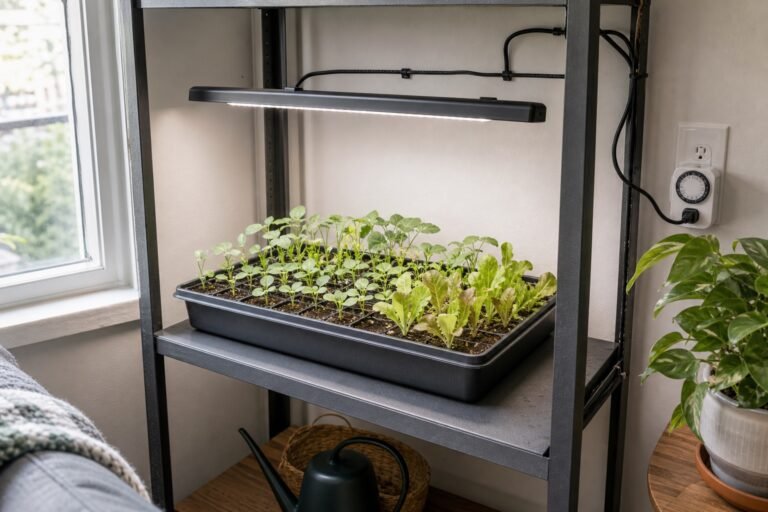
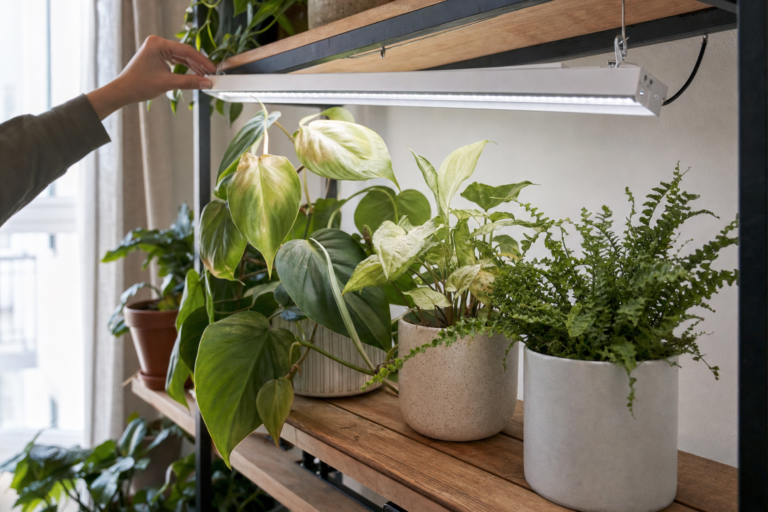
So an indoor tower is really a grow light project. You’ll want a proper full-spectrum light, ideally more than one given the tower’s height, or a couple of clamp-on grow lights angled at different thirds of the cylinder, running 12 to 14 hours a day. Budget $40 to $100, plus a few dollars a month in electricity (at typical US rates; German readers paying €0.35+ per kWh will feel the running cost more, and it’s worth doing that math before committing). If you’re new to grow lights, start with whether your plants need one at all and how long to leave it on; the answers change for fruiting vegetables versus herbs.
Caveat 2: The weight problem
A filled Garden Tower 2 weighs over 200 lbs (90+ kg) on a footprint the size of a bar stool. That’s within what any sound floor handles (think: a large refrigerator), but it has two practical consequences.
First, it’s permanent. You will not be sliding it over for the holidays. Choose the spot once, on a rolling plant caddy rated for the weight if you want any mobility at all. Second, water plus floors. Every tower drains; indoors, that means a generous tray underneath, checked regularly. Renters with a security deposit on the line (a topic close to my heart, and covered throughout my renter’s indoor gardening guide) should treat the drainage tray as non-negotiable, and on wooden floors I’d add a waterproof mat under the whole setup.
A 5-tier GreenStalk is the friendlier indoor candidate here: lighter, unstackable, and small enough to live in a corner without structural commitment.
Caveat 3: The worm question
The Garden Tower’s best outdoor feature, the vermicomposting tube, gives indoor people pause. Worms. In the living room. Here’s the honest reassurance: a properly run worm composter has no meaningful smell (it smells faintly like forest floor, if anything) and the worms stay put, because the tube is where the food is. Thousands of people run standalone worm bins in apartment kitchens from Brooklyn to Berlin without incident.
The real indoor adjustments: feed scraps in smaller amounts so nothing sits and ferments, skip onions and citrus (slow to break down, more aroma), and keep fruit flies out by burying fresh scraps under the bedding. If the idea still gives you the ick, run the tower without worms and feed it like any container garden with a normal liquid fertilizer routine. You lose the magic loop, you keep the 50 pockets.
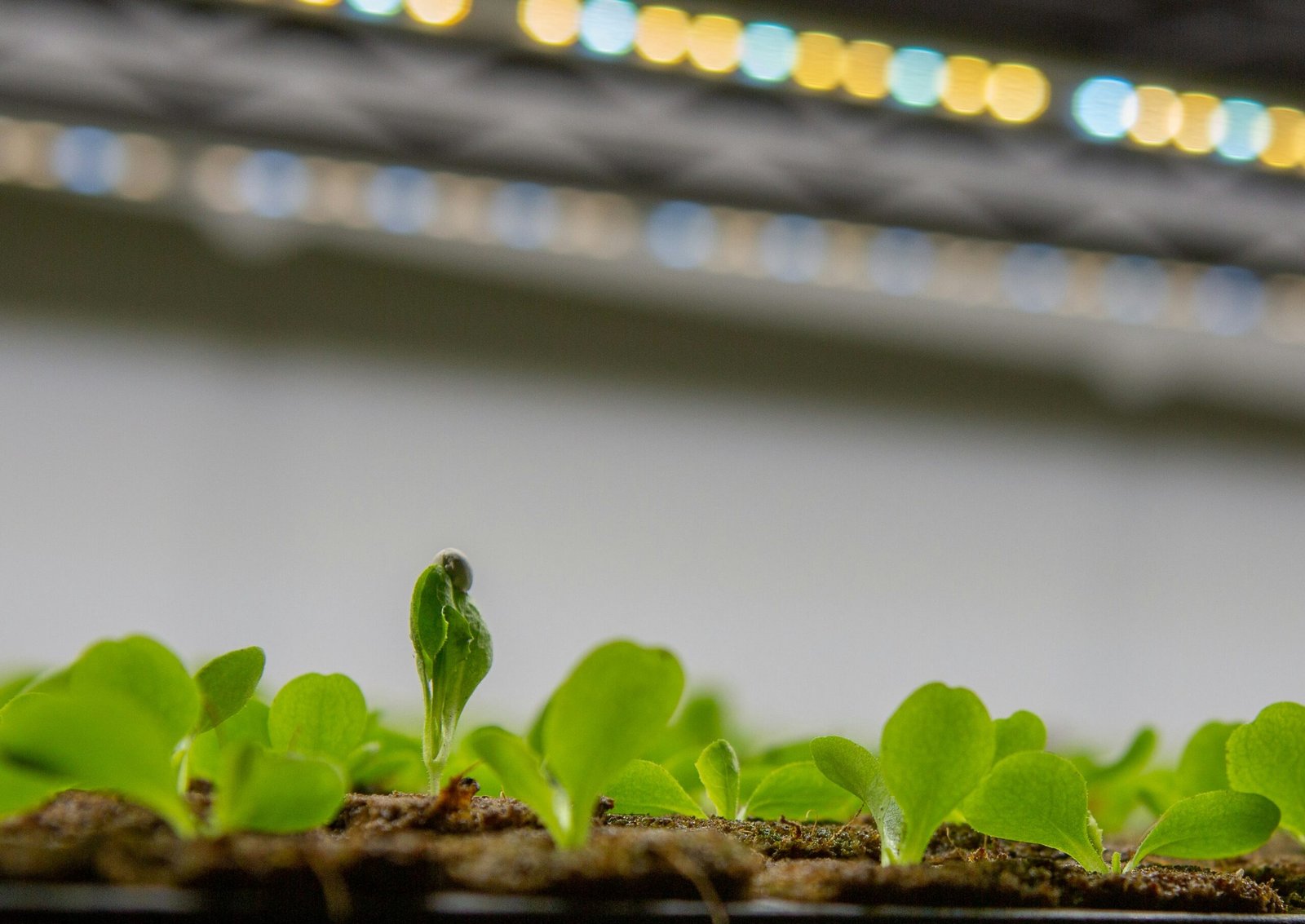
What actually grows well indoors in a tower
Set expectations: indoors under lights, your tower is a leaf machine, not a vegetable plot. The reliable winners are lettuces, spinach, kale, chard, arugula (rocket, for my UK readers), and nearly every herb, the same cast I recommend in the best plants for an indoor vertical garden. Strawberries work if the light is strong. Tomatoes and peppers want more light than most people will realistically hang. If your dream is year-round salad and a wall of basil, an indoor tower delivers. If it’s beefsteak tomatoes in February, it’ll break your heart.
My actual recommendation
If you have decent light, a spot you’re happy to dedicate permanently, and the grow light budget, an indoor garden tower works and is a legitimately great way to grow real quantities of food in an apartment. Do it with eyes open about the lighting bill.
But if you’re starting from zero, I’d honestly steer most indoor-only people toward one of two alternatives: a purpose-built indoor vertical garden system with lights already integrated and engineered for living rooms, or, if the budget is the obstacle, building your own vertical setup sized to the light you actually have. The tower is a brilliant outdoor product that can be persuaded to work indoors. The persuasion just costs a grow light or two and a corner of your home, forever.