How to Increase Humidity for Houseplants (What Actually Works and What’s a Myth)
Last updated: 26.06.2026.
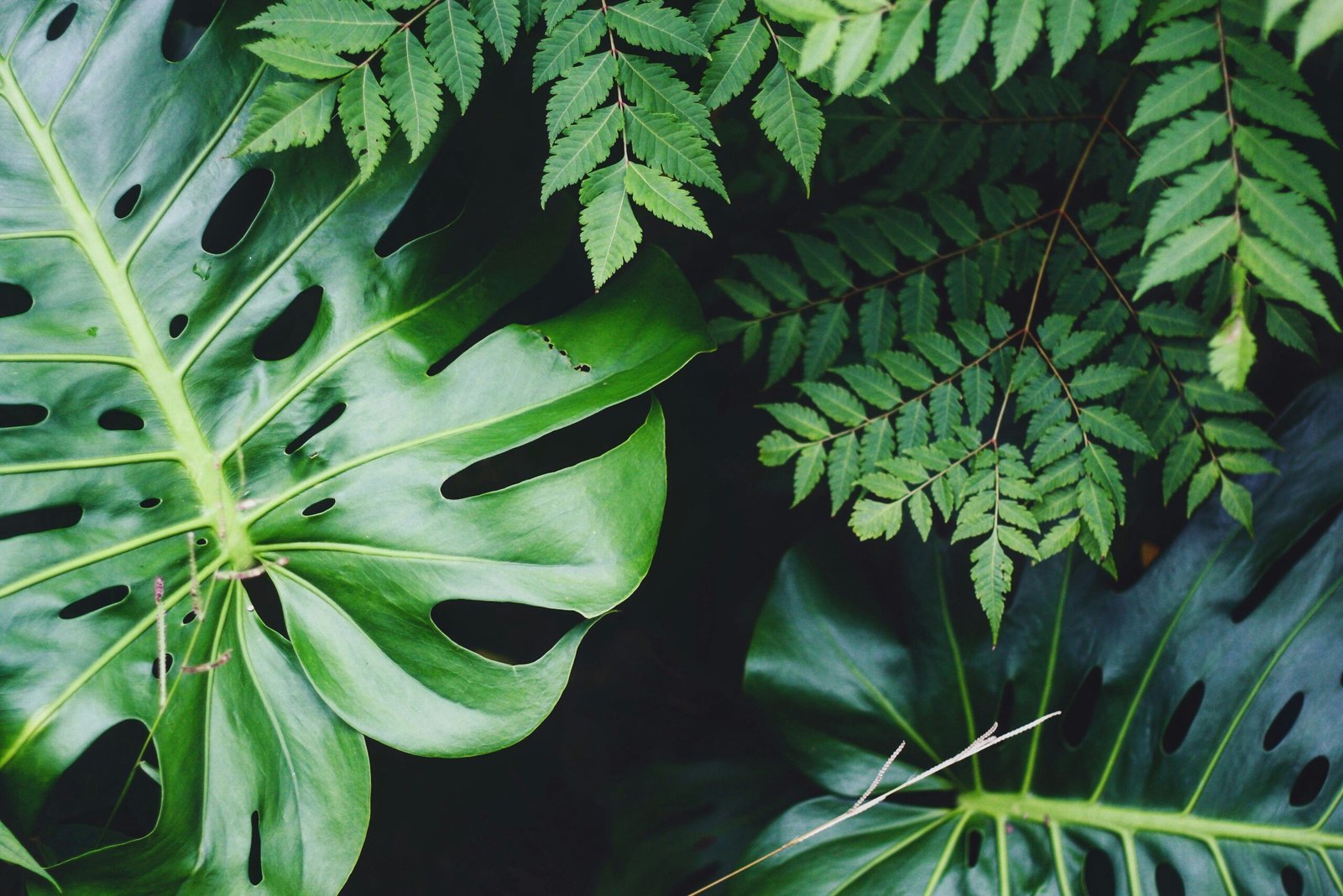
Most popular houseplants come from tropical places. Rainforests, jungle floors, humid understories where the air is thick with moisture. Then we bring them home to a centrally heated apartment where the air is drier than a desert in winter, and wonder why their leaves go crispy and brown at the edges. The mismatch is the whole problem, and raising humidity is the fix.
Start here: For a complete overview, see our Indoor Gardening for Absolute Beginners.
The trouble is that the internet is full of humidity advice, and a good chunk of it does almost nothing. So here is the honest guide: which methods actually raise humidity in a meaningful way, which are a waste of effort, and how to do it without turning your home into a swamp.
How to tell your plants want more humidity
The signs are fairly specific:
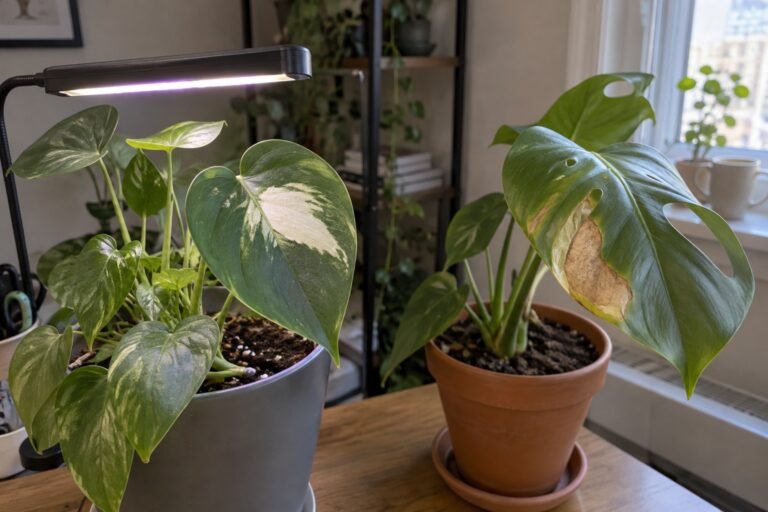
- Brown, crispy leaf tips and edges, the classic symptom, covered in detail in brown tips on houseplant leaves
- Leaves that look dry or curl despite correct watering
- Flower buds dropping before they open
- Slow growth and a generally unhappy look on tropical plants
The plants most likely to complain are the moisture-lovers: calatheas, ferns, prayer plants, fittonia, palms, and many aroids. Tough, dry-tolerant plants like snake plants, ZZ plants, and succulents do not care about humidity, so do not waste effort raising it for them.
Most homes sit around 30 to 50 percent humidity, and lower in winter when heating runs. Tropical plants would prefer 50 to 60 percent or more. A cheap hygrometer (humidity meter) tells you exactly where you stand for a few dollars, and takes the guesswork out.
For placement and reading mistakes, see the hygrometer for houseplants guide.
What actually works
These methods genuinely move the needle, roughly in order of effectiveness.
1. A humidifier (the only real fix for a whole room). Nothing else comes close. A small cool-mist humidifier running near your plants raises humidity reliably and consistently, and it helps you too in dry winter air. If you are serious about humidity-loving plants, this is the answer. Expect to pay about $25 to $45 (£20 to £36, €23 to €42). Keep it a little distance from the plants so leaves are not constantly wet, which invites mold.
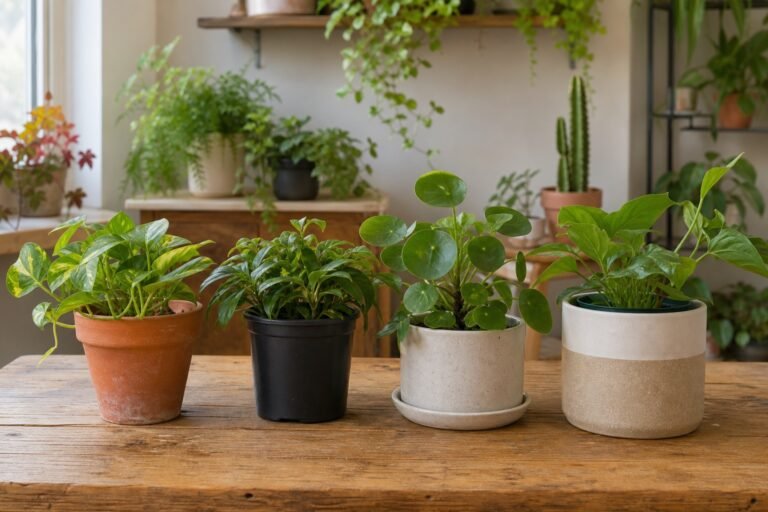
2. Group plants together. Plants release moisture through their leaves (transpiration), so a cluster of plants creates its own slightly humid microclimate. Grouping your tropicals together is free and genuinely effective, especially combined with a humidifier or pebble tray in the middle.
3. Move them to a naturally humid room. Bathrooms and kitchens are the most humid rooms in any home thanks to showers and cooking. Moving humidity-lovers there is free and works well, which is exactly why the bathroom humidity plant list is full of ferns and calatheas. A bright bathroom is the easiest humidity win there is.
4. A pebble tray. A shallow tray of water with pebbles, with the pot sitting on the pebbles (above the water line, not in it), adds local humidity as the water evaporates around the plant. Modest but real, and basically free. Best for smaller plants.
What barely works (or doesn’t)
Time to puncture a couple of popular myths.
Misting. This is the big one. Spritzing your plants with a spray bottle feels productive, but it raises humidity for only a few minutes before the water evaporates. To actually change humidity by misting you would have to mist every few minutes all day, which nobody does. Worse, leaving leaves wet can encourage fungal problems and, on fuzzy-leaved plants, spotting. Misting is not useless for a quick freshen-up or rinsing dust, but as a humidity strategy it is mostly a feel-good ritual. Skip it as your main method.
A bowl of water near the plant. A still bowl of water evaporates far too slowly to change the humidity around a plant in any meaningful way. Harmless, but pointless.
Terrariums and cloches (actually these work, for small plants). Enclosing a small humidity-lover under a glass cloche or in a closed terrarium traps moisture beautifully. For tiny fussy plants like fittonia, this genuinely works, just watch for too much trapped moisture causing rot.
Related guides and tools
Putting it together for a small space
You do not need all of this. A practical setup for a small apartment:
- For a few fussy plants: group them together in your brightest bathroom or kitchen, on a pebble tray, and you are most of the way there for free.
- For a serious tropical collection: add a small humidifier nearby and check a hygrometer to dial it in.
- In winter: expect humidity to drop as heating runs, in a US apartment with forced air or a German Altbau with radiators alike, so lean harder on the humidifier and grouping. This is a core part of winter houseplant care.
And the simplest move of all: if humidity is a constant battle, grow plants that do not need it. Snake plants, ZZ plants, pothos, and succulents thrive in normal dry household air, and the easiest indoor plants to keep alive skew toward exactly those low-maintenance, humidity-indifferent species.
Humidity is one of those things that sounds high-maintenance and mostly is not, once you ignore the myths. Group your tropicals, use a bathroom or a humidifier, skip the misting bottle as a humidity tool, and the crispy brown edges fade away. Match the plant to your air, or change your air to match the plant, and either way the problem is solved.