Balcony Wind Protection for Plants That Will Not Block All the Sun
Affiliate disclosure: As an Amazon Associate I earn from qualifying purchases. Links marked “paid link” may earn Fern & Shelf a commission at no extra cost to you. Read our full Affiliate Disclosure.
Balcony wind dries containers, tears broad leaves, tips lightweight pots, and can turn a loose trellis into a hazard. A solid wall is not always the best answer. Wind hitting a hard panel can curl around its edges and create stronger turbulence. Porous screening, stable containers, and shorter plant profiles usually work together better.
Read the wind before buying a screen
Observe the balcony in the morning, afternoon, and during gusty weather. Note the prevailing direction, the corner where wind accelerates, and any downdraft from the building. Move an empty ribbon or lightweight strip around the space to reveal eddies without risking a plant.
Use a porous windbreak
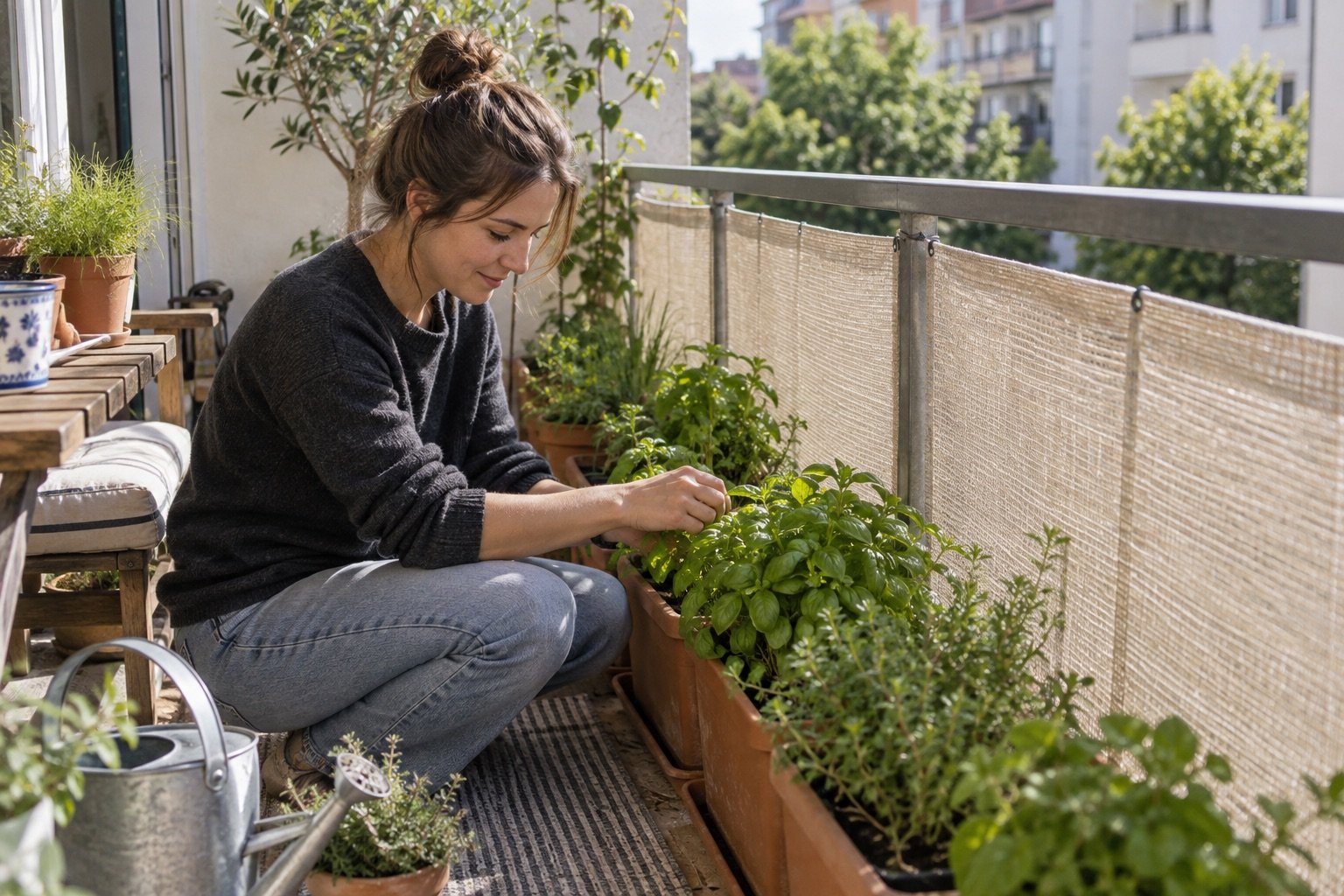
Shade cloth, open lattice, or purpose-made balcony mesh lets part of the air pass through and reduces the pressure difference behind the barrier. Mounting must comply with the building lease, fire code, and balcony rules. Never attach a large sail-like panel to a weak railing.
Compare porous balcony wind screens (paid link) by open area, UV rating, reinforced edges, and fastening instructions. Remove a screen during severe weather if the manufacturer or building requires it.
Stabilize the containers
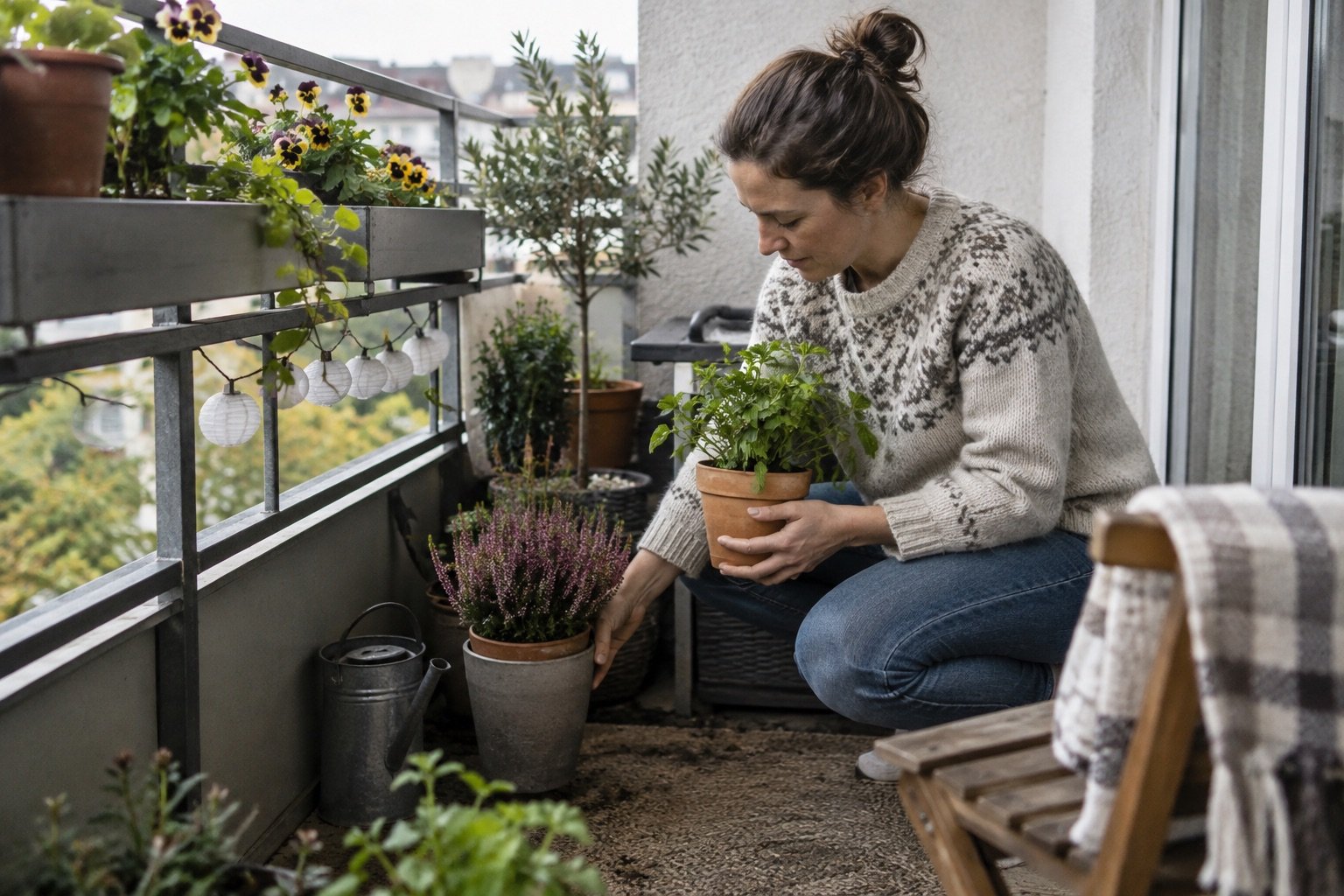
Choose low, wide pots for tall plants and place heavy containers on the floor rather than the railing. Add weight through an appropriately sized pot and damp mix, not loose stones piled on top. Confirm the balcony’s load rules before grouping large planters.
Rail boxes need hardware rated for the rail shape and outdoor exposure. Secondary safety straps should not create a trip or entanglement hazard.
Group plants by height
Place sturdy shrubs or trellised plants on the windward side and tender herbs behind them. Keep enough space for air to move and for leaves to dry after rain. A dense wall of foliage can shade smaller plants and may still topple as one unit.
Support stems without strangling them
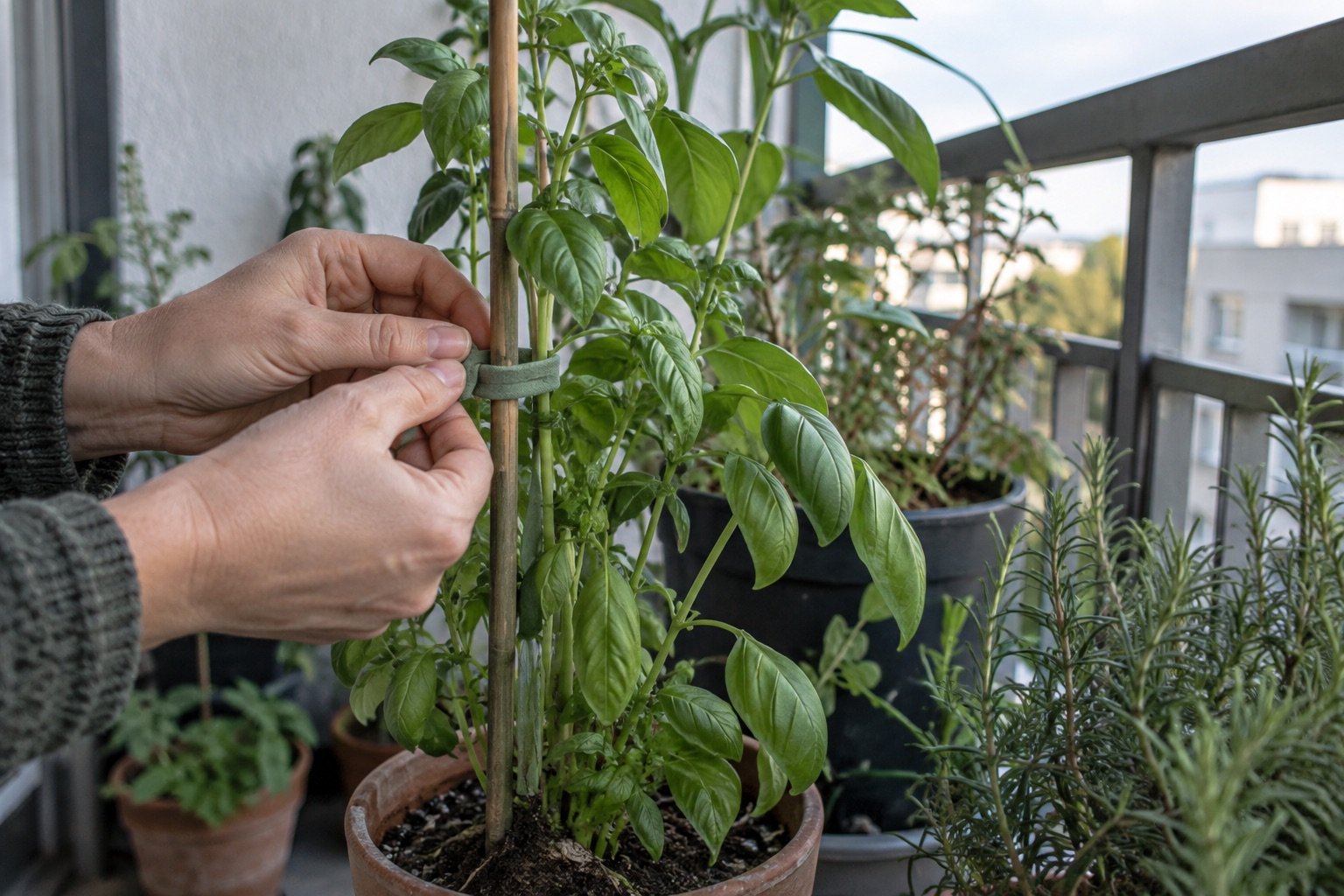
Use several soft ties along a stake or trellis, leaving room for the stem to thicken. One tight tie at the base acts as a hinge during gusts. Inspect ties every few weeks and after storms.
A set of soft reusable plant ties (paid link) is safer for stems than thin wire. Attach supports to the planter when possible rather than relying on the plant stem.
Water for wind, not for the calendar
Wind can dry a pot even on a mild day. Check container moisture daily during windy periods, especially for hanging baskets and terra-cotta pots. Water thoroughly until excess drains, then empty saucers where standing water is a problem. Mulch can slow evaporation, but keep it away from stems and do not block drainage.
Choose plants that tolerate exposure
Small leaves, flexible stems, compact habits, and established roots handle wind better than large thin foliage. Thyme, chives, compact rosemary, sedges, and selected ornamental grasses may suit an exposed balcony if light and climate also fit. Start with young plants low behind shelter and acclimate them.
Protect new plants first
A nursery plant may have grown in a protected greenhouse. Give it several days in the most sheltered bright spot before increasing exposure. Our balcony vegetable garden guide covers container depth, sunlight, and crop placement.
Storm checklist
- Move small pots to the floor or indoors.
- Remove hanging items that can swing.
- Take down temporary fabric screens if required.
- Check drains so water cannot pool.
- Inspect rail hardware after the storm.
Keep light in the plan
Measure how much shade a screen creates at plant height. Dark privacy fabric can turn a sunny balcony into a low-light site. A shorter barrier placed near the most vulnerable pots may protect them without covering the whole rail.