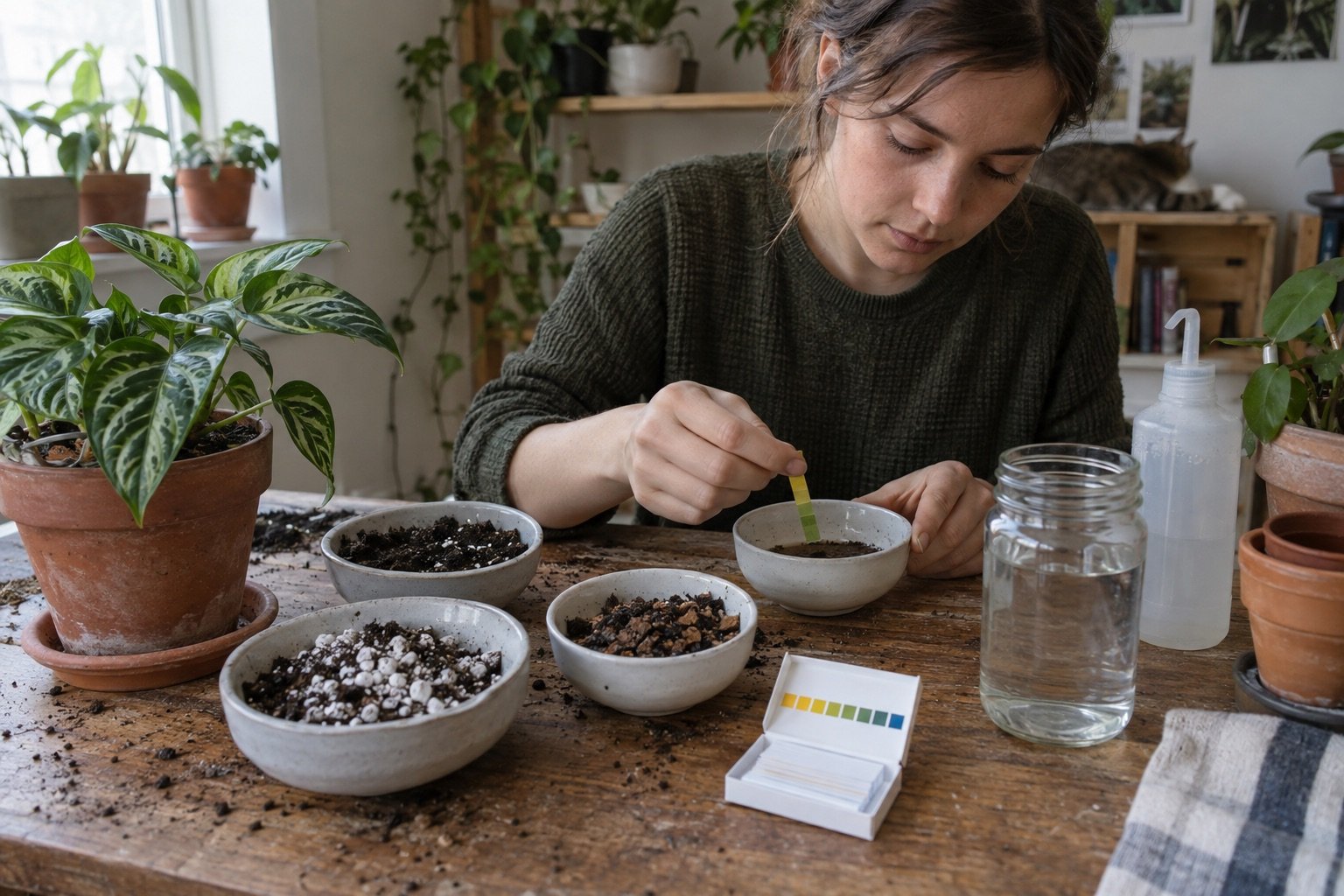
Soil pH for Houseplants: When to Test and How to Correct It
Affiliate disclosure: As an Amazon Associate I earn from qualifying purchases. Links marked “paid link” may earn Fern & Shelf a commission at no extra cost to you. Read our full Affiliate Disclosure.
Most common houseplants grow well in a mildly acidic potting mix, often around pH 5.5 to 7.0. Species preferences vary. pH matters because it changes nutrient availability, but a yellow leaf does not prove that the potting mix is too acidic or alkaline.
Useful starting ranges
| Plant group | General pH starting range | Notes |
|---|---|---|
| Most tropical foliage | 5.5 to 6.5 | Check the species and mix label |
| Herbs in containers | 6.0 to 7.5 | University of Minnesota gives this range for many herbs |
| Succulents and cacti | About 5.5 to 7.0 | Drainage often causes more trouble than small pH differences |
| Acid-loving plants | About 4.5 to 5.5 | Azaleas and relatives prefer more acidity |
Use species-specific guidance when available. A broad chart cannot account for cultivar, irrigation water, and fertilizer.
When a pH test makes sense
- New growth shows repeated deficiency symptoms despite appropriate feeding.
- Tap water leaves heavy mineral deposits.
- The same potting mix has been used for several years.
- A DIY mix contains lime, compost, bark, or coir in uncertain proportions.
- You are growing a plant with a narrow known preference.
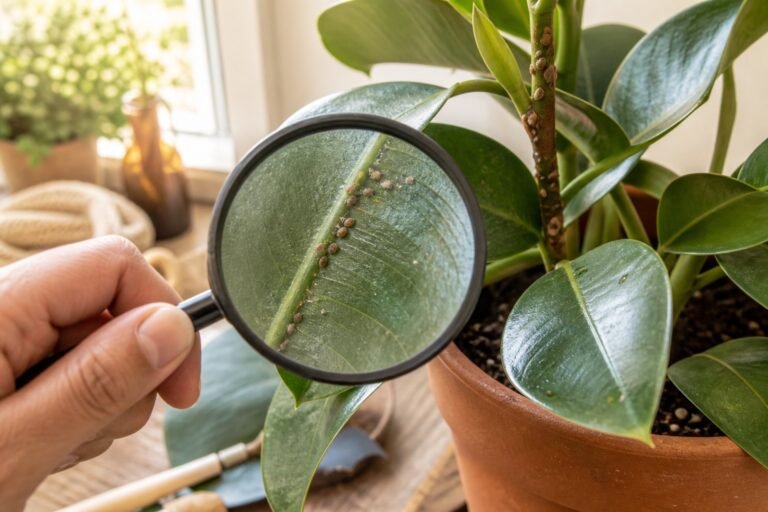
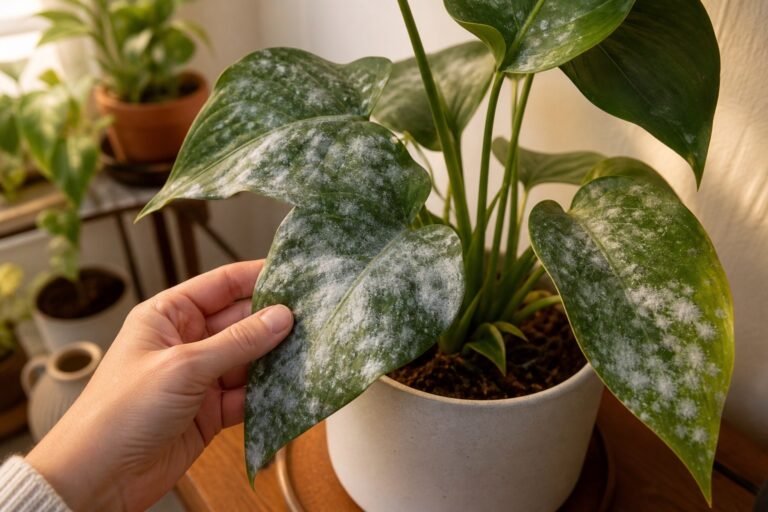
Check roots, moisture, pests, and light first. These causes are more common and can mimic nutrient problems.
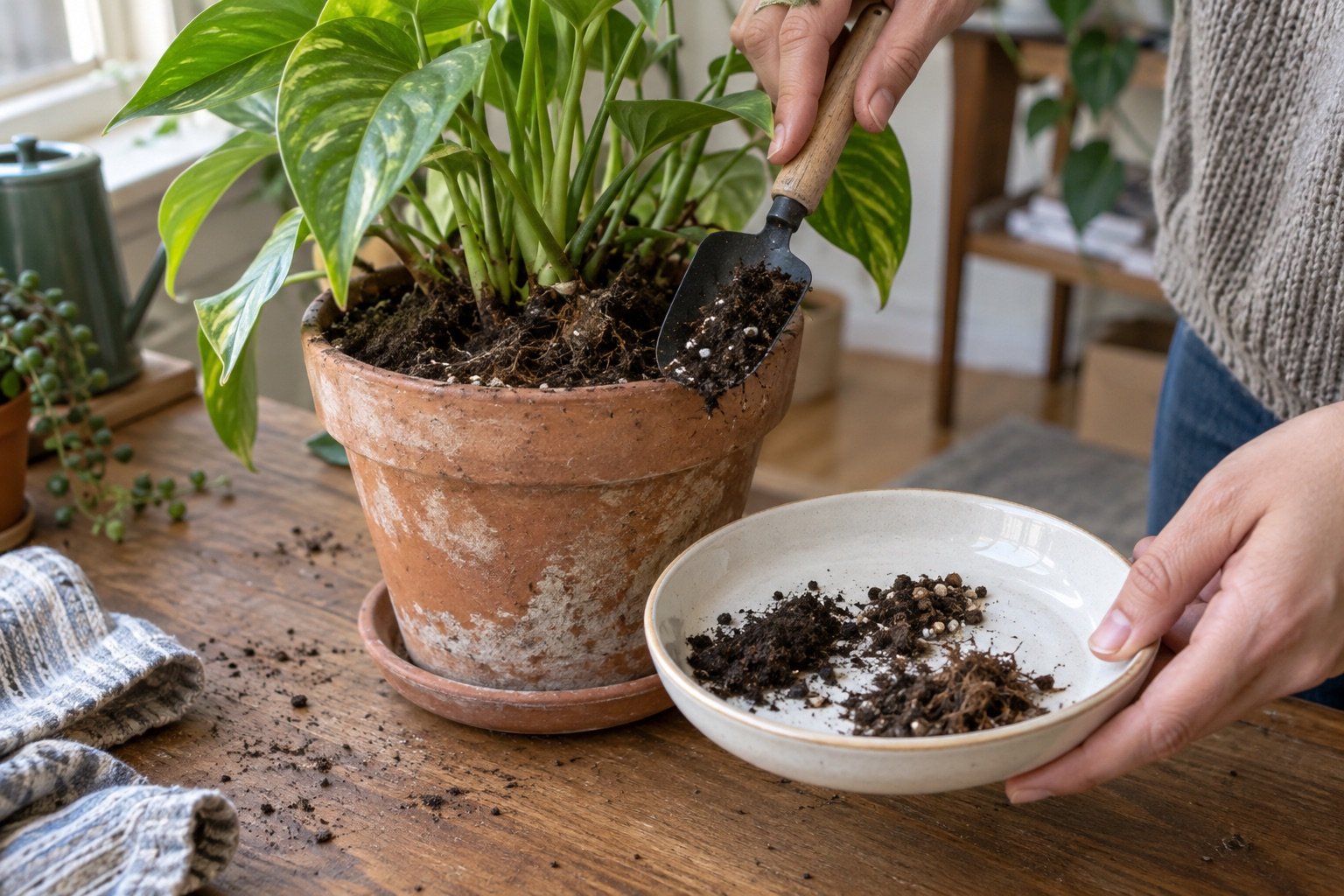
How to test a container mix
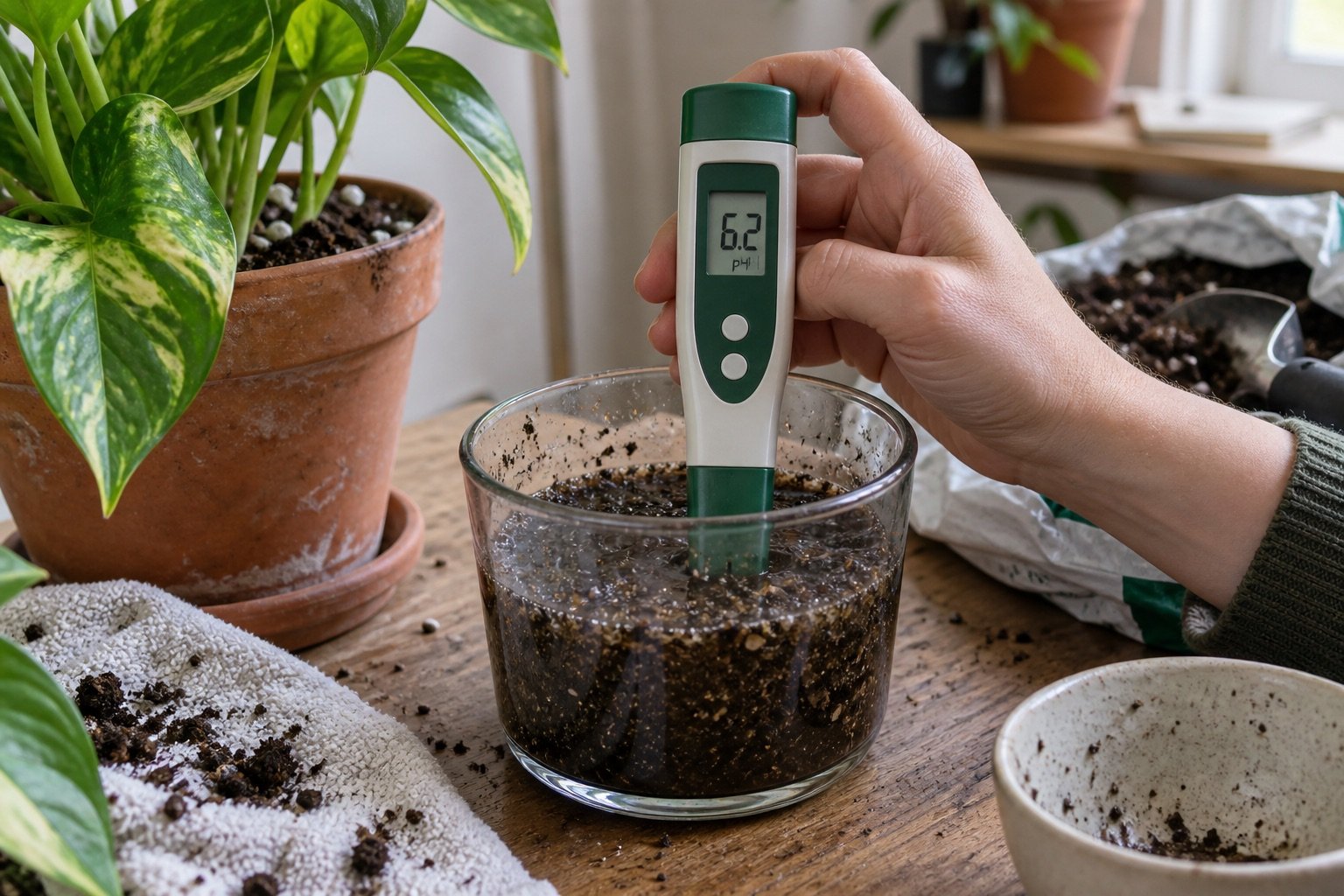
A laboratory test gives the most useful result when diagnosis matters. For home screening, collect a small representative sample away from fertilizer granules, follow the meter or test-kit method exactly, and use distilled water if the instructions require it. Repeat the test before making a large correction.
A soil pH test kit (paid link) can show a broad trend. Cheap combination probes often respond more to moisture and contact than to a precise pH value, so do not chase decimals.
Irrigation water and fertilizer
Alkaline water can push container media upward over time. Fertilizer formulation also influences pH. Measure water, review the fertilizer label, and look for crust on the pot before adding an amendment to the mix.
Correcting high pH
Repotting into a fresh species-appropriate mix is often safer for one houseplant than dosing sulfur or acid. Where hard water is the cause, rainwater or another suitable low-mineral source may slow recurrence. Never add household vinegar by guess; it creates a short, sharp change without correcting alkalinity consistently.
Correcting low pH
Fresh potting mix may again be the cleanest fix. Horticultural lime can raise pH, but the dose depends on the medium, starting pH, target, and lime type. Use a product labeled for container culture and follow its rate. Excess lime is difficult to remove.
Do not confuse EC with pH
pH measures acidity; EC estimates dissolved ionic salts. A pot can have acceptable pH and damaging salt buildup. Flush only when the plant, pot, and local water conditions make it appropriate, and let the container drain completely.
Recheck slowly
Container media is buffered, so durable changes take time. Recheck after the product’s stated interval and judge new growth. Old yellow tissue may remain yellow even after the root environment improves.
Use our DIY potting mix guide when selecting components, and the plant diagnostic to rule out look-alike problems.