Grow Light Burn vs Sunburn: How to Tell Which Damaged the Leaves
Affiliate disclosure: As an Amazon Associate I earn from qualifying purchases. Links marked “paid link” may earn Fern & Shelf a commission at no extra cost to you. Read our full Affiliate Disclosure.
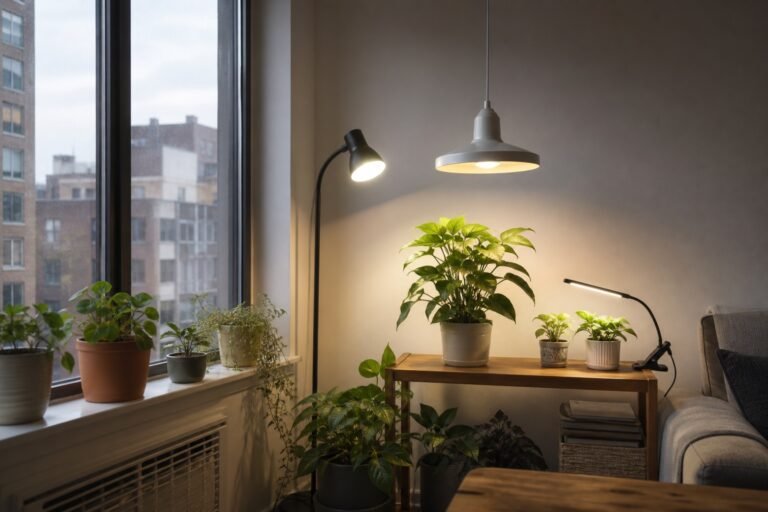
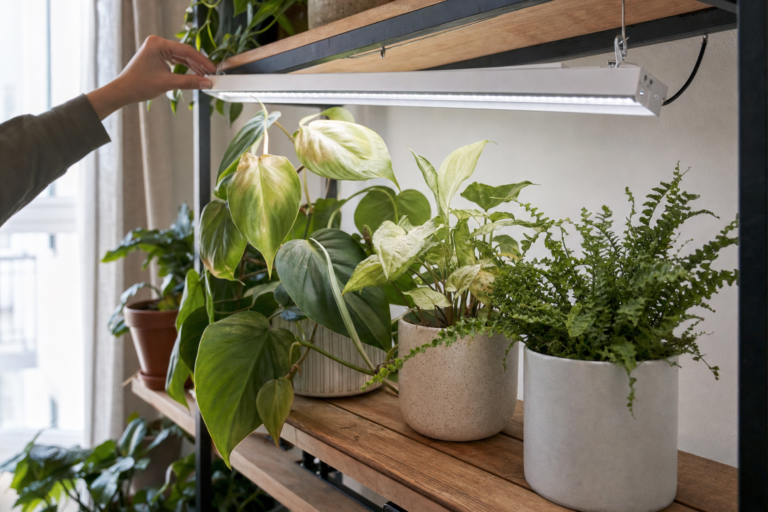
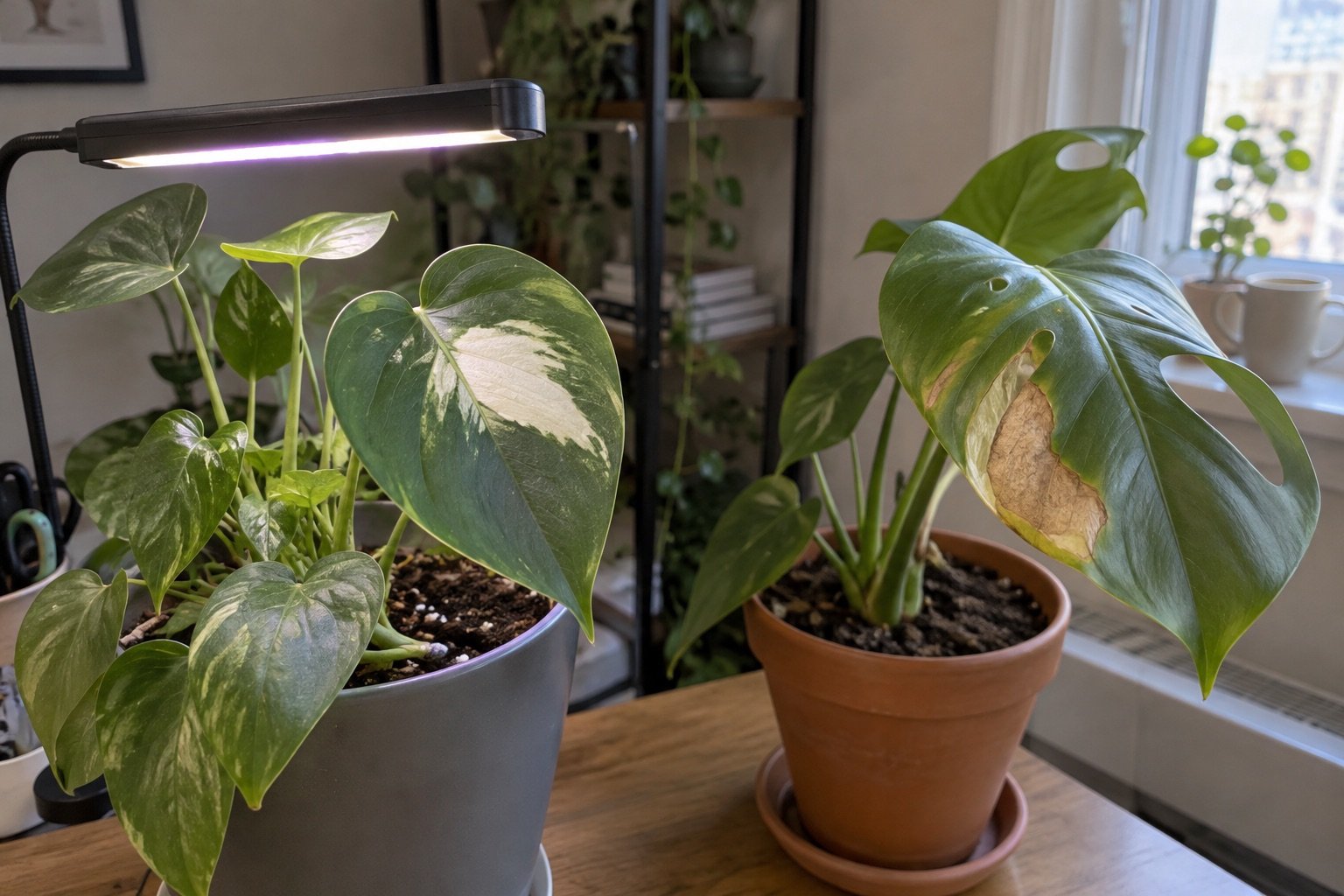
Grow-light damage and sunburn can look similar because both follow excess light at the leaf surface. The recent history usually separates them. Sunburn often appears after a plant moves outdoors or into direct window sun. Grow-light damage appears on leaves closest to a lamp after the fixture moves, output rises, or the schedule lengthens.
Compare the pattern
| Clue | Grow-light damage | Sunburn |
|---|---|---|
| Recent change | Lamp moved closer or run longer | Plant moved into direct sun |
| Leaf position | Top or lamp-facing leaves | Window-facing or exposed outdoor leaves |
| Boundary | Matches fixture hotspot | Matches sun-exposed side |
| Heat | Possible near inefficient lamp | Often accompanies hot glass or afternoon sun |
| New shaded leaves | Usually unaffected | Usually unaffected |
Damage does not heal
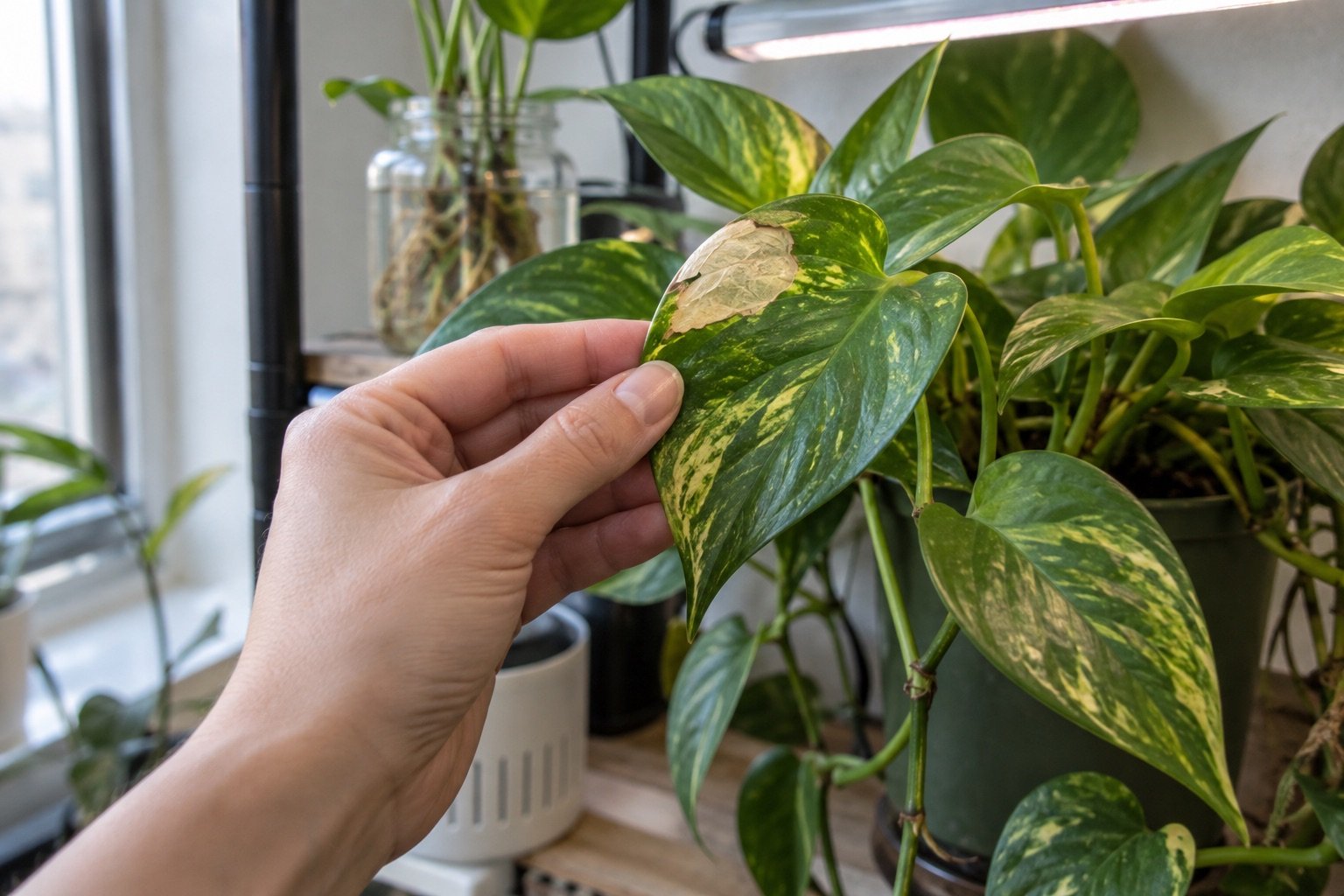
Bleached or crisp tissue will not turn green again. Judge the correction by new leaves and whether existing spots stop expanding. Keep partly green leaves unless they are diseased or collapsing because the remaining tissue still contributes to the plant.
Correct a grow light
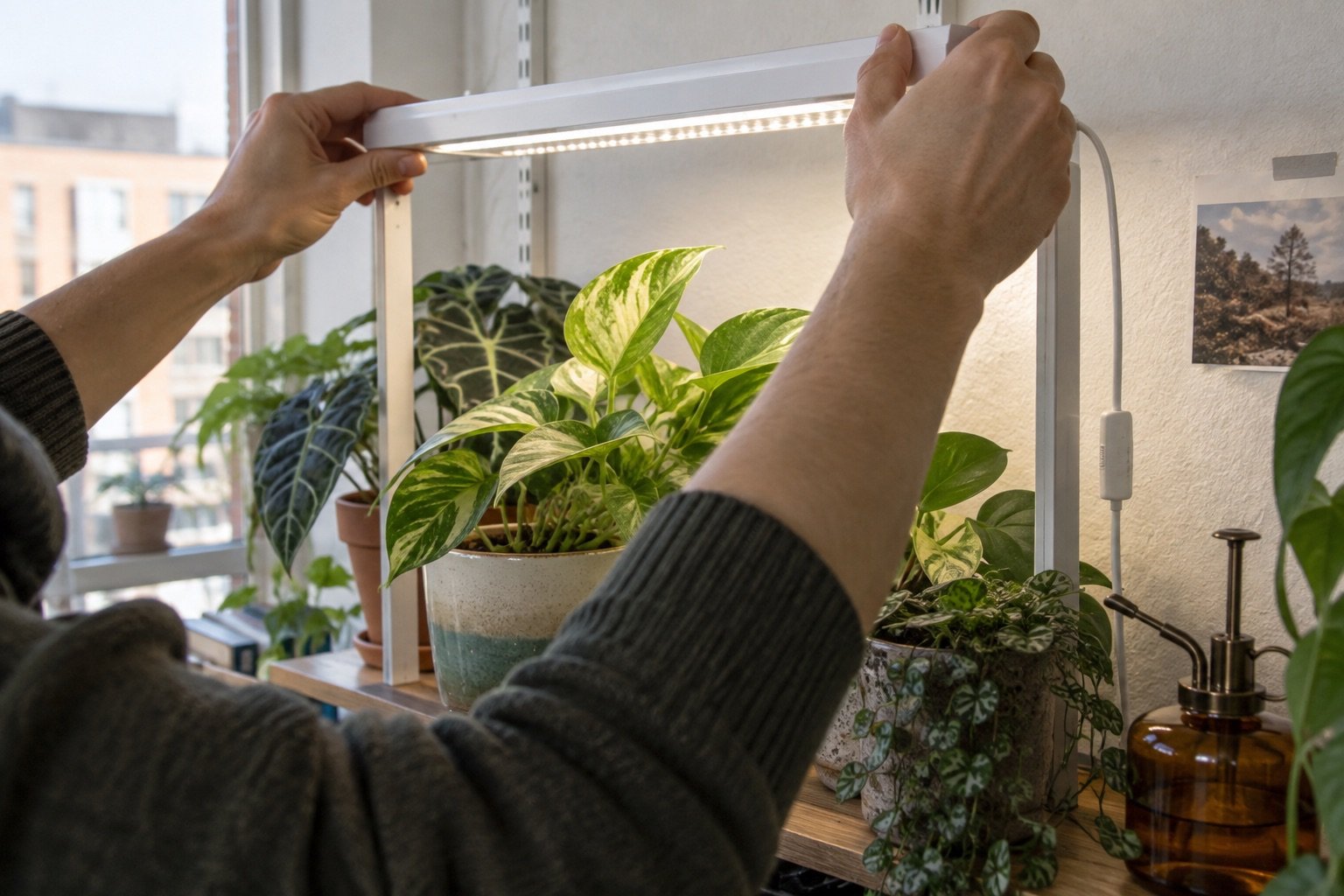
Raise the fixture a few inches or shorten the schedule, then wait several days before another large change. Measure PPFD at the most affected leaf and at the dimmest plant. Our grow-light distance guide explains why one hanging height does not fit every lamp.
A PAR meter (paid link) gives a direct reading, while some phone apps provide only a rough estimate unless they are calibrated. Our PAR meter guide discusses those tradeoffs.
Acclimate a plant to sun
Move indoor plants outdoors first into shade protected from wind. Add a small amount of morning sun, then increase exposure over one to two weeks according to the species. University of Minnesota Extension warns that immediate direct sun can burn even succulents accustomed to a bright indoor window.
Rule out other causes
Dry brown margins across the whole plant may come from a dry root ball, fertilizer salts, or hot air. Small pale dots and webbing suggest spider mites. White fungal patches may rub off; sunburn does not. Use our plant problem diagnostic when the pattern is mixed.
Prevent a second episode
- Record lamp height and schedule after each adjustment.
- Measure at the tallest leaf, not the pot rim.
- Raise lights as plants grow.
- Acclimate after winter or a low-light shipping period.
- Keep leaves away from hot bulbs and cold window glass.
Should you cut damaged leaves?
Remove leaves that are mostly dead, wet, or supporting disease. Leave partly functional foliage during recovery, especially on a small plant. Use clean snips and avoid removing more tissue than the root system can support.
Light stress is easiest to diagnose within a day or two of the change. A short setup log with plant position, fixture height, schedule, and PPFD prevents guesswork later.
Sources
- University of Minnesota Extension: Winter houseplant tips
- University of Minnesota Extension: Spring houseplant care
Outdoor transition reference: University of Minnesota Extension: Moving Houseplants Outdoors.