The Fastest-Growing Microgreens (Harvest in a Week, Sometimes Less)
Last updated: 02.06.2026.
Affiliate disclosure: As an Amazon Associate I earn from qualifying purchases. Links marked “paid link” may earn Fern & Shelf a commission at no extra cost to you. Read our full Affiliate Disclosure.
Start here: For a complete overview, see our How to Grow Herbs Indoors Without Sunlight.
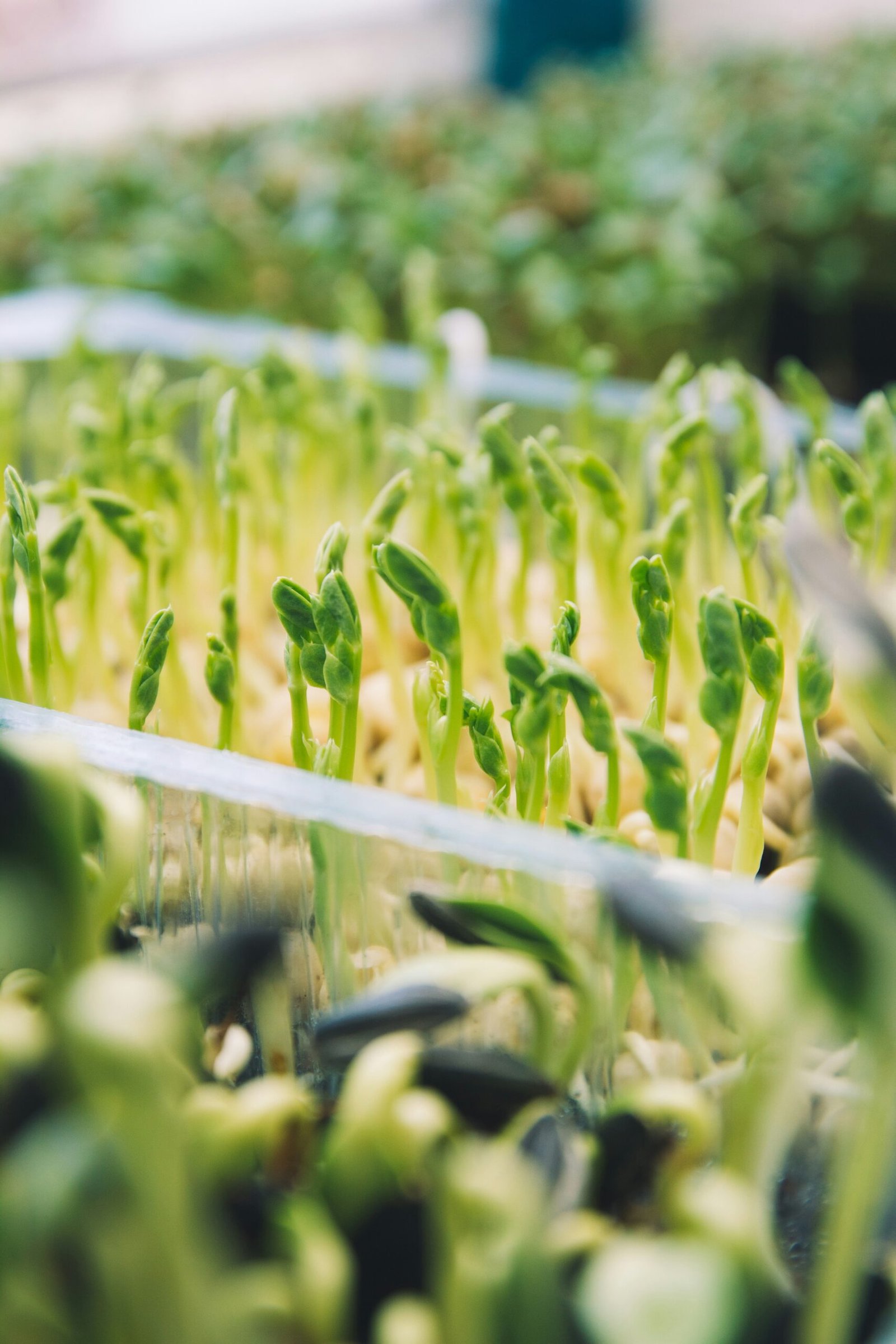
Speed is the whole appeal of microgreens. You sow on a Sunday and some of them are on a plate the following weekend. For a side hustle that’s the magic number — fast turnover means more harvests per tray per month, which means more money out of the same square foot of apartment.
But “fast” and “profitable” aren’t always the same plant, and that trips people up. The quickest crop isn’t automatically the one worth growing. Before you fall in love with a 7-day turnaround, cross-check it against the varieties that actually make money — speed only pays if someone’s buying. With that caveat parked, here are the fastest growers and how to push them even faster.
What “fast” actually means here
A microgreen’s timeline has three parts: germination (1–3 days), growing (most of it), and the harvest window. “Days to harvest” usually means from sowing to first cut. The champions land at 7–12 days; a few sprint-types are ready in 5–6.
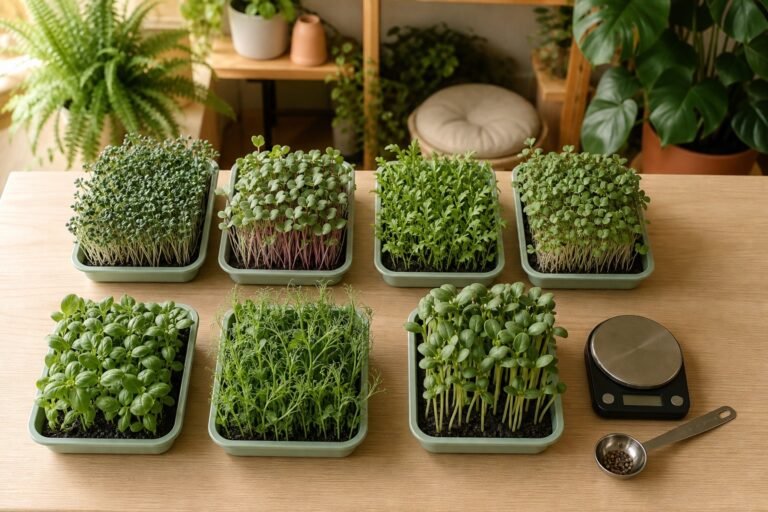
Quick conversion for the seeding density most guides quote: aim for roughly 1–1.5 oz of seed per standard 10×20 inch tray (about 25×50 cm). Denser for small seeds, lighter for big ones like peas and sunflower.
The 6 fastest microgreens worth your time
Radish — 5–7 days
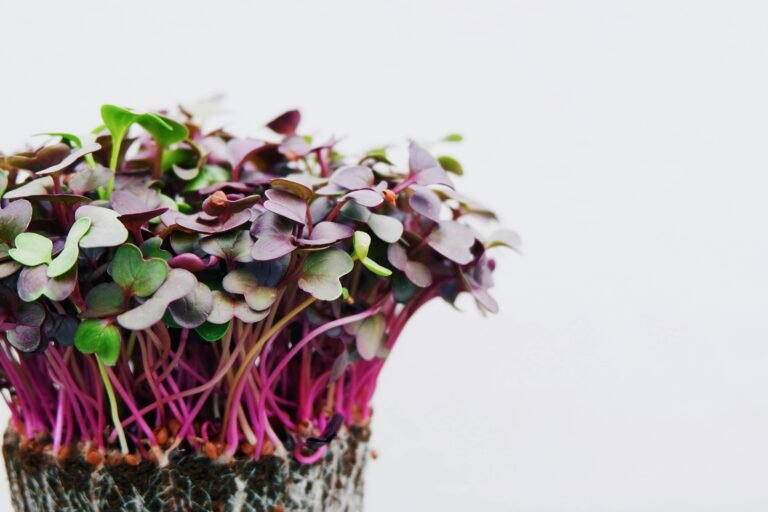
The undisputed speed king. Radish germinates in a day, grows like it’s angry, and is cut-ready in under a week. Spicy, crunchy, holds well after harvest. Chefs love it on tacos and raw fish. It’s fast and it sells, which is rare — one of the few that shows up high on both this list and the profitable-varieties breakdown.
If radish is your first tray, follow our complete radish microgreens method for seed density, blackout, watering, and the harvest window.
- Radish microgreen seeds (bulk) → (paid link) (nofollow, sponsored)
Pea shoots — 8–12 days
Slightly slower but worth the wait. Sweet, substantial, and the single biggest seller at most markets — brunch cafés go through them by the case for avocado toast. Soak the seeds 8–12 hours first or germination drags.
For the full soak, blackout, lighting, watering, and harvest sequence, use the step-by-step pea shoot guide.
- Speckled pea seeds for shoots → (paid link) (nofollow, sponsored)
Broccoli — 7–10 days
Mild flavor, the “health halo” variety everyone’s heard of (sulforaphane). Easy, consistent, reliable seller. A good default tray to always have going.
The broccoli microgreens growing guide covers the simple tray routine without turning the crop into a health claim.
Sunflower — 8–12 days
Nutty, thick, satisfying to eat — my personal favorite as booth bait because people taste it and immediately get it. Needs a good soak and sometimes a weighted “blackout” lid early to grow evenly.
The sunflower microgreens growing guide covers the soak, weighted blackout, hull management, and harvest timing in order.
Mustard — 6–8 days
Fast and feisty. Sharp, peppery, adds color and bite. Wasabi mustard especially commands a premium with chefs — worth noting if you’re reading the profit angle, since the fast-growing version overlaps with the high-margin one.
Cress / garden cress — 5–7 days
Genuinely one of the fastest. Peppery, classic in the UK on egg-and-cress sandwiches, ready almost as quick as radish. Underrated for how reliably it sells in British and German markets.

The slow ones (so you don’t get surprised)
Worth knowing what not to reach for when you need speed: basil (16–25 days), cilantro (14–21), beet and chard (10–16). These are slower and fussier. Some are still very profitable per ounce — basil and cilantro both sell high — which is exactly the tension the most-profitable-microgreens guide sorts out: sometimes the slower crop earns more per tray-week despite the wait. Speed is one input. Price is the other.
How to actually get faster harvests
A few things shave real days off:
Soak big seeds. Peas, sunflower, and beet germinate noticeably faster after an 8–12 hour soak in room-temperature water.
Use the blackout/weight method. Cover newly sown trays for the first 2–4 days, sometimes with a light weight on top. The seeds push against resistance, root faster, and grow taller and more even once you uncover them.
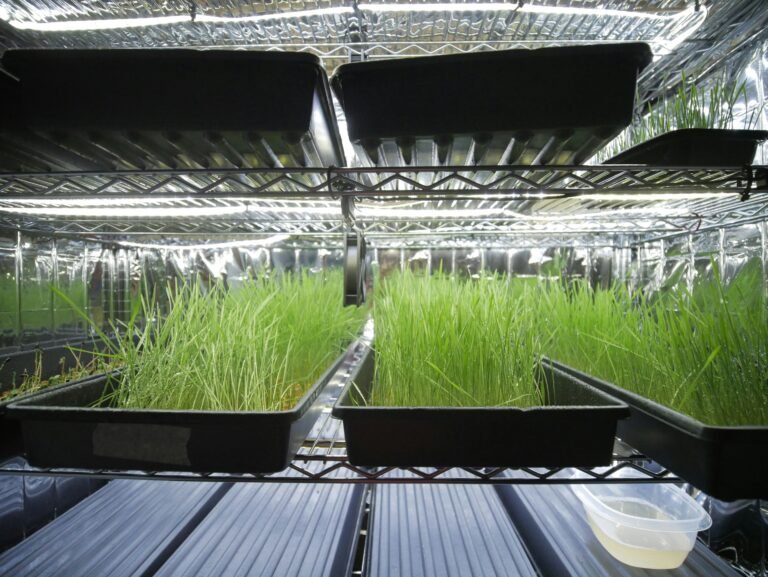
Keep it warm. Germination speed is mostly about temperature. 68–75°F (20–24°C) is the sweet spot. A chilly Berlin Altbau or a north-facing Manchester flat in winter slows everything down — a cheap seedling heat mat (paid link) (nofollow, sponsored) fixes it for $15–25 (£12–20 / €14–23).
Give them light the moment they’re up. Once you uncover the trays, strong light prevents leggy, stretched growth. If your window’s weak, a basic grow light earns its keep — and the grow-light timing guide covers how many hours these want (less than you’d think).
Stagger your sowing. Don’t sow everything Sunday. Sow a few trays every 2–3 days so you’re harvesting continuously instead of feast-or-famine. This is the single habit that turns fast growth into steady income.
Related guides and tools
Speed is a tool, not the goal
Fast microgreens are how you keep trays turning and cash flowing — but turning trays of something nobody buys is just expensive composting. Pair the speed list here with the demand side: grow the varieties that actually sell and profit, price the premium ones higher, and lean on the fast growers (radish, cress, mustard) for quick cash flow between the slower premium crops.
If you’re building toward real income, the rest of the cluster maps the path: the startup cost breakdown for what to spend, selling to restaurants and farmers markets for where the money comes from, and the scaling-equipment guide for when you outgrow the windowsill. Speed just gets you there a few days quicker each cycle.