
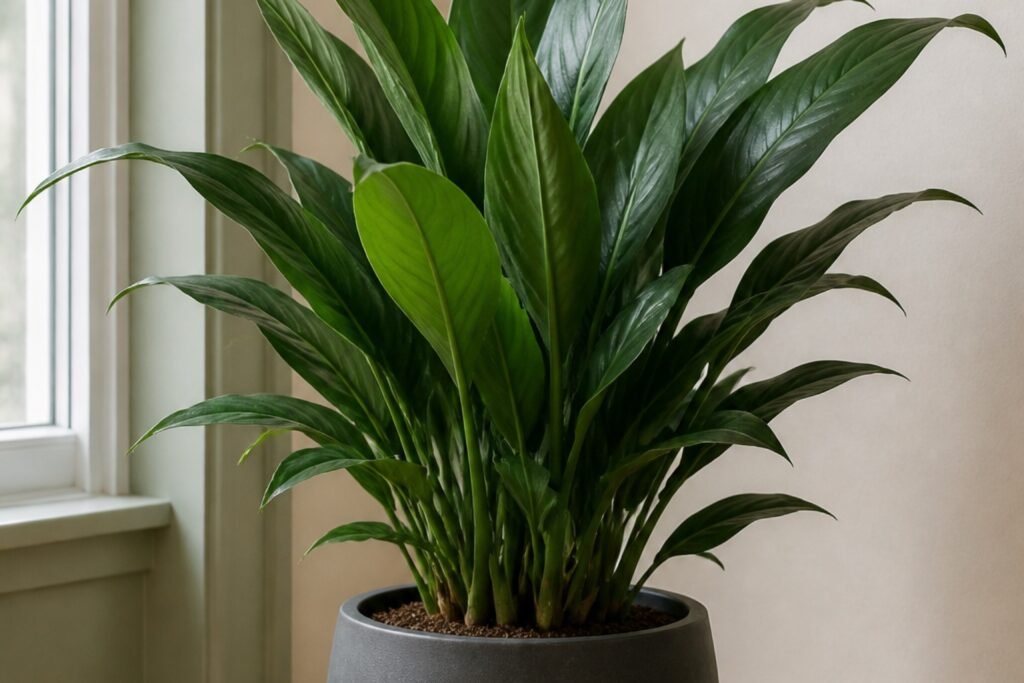
Cast iron plant care has a funny reputation. The plant is sold as something that survives neglect, which is largely true, and then people assume it should thrive in a dark, wet corner forever. It will not. Aspidistra elatior grows slowly, prefers shade, and forgives dry spells, but its roots still need drainage and its leaves still need some light.
Bar room plant, iron plant, and haran are older common names. The plant grows from rhizomes and sends each leathery leaf directly from the soil. That structure explains both its sturdy appearance and its dislike of being repotted for no reason.
Cast iron plant care snapshot
| Care point | Practical indoor target |
|---|---|
| Light | Low to medium indirect light; protect from direct sun |
| Water | Let the upper part of the mix dry before watering deeply |
| Soil | Rich but well drained indoor mix |
| Humidity | Average household humidity |
| Temperature | Roughly 60 to 80 F indoors |
| Mature indoor size | Usually 1 to 3 feet tall and wide |
| Growth rate | Slow |
| Pet safety | ASPCA lists it as non-toxic to cats and dogs |
Cast iron plant is included in our lists of easy houseplants and low light indoor plants. Its species profile has a different job. It explains how to get clean new leaves rather than merely keeping the plant alive.
Protect the leaves from direct sun
An unobstructed east window can work if the plant sits back from the glass. A north exposure or a bright spot beyond the reach of direct southern or western sun is safer. Deep shade is tolerated, yet growth may become almost imperceptible. Variegated cultivars need enough filtered light to hold their markings but can scorch quickly in strong sun.
Sun damage often appears as pale tan areas on the side facing the window. Move the plant gradually. Existing scars remain, so judge the placement by leaves that emerge after the move.
Dust is more noticeable on broad, dark foliage. Wipe each leaf with a damp cloth, supporting it from below. Leaf shine can leave residue and does not solve a light problem. The plain method in our houseplant leaf cleaning guide works well.
Let the roots breathe between drinks
Check below the surface instead of watering on the same day each week. When the upper few inches have dried and the pot feels lighter, water until the entire root ball is moist. Let the excess escape and empty the saucer.
The plant tolerates some drying, especially in lower light. It does not tolerate a pot that remains waterlogged. A single yellow leaf can be age. Several yellowing leaves, soft bases, or a sour smell suggest wet roots. Use the steps in how often to water indoor plants to compare moisture, weight, and season before adding more.
Very dry plants may develop brown leaf edges, but humidity, fertilizer salts, and hot air can produce a similar mark. Look at the whole pattern. New damage near a heat vent calls for a different response than an extremely light, dry pot.
Keep the rhizomes in a sensible pot
Use a container with a drainage hole and a loose, organic indoor mix. The plant does not need a special secret blend. It needs a mix that absorbs water, then releases the excess without collapsing around the rhizomes.
Do not repot annually just because spring arrived. Cast iron plants are slow and tolerate a snug container. Repot when rhizomes distort the pot, roots block the drainage hole, or the mix has broken down and no longer wets or drains evenly. Move up one size or divide the clump. Our repotting guide covers how to keep the crown at the same depth.
Division is the reliable propagation method. Separate a healthy section with several leaves, rhizomes, and roots. A tiny one-leaf fragment can take a long time to recover. Make fewer, stronger divisions and give them steady indirect light while they settle.
Feed gently during active growth
A slow plant does not need a heavy feeding program. Use a complete houseplant fertilizer according to its label while new leaves are developing. Plants in low light need less. Stop and inspect the roots if the plant looks stressed; fertilizer cannot repair rot or cold injury.
Flowers may appear at soil level and are easy to miss. They are not a useful measure of indoor care. Healthy leaves and firm rhizomes tell you more.
Common cast iron plant problems
| Symptom | Likely checks | First sensible move |
|---|---|---|
| Pale tan patches | Direct sun exposure | Move out of the sun and watch new leaves |
| Several yellow leaves | Wet mix, poor drainage, root damage | Check the root zone and delay watering |
| Brown tips or split edges | Dry air, salts, physical damage | Review the location and watering history |
| No new leaves for months | Low light, cool season, recent division | Improve light modestly and wait |
| Fine stippling or fixed bumps | Spider mites or scale | Isolate and inspect both sides of the leaves |
The plant's toughness can delay obvious symptoms. If the evidence is mixed, compare it with our guide to yellow houseplant leaves and make one measured change. A rushed series of repotting, feeding, and watering often creates a new problem.
Pet safety and identification
ASPCA lists Aspidistra elatior as non-toxic to cats and dogs. Any plant material can still cause stomach upset if an animal eats enough, and potting mix may contain fertilizer or pesticides. Keep the botanical label. "Iron plant" and "palm" are loose retail names, so they should not be used to verify another species.
Our pet safe indoor plant guide explains how to match the botanical name and check lookalikes before bringing a plant home.
Frequently asked questions
Can a cast iron plant live in a dark hallway?
It may survive dim conditions for a long time, but growth will be extremely slow. A windowless hall needs a suitable grow light. Low light tolerance is not the same as no light.
Why are my cast iron plant leaves turning yellow?
Check the mix first. Several yellow leaves often accompany excessive moisture or poor drainage. Also consider cold injury, old leaves, and major light changes before deciding to water or fertilize.
Should I cut damaged leaves off at the base?
Remove a badly damaged leaf with clean scissors near the soil line without cutting neighboring stems. A partly marked leaf still feeds the plant, so there is no need to remove every cosmetic flaw.