
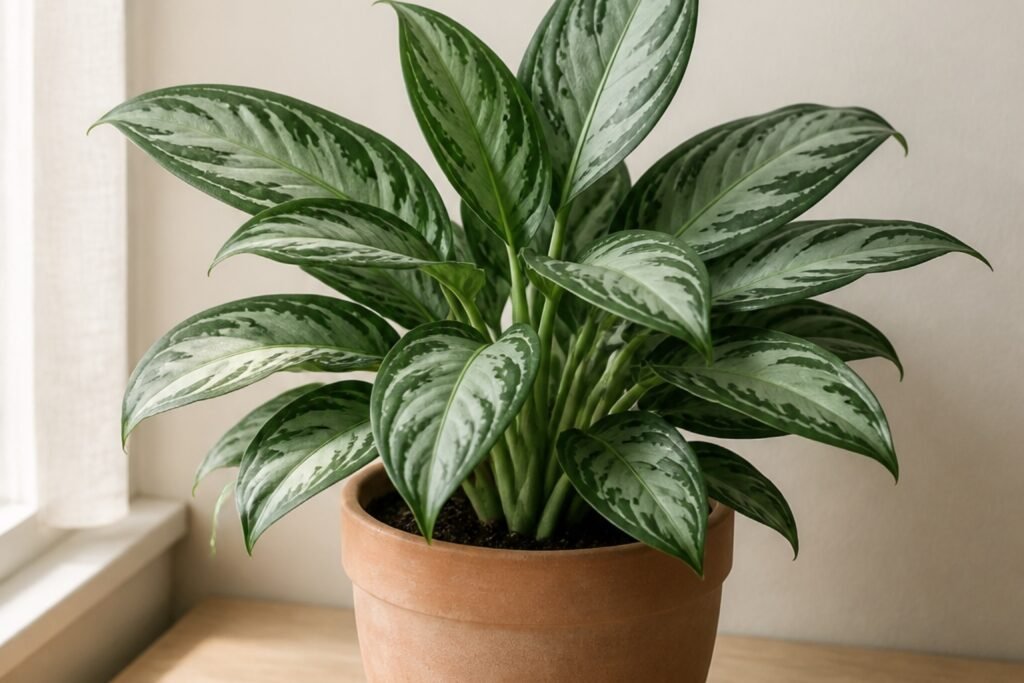
Chinese evergreen care begins with the label. This profile centers on Aglaonema commutatum, a species behind many familiar indoor cultivars. The store name also covers other Aglaonema species and hybrids, so a dark green plant and a pink, heavily variegated one may not behave alike in low light. Knowing what you bought prevents a lot of bad advice.
Philippine evergreen and golden evergreen are other common names used for A. commutatum. It belongs to the arum family, Araceae. If your nursery label names another species or only says Aglaonema, keep that distinction when checking identity or safety advice.
Chinese evergreen care snapshot
| Care point | Practical indoor target |
|---|---|
| Light | Medium to bright indirect light; green forms tolerate less than highly colored forms |
| Water | Let the upper layer dry, then water thoroughly and drain |
| Soil | Loose, organic potting mix with reliable drainage |
| Humidity | Average to moderately humid household air |
| Temperature | About 65 to 80 F; protect from cold drafts |
| Mature indoor size | Commonly 1 to 3 feet, depending on cultivar |
| Growth rate | Slow to moderate |
| Pet safety | Toxic to cats and dogs if chewed |
Chinese evergreen appears in our easy houseplant guide and low light plant guide. Those placements describe the tougher green cultivars best. A plant with broad cream, pink, or red areas needs more filtered light to hold its color and balanced growth.
Match the light to the leaf color
Green cultivars can remain useful in medium or lower indirect light. Move a bright red or pale variegated cultivar closer to a filtered window, since the colored sections contain less chlorophyll. Avoid sudden direct sun. Pale patches caused by scorch do not regain their former color.
Use new leaves as your record. If fresh growth is smaller, greener, or leaning hard toward the window, the plant may need more light. If the light side develops dry tan patches while the shaded side stays intact, move it back from the glass.
Cold can look like a care mistake. A plant pressed against winter glass or carried through freezing air may develop water-soaked, dark areas and leaf drop. Keep it away from exterior doors and heat vents. Wrap the plant for the trip home in cold weather.
Water after the surface begins to dry
Chinese evergreen likes more regular moisture than a ZZ plant, but it should not sit in saturated mix. Feel the top inch or two. Water when that layer is dry and the pot has lost some weight, then soak the full root ball and empty the saucer.
In low light, water use slows sharply. That is why a weekly schedule can work in June and cause yellow leaves in December. The guide to watering indoor plants explains how season, light, and pot size change the interval.
If stems feel soft at the soil line or the pot smells sour, inspect the roots. Healthy roots are firm. Dark, collapsing roots need prompt attention and a correction to drainage, not another drink.
Keep the roots snug and aerated
Use a loose indoor potting mix with organic material and coarse structure. A drainage hole is essential. Chinese evergreen grows slowly enough that an oversized pot can remain wet for too long. Move up one size when roots have filled the container or water no longer penetrates the root ball evenly.
The repotting guide covers the practical steps. Keep the stems at their former depth. Burying them to hide a leggy base can invite rot. If an old plant has several rooted crowns, division may be cleaner than shifting the whole clump into a very large pot.
Feed lightly during active growth with a complete houseplant fertilizer used as its label directs. Strong fertilizer will not restore color lost to low light. It can leave a white crust on the mix or damage roots. Pause feeding when the plant is barely growing.
Clean and inspect broad leaves
Wipe leaves with a soft damp cloth. The job is quick, and it exposes scale, spider mites, and mealybugs before a colony becomes obvious. Do not use oily leaf shine. Our leaf cleaning guide gives a plain-water routine for broad foliage.
Propagation by division is direct: separate a rooted crown from a crowded clump and pot it at the same depth. Stem sections can also root in a warm, lightly moist medium, but soft or damaged tissue rots easily. Use clean tools and discard any section with a foul smell or spreading black tissue.
Common Chinese evergreen problems
| Symptom | Likely checks | First sensible move |
|---|---|---|
| Several yellow lower leaves | Wet soil, poor drainage, low light | Check root moisture and move closer to indirect light |
| Dry brown tips | Dry air, water quality, salt buildup | Review water and flush the mix if it drains well |
| Colored leaves become greener | Light too low for the cultivar | Increase filtered light gradually |
| Pale tan patches | Direct sun or cold contact | Move away from harsh sun or cold glass |
| Sticky residue or small fixed bumps | Scale or another sap feeding pest | Isolate and identify the pest before treating |
Symptoms overlap. The guide to yellow houseplant leaves helps you compare moisture, light, temperature, and pest evidence before taking the plant apart.
Pet and child safety
ASPCA lists Chinese evergreen as toxic to cats and dogs and identifies insoluble calcium oxalates. The ASPCA entry names Aglaonema modestum, while stores use Chinese evergreen for many Aglaonema plants. Treat the whole retail group as unsafe to chew unless a veterinary source confirms the exact plant. Oral pain, drooling, vomiting, swelling, and difficulty swallowing need prompt veterinary advice. Our pet safe indoor plant guide explains how to verify botanical names and lookalikes.
Frequently asked questions
Can Chinese evergreen grow in very low light?
Green cultivars tolerate lower light better than many houseplants, but growth becomes slower and weaker. Colored cultivars usually need brighter filtered light. A windowless room needs a suitable grow light.
Why is my red Chinese evergreen turning green?
Insufficient light is a common reason. Move it closer to bright indirect light over several days. Cultivar genetics and leaf age also affect color, so compare several new leaves rather than one.
Can I divide a Chinese evergreen?
Yes. Separate a natural crown that already has healthy roots. Division is most useful when a mature clump crowds the pot, and it gives a larger plant sooner than a stem section.