
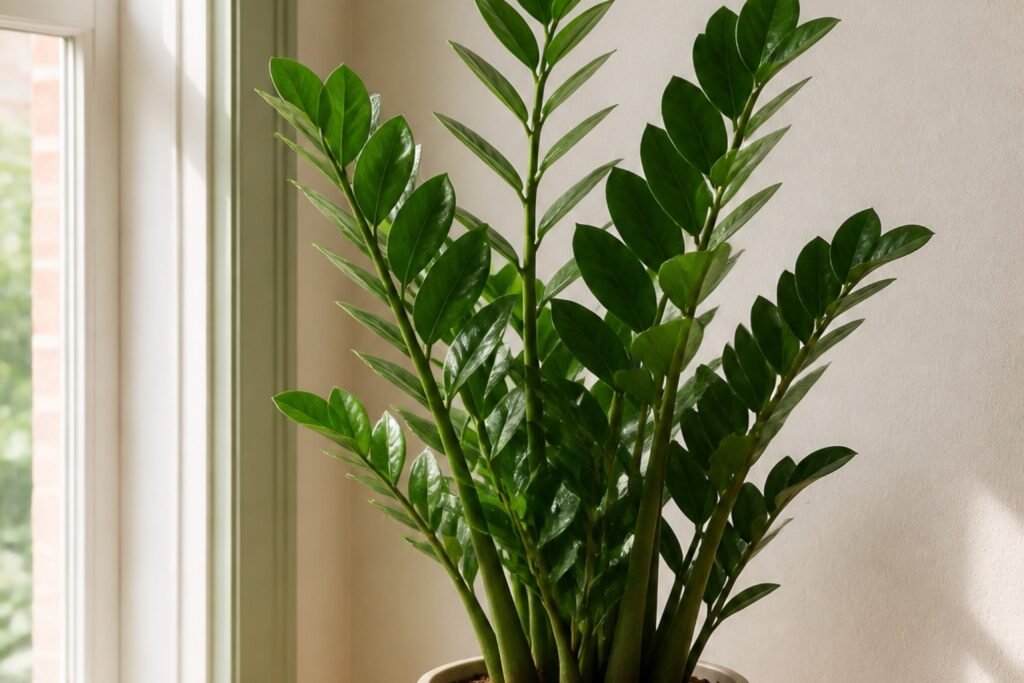
ZZ plant care gets easier once you stop treating this plant like a leafy fern. The thick underground rhizomes store water, and the glossy leaf stalks are built to coast through dry spells. That storage system is useful in an apartment, but it also makes a ZZ plant unusually easy to overwater. A bright room, a draining pot, and a little patience usually do more for it than frequent attention.
The plant's botanical name is Zamioculcas zamiifolia. Stores also sell it as Zanzibar gem, eternity plant, or aroid palm. It is not a true palm. It belongs to the arum family, Araceae, and comes from tropical Africa.
ZZ plant care snapshot
| Care point | Practical indoor target |
|---|---|
| Light | Bright indirect light for steady growth; lower light is tolerated |
| Water | Let most of the potting mix dry, then soak and drain the pot |
| Soil | Loose, fast draining indoor potting mix |
| Humidity | Normal household humidity is usually sufficient |
| Temperature | A warm room, roughly 65 to 80 F, away from cold drafts |
| Mature indoor size | Commonly 2 to 4 feet tall and wide |
| Growth rate | Slow, especially in lower light |
| Pet safety | Irritating if chewed; keep away from cats, dogs, and small children |
Our low light plant guide includes the ZZ plant because it can hold its leaves in a dimmer room. That does not mean darkness is good for growth. A plant several feet from a window may survive for a long time while producing almost no new stalks. If you want a fuller plant, move it closer to filtered daylight or add measured supplemental light.
Give it more light than the label suggests
Bright indirect light is the comfortable middle ground. Put the pot close to an east window, beside a brighter north window, or a few feet back from a south or west exposure. Harsh afternoon sun through glass can bleach or scorch leaves that have been living in shade, so make any move gradually.
Turn the pot every week or two if new stalks lean toward the window. A ZZ plant in low light also uses water slowly. That link between light and water matters more than any calendar. The same pot may dry in ten days during a bright summer stretch and take several weeks in winter.
Check the mix before watering
Push a finger or wooden skewer well into the pot. Water when most of the mix feels dry and the container has become noticeably lighter. Then water thoroughly until excess runs from the drainage hole. Empty the saucer.
Small sips are not a good compromise. They can wet the upper layer without reaching the full root ball, leaving some roots dry while salts collect near the surface. Our guide to watering indoor plants explains why checking the plant and pot works better than choosing a fixed weekday.
Yellow lower leaves, soft stalk bases, and a pot that stays wet for a long time point toward excessive moisture. Wrinkled leaflets can occur when the plant is very dry, but check the root zone before assuming it needs more water. Damaged roots can also leave a plant unable to take up moisture.
Use a draining pot and a loose mix
A drainage hole is more useful than a decorative layer of rocks. Choose a pot only slightly wider than the rhizome mass. A large volume of unused mix stays wet longer, which is exactly what this plant does not need.
A general indoor mix can work if it drains freely. If it packs into a heavy block, blend in a coarse amendment appropriate for container plants. The potting soil comparison and the guide to repotting a houseplant cover the details without requiring a complicated recipe.
Repot when rhizomes press hard against the pot, roots circle densely, or water no longer moves through the mix. Spring or early summer is convenient because the plant is more likely to be growing. Wear gloves if your skin reacts easily to plant sap.
Feed lightly and clean the leaves
ZZ plants are not heavy feeders. During active growth, use a complete houseplant fertilizer at the label rate and frequency. Plants in very low light need less, and fertilizing a stressed or waterlogged plant will not repair its roots. Pause feeding when growth has stopped for winter.
Dust dulls the broad leaflets and can hide early scale insects. Wipe both sides with a damp cloth while supporting the stalk. Skip leaf shine products. The plain-water method in our leaf cleaning guide is enough.
Propagation is slow but straightforward
Division gives the quickest result. Slide the plant from its pot, separate a natural section with healthy rhizomes and roots, and replant each division at the same depth. Do not cut the plant into tiny pieces just to make more pots. A larger division settles faster.
Leaflet and stem cuttings can form rhizomes, but the process may take months. Keep the medium lightly moist rather than wet, and do not keep pulling the cutting up to check for progress. If speed matters, division is the sensible choice.
Common ZZ plant problems
| Symptom | Likely checks | First sensible move |
|---|---|---|
| Yellow leaves and soft bases | Wet mix, oversized pot, poor drainage | Stop watering and inspect the roots and rhizomes |
| Stalks lean strongly to one side | Light coming from one direction | Rotate the pot and move it closer to useful light |
| Pale or scorched patches | Sudden direct sun exposure | Move it back from the glass and acclimate slowly |
| Wrinkled leaflets | Very dry mix or damaged roots | Check moisture and roots before adding water |
| Sticky spots or fixed brown bumps | Scale insects | Isolate the plant and confirm the pest before treating |
Several houseplant problems look alike. If the cause is not obvious, compare the pattern with our guide to yellow houseplant leaves before changing water, fertilizer, and light all at once.
Pet and household safety
NC State Extension lists ZZ plant as a poisonous houseplant and notes calcium oxalate crystals. Chewing can irritate the mouth and digestive tract. Place it where pets and young children cannot reach fallen leaflets. If a pet chews the plant or develops drooling, vomiting, swelling, or trouble swallowing, contact a veterinarian or animal poison service promptly. Our pet safe plant guide explains why a common name alone is not enough for a safety check.
Frequently asked questions
Can a ZZ plant live in a windowless room?
It can remain presentable for a while under ordinary room lighting, but that is not a sound long term growing plan. Give it daylight or a suitable grow light on a timer if the room has no useful window light.
How often should I water a ZZ plant?
There is no dependable number of days. Check the full depth of the pot and water after most of the mix has dried. Light, pot size, season, and temperature change the interval.
Why is my ZZ plant not growing?
Slow growth is normal. Low light, cool conditions, a recent repot, or root trouble can slow it further. Improve the conditions you can verify, then wait for the next growth cycle rather than adding extra fertilizer.