
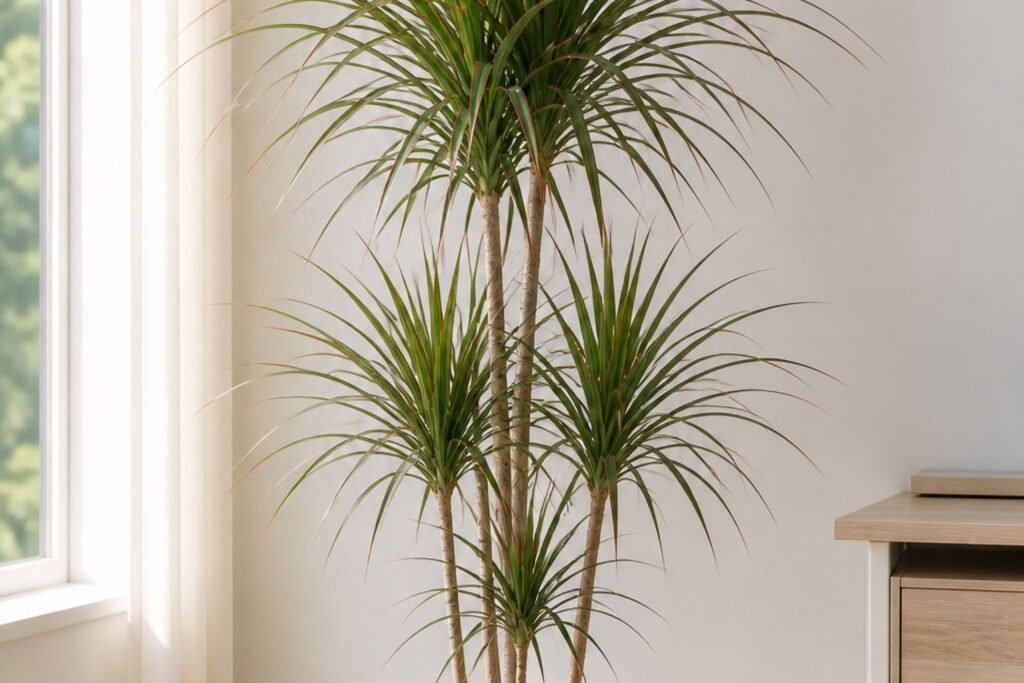
Dracaena marginata care indoors starts with the name on the label. The accepted name used here is Dracaena reflexa var. angustifolia. Nurseries still sell it as Dracaena marginata, Madagascar dragon tree, or red-marginated dracaena. Those names point to the same narrow-leaved cane plant, not to a true palm or a yucca.
It grows slowly, tolerates ordinary indoor air, and does not ask for frequent attention. Its main weakness is a wet root ball. Brown tips get all the attention, but soft yellow leaves over damp mix deserve a faster response.
Dracaena marginata care indoors snapshot
| Care point | Practical indoor target |
|---|---|
| Light | Bright indirect light; medium light is tolerated |
| Water | Let roughly the upper half of the mix dry before soaking |
| Soil | Open, well-drained indoor mix |
| Humidity | Average household humidity |
| Temperature | Roughly 60 to 80 F |
| Mature indoor size | Commonly 2 to 6 feet tall |
| Growth rate | Slow |
| Pet safety | Toxic to cats and dogs |
Use bright light without cooking the narrow leaves
Place the plant near an east window or behind a sheer curtain at a brighter exposure. A green-leaved form tolerates medium indirect light, but growth slows and the pot stays damp longer. Variegated forms need enough light to hold their stripes.
Harsh afternoon sun through hot glass can leave pale dry patches. Acclimate the plant if it is moving into direct rays. The checklist for deciding whether a grow light is needed is useful in rooms where a cane leans, makes sparse crowns, or barely grows.
Lower leaves eventually age and fall, exposing the patterned cane. That bare section is part of the plant's mature form. A healthy crown making firm new leaves does not need to be cut simply because the lower cane is visible.
Let the pot lose weight between drinks
Check deeper than the surface. Wait until roughly the upper half of the mix is dry and the pot feels lighter. Then water the entire root ball and let it drain. A small sip wets only one pocket and leaves salt behind.
Dracaenas use water slowly in cool or low-light rooms. A schedule that worked beside a summer window can keep the same plant soaked in winter. Use the method in how often to water indoor plants to combine touch, pot weight, and the plant's recent growth.
Brown tips have several possible causes. Fluoride sensitivity and dissolved salts are documented concerns for this plant. If tap water leaves mineral crust and the newest tips burn despite sensible moisture, try rainwater, distilled water, or another low-mineral source for a few watering cycles. Also flush the mix thoroughly rather than adding more fertilizer. The guide to brown tips on houseplant leaves helps sort salt damage from drought and hot sun.
Keep the cane firm and the mix open
A drainage hole matters more than an expensive pot material. Use a structured indoor mix with coarse material that keeps air around the roots. Never bury a long section of cane to make a tall plant look shorter.
Repot when roots press densely against the container, water no longer enters evenly, or the canes become unstable. Move up one size. The steps in how to repot a houseplant explain how to loosen circling roots without stripping every fine root bare.
Feed lightly while the plant is making new leaves. Heavy fertilizer does not speed a naturally slow dracaena. It often leaves more salts in the pot, exactly where tip-sensitive roots do not need them.
Prune a cane only with a clear goal
Cutting a healthy cane below its crown can shorten the plant and encourage two or more shoots below the cut. Make the cut during active growth with a clean blade. Keep the rooted base in good light and water cautiously while it has less foliage.
The leafy top can root as a stem cutting. Sections of bare cane may also root if orientation is kept clear. A leaf by itself is not enough. Air layering is another option when the stem is thick and losing the whole top would be a poor gamble.
Common Dracaena marginata problems
| Symptom | Likely checks | First sensible move |
|---|---|---|
| Brown tips | Salts, fluoride, dry air, or uneven moisture | Review water quality and crust on the mix |
| Yellow soft leaves | Wet roots or cold conditions | Check the middle of the pot before watering |
| Pale stretched crown | Light too weak | Move toward filtered window light in stages |
| Bare cane below a firm crown | Normal aging or an earlier stress | Judge the newest growth first |
| Fine stippling and webbing | Spider mites | Inspect leaf bases and undersides |
Spider mites are easy to miss among narrow leaves. Look for pale speckles, dusty webbing, and movement near leaf bases. Isolate the plant and confirm the pest before spraying. The spider mite guide covers inspection and follow-up.
If the cane becomes soft at soil level, remove the plant from its pot. Dark mushy roots and a sour smell point to rot, not thirst. Trim only to firm tissue and correct the wet setup before replanting.
Treat the sap and pet warning seriously
ASPCA lists Dracaena marginata as toxic to cats and dogs. Reported signs include vomiting, drooling, weakness, and loss of coordination; cats may also develop dilated pupils. Contact a veterinarian or animal poison service after suspected ingestion.
NC State notes that ingestion can irritate the human mouth and stomach, and sap may bother skin. Wear gloves when making large cane cuts and wash the blade afterward. This is not a plant for the reachable shelf on a pet-safe plant list.
Frequently asked questions
Can Dracaena marginata live in low light?
It can tolerate medium or relatively low indirect light, but growth slows and wet-soil risk rises. Bright filtered light produces a denser crown and makes the watering pattern easier to read.
Should I cut off brown Dracaena tips?
You may trim the dry tissue for appearance, leaving a narrow brown margin rather than cutting into green. Trimming does not fix the cause, so check water quality, root moisture, heat, and fertilizer salts.
Will a cut Dracaena cane grow again?
Usually, a healthy rooted cane can push new shoots below the cut during active growth. Give it useful light and less water while the reduced canopy is developing.