
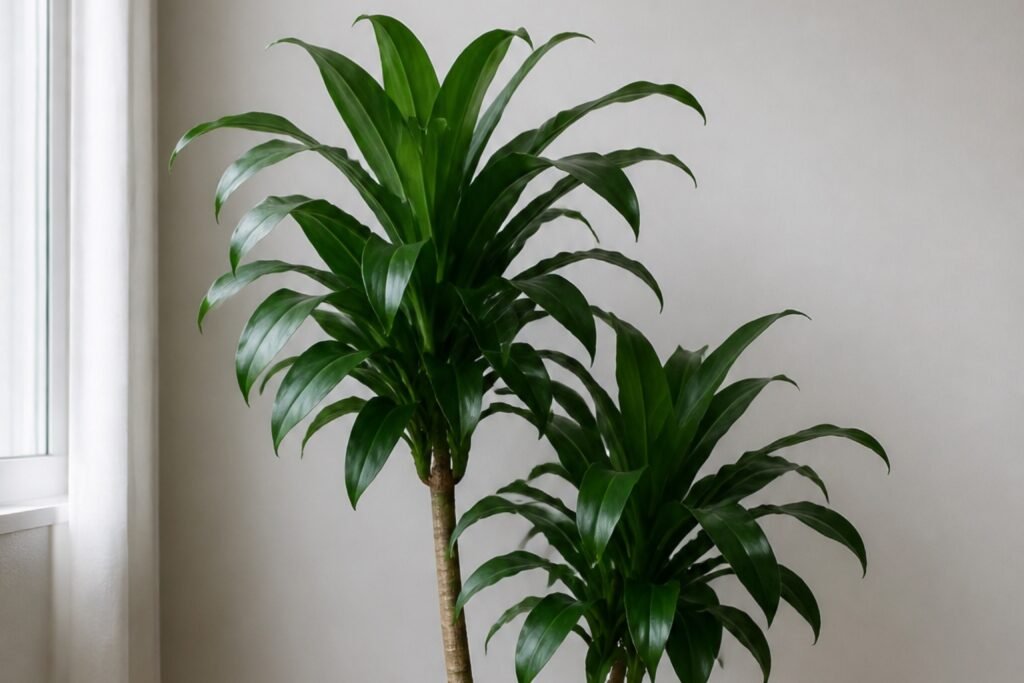
Janet Craig dracaena care suits rooms where a broad, spreading plant would feel awkward. The dark leaves rise in dense clusters from upright canes, so the plant adds height without claiming much floor space. Its accepted name here is Dracaena fragrans 'Janet Craig'. Older books and nursery tags may place it under Dracaena deremensis, and compact plants are sometimes sold as 'Compacta'.
The cultivar tolerates lower indoor light better than many striped dracaenas. That reputation has limits. A Janet Craig can sit quietly in a dim office for a long time, but useful filtered daylight produces stronger, broader leaves and steadier growth.
Janet Craig dracaena care snapshot
| Care point | Practical indoor target |
|---|---|
| Light | Medium indirect light; lower light is tolerated |
| Water | Water after the upper inch or two dries and the pot feels lighter |
| Soil | Well drained indoor mix in a stable pot with drainage |
| Humidity | Average household humidity, away from drying vents |
| Temperature | About 65 to 80 F; protect from temperatures below 50 F |
| Indoor size | Usually 3 to 6 feet tall and 2 to 3 feet wide |
| Pet safety | Toxic to cats and dogs if eaten |
Put the plant where the leaves stay broad
A bright north window or a position near an east window is an easy fit. In a room with strong south or west exposure, set the plant back from hot direct sun. Sudden sunlight can bleach or scorch leaves that formed in shade. Rotate the pot now and then if the crown leans noticeably toward one side.
In weak light, Janet Craig grows slowly and uses water slowly. New leaves may become narrower, and lower leaves can be lost over time. Do not respond by feeding more. Move the plant closer to useful light first. Our low light houseplant guide explains why a dark green dracaena is a better dim-room candidate than a highly variegated cultivar.
If the room has no window, choose a suitable grow light and place it close enough to provide measurable light. A bright ceiling fixture designed for people rarely supplies enough energy at leaf level.
Let the upper mix dry before watering
Push a finger or wooden skewer an inch or two into the pot and lift the container if you can. Water when that upper zone has dried and the pot is noticeably lighter. Then soak the full root ball and let the excess drain. A fixed weekly schedule ignores changes in winter light, pot size, room temperature, and root density.
Persistent wetness is harder on the roots than a short dry interval. Yellow lower leaves, a soft cane base, and sour-smelling mix are reasons to inspect the root zone before adding more water. Our guide to saving an overwatered plant starts with the same evidence: moisture, drainage, and root condition.
Dracaenas can be sensitive to fluoride and soluble salts. If brown tips continue despite steady moisture and reasonable humidity, check for a pale crust on the soil or pot rim. Flush the mix with plain water. Where local water is naturally high in salts or fluoride, collected rainwater or another suitable low-mineral source may help. Do not assume every brown tip is a water-quality problem, though. Dry air, missed watering, hot sun, and excess fertilizer can look similar.
Keep the root zone airy
Use a loose general houseplant mix in a pot with an open drainage hole. The container should be heavy enough that a tall cane cannot tip it, but it should not be much wider than the root ball. Too much unused mix holds water long after the plant has taken what it needs.
Repot when roots circle densely, rise from the surface, or push the plant upward. A pot that dries much faster than it once did can be another clue. Move up one modest size and keep the canes at their previous depth. The repotting walkthrough covers how to handle a tight root ball without tearing it apart.
If the mix is still structurally sound and the plant is stable, there is no benefit to an automatic yearly repot. Replace the top layer carefully and wait for a real trigger.
Feed lightly and manage the canes
Apply a complete houseplant fertilizer during active growth according to the label. A plant in low light needs less than one growing beside a bright window. Stop feeding a plant with damaged roots, and pause during a winter slowdown. Salt buildup from generous feeding can worsen the exact brown tips the fertilizer was meant to prevent.
Dust shows quickly on dark leaves. Wipe each leaf with a damp cloth while supporting it from below. This also gives you a close look for mealybugs, scale, or thrips. Our plain-water leaf cleaning method is enough; a glossy coating is unnecessary.
An overly tall cane can be shortened in spring or early summer. Make a clean cut at the chosen height. New shoots may develop below it, although the response takes time. The cut top can be rooted as a stem cutting, and bare cane sections may also root. Keep propagation brief and patient rather than leaving cuttings in saturated media.
Common Janet Craig problems
| Symptom | What to check first | First sensible move |
|---|---|---|
| Brown leaf tips | Salt crust, dry drafts, watering gaps, and direct sun | Correct one confirmed cause and trim only dead tissue |
| Yellow lower leaves | Age of leaf, moisture depth, and cane firmness | Inspect roots if several leaves yellow while the mix stays wet |
| Narrow, weak new leaves | Light at the crown | Move gradually to brighter indirect light |
| Soft or leaning cane | Cane base and roots | Stop watering and inspect for decay |
| White cottony clusters | Leaf bases and cane joints | Isolate and confirm mealybugs before treatment |
The houseplant diagnostic tool can help when the clues conflict. A new dracaena should also be checked away from the main collection. Follow the new plant quarantine routine before giving it a permanent spot.
Pet and household safety
The ASPCA lists Dracaena fragrans as toxic to cats and dogs because it contains saponins. Reported signs include vomiting, appetite loss, drooling, and depression; cats may also have dilated pupils. Keep leaves and pruned cane pieces out of reach. If a pet chews the plant or shows symptoms, contact a veterinarian or animal poison service rather than waiting for an online remedy.
Frequently asked questions
Can Janet Craig dracaena live in low light?
It tolerates low light, especially compared with variegated dracaenas, but growth becomes slower and often thinner. Give it the brightest indirect location the room can reasonably provide, then adjust watering to the slower drying rate.
Why are the tips turning brown?
Several conditions can cause the same tip damage: dry air from a vent, irregular watering, excess fertilizer salts, fluoride sensitivity, or harsh sun. Check the whole setup before switching water sources or fertilizing.
Can I cut a Janet Craig cane shorter?
Yes. Use a clean blade during active growth and make the cut at the height you want. The remaining cane may send out new shoots below the cut. Rooting the removed top is possible, but it should have firm, healthy tissue.