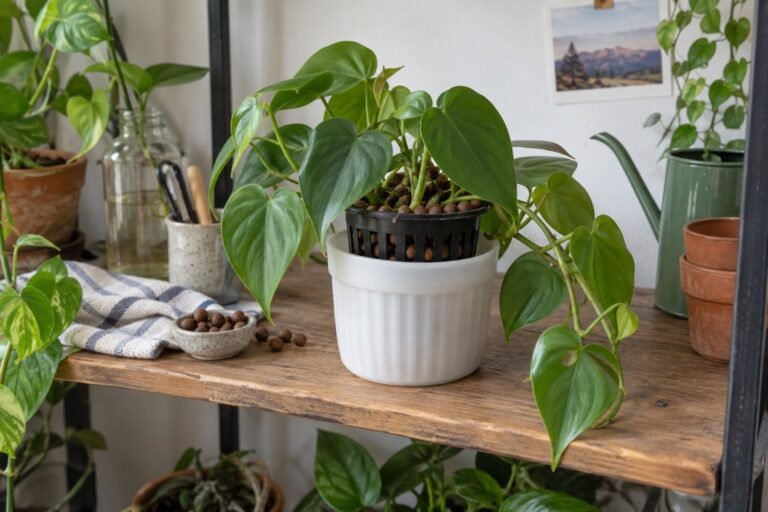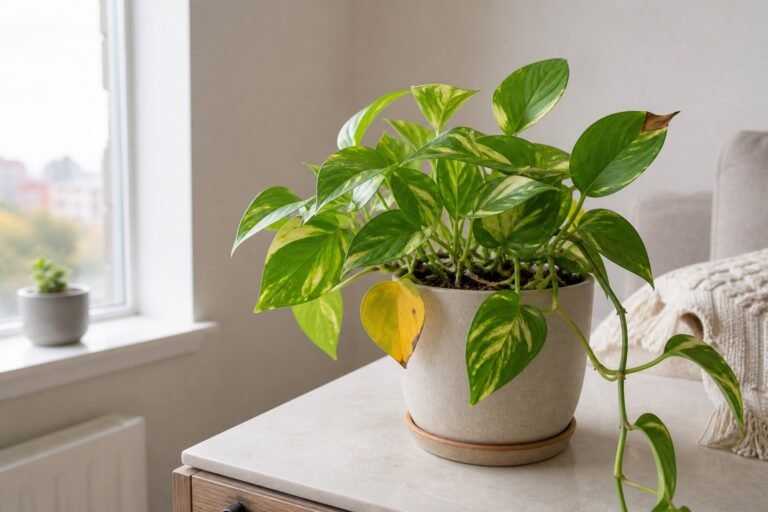
How to Quarantine New Houseplants: 7 Safe, Simple Steps
Last updated: July 20, 2026.
Affiliate disclosure: As an Amazon Associate I earn from qualifying purchases. Links marked “paid link” may earn Fern & Shelf a commission at no extra cost to you. Read our full Affiliate Disclosure.
Start here: For a complete overview, see our Indoor Gardening for Absolute Beginners.
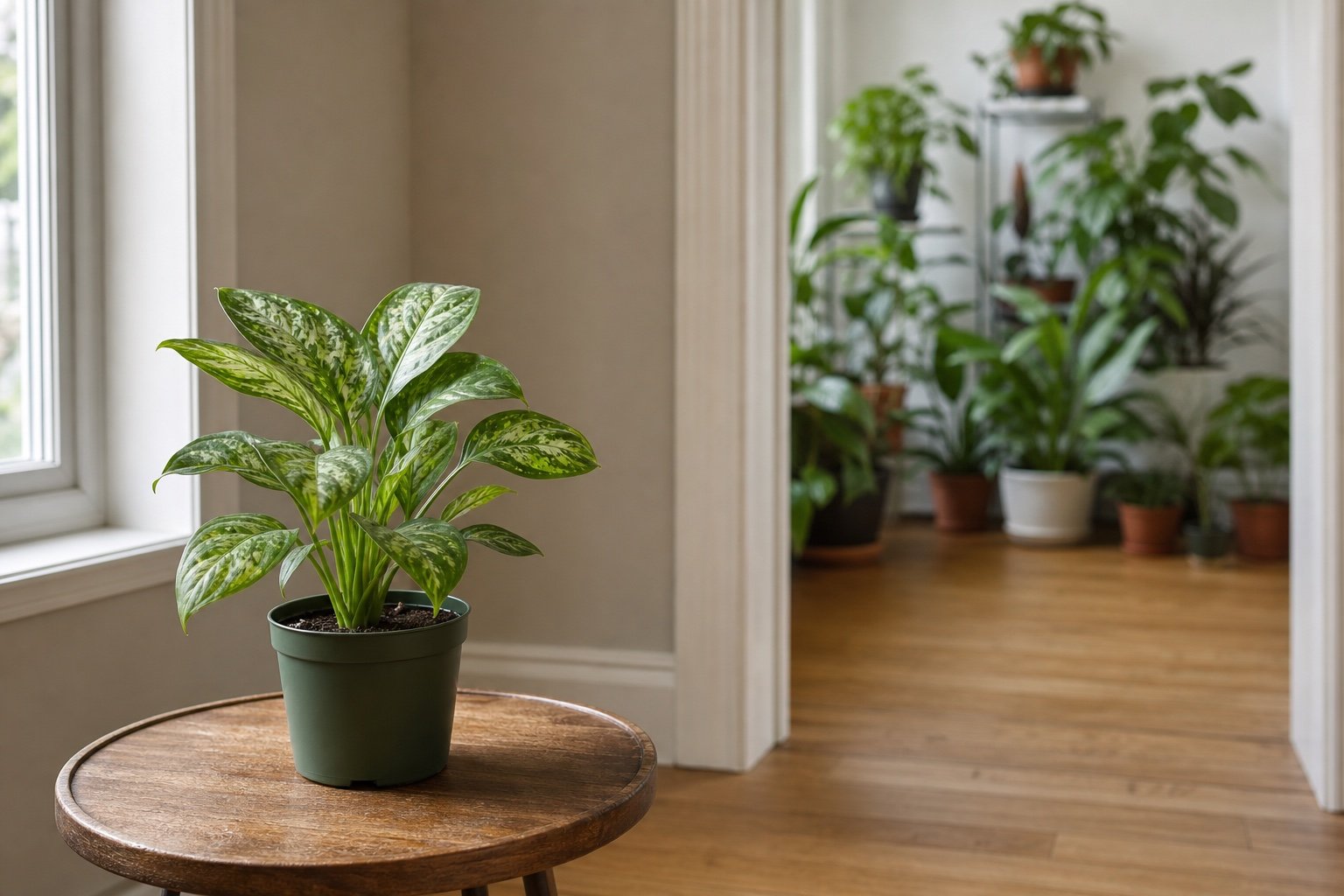
Learning how to quarantine new houseplants is mostly about slowing down. Keep a new plant apart from the collection for two to three weeks, give it suitable light, and inspect it more than once. A closed door is better than another corner of the same plant shelf. The calendar helps, but repeated clean inspections matter more than reaching a magic day.
Official recommendations vary. University of Minnesota Extension advises isolating new plants for one to two weeks. Penn State Extension suggests about three weeks, while Clemson recommends six weeks as a conservative approach. A practical household plan is three weeks, with a longer quarantine for plants that lived outdoors, arrived with suspicious damage, or are joining a large or hard-to-replace collection.
Quarantine will not prove that a plant is pest-free. It gives small problems time to become visible while one pot is still easier to manage than twenty.
How to quarantine new houseplants at a glance
| When | What to do | What would make you wait longer |
|---|---|---|
| Before buying or unpacking | Check leaves, stems, pot, saucer, and soil surface | Webbing, sticky residue, moving specks, cottony clusters, damaged new growth |
| Day 0 | Place the plant in a separate suitable area and inspect it under good light | Any unidentified insect, suspicious eggs, or fresh feeding damage |
| Days 1 to 7 | Water only when needed and check the plant during routine care | New spots, distorted growth, trap catches, insects around drainage holes |
| Days 8 to 14 | Repeat the full leaf, stem, pot, and soil inspection | A pest sign that was absent during the first week |
| Days 15 to 21 | Inspect once more before moving the plant | Unexplained symptoms or a treatment still in progress |
| After a confirmed pest | Keep the plant isolated and follow a pest-specific plan | Do not release it merely because the original three weeks ended |
Why a healthy-looking plant still gets quarantined
Spider mites can begin as moving dots on a leaf underside. A young scale insect may settle along a vein before the obvious shell-like bumps appear. Mealybugs hide where leaves join stems, and fungus gnat larvae stay in the potting mix while the adults are the part people notice.
None of that means every nursery plant is infested. It means a quick glance at the top leaves can’t clear the whole plant. Eggs, immature stages, and insects tucked into pot rims are easy to miss during the excitement of bringing something home.
Quarantine also gives the plant time to react to its new room. Some yellowing or leaf drop can follow a move even when no pest is present. Separating the newcomer prevents a normal adjustment from becoming an excuse to spray first and diagnose later.
Step 1: inspect before the plant enters the collection
Start before checkout. Look at the plant in bright light and compare it with the plants beside it. A clean specimen can still carry something small, but obvious trouble is a reason to leave the entire purchase behind.
Check these areas:
- the upper and lower surfaces of several old and new leaves;
- leaf veins, folds, and points where leaves meet stems;
- tender new growth and flower buds;
- stems, stakes, ties, and moss poles;
- the rim, outer wall, base, drainage holes, and saucer;
- the surface of the potting mix and any fallen leaf litter;
- nearby plants on the same store bench.
Watch for fine webbing, sticky honeydew, white cotton-like material, hard brown bumps, silvery scars, black specks, holes, distorted growth, or insects that move when the plant is disturbed. A few harmless soil organisms can live in a pot, so the goal is observation rather than panic.
Mail-order plants need the same check as soon as the box opens. Keep packing material away from the main collection until you have inspected it, then discard or store it outside the plant area.
Step 2: choose a separate place that the plant can tolerate
A dark closet is excellent separation and terrible plant care. Use a spare room, bright bathroom, office, or other area with a door when possible. The plant still needs a reasonable temperature and enough light for the species.
There is no useful universal distance in feet. Adult fungus gnats and whiteflies can fly, as can winged aphids and adult thrips. People also move pests on hands, sleeves, tools, and shared trays. A different shelf in the same dense plant corner offers weak separation. A closed room and separate equipment are much better.
If a separate room is impossible, choose the most isolated bright location available. Keep leaves from touching anything in the established collection, avoid a shared windowsill, and do not place the new pot above other plants where water or debris can fall onto them.
A washable surface makes inspection and cleanup easier. Protect wood and fabric, but don’t seal a nursery pot into standing water.
Step 3: remove hiding places and clean the setup
Take off decorative sleeves, gift wrap, moss toppers, and dead leaves. These materials can hide insects and make it harder to see the soil surface. Inspect the pot and saucer before deciding whether either should stay.
Don’t automatically bare-root or repot a healthy new plant. Moving already stresses roots, and quarantine doesn’t require replacing every nursery mix. Repot when the container lacks a workable drainage setup, the root zone has a confirmed problem, the medium has failed, or the plant is genuinely root-bound. The houseplant repotting guide covers that decision and process.
If you reuse a tray or cachepot, wash off soil and plant debris first. A waterproof boot tray works well as a quarantine surface because it contains ordinary runoff and loose mix, but it does not block flying pests or disinfect the plant.
Search Amazon for a washable waterproof plant tray (paid link)
Step 4: inspect with good light and a 10x lens
Small pests don’t become easier to identify because you stare harder. University of Minnesota Extension recommends a ten-power hand lens for tiny pests. A phone camera can enlarge a suspicious spot, although it is less comfortable for scanning a whole plant.
For anyone learning how to quarantine new houseplants, a fixed inspection route is more reliable than checking whichever leaf catches the eye.
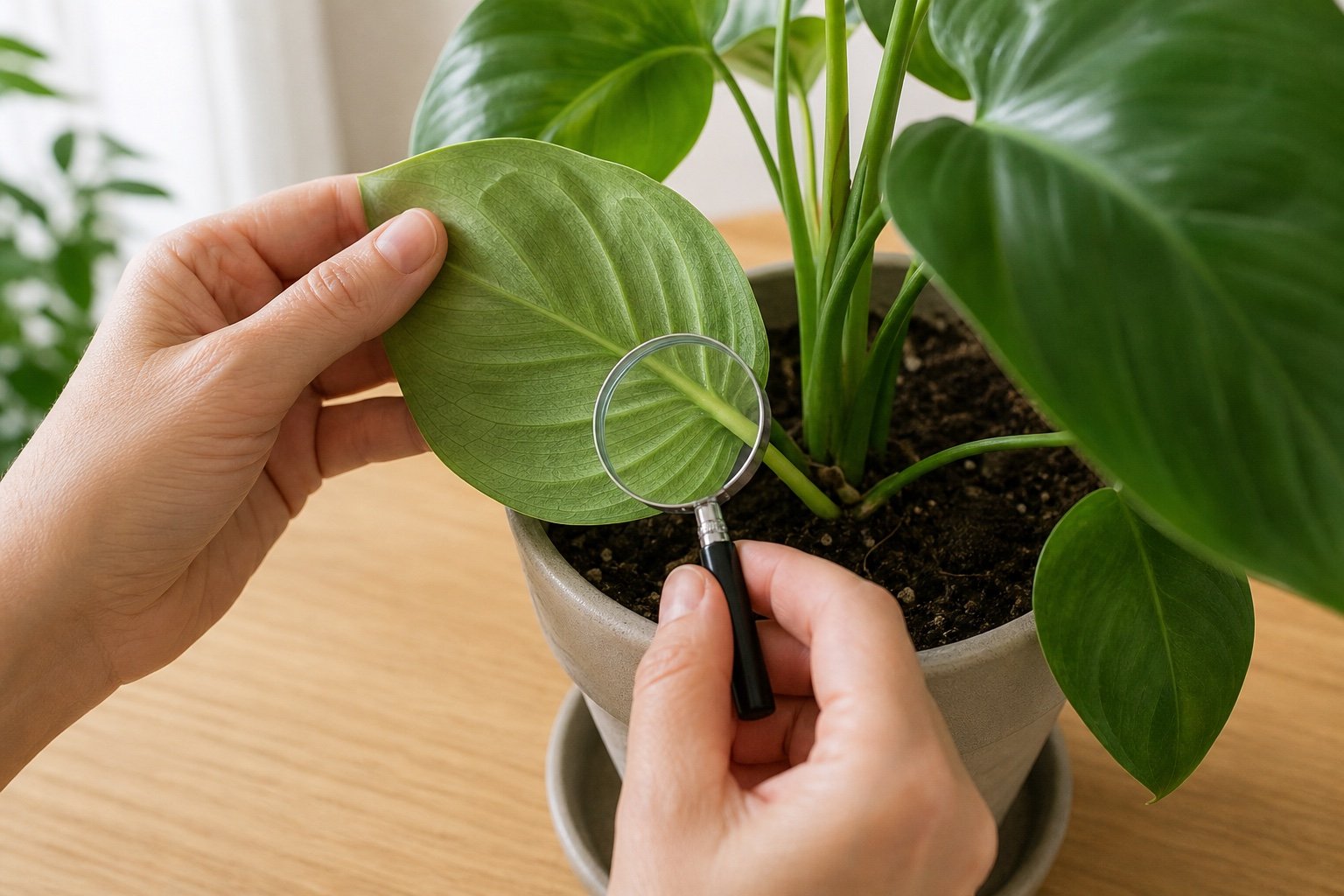
A fixed route may sound fussy, but it keeps easy hiding places from being skipped:
- Start at the newest leaves and buds.
- Follow stems downward, checking nodes and crevices.
- Turn several leaves over and inspect the veins.
- Look along the pot rim, underneath the pot, and inside drainage openings.
- Disturb the foliage gently and watch for flying adults.
- Check the soil surface after watering, when some insects become easier to see.
A white sheet of paper beneath a leaf can help reveal moving specks when the leaf is tapped gently. It is a screening method, not a complete diagnosis. Dust and bits of potting mix fall too.
Search Amazon for a 10x lighted hand lens (paid link)
Step 5: use sticky cards as monitors, not proof
Yellow or blue sticky cards can reveal adult fungus gnats, whiteflies, winged aphids, and some thrips. Place a card close to the plant without pressing it against the leaves. Write the start date on the removable backing or keep the date in a separate note, then check the card during each inspection.
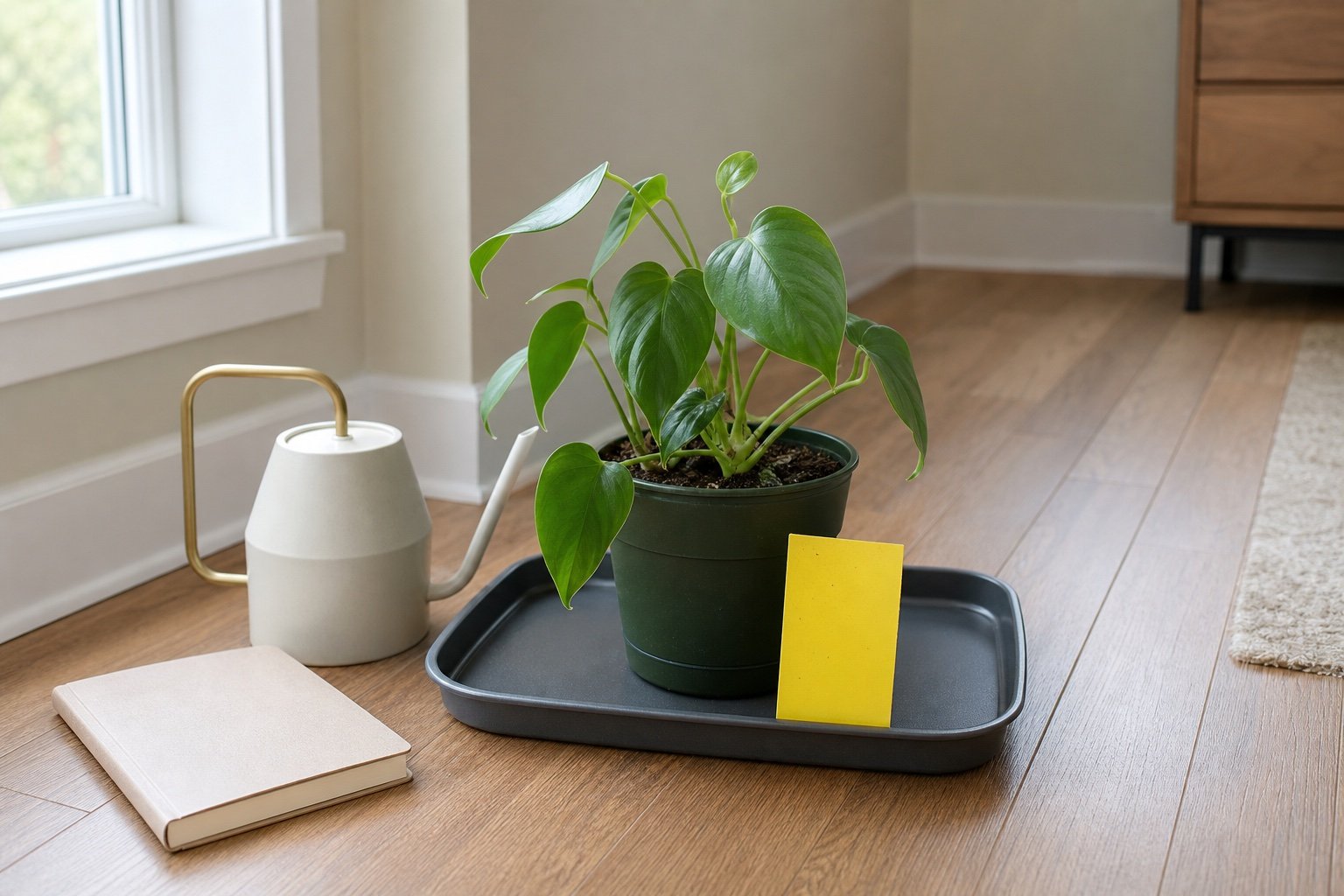
A clear card is encouraging, but it doesn’t tell you anything about spider mites, scale, mealybugs, or eggs. A card full of fungus gnats confirms flying adults, yet it doesn’t treat larvae in the pot. Sticky cards are one monitoring tool, not a certificate or a complete pest-control program.
Search Amazon for yellow sticky cards for houseplants (paid link)
Step 6: care for the plant without sharing the mess
Water according to the plant and the actual drying of the mix. A quarantine plant does not need extra water because it is new. Continuously damp soil can encourage fungus gnats, while drought can create damage that looks like another mystery to diagnose. The guide to watering indoor plants explains how to use the mix and pot weight instead of a weekly alarm.
Keep a small watering container, tray, cloth, and pruning tool in the quarantine area when possible. If equipment must be shared, work with established healthy plants first and the isolated plant last. Clean soil and debris from tools afterward, then disinfect when the situation calls for it.
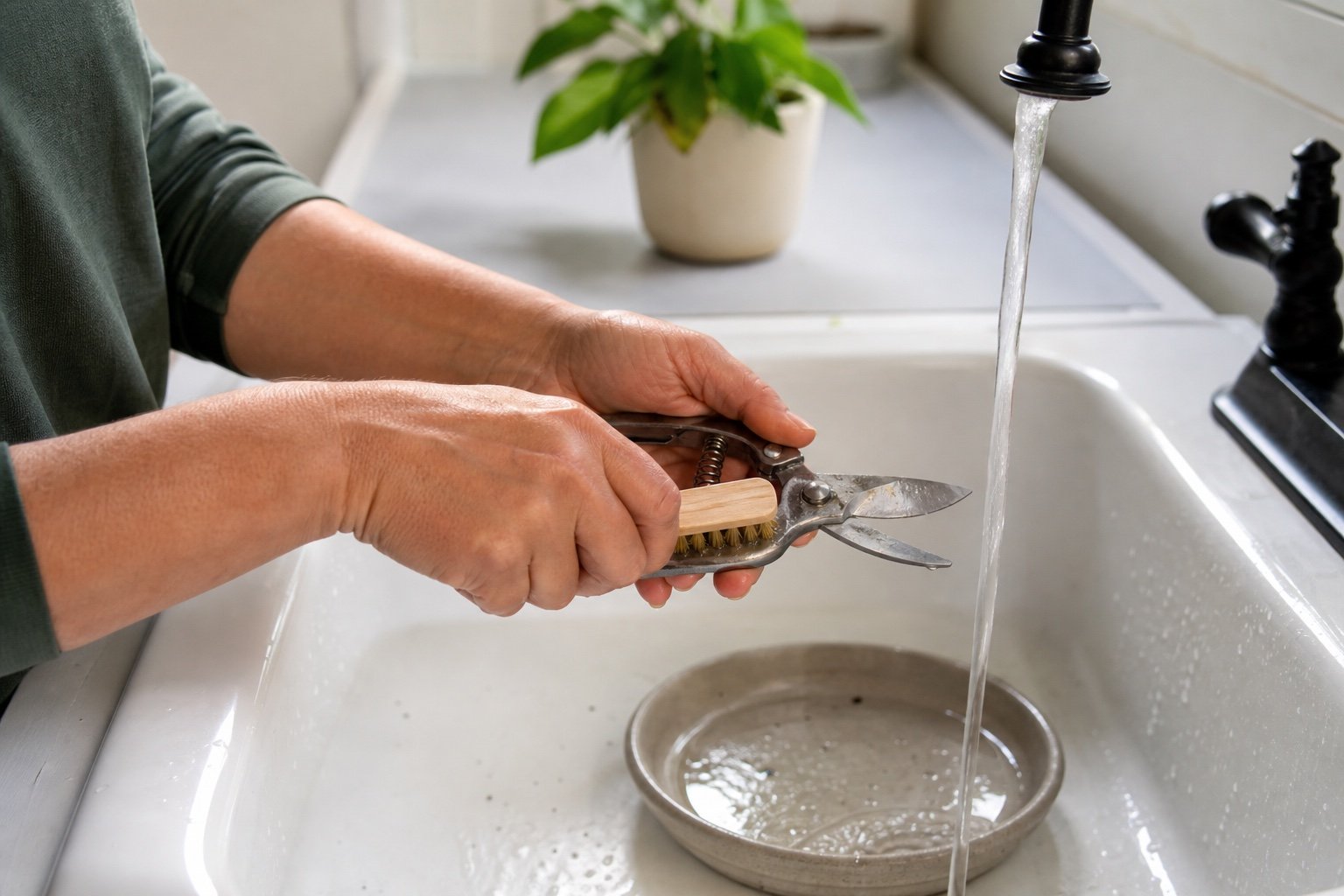
University of Minnesota Extension distinguishes cleaning from disinfection: dirt and plant material need to come off before a disinfectant can do its job properly. Follow the product directions and avoid mixing cleaning chemicals.
Wash your hands after handling a suspicious plant. Do not pour its runoff through pots in the main collection, and do not move fallen leaves onto a shared potting bench.
Step 7: finish with a full inspection, not a date alone
At the end of two to three weeks, repeat the Day 0 inspection under good light. Check new growth carefully because fresh distortion or feeding scars may be more informative than an older damaged leaf.
A plant is ready to join the collection when repeated inspections have found no pest signs, the plant isn’t undergoing treatment, and any transition symptoms are stable or improving. New or worsening symptoms are a reason to wait. One empty sticky card isn’t enough. Neither is one clean glance on Day 21.
Extend quarantine when:
- the plant spent time outdoors or sat on the ground;
- nearby store plants looked infested;
- the box or pot contained an unidentified insect;
- new symptoms appeared during isolation;
- you treated a confirmed problem;
- the established collection would be expensive or difficult to replace.
Clemson’s six-week recommendation is a reasonable conservative choice in those situations. Release criteria still matter at six weeks.
What the common warning signs may mean
| Sign | Possible problem | Next step |
|---|---|---|
| Fine webbing, pale stippling, tiny moving dots | Spider mites | Keep isolated and use the spider mite guide |
| White cotton-like clusters at nodes or roots | Mealybugs | Follow the mealybug treatment routine |
| Small dark flies rising from moist mix | Fungus gnats | Confirm the insect and use the fungus gnat guide |
| Sticky leaves or shiny residue below foliage | Honeydew from aphids, scale, mealybugs, or whiteflies | Inspect above and below the residue before choosing a treatment |
| Silvery scarring with small dark specks | Possible thrips feeding and waste | Use a lens, keep the plant separate, and seek species-appropriate advice |
| Yellowing, curling, or leaf drop with no insect found | Transition stress, light, water, roots, temperature, or a pest not yet identified | Check the yellow-leaf guide or curling-leaf guide without assuming one cause |
Common names and quick photos can mislead. Identify the problem before choosing a pesticide, especially when the home also has children, pets, edible plants, or sensitive species.
If you find a pest
Keep the plant isolated. Remove severely affected fallen material, identify the likely pest, and start with suitable physical or cultural controls. A shower or careful leaf wipe may reduce some exposed insects on smooth foliage, but the method depends on the pest and the plant. The full leaf-cleaning guide covers safe routine cleaning without oily shine products.
Do not spray every new plant with a homemade soap, alcohol mixture, neem product, or systemic pesticide as a ritual. Soft leaves can burn, a product may not be labeled for that pest or indoor site, and preventive spraying can hide the original diagnosis.
The US Environmental Protection Agency explains that pesticide labels are legally enforceable. The label determines the allowed plant or site, target pest, rate, application method, protective steps, and frequency. More product does not produce a better or safer result.
Treatment changes the release decision. Continue isolation until the pest-specific routine is complete and follow-up inspections remain clean. A universal rule such as “restart for exactly 14 days” cannot account for different life cycles or product directions.
Quarantine mistakes that waste the effort
Most failed quarantines are undone by ordinary shortcuts:
- A dark closet separates the plant but creates a light problem. Use a suitable bright space instead.
- A different shelf in the main plant corner isn’t much of a quarantine. Touching leaves and shared runoff weaken the separation.
- A top-leaf glance misses undersides, nodes, pot rims, drainage holes, and saucers. Follow the same inspection route each time.
- An automatic repot disturbs roots and may erase useful clues. Repot only when the roots, medium, or container give you a reason.
- Shared wet trays and dirty tools move water, soil crumbs, and plant material between pots. Keep the setup contained and clean equipment after use.
- A preventive cocktail can injure the plant or expose people and pets without solving the right problem. Diagnose first, then follow the exact label for any pesticide.
Frequently asked questions
How long should I quarantine a new houseplant?
Plan on two to three weeks for an apparently healthy indoor plant. University recommendations range from one or two weeks to six weeks. Use the longer end for outdoor plants, suspicious shipments, known exposure, or a collection where the cost of spread is high. Finish with another full inspection rather than relying on time alone.
What is the best room for plant quarantine?
A separate bright room with a door, washable surfaces, and suitable temperature is ideal. A bathroom can work when it has enough light and the plant is not exposed to cold drafts or extreme shower heat.
How far should a quarantined plant be from other plants?
No fixed distance stops every pest. A separate room is stronger than a few feet because some insects fly and people move others on tools, hands, and trays. If one room must be shared, maximize separation and prevent leaf contact or shared runoff.
The same approach explains how to quarantine new houseplants without a spare room: use the most isolated suitable spot, keep equipment separate, and never let the newcomer touch the established collection.
Can I quarantine several new plants together?
You can, but one infested plant then exposes the others. Keep arrivals from the same shipment together only if you are willing to treat the group as one quarantine unit. Do not add another plant halfway through and keep the original release date.
Should I repot a new plant during quarantine?
Only when the roots, medium, or container give you a reason. Quarantine by itself is not a reason to strip the root ball. If repotting is necessary, choose an appropriate indoor potting mix and keep the plant isolated afterward.
Does seeing one fungus gnat mean the plant is infested?
One small fly needs identification. Fungus gnats often come from moist organic media, but fruit flies and drain flies are different. Keep monitoring the plant and soil; if the signs fit, use the dedicated treatment guide.
Can a clean sticky card end quarantine early?
No. Sticky cards miss crawling pests, mites, eggs, and insects that have not reached the winged stage. Use the card alongside repeated plant and pot inspections.
What should I do after finding a pest on the last day?
Keep the plant isolated and move to a pest-specific treatment plan. The original end date no longer decides release. Follow the biology of the pest, the treatment directions, and clean follow-up inspections.
Related guides and tools
Give the newcomer a quiet three weeks
A practical way to learn how to quarantine new houseplants is to make the process ordinary: one separate place, one inspection route, and a few minutes of attention during normal care. Three weeks is a useful household plan, not a guarantee.
The plant can join the collection after repeated checks stay clean and no treatment remains underway. If something appears, isolation gives you a better chance to deal with it before it reaches the main collection.