How to Get Rid of Scale on Houseplants: 7 Safe Steps
Affiliate disclosure: As an Amazon Associate I earn from qualifying purchases. Links marked “paid link” may earn Fern & Shelf a commission at no extra cost to you. Read our full Affiliate Disclosure.
Last updated: August 12, 2026.
Start here: For a complete overview, see our Indoor Gardening for Absolute Beginners.
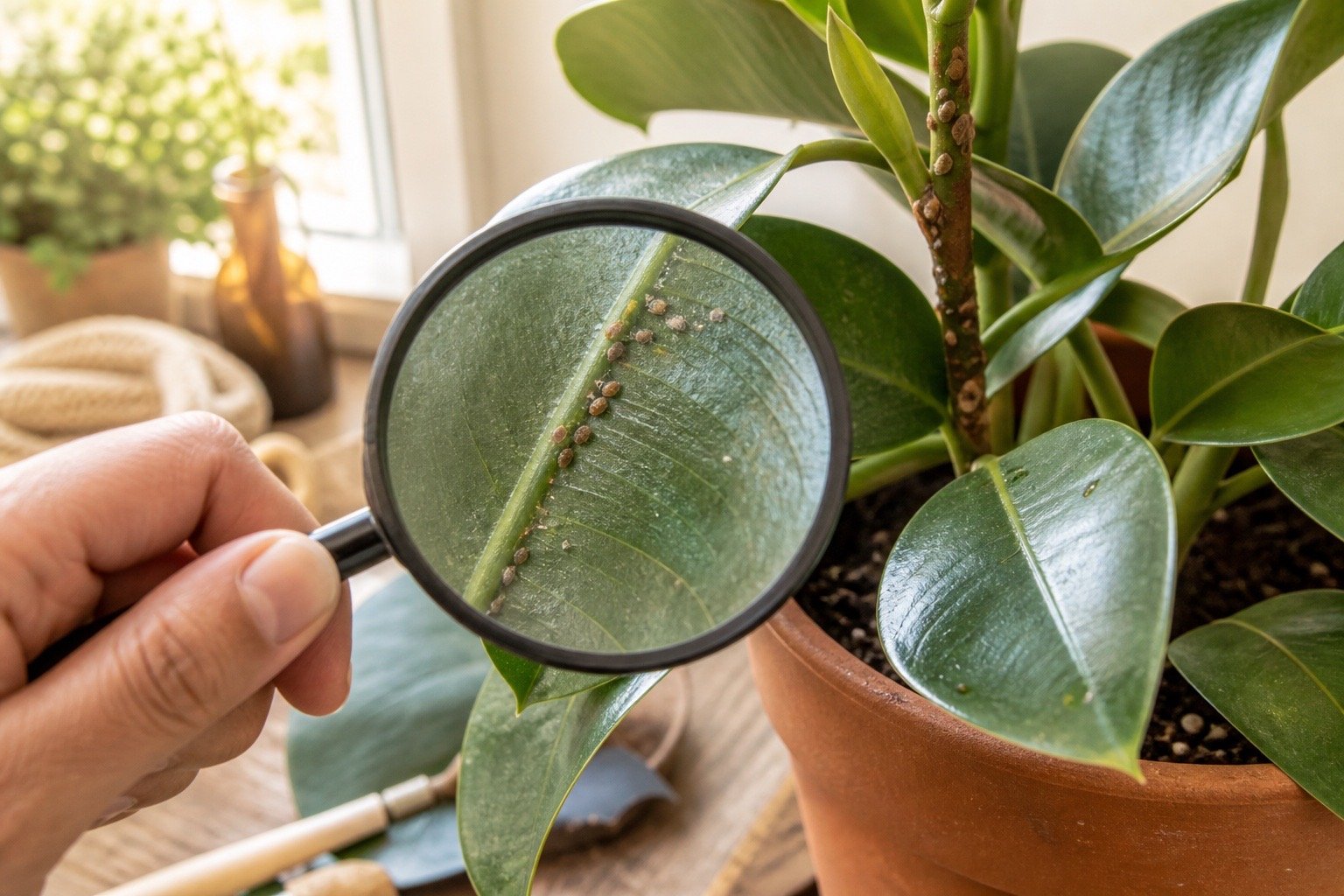
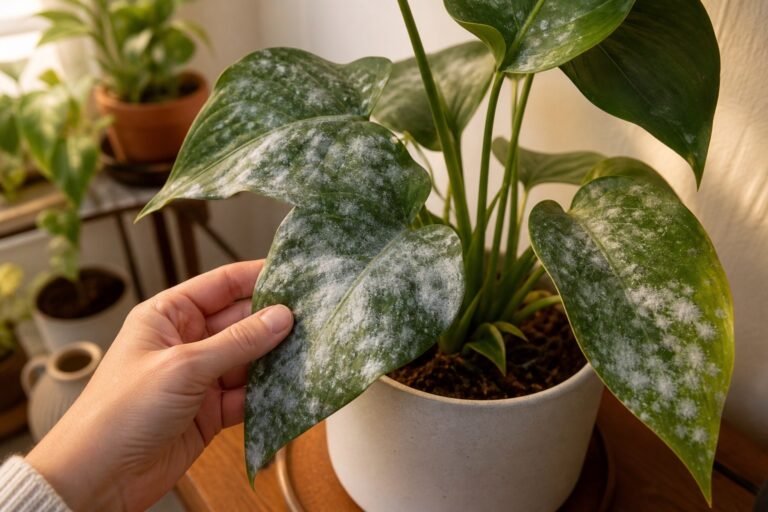
Learning how to get rid of scale on houseplants starts with a slightly annoying fact: scale rarely looks like an insect. Adults can pass for flecks of bark, scabs, or tidy brown bumps fixed to a stem. Soft scales may leave sticky honeydew behind. Armored scales usually do not.
That distinction matters because a spray chosen for the wrong problem wastes time and can injure a sensitive plant. Confirm the pest, separate the plant, remove what you can reach, and use only a product whose current label covers both the pest and the plant or site. Scale control tends to be a routine, not a dramatic one-day rescue.
How to get rid of scale on houseplants in 7 safe steps
First, make sure the bumps are alive
Use bright light and check stems, leaf veins, petioles, leaf undersides, and tight folds. A hand lens helps when the suspected insects are only a few millimeters across.
| Clue | What it may mean | What to do next |
|---|---|---|
| Tan or brown oval bumps that lift from the plant | Scale covers or soft scale bodies | Inspect several bumps and the tissue beneath them |
| Sticky leaves, shiny furniture, or black sooty growth | Honeydew from soft scale, mealybugs, aphids, or whiteflies | Look closely for the insect producing it |
| Flat pale discs with no sticky residue | Possible armored scale | Check stems and both sides of leaves for a wider colony |
| Cottony material in leaf joints | More likely mealybugs or a cottony scale | Compare it with the mealybug guide before treating |
| Raised corky spots that will not scrape away | Plant tissue, edema, or another disorder | Stop and use the houseplant problem diagnostic |
University of Maryland Extension notes that brown soft scale commonly appears on indoor plants and that honeydew is its main calling card. Iowa State University Extension describes scale as tan or brown, often between 1/16 and 1/4 inch across, with adults commonly found on stems or leaves.
Do not identify a pest from one blurry phone photo if the treatment could harm the plant. Look at several spots. If you still cannot tell whether the bump is an insect, send clear close-ups and the plant’s botanical name to a local Cooperative Extension office.
Search Amazon for a 10x hand lens for plant inspection (paid link)
1. Isolate the plant before disturbing the colony
Move the plant away from the rest of the collection. Choose a spot with suitable light and temperature rather than shutting it in a dark closet. Keep leaves from touching other plants, and do not carry pruning debris through the room uncovered.
Check the neighboring plants too. Scale crawlers are tiny and mobile even though older stages stay fixed in place. The new plant quarantine routine explains how to inspect leaf joints, pot rims, and nearby surfaces without pretending that a sticky card can catch every pest.
Wash your hands after handling the plant. Clean tools before they touch a healthy plant. These are small chores, but skipping them can turn one infested pot into a shelf-wide project.
2. Map the infestation and decide whether the plant is worth treating
Look at the whole plant before picking at the first bump. Count affected leaves and stems. Check the crown, new growth, and any woody branches. Then inspect the pot rim and support stakes.
A lightly infested, compact plant is a reasonable treatment candidate. A large plant coated in scale, dropping leaves, and declining despite poor roots may take repeated work with no guarantee of recovery. UC Statewide IPM says discarding heavily infested houseplants can be the practical choice, especially when nearby plants are at risk.
That is not defeat. Bag the plant before moving it through the home, clean the area, and keep watching the plants that shared its space. Do not compost pest-covered foliage in a casual indoor bin.
3. Remove the scale insects you can reach
Physical removal immediately reduces the population. Gently lift individual scales with a cotton swab, soft toothbrush, fingernail, or another blunt tool that will not cut the stem. Support thin leaves from behind so they do not tear.
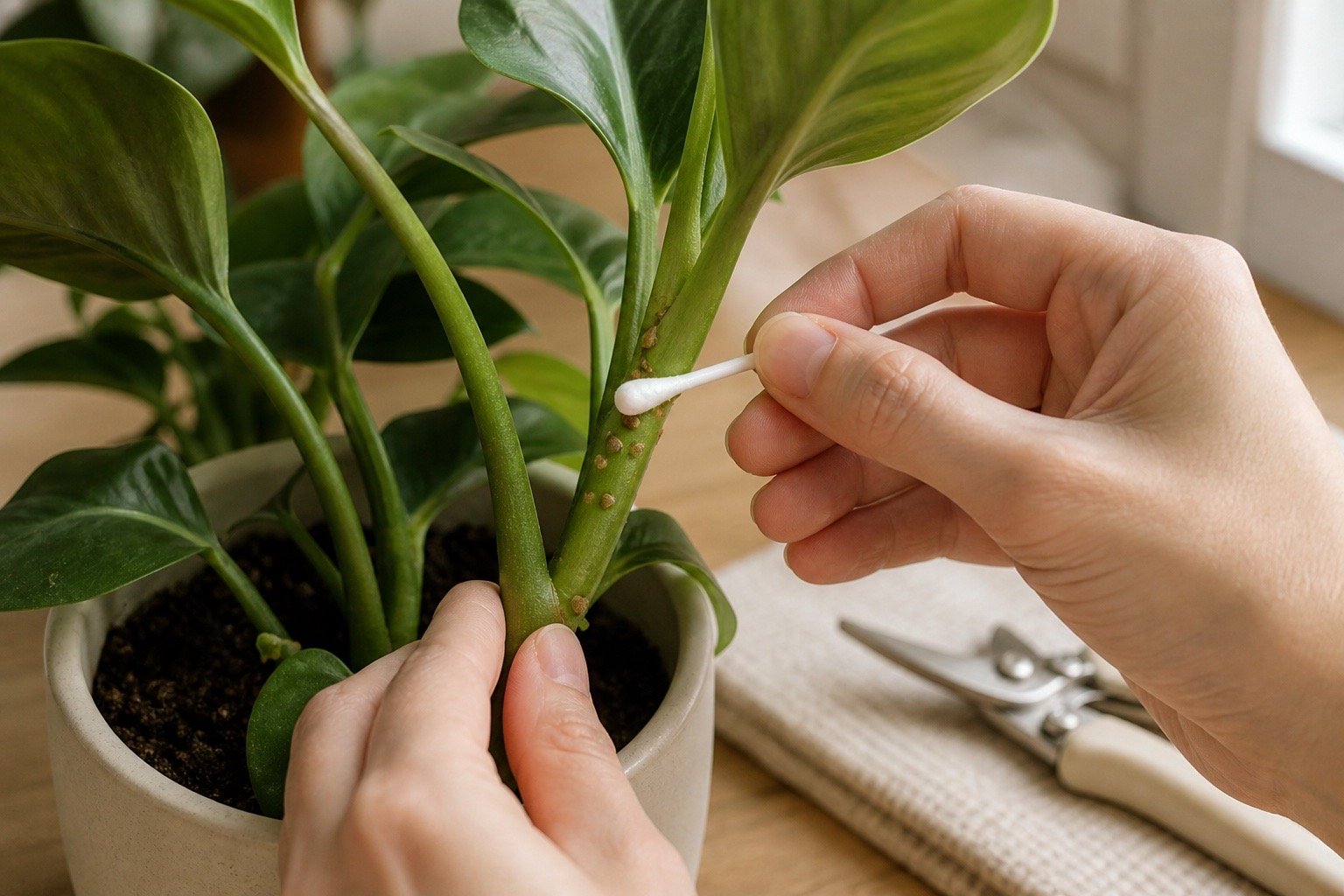
Work over a disposable sheet of paper or a bag. A scale cover left on the table is easy to lose. Wipe honeydew from broad leaves with plain water and a soft cloth; the leaf-cleaning guide covers plants that should not be scrubbed.
Some Extension sources discuss touching individual scales with rubbing alcohol. Plant tolerance varies, and alcohol can damage foliage. Do not treat a whole plant with a homemade alcohol mixture because a forum calls it harmless. If a trusted local Extension specialist recommends spot treatment for your identified plant, test one inconspicuous area and wait for a reaction before continuing.
4. Rinse or prune where the plant allows it
A firm stream of lukewarm water can dislodge crawlers and loose debris from sturdy foliage. Shield the potting mix so it does not wash out, and support the stems. Skip the shower treatment for plants with fragile, fuzzy, or water-sensitive leaves.
Prune a badly infested stem when the plant can tolerate the loss. Cut with clean, sharp tools and bag the removed material at once. Avoid stripping so much foliage that a weak plant loses its working canopy.
Search Amazon for small bypass pruning snips (paid link)
If yellow leaves remain after the insects are gone, do not assume scale is still the only cause. Wet soil, root trouble, and weak light can produce the same broad symptom. Work through the yellow leaf checks before adding more treatment.
5. Choose a label-led treatment, if one is needed
Manual removal may be enough for a very small colony. For a larger infestation, University of Maryland Extension and UC IPM list horticultural oils and insecticidal soaps among possible options for scale on indoor plants. The waxy covering makes established scale difficult to reach, while the younger crawler stage is more exposed.
Identify the pest first. Then read the current product label from start to finish. It must allow the product’s use indoors, cover the target pest, and permit use on the kind of plant you have. Follow the listed rate, coverage, ventilation, protective equipment, reentry time, and repeat interval. The label is the instruction, even when a blog gives a different recipe.
Test plant sensitivity on a small, inconspicuous section and wait as the label directs before treating the rest. Ferns and other tender foliage can react to oils or soaps. Do not spray a drought-stressed plant, combine products without label permission, or assume a homemade soap mixture is universally safe. Household detergents are not the same formulation as a registered insecticidal soap.
Search Amazon for insecticidal soap labeled for indoor houseplants (paid link)
Keep pesticides away from children and pets. Do not use a systemic product on an edible indoor plant unless its current label explicitly permits that crop and use. When no suitable label fits the situation, physical removal or disposal is safer than improvising.
6. Repeat only at the label interval
One pass often misses eggs, sheltered insects, or crawlers that emerge later. That does not justify daily spraying. Reinspect the same stems in good light and repeat a pesticide only when its label tells you to.
| Follow-up finding | Sensible response |
|---|---|
| A few fixed scales remain, with no new honeydew | Remove them manually and keep monitoring |
| Tiny new crawlers appear | Use the next label-permitted treatment at the stated interval |
| Leaves show spotting or scorch after treatment | Stop, rinse only if the label directs it, and seek plant-specific advice |
| Honeydew returns quickly | Recheck hidden leaf joints and confirm whether scale is still the source |
| The plant keeps declining with few live scales | Inspect roots, moisture, and light instead of escalating pesticides |
| Nearby plants develop bumps or stickiness | Isolate and identify the pest on each plant before treating |
Dead scale covers can remain attached after treatment. A bump on the stem is not proof that it is alive. Lift a sample and inspect it. The goal is no live insects, no fresh honeydew, and healthy new growth, not a cosmetically perfect stem overnight.
7. Monitor new growth before ending isolation
Keep the plant separate while you check it repeatedly over the following weeks. Focus on tender new leaves, stems, folds, and the underside of foliage. Record the dates when you find live insects, apply a label-approved product, or see fresh honeydew.
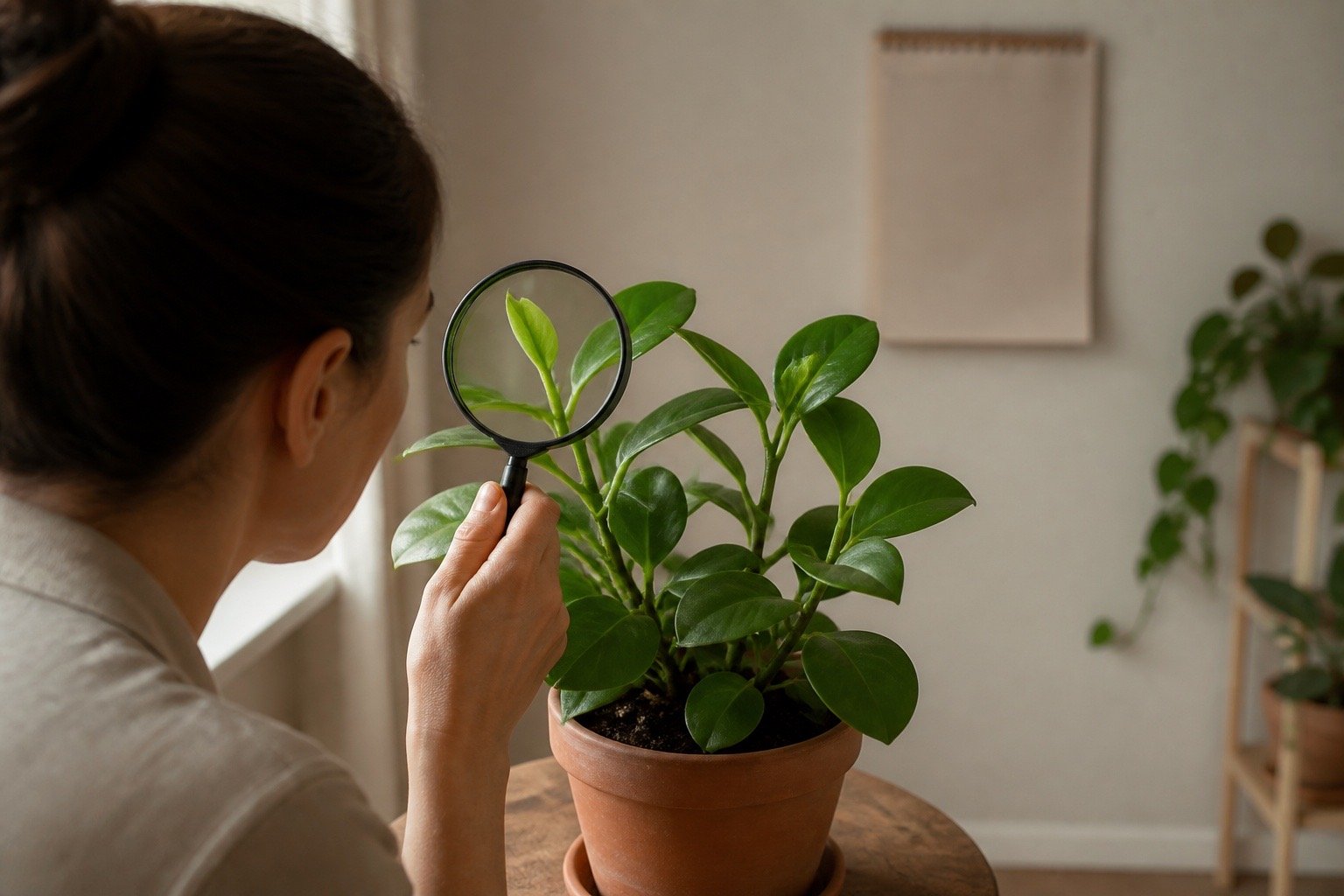
Release the plant only after repeated inspections show no live scale and no new sticky residue. There is no honest universal day count because scale species, temperature, treatment choice, and hiding places differ. A calendar helps you remember to look. It cannot declare the plant clean.
Preventing another scale outbreak
Inspect every new plant before it joins the collection, then quarantine it. Leave enough room to see stems and leaf undersides. Crowded shelves make a quiet infestation easier to miss.
Give each plant appropriate light and watering so it can replace damaged growth. Avoid fertilizing a stressed plant in an attempt to push a fast recovery. The houseplant fertilizer guide explains why extra fertilizer can add root stress without solving the original problem.
Scale can arrive on plants, cuttings, and infested decorative material. It does not appear because a home is dirty. Regular inspection is more useful than blame, and early removal is far easier than treating a woody plant covered from base to tip.
Frequently asked questions
What kills scale on houseplants?
There is no single answer for every plant and scale species. Manual removal, washing, pruning, horticultural oil, and insecticidal soap may play a role. Identify the pest first, then use only a product whose current label permits the pest, plant, and indoor site. Test sensitivity before broad application.
Can scale spread to other houseplants?
Yes. Newly hatched crawlers can move before settling down, and infested plant material can carry scale between rooms. Isolate the affected plant and inspect its neighbors.
Does neem oil get rid of scale?
Some horticultural oil products use neem-derived ingredients and carry labels for certain scale pests. The ingredient name alone does not guarantee that a product suits your plant or indoor setting. Read the full current label, follow its directions, and test a small area.
Should I repot a plant with scale?
Scale usually lives on stems and leaves, so automatic repotting can add stress without removing the pest. Repot only when roots or potting mix have a separate problem. If the plant is also staying wet, consult the indoor plant watering guide and the repotting guide.
How do I know whether scale is dead?
Lift a sample with a blunt tool. A live soft scale may contain moist tissue; an empty or dry cover may remain attached after treatment. Watch for new crawlers, honeydew, or expanding colonies rather than judging one old shell.
When should I throw the plant away?
Consider disposal when scale covers much of the plant, the plant is already in poor condition, treatment cannot be applied safely, or valuable nearby plants face a high risk. Bag it before carrying it through the home.
A steady routine beats a stronger spray
The safest way to get rid of scale is to reduce the population without creating a second problem. Confirm what you see, isolate the pot, remove reachable insects, and treat only when a current label fits. Then check again.
Scale is stubborn because its life stages do not all sit exposed at the same time. Patient inspection catches the survivors. Repeated unplanned spraying mostly increases the chance of damaged leaves and pesticide exposure.
Sources and further reading
Sources were checked August 12, 2026.
- University of Maryland Extension: Scale Insects on Indoor Plants
- Iowa State University Extension: Scale Insects on Houseplants
- UC Statewide IPM: Houseplant Problems
- Mississippi State University Extension: Insect Pests of Houseplants
- Colorado State University Extension: Managing Houseplant Pests
- U.S. EPA: Introduction to Pesticide Labels