
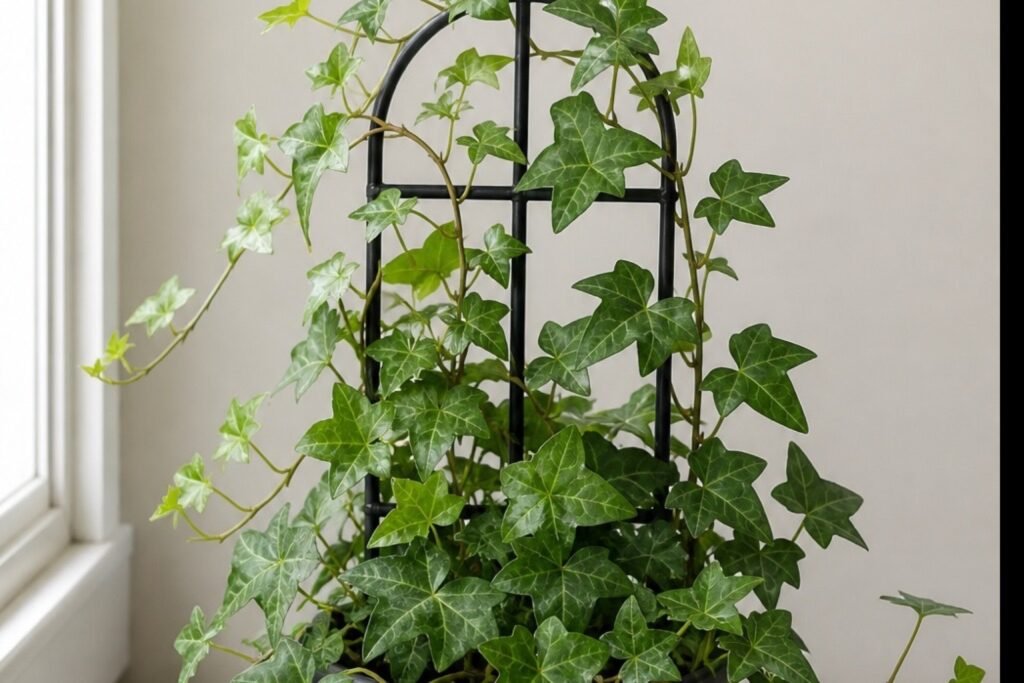
English ivy care indoors is a bargain with sharp terms. Hedera helix can make neat trailing or climbing growth, but it wants bright light, cooler air, steady inspection, and careful watering. A warm dim room often produces thin vines and spider mites. The plant is also toxic to pets and invasive in many parts of the United States, so indoor containment matters.
Juvenile ivy makes lobed leaves and clings with aerial rootlets. It comes from Europe into western Asia and North Africa and belongs to the ginseng family, Araliaceae. Baltic ivy, glacier ivy, and needlepoint ivy are trade names or forms, not separate care guarantees.
English ivy care indoors snapshot
| Care point | Practical indoor target |
|---|---|
| Light | Bright indirect light with mild sun if acclimated |
| Water | Water when the surface begins to dry; do not leave soggy |
| Soil | Loose, organic mix with dependable drainage |
| Humidity | Moderate with useful air movement |
| Temperature | Roughly 50 to 70 F; cooler than many tropical plants |
| Indoor length | Controlled by pruning and support |
| Growth rate | Fast in favorable conditions |
| Pet safety | Toxic to cats and dogs |
Favor bright light and a cooler room
Place indoor ivy close to a bright window. Variegated cultivars need enough filtered light to hold their pale markings, while solid green forms tolerate somewhat less. Hot direct sun through glass can scorch leaves, especially after a move from lower light.
English ivy generally handles cool rooms better than hot, dry ones. Keep it away from heating vents and radiators. A warm room is not automatically fatal, but mites reproduce quickly there and the root ball dries unevenly.
Long gaps between leaves and small pale growth point to low light. Trim the vines only after addressing the location. Our guide to leggy plant growth explains why pruning alone produces another weak flush.
Keep the mix lightly moist, never stagnant
Check the upper layer of soil and lift the pot. Water when the surface has begun to dry and the container has lost some weight. Soak the full root ball, let it drain, and empty the saucer. Do not keep a decorative cachepot full of runoff.
Ivy dislikes both a saturated root zone and repeated severe wilting. Yellow lower leaves over wet mix suggest poor drainage or damaged roots. Crisp leaves on a very light pot point toward drought, though mites and hot air can create a similar look. Use the routine in how often to water indoor plants before choosing a fix.
Choose a pot with a drainage hole and a loose indoor mix. Repot when roots fill the container or the mix stops accepting water evenly. Ivy can grow quickly, but moving a small root ball into a huge pot still raises the risk of wet soil.
Train it on a removable support
Let vines trail from a hanging pot or guide them around a small trellis. Avoid attaching aerial roots directly to painted walls, wood trim, or masonry. They can cling firmly and damage a surface when removed.
Prune just above a leaf node to encourage branching. Clean the blades after use. Tip cuttings root in water or moist mix, and the water propagation guide covers how to keep submerged nodes clean.
Do not put pruned pieces outdoors or in open compost where they could root. English ivy is invasive in North Carolina and several other regions. Dispose of unwanted material according to local guidance and keep an indoor pot away from natural areas.
Inspect for spider mites every week
Spider mites are the practical reason this plant earns a moderate difficulty rating. Look at the leaf undersides and newest growth in strong light. Fine pale stippling often appears before obvious webbing. A white sheet of paper held under a tapped vine can make moving mites easier to see.
Keep a new ivy away from the rest of the collection while you inspect it. Clean leaves make early stippling easier to see, and our leaf cleaning guide explains a plain-water method that does not coat the foliage.
If you confirm mites, isolate the pot and follow the steps in how to get rid of spider mites. Repeated treatment and coverage of leaf undersides matter more than spraying once. Do not treat ordinary dust or corky aerial roots as pests.
Common English ivy problems
| Symptom | Likely checks | First sensible move |
|---|---|---|
| Fine pale stippling | Spider mites | Isolate and inspect leaf undersides |
| Long sparse vines | Low light or delayed pruning | Improve light, then prune above healthy nodes |
| Yellow leaves with wet soil | Poor drainage or root stress | Check roots and delay watering |
| Crisp brown margins | Drying, hot air, mites, or salts | Inspect for pests and review the location |
| Dark soft stems | Rot from persistent moisture | Remove damaged tissue and correct drainage |
Ivy leaf damage overlaps. A hot vent, dry roots, and mites can occur together. Make the pest inspection first because an untreated population can move to nearby plants. Then change one environmental factor at a time.
Treat leaves and berries as toxic
ASPCA lists Hedera helix as toxic to cats and dogs. Reported signs include vomiting, abdominal pain, drooling, and diarrhea, with foliage more toxic than berries. Keep vines where animals and children cannot pull them down. Contact a veterinarian or poison professional after a suspected ingestion.
Sap may also irritate sensitive skin. Gloves make pruning and disposal easier. The pet safe indoor plant guide offers alternatives when a trailing plant must live within reach.
Frequently asked questions
Why does my indoor English ivy keep getting spider mites?
Warm dry air and dense foliage favor mites, and new plants may arrive with a small population. Improve inspection and isolation, keep the plant away from hot vents, and complete the treatment cycle after confirming the pest.
Can English ivy climb an indoor wall?
It can, but aerial rootlets may mark paint, wood, and masonry. Use a removable trellis or let the vines trail so you can prune and inspect them without damaging the room.
Should English ivy soil stay wet?
No. Keep it lightly moist while allowing the surface to begin drying. Saturated soil limits air around the roots and can cause yellow leaves or rot.