
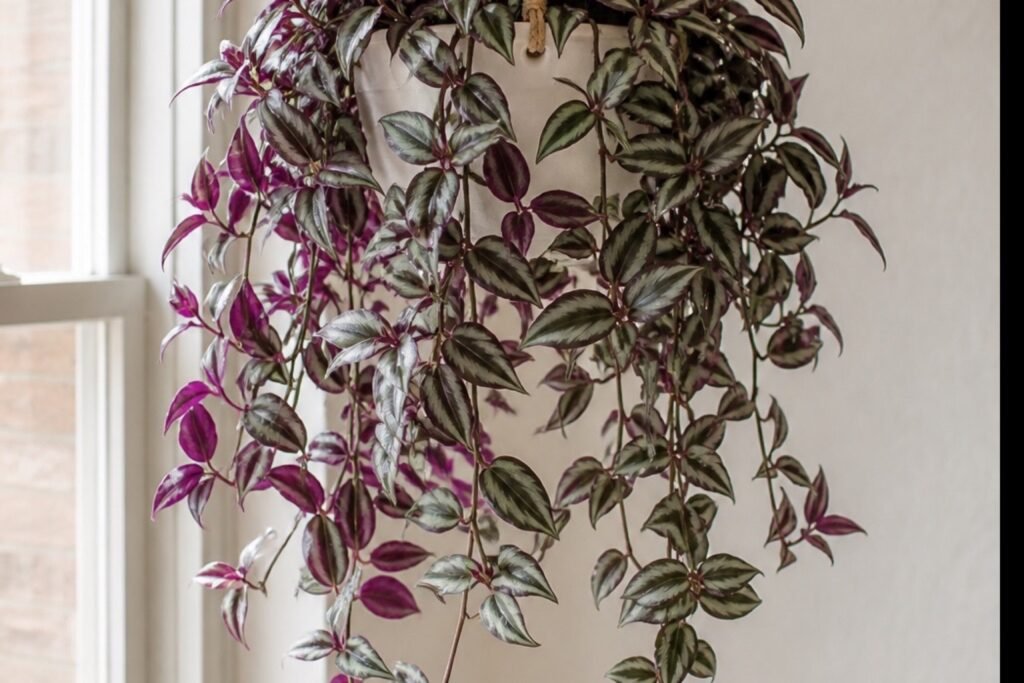
Tradescantia zebrina care is easy until the vines become pale, bare, and tangled. The plant grows quickly, which hides weak conditions for a while. Bright filtered light keeps the silver bands and purple undersides distinct. Regular pruning keeps leaves close to the pot, and a short drying spell protects the soft stems from rot.
Tradescantia zebrina is native from Mexico into Central America and Colombia. It belongs to the spiderwort family, Commelinaceae. Inch plant and silver inch plant are useful common names. Several unrelated houseplants are also sold as zebra plant, so the botanical label matters.
Tradescantia zebrina care snapshot
| Care point | Practical indoor target |
|---|---|
| Light | Bright indirect light; mild direct sun after gradual acclimation |
| Water | Water after the upper layer dries, then drain fully |
| Soil | Loose indoor mix with reliable drainage |
| Humidity | Average household humidity |
| Temperature | Roughly 60 to 80 F indoors |
| Mature indoor spread | Vines commonly reach 1 to 2 feet |
| Growth rate | Fast |
| Pet safety | Use caution with sap and chewing pets |
Use light to keep the stripes
Place the pot close to a bright window. A sheer curtain can soften strong southern or western sun, while an eastern exposure often provides gentler light. Move the plant gradually. Leaves that were grown in a dim shop can scorch if they go straight into several hours of direct sun.
Low light produces longer gaps between leaves and duller color. The silver bands may narrow, and new stems reach toward the window. Pruning helps the shape, but it cannot fix the location. Check the signs in why indoor plants get leggy before cutting the whole basket back.
Rotate the pot if one side receives most of the light. If you use a lamp, the guide to how long to run a grow light gives a better starting point than leaving it on around the clock.
Let the surface dry before watering
Feel the upper inch of mix. When it has dried and the pot feels lighter, water until the root ball is evenly moist. Let the excess escape and empty the saucer. Soft stems do not cope well with a mix that stays saturated.
A drooping vine may be thirsty, but it may also have damaged roots. Check the soil before responding. If stems are black or mushy at the soil line, remove the affected pieces and inspect drainage. Healthy tip cuttings can rescue the plant while you correct the root problem.
Drying the plant until every leaf is limp is not useful either. Repeated hard wilting can leave brown edges and bare lower stems. The checks in how often to water indoor plants help match the interval to light, season, and pot size.
Keep the pot breathable and modest
A standard houseplant mix works when it has enough coarse structure to drain quickly. Use a pot with a hole. An oversized hanging basket can stay wet in its center long after the surface looks dry, so move up only one size when roots have filled the current container.
Repot when water no longer enters evenly, roots circle densely, or the old mix has collapsed. The plant is forgiving about root disturbance, but brittle stems snap easily. Gather the vines loosely and follow the sequence in the houseplant repotting guide.
Feed lightly during active growth. Fast growth does not justify heavy fertilizer. Too much can leave crust on the mix and brown leaf edges, especially when the pot is allowed to dry very far between waterings.
Prune before the middle goes bare
Pinch or cut a stem just above a node. New growth can break from nodes below the cut, which makes the pot look fuller. Do this while the plant still has healthy growth near the base. Waiting until every vine is several feet long leaves fewer good places to rebuild the crown.
Tip cuttings root readily. Take a section with several nodes, remove the lowest leaves, and place at least one bare node in water or lightly moist mix. Plant several rooted cuttings back into the parent pot for a dense top. Our guide to propagating houseplants in water covers clean containers and the move back to soil.
Fresh cuttings often make a better basket than trying to preserve old bare vines forever. That is normal maintenance for a fast trailing plant, not a failure.
Common Tradescantia zebrina problems
| Symptom | Likely checks | First sensible move |
|---|---|---|
| Long bare stretches | Low light or delayed pruning | Improve light and root healthy tip cuttings |
| Faded silver bands | Light too low or cultivar variation | Compare new growth after a gradual move |
| Black soft stem bases | Wet mix or poor drainage | Remove rot and save clean cuttings |
| Brown leaf edges | Hard drying, salts, heat, or damaged roots | Review the watering and feeding history |
| Sticky leaves or white clusters | Aphids, scale, or mealybugs | Isolate and inspect nodes and leaf undersides |
Wet foliage packed into a dense basket can develop spots. Water the mix rather than showering the leaves late in the day, and thin badly damaged growth to improve airflow. If white cottony insects are present, use the identification steps in how to get rid of mealybugs before treating.
Handle the sap with care
NC State lists low-severity poison characteristics for Tradescantia zebrina, including contact dermatitis concerns. Keep the plant away from pets that chew or rub against trailing stems. Wear gloves if the sap bothers your skin, and wash after pruning. A known pet ingestion or persistent skin reaction calls for professional advice, not a home diagnosis.
This species does not belong on a list labeled verified pet safe. The pet safe plant guide explains how to check the botanical name instead of relying on a common name such as zebra plant.
Frequently asked questions
How do I make Tradescantia zebrina look fuller?
Give it brighter filtered light, prune above nodes, and plant several rooted tip cuttings back around the crown. Rotating the pot also prevents one side from stretching toward the window.
Can Tradescantia zebrina grow in water permanently?
Cuttings root easily in water, but long-term water culture needs deliberate nutrient and oxygen management. For ordinary propagation, move rooted cuttings into an airy potting mix once they have a small usable root system.
Why is my Tradescantia losing purple color?
Low light is a common cause, though cultivar and leaf age matter too. Move it toward brighter filtered light gradually and judge the next few leaves rather than expecting old foliage to recolor.