
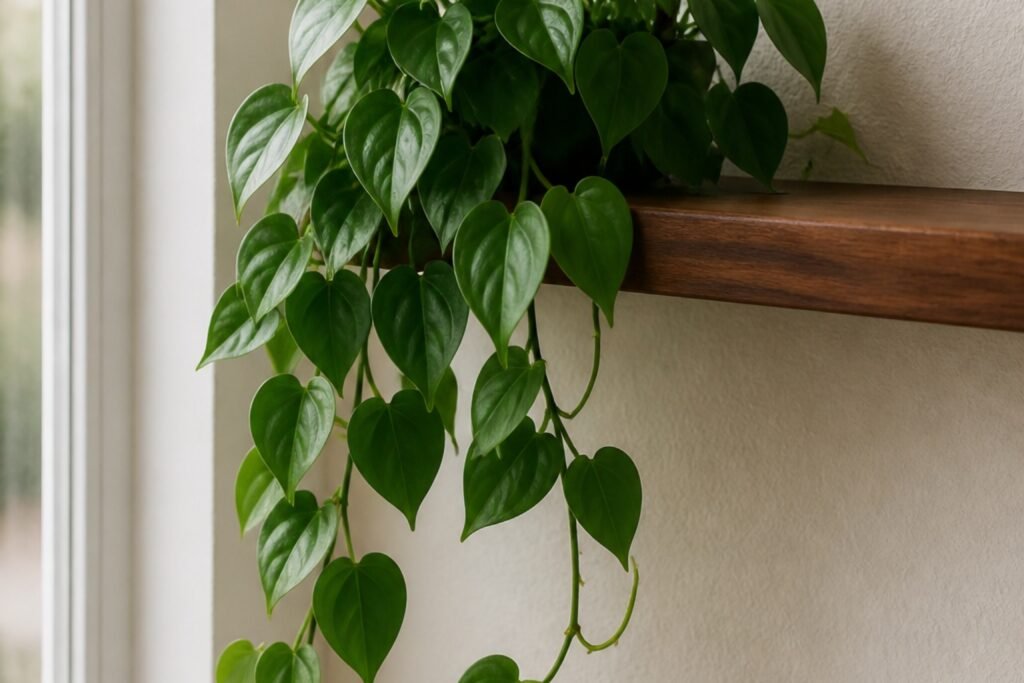
Heartleaf philodendron care is mostly a matter of balance. This vine likes its potting mix slightly moist, but it also needs air around the roots. It tolerates a dim room, yet a brighter position makes the stems fuller and the leaves larger. Once those two balances are right, it is an adaptable shelf or hanging plant.
The botanical name is Philodendron hederaceum. Sweetheart plant, parlor ivy, and cordatum still appear on shop labels. The last name is especially confusing because older botanical names remain in circulation. Look for thin, heart-shaped leaves and papery sheaths around new growth rather than trusting the common name alone.
Heartleaf philodendron care snapshot
| Care point | Practical indoor target |
|---|---|
| Light | Medium to bright indirect light; lower light slows and stretches growth |
| Water | Water when the upper layer has dried while the root zone is still slightly moist |
| Soil | Loose, organic indoor mix that drains freely |
| Humidity | Average humidity works; moderate humidity supports cleaner new leaves |
| Temperature | About 65 to 85 F, away from cold glass and vents |
| Mature indoor size | Vines commonly reach 4 to 6 feet unless trimmed |
| Growth rate | Fast in warm, bright conditions |
| Pet safety | Toxic to cats and dogs if chewed |
This species often gets grouped with pothos in store displays. They are different plants, and our article about why pothos declines should not be used as a botanical identification guide. Heartleaf philodendron has smooth petioles and noticeable stipules around new leaves. A correct ID matters for pet safety and for judging what normal growth looks like.
Let the vine see useful light
Place the plant near a bright window where direct midday sun does not strike the leaves. A little gentle morning sun is usually easier to tolerate than a hot western exposure. Lower light will not kill a healthy plant at once, but the gaps between leaves often lengthen and the vine may lose its compact shape.
If a vine has become bare and stretched, moving it to better light will not fill the old stem. Trim it above a node and judge the new growth. The low light plant guide explains the difference between a plant tolerating a dim position and looking its best there.
A hanging basket produces a soft cascade. A moss pole or simple trellis changes the habit. Climbing stems may make larger leaves once they attach, although indoor results depend on light, warmth, and the support itself.
Keep the mix slightly moist, not continuously wet
Feel the upper inch or two of the mix. Water when that layer has dried, then soak the pot and let the runoff escape. Do not leave the nursery pot standing in a sealed cachepot full of water. In winter, or in a dim room, the same pot may need much more time between waterings.
Drooping alone is not a complete watering test. A dry plant can droop, but so can a plant with damaged roots in wet soil. Lift the pot, feel the mix, and smell the drainage hole before adding more. The broader guide to watering indoor plants shows how to combine those clues.
Yellow leaves near the base are often linked with wet roots, especially when several appear together. One old leaf aging out is different. Look for a pattern and for recent changes before pulling the plant apart.
Choose a pot that matches the roots
Use a container with drainage and a loose indoor mix that holds some moisture without becoming dense. A heavy garden soil is a poor substitute. If a bagged mix stays saturated, add an appropriate coarse amendment rather than watering less but leaving the root zone airless.
Repot when roots circle tightly, water rushes around the root ball, or the plant needs watering unusually often. Move up one size. The steps in our houseplant repotting guide help prevent burying the crown or choosing a pot that is far too large.
Heartleaf philodendron responds well to modest feeding while it is actively producing leaves. Follow a complete houseplant fertilizer label. Flush plain water through the pot periodically if salts collect as a pale crust. Skip fertilizer when roots are stressed or the plant has stopped growing in winter.
Prune where a new vine can start
Cut just above a node on the parent plant. New growth can emerge from a node below that cut, which makes pruning useful for a sparse basket. Clean scissors before and after the job because the sap can irritate skin. Gloves are sensible.
For propagation, take a stem section with at least one healthy node. A leaf without a node may remain green for a while but cannot make a complete vine. Root cuttings in water or a moist propagation medium, then move them into potting mix before a large tangle of water roots forms. Our water propagation guide covers the transition.
Several cuttings planted around the edge of one pot create a fuller look sooner than waiting for a single vine to branch repeatedly.
Common heartleaf philodendron problems
| Symptom | Likely checks | First sensible move |
|---|---|---|
| Long gaps between leaves | Insufficient light | Move closer to filtered daylight and trim stretched vines |
| Several yellow lower leaves | Wet mix, poor drainage, root stress | Let the mix drain and inspect roots if the pattern continues |
| Brown tips or margins | Dry spells, salt buildup, hot drafts | Review watering and flush the mix if drainage is sound |
| Sticky leaves or cottony spots | Scale, aphids, or mealybugs | Isolate and identify the pest before treatment |
| Black soft stem near soil | Rot or cold injury | Remove affected material and correct the wet or cold condition |
Our guide to leggy houseplants is useful when sparse growth does not point cleanly to one cause. Avoid changing the fertilizer, pot, and light on the same day unless roots are clearly rotting.
Keep it away from pets
ASPCA lists heartleaf philodendron as toxic to cats and dogs because it contains insoluble calcium oxalates. Chewing may cause oral pain, drooling, vomiting, swelling, and difficulty swallowing. A high shelf is not safe if a cat can reach the trailing vines. Shorten accessible stems and place the pot in a room the pet cannot enter. Contact a veterinarian or animal poison service after a suspected exposure.
Frequently asked questions
Is heartleaf philodendron the same as pothos?
No. They are both trailing aroids and their leaves can look similar, but they belong to different genera. Heartleaf philodendron has conspicuous stipules around new growth and smooth rather than grooved petioles.
Should I mist a heartleaf philodendron?
Misting raises humidity for only a short time and may spread some leaf diseases. If the room is very dry, a humidifier is more dependable. Clean dusty leaves with a damp cloth instead.
Why are the new leaves getting smaller?
Low light, an unsupported trailing habit, depleted roots, or inconsistent moisture can all contribute. Start with light and root condition. Give the plant a support if you want to encourage a climbing form.