
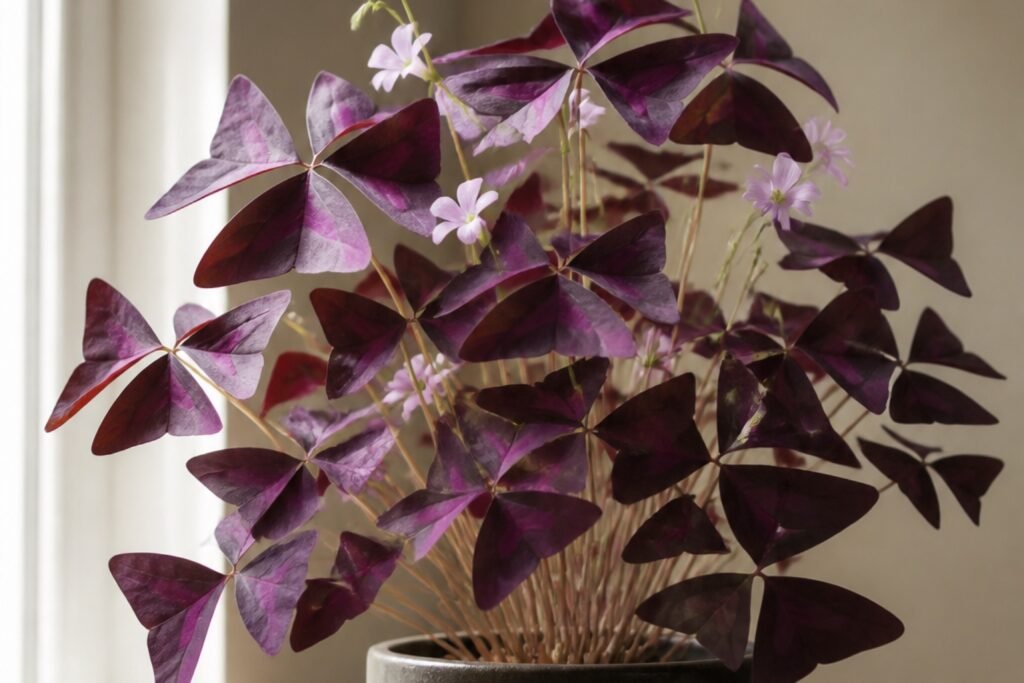
Oxalis triangularis care indoors is less mysterious once you know the plant can go dormant. Purple shamrock grows from small underground rhizomes and carries three sharply triangular leaflets on each stem. The leaves fold at night and reopen with light. A sudden pause in growth is not always a watering emergency.
The word shamrock is used for several Oxalis species and true clovers. This profile covers Oxalis triangularis, the purple-leaved houseplant with pale pink or white flowers. Keep its botanical label, especially in a home with pets.
Oxalis triangularis care indoors at a glance
| Care point | Practical indoor target |
|---|---|
| Light | Bright indirect light with gentle morning sun |
| Water | Water after the upper inch dries during active growth |
| Soil | Loose indoor mix that drains but does not dry instantly |
| Humidity | Average household humidity |
| Temperature | Roughly 60 to 75 F during active growth |
| Indoor size | About 8 to 12 inches tall and wide |
| Growth rate | Fast from established rhizomes |
| Pet safety | ASPCA lists Oxalis species as toxic to cats and dogs |
Give the leaves enough light to stay sturdy
Place the pot close to an east window or a few feet back from a brighter exposure. A little gentle direct sun keeps the stems shorter and the purple color rich. Acclimate the plant before exposing it to stronger afternoon rays. Hot glass can leave crisp pale patches.
Long weak stems that fall outward usually need more light. A leaf that closes after sunset is behaving normally. Leaves can also fold during intense heat or water stress, so judge that response with the time of day and soil condition.
If the room stays dim, the guide to whether indoor plants need a grow light helps separate a dark corner from a workable low-light position.
Keep active growth lightly moist, not saturated
During active growth, water when the upper inch of mix is dry and the pot has begun to feel lighter, before the whole root ball becomes bone dry. Wet the mix thoroughly and empty the saucer. Repeated small sips leave dry pockets around the rhizomes.
Purple shamrock is not a desert succulent, though its underground storage organs survive a resting period. Constantly wet soil can rot them. A dramatic wilt over dry mix often recovers after watering. A wilt over wet mix needs a root and rhizome check, not another pour.
The interval changes as leaf mass, light, and temperature change. Use the physical cues described in how often to water indoor plants instead of choosing one weekday.
Recognize dormancy before discarding the pot
Leaves may yellow and collapse after a long flowering period, during summer heat, or when seasonal conditions shift. If the underground rhizomes remain firm, trim dead foliage and let the plant rest in a cool, dimmer position. Keep the mix barely moist rather than regularly wet.
After several weeks, return the pot to bright light and resume modest watering. Fresh stems often emerge quickly. Do not fertilize a leafless resting pot. Feed lightly only after active growth returns.
Dormancy is different from rot. Healthy rhizomes feel firm. Rotten ones are soft, dark, and may smell sour. When in doubt, slide the root ball out and inspect rather than soaking an apparently empty pot.
Use a snug pot and divide crowded rhizomes
A standard loose houseplant mix works if water drains freely. Choose a pot with a drainage hole and leave only a small margin beyond the rhizome cluster. An oversized container stays wet long after the fine roots have used what they need.
Repot when the cluster crowds the pot, water no longer enters evenly, or the old mix has compacted. The houseplant repotting guide covers sizing and root inspection. Keep the rhizomes shallow and cover them lightly rather than burying them at the bottom of a deep pot.
Division is the simplest propagation method. Separate firm rhizomes with attached roots during repotting and place each group into a small container. A sparse division may look unimpressive at first but fills out when several growing points start together.
Common Purple Shamrock problems
| Symptom | Likely checks | First sensible move |
|---|---|---|
| Leaves closed at night | Normal sleep movement | Recheck after morning light reaches the plant |
| Long floppy stems | Light too weak | Move closer to a brighter window gradually |
| Whole plant collapses | Drought, dormancy, heat, or root trouble | Check moisture and rhizome firmness |
| Pale scorched patches | Direct sun increased too quickly | Reduce peak sun and acclimate more slowly |
| Fine webbing or stippling | Spider mites | Isolate and inspect leaf undersides |
Spider mites can spread through a dense clump before webbing becomes obvious. Look for pale speckling and check the underside of folded leaves. The spider mite guide explains repeated inspections and treatment coverage.
Yellow leaves alone do not identify the cause. A few aging stems are ordinary. Many yellow stems over wet soil suggest root stress, while dry crisp stems with firm rhizomes may signal a normal rest. The yellow leaf guide provides a useful elimination order.
Pet safety requires caution
ASPCA lists Oxalis species as toxic to cats and dogs because they contain soluble calcium oxalates. Small exposures commonly affect the digestive system, while large intake can disturb calcium balance and kidney function. Keep the plant away from pets that graze, collect fallen stems, and contact a veterinarian or poison service after a known ingestion.
The veterinary source covers the genus rather than an exact O. triangularis test. This profile therefore uses the conservative toxic classification. The pet-safe indoor plant guide lists alternatives with better supported non-toxic records.
Frequently asked questions
Why does Purple Shamrock close its leaves at night?
The plant has normal sleep movements tied to light. Leaves usually fold in the evening and open again after morning light returns. Persistent daytime folding needs a heat, moisture, or root check.
Is my Oxalis triangularis dead after all the leaves disappear?
Not necessarily. Firm underground rhizomes can rest and regrow. Trim dead foliage, keep the resting mix only barely moist, and restart regular care when shoots appear.
How do I know when to water Purple Shamrock?
During active growth, water after the upper inch dries and the pot begins to feel lighter. Do not wait for every stem to collapse, and do not keep the root ball constantly wet.