Most Profitable Microgreens to Grow: 7 Crops From a Two-Year Test
Last updated: July 22, 2026.
Affiliate disclosure: As an Amazon Associate I earn from qualifying purchases. Links marked “paid link” may earn Fern & Shelf a commission at no extra cost to you. Read our full Affiliate Disclosure.
Start here: For a complete overview, see our How to Start a Microgreens Business.
The most profitable microgreens to grow are not the varieties with the highest price in somebody else’s spreadsheet. They are the crops that your buyers reorder, your setup grows consistently, and your selling price can support after seed, medium, packaging, loss, delivery, labor, and overhead are counted.
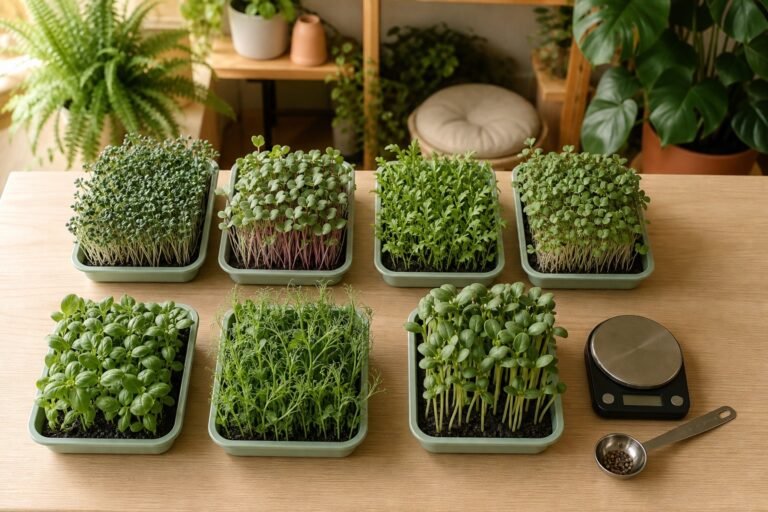
After two years of running test trays and tracking which crops restaurants reordered, seven crop groups kept earning a place in my trials: sunflower, pea shoots, radish, broccoli, wheatgrass, beet and amaranth, and cilantro. That is a real record of my own testing, not a national price survey. Your local result can be different.
Midpoint prices and yields can produce a precise-looking “profit per tray per week,” but the answer is mislabeled when it leaves out labor, unsold crop, delivery, market fees, insurance, permits, utilities, equipment wear, and taxes. A useful profitable microgreens list needs a method you can audit.
Seven profitable microgreens I would test first
| Crop | Why it can earn a trial | Main risk to measure | Best buyer question |
|---|---|---|---|
| Sunflower | Substantial texture and familiar, nutty flavor | Large-seed cost, hulls, loss, and harvest labor | Would you buy it as a salad or sandwich green? |
| Pea shoots | Recognizable flavor and useful volume | Seed weight, soaking work, bulk, and cold-storage space | Do you want tender tips, a longer shoot, or neither? |
| Radish | Fast cycle and a clear peppery identity | Price pressure and more supply than local demand | Which color and heat level fits your menu? |
| Broccoli | Mild flavor that is easy to explain | Competing on health claims instead of quality | Would you use it alone or only in a mix? |
| Wheatgrass | Clear use for juice-focused buyers | Narrow channel and a different package or living-tray workflow | Do you buy cut grass, living trays, or neither? |
| Beet and amaranth | Strong color for buyers who value presentation | Slower, delicate crops and lower usable yield | Is the color worth the extra handling? |
| Cilantro | Distinctive flavor for a buyer who already needs it | Longer, less even germination and tied-up space | What weekly quantity would replace your current garnish? |
This profitable microgreens table is a screening list. It isn’t a promise that all seven belong in your rack. Start with three crops, get a paid trial order, and let repeat sales remove the weak ones.
1. Sunflower: worth testing for texture
Sunflower has more bite than a delicate brassica green, so customers understand it quickly in a sample. In my tests it worked best when the buyer wanted a substantial salad, bowl, wrap, or sandwich green rather than a tiny garnish.
Before pricing a tray, follow the full process for how to grow sunflower microgreens and record your own seed, labor, and usable yield.
The crop’s apparent value can disappear in the seed and labor line. Large seed is used heavily, hull removal takes attention, and an uneven stand creates sorting and loss. Record the seed lot, dry seed weight, soaking method, planted area, harvest labor, usable packaged yield, and rejected material. Do not compare sunflower with radish using seed cost alone.
Search Amazon for sunflower microgreens seed (paid link)
2. Pea shoots: useful volume with bulky inputs
Pea shoots can produce a generous-looking package and a flavor most shoppers recognize. They also occupy space in seed storage, soaking containers, trays, packages, and the refrigerator. A high tray yield is not automatically high profit when the crop takes more seed and produces packages that are expensive to store or deliver.
The guide to how to grow pea shoots indoors covers the crop routine; use the worksheet here to decide whether that routine fits your own costs and buyers.
I would plan one clean harvest and judge the economics from that. Some growers take regrowth, but a second cut should not be inserted into a forecast until your own food-safety plan, crop quality, labor, and buyer acceptance support it.
Search Amazon for pea-shoot seed (paid link)
3. Radish: fast feedback, not guaranteed demand
Radish is useful in an early crop test because it gives quick feedback and has a flavor that does not need much explanation. Colorful types can make a mix look better, while greener types may be simpler to source consistently.
Speed can fool the spreadsheet. A short cycle improves rack turnover only if the tray sells and the next order is ready. If three growers at the same market all offer radish, the fast crop may become the first one discounted. Track paid reorders and unsold packages alongside days to harvest.
Search Amazon for radish microgreens seed (paid link)
4. Broccoli: sell flavor and quality, not a cure
Broccoli microgreens have a mild, familiar identity. That makes them an approachable first purchase and a practical component in a mix. In my testing, the real business question was whether the buyer wanted broccoli specifically or simply wanted a mild green.
For the crop method itself, see how to grow broccoli microgreens; use the contribution worksheet here for the business decision.
Avoid turning a food label or market sign into a medical claim. Research interest in nutrients does not justify promises about preventing disease, detoxifying the body, or delivering a guaranteed compound level from your tray. Seed lot, growing conditions, harvest stage, storage, and testing all affect what ends up in a crop. Sell a clean, flavorful product and use only claims your label can support.
Search Amazon for broccoli microgreens seed (paid link)
5. Wheatgrass: profitable only with the right channel
Wheatgrass does not belong in every microgreens lineup. It earns a test when a juice bar, fitness-focused shop, or regular market customer already knows how they want to buy it. Without that buyer, it can become a dense green tray that takes up space while customers choose something ready for a salad.
Decide whether you are selling cut product or a living tray before calculating packaging and labor. Juicing, bottling, or making another prepared product is a different activity with different facility, process, labeling, and food-safety questions. Do not add a juicer to the equipment list until the responsible authority and the buyer have defined the product.
6. Beet and amaranth: color has to pay for care
Beet and amaranth can make a plate memorable. They can also be slower, less even, and more delicate than a beginner’s radish tray. I group them here because the business case is similar: a buyer is paying for color and presentation, not for bulk salad volume.
Run small trials. Keep them separate from a mix while measuring germination, harvest labor, usable yield, and storage quality. Then ask the chef to compare a plate with and without the crop. If the buyer values the visual difference, price the package for the extra handling. If not, the beautiful tray is an expensive hobby.
7. Cilantro: a buyer-led specialty crop
Cilantro microgreens make sense when a chef already wants the flavor and cannot get the same result from a cheaper ingredient. They make less sense as an impulse crop. Germination and timing can be less convenient than quick brassicas, so rack days and labor must be counted honestly.
Ask for a paid trial order before scaling it. Record the seed form and lot, sowing method, emergence pattern, days occupying the tray, harvest labor, and amount accepted by the buyer. A premium price is useful only when it survives the longer cycle and the reorder arrives.
Search Amazon for cilantro microgreens seed (paid link)
How to calculate profitable microgreens without fake profit
Use one line for each crop and seed lot. Keep estimates separate from actual results.
| Line | What to enter |
|---|---|
| Collected sales | Money received for packages from that tray, excluding free samples and unsold stock |
| Less seed | Actual seed weight multiplied by landed cost per unit |
| Less medium and consumables | Measured tray share of substrate, liners, sanitizer, and disposable items |
| Less packaging and selling fees | Clamshell, label, payment fee, and market commission attributable to sold packages |
| Less variable delivery | Mileage or delivery expense that changes with the order |
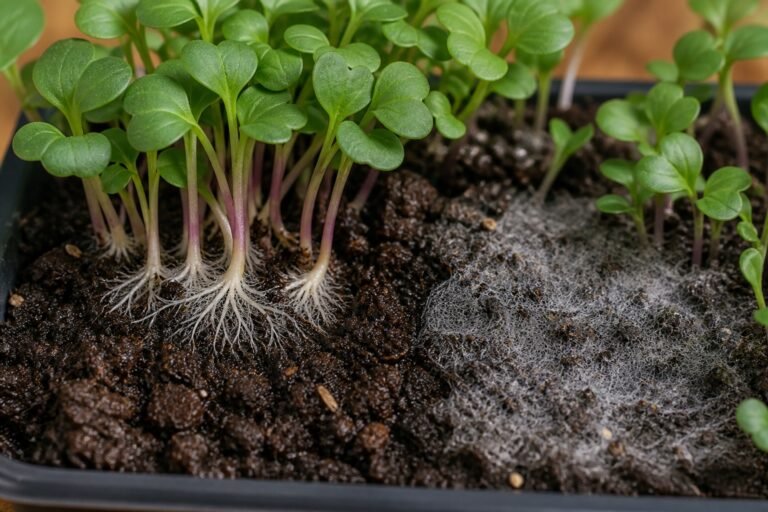
| Less expected crop loss | Failed, rejected, damaged, sampled, and unsold output |
| Contribution before labor | What remains to cover labor and fixed overhead |
| Less labor | All crop, cleaning, packing, sales, and delivery minutes at your chosen hourly value |
| Less fixed-cost allocation | Insurance, permits, rent, utilities, equipment wear, software, marketing, and other overhead |
| Operating result before tax and financing | The more useful comparison between crops, still not personal take-home pay |
The SBA break-even guide defines contribution margin and shows the fixed-cost break-even formula. The exact allocation method can be refined with an accountant, but calling sales minus seed “profit” should stop immediately.
Add three measures to a profitable microgreens ranking
Sell-through
Divide units sold by saleable units packed. Record samples, spoilage, and leftovers separately. A high-yield tray with weak sell-through can contribute less than a smaller crop grown against a standing order.
Paid reorder rate
A compliment is not demand. Track how many trial buyers place another paid order within the interval appropriate to their menu or household use. The result helps separate novelty from a product worth scheduling.
Rack-day contribution
Divide the tray’s contribution before labor by the days it occupies scarce growing space. Use this only as a comparison aid. It still excludes labor and overhead, and it can favor a fast crop that does not sell. Pair it with sell-through and paid reorders.
Run a 12-tray profitable microgreens test
A small structured test is more useful than buying seven bulk seed bags:
- Choose three crops based on real buyer conversations.
- Grow four trays of each crop across more than one sowing date.
- Keep the tray size and measurement method consistent.
- Record actual inputs, labor, loss, packaged units, samples, and sales.
- Ask for a paid reorder instead of asking whether the buyer “liked it.”
- Repeat the strongest crop before expanding it.
Twelve trays will not establish a permanent yield standard. They will expose obvious mismatches between the crop, your room, and your customers at a manageable cost.
Food-safety costs belong in profitable microgreens math
Microgreens are not simply “low-risk cottage food.” FDA guidance distinguishes substrate-grown microgreens harvested above the substrate from sprouts covered by the sprout-specific Subpart M requirements. Microgreens can still be covered produce under the Produce Safety Rule unless an exclusion or exemption applies.
Review the FDA Produce Safety Rule overview and discuss your operation with the state agriculture or health authority. Requirements can involve agricultural water, worker hygiene, tools, sanitation, records, packing, the production location, and the sales channel.
The SBA permits guide explains why license and permit needs vary by activity and location. Those costs belong in the model before a crop is called profitable. Official rules and guidance were checked on July 22, 2026.
What organic means for profitable microgreens
A restaurant may request a particular seed source or documented growing practice. That buyer specification is not the same thing as USDA organic certification.
If you market the finished crop as organic, follow USDA organic labeling rules. Operations selling $5,000 or less of organic products annually may qualify for a certification exemption, but USDA says exempt operations still have applicable production, handling, labeling, and recordkeeping duties and cannot use the USDA organic seal. Check current eligibility rather than repeating the threshold without its conditions.
Profitable microgreens equipment follows demand
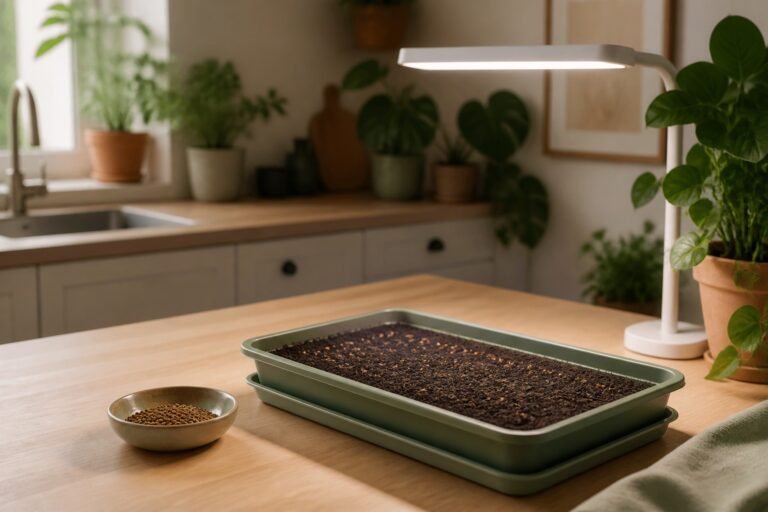
Use a small microgreens starter kit for the test. Once recurring demand and records identify the actual bottleneck, the microgreens scaling equipment guide explains how to upgrade without tying purchases to a made-up revenue tier.
Search Amazon for heavy-duty microgreens trays (paid link)
Do not buy a humidifier, automated misting system, heat sealer, freezer, or bulk seed contract because a generic list calls it professional. Each item needs a measured job and a cleaning, maintenance, and regulatory plan.
Frequently asked questions
Which microgreen has the highest profit?
No crop has the highest profit in every market. Sunflower, pea, and radish were strong repeat test candidates for me, while specialty crops depended more heavily on a specific buyer. Use collected local sales, actual costs, labor, loss, and overhead.
How much profit does one tray make?
A universal amount would be fiction. A tray can produce sales revenue and a contribution after variable costs, yet still lose money after labor, failed crop, delivery, market fees, insurance, permits, utilities, and equipment are counted.
Are microgreens legal to sell from home?
The answer depends on the production method, location, scale, packaging, and sales channel, plus federal, state, county, city, and market rules. Do not assume cottage-food coverage. Ask the responsible agencies about your exact operation.
Should I price below a supplier to win a restaurant?
Not by a universal percentage or for a fixed introductory period. A trial price still needs to cover its purpose and be clearly limited. Compete on a combination of crop, freshness, reliability, package, service, and price without creating an account that works only while your labor is free.
How many varieties should I start with?
Three is enough for a controlled first comparison. Add another only when a buyer requests it or the records show a clear reason. Seven crops at once produce seven learning curves and muddy the economics.
The bottom line
My list of the most profitable microgreens to grow still begins with sunflower, pea shoots, and radish, then moves into broccoli, wheatgrass, beet and amaranth, and cilantro when the buyer fit is right. Two years of tests made that a useful shortlist for me. It did not make my prices, yields, or customers universal.
Pick three crops. Grow twelve careful trays. Count loss and every minute. Ask for paid reorders. The winner is not the tray with the prettiest revenue line. It is the crop that keeps contributing after the real work appears.