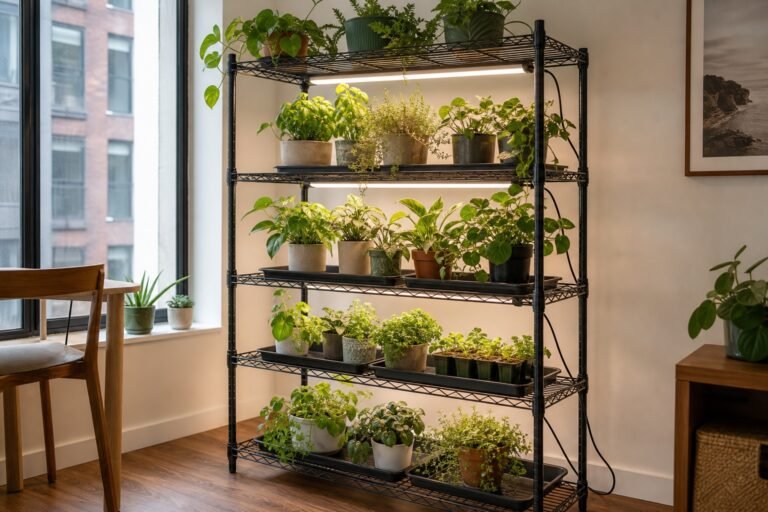
How Long Should I Leave a Grow Light On? (For Every Type of Indoor Plant)
Last updated: 30.05.2026.
Affiliate disclosure: As an Amazon Associate I earn from qualifying purchases. Links marked “paid link” may earn Fern & Shelf a commission at no extra cost to you. Read our full Affiliate Disclosure.
If you’ve just bought your first grow light and you’re trying to figure out how many hours per day to run it — here’s the simple answer, broken down by what you’re actually growing.
Most indoor plants: 12–16 hours per day.
Herbs and leafy greens: 14–16 hours per day.
Seedlings: 14–18 hours per day.
Flowering or fruiting plants: 12–14 hours per day.
Plants in pure “supplement” mode (you also have window light): 4–8 hours.
The rest of this article explains why, plus the practical tools to automate this so you don’t have to remember.
The simple rule: 12–16 hours, then off
Almost all indoor plants do best with somewhere between 12 and 16 hours of light per day, and 8–12 hours of complete darkness.
That darkness matters more than people realize. Plants need night to complete certain biological processes (respiration, sugar transport, hormone regulation). A grow light running 24 hours doesn’t help your plant grow faster — it actually stresses the plant and produces weaker growth over time.
The “running 24/7 for faster growth” myth is one of the most common beginner mistakes with grow lights. Don’t do it.
By plant type — the specific recommendations
Most houseplants (pothos, snake plant, ZZ plant, philodendron, peace lily)
12–14 hours on, 10–12 off.
Most foliage houseplants are happy with about 12 hours of grow light daily. Snake plants and ZZ plants tolerate less (8–10 hours is fine since they’re built for low light). Pothos and philodendrons thrive at 12–14 hours.
For the easiest houseplants and how much light each one needs, see our 9 easiest indoor plants for people who kill plants guide — every plant on that list has its light needs broken down.
Herbs and leafy greens (basil, mint, parsley, lettuce, spinach)
14–16 hours on, 8–10 off.
Herbs and leafy greens need more light than houseplants to produce dense, flavorful growth. Less than 12 hours and they become “leggy” — long thin stems with sparse leaves. The 14–16 hour range is what countertop hydroponic systems use by default. See the best small indoor herb garden kits for system recommendations.
If you’re growing herbs in soil pots under a grow light instead of using an all-in-one hydroponic, our grow lights for apartment windows guide covers the right products.
Microgreens
14–18 hours on, 6–10 off.
Microgreens grow fast and want a lot of light, but they don’t need to flower or fruit. The standard commercial microgreens schedule is 16 hours on, 8 off — see our microgreens startup cost guide for the full setup. Some growers go up to 18 hours during the rapid-growth phase, then back to 16 once mature.
Seedlings and propagations
14–18 hours on, 6–10 off.
Young plants need extended light to develop strong stems and roots. Most commercial seed starters use 16–18 hours daily during the first 2–4 weeks of growth, then reduce to 14 hours as plants mature.
Flowering or fruiting plants (tomatoes, peppers, strawberries indoors)
12–14 hours on, 10–12 off.
Plants that flower and produce fruit need a longer dark period to trigger flowering — this is why you don’t want to run 18 hours of light on these. The “long night” signals the plant it’s time to fruit.
Note that most countertop hydroponic systems aren’t ideal for fruiting plants (the light isn’t strong enough). For serious tomato/pepper growing indoors, see our best indoor vertical garden systems guide.
Supplemental lighting (you have some window light)
4–8 hours on, supplementing daylight.
If your plant gets some natural light but you want to boost it (e.g., a houseplant near a north-facing window that doesn’t quite get enough), you don’t need a full 14-hour schedule. Run the grow light 4–8 hours during the day, ideally in the morning or evening when daylight is weakest.
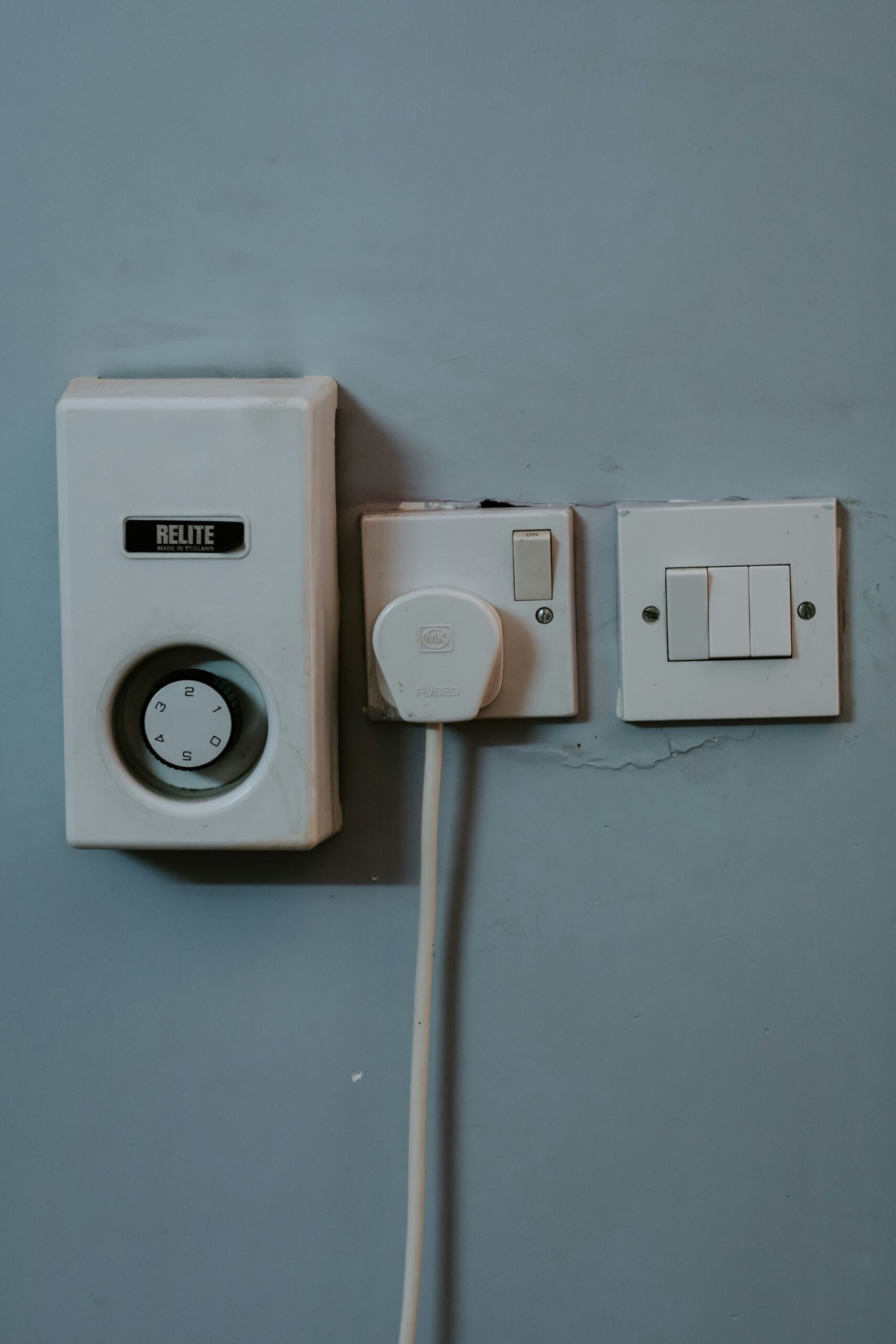
How to automate this (don’t remember manually)
You can’t reliably remember to turn a grow light on at 7 am and off at 9 pm every single day for years. Don’t try.
The fix is a smart plug with a timer, or a basic mechanical wall timer. Both cost around $10–$15 on Amazon and handle everything automatically.
Smart plug with timer → (paid link)
Mechanical outlet timer → (paid link)
Set it once, forget it forever. The smart plug version connects to a phone app if you want to change schedules remotely; the mechanical timer is simpler and doesn’t need internet.
Most countertop hydroponic systems (Click & Grow, AeroGarden, LetPot — see our 3-way comparison) have timers built in, so you don’t need a separate one. For DIY grow light setups using bulbs in lamps, a smart plug is essential.
Common mistakes with grow light timing
A few patterns we see beginners make:
Running the light 24 hours per day for “faster growth.” Doesn’t work. Stresses plants. Stops doing it.
Inconsistent schedule (different hours each day). Plants do better with predictable cycles. Use a timer.
Running the light too close to the plant. Not a timing issue per se, but worth knowing — LED grow lights run hot and can burn leaves if placed within 4–6 inches of the plant. Keep at least 8–12 inches between LED panel and plant top.
Timing is only half of the diagnosis. Check the signs that a plant is getting too much grow light before shortening the schedule, because distance and intensity may be the real problem.
Running too few hours and expecting growth. Pothos can survive at 6 hours of weak light per day; it won’t actually grow well. If you want a plant to thrive (not just survive), give it the recommended hours.
Forgetting plants need a dark period. Even desert plants like cacti need 8+ hours of darkness daily. Don’t try to “extend” growth with extra light.
What if I don’t have a grow light yet?
If you’re trying to figure out whether you need one in the first place, our companion article do you need a grow light for your indoor plants walks through the decision.
For specific product recommendations across different budgets and use cases, see the best grow lights for apartment windows guide. Basic full-spectrum bulbs in normal lamps start at around $30; LED panels for larger setups run $80–$200.
Frequently asked questions
Does it matter what time of day the grow light is on?
Not really. Plants don’t care if their “day” is 7 am to 9 pm or 9 pm to 11 am. Pick a schedule that matches your life (so you can check on plants during their “day” period) and stick with it.
Can I run the grow light at night to save on electricity costs?
You can, but it can interfere with your sleep if the light is in a visible location. Some people set grow lights to run while they’re at work (8 am to 10 pm) so the light is rarely in their direct view.
Should I gradually reduce the hours as winter approaches?
For most houseplants, no — keep the same schedule year-round. For flowering plants, slightly shorter days in winter (12 hours instead of 14) can encourage blooming in some species.
Will leaving the grow light on too long damage the plant?
Yes, slowly. Leaves of plants under 24-hour light develop spots, lose color, and eventually wilt. The plant doesn’t die quickly but it doesn’t thrive either. Stick to 12–16 hours.
Do I need different bulbs for different plant types?
Mostly no. A full-spectrum LED bulb works for almost everything — herbs, houseplants, seedlings, flowering plants. The only exception is highly specialized commercial growing (cannabis, specific fruiting greenhouse crops) which uses tuned-spectrum lights.
The bottom line
For 99% of indoor plants, the answer is 14 hours on, 10 hours off. Set a timer. Forget about it.
The specifics in this article are useful when you’re growing something specific — herbs, microgreens, seedlings — and want to optimize. For a casual houseplant or two, the 14-on / 10-off rule is good enough forever.
Grow lights are one of those things that look complicated and are actually very simple once you get past the marketing. Buy a basic light, plug it into a timer, set the timer for 14 hours, and your plant will be happier than it’s been in your apartment so far.