Grow Light Watts per Square Foot: Why the Shortcut Often Fails
Affiliate disclosure: As an Amazon Associate I earn from qualifying purchases. Links marked “paid link” may earn Fern & Shelf a commission at no extra cost to you. Read our full Affiliate Disclosure.
Watts per square foot compares electrical power with growing area. It is easy to calculate but cannot tell you how efficiently a fixture turns electricity into plant-usable photons or how evenly those photons land on the canopy. Use it to catch obviously weak or oversized setups, then check PPFD and coverage.
Rough LED planning ranges
| Plant use | Rough actual LED draw | Next check |
|---|---|---|
| Low-light foliage support | 5 to 10 W/sq ft | Measure at leaf height |
| Herbs and seedlings | 10 to 20 W/sq ft | Check uniformity and DLI |
| High-light leafy crops | 15 to 25 W/sq ft | Use a crop PPFD target |
| Fruiting crops | 25 to 40+ W/sq ft | Use fixture maps and heat planning |
These ranges assume modern white LEDs with reasonable efficiency. They are not promises of plant performance.
Calculate actual watts per square foot
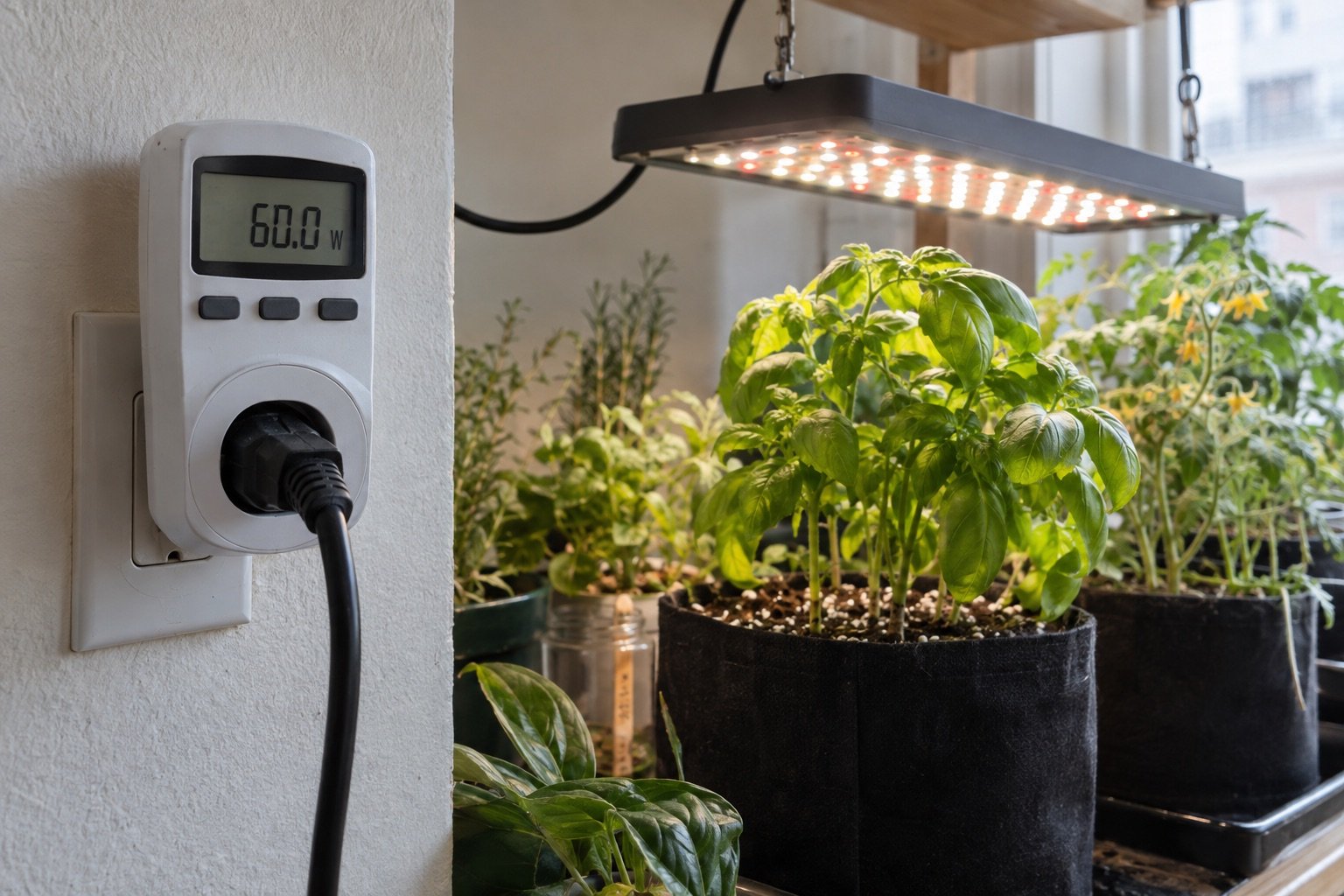
Divide the fixture’s measured or listed wall draw by the lit canopy area. A 60-watt light over a 2-by-2-foot shelf equals 15 watts per square foot. Ignore product names such as “600W equivalent” and use actual power consumption.
Efficiency changes the result
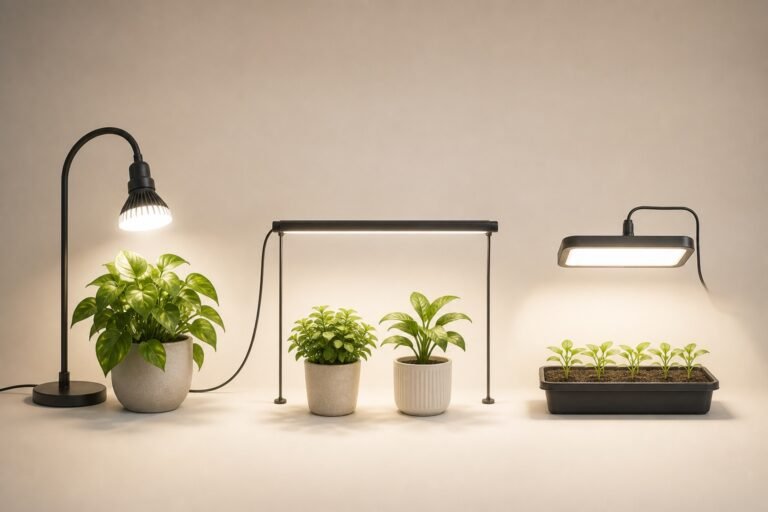
A more efficient fixture produces more photosynthetic photons from the same electrical input. Optics, mounting height, reflective walls, and diode layout also affect how much reaches the leaves. This is why a 20-watt bulb and a 20-watt bar do not cover the same shape.
Browse LED grow lights with published PPFD maps (paid link). Check whether the map uses the same hanging height and area you plan to use.
Coverage comes before the center reading
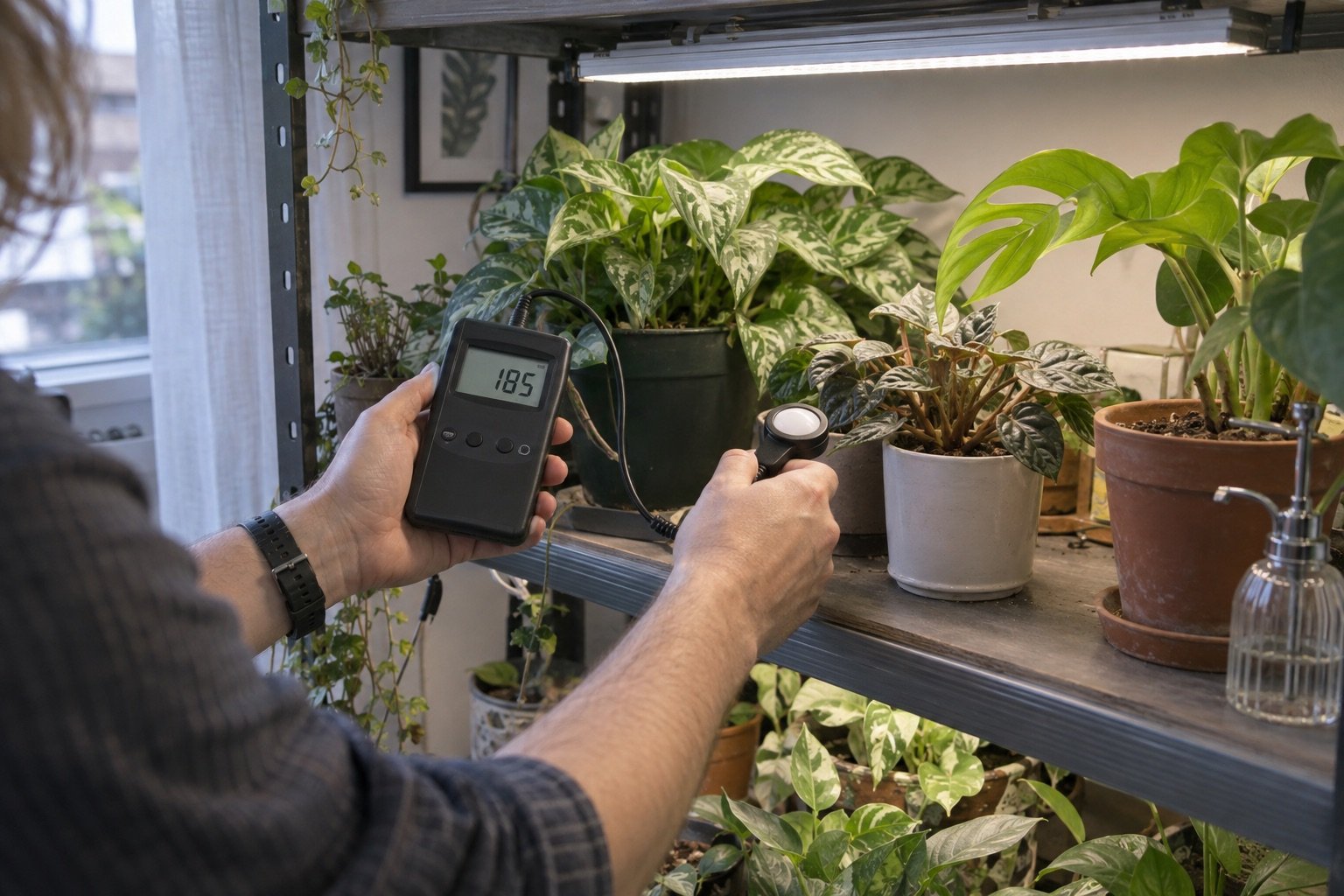
A high reading in the middle can hide dim corners. Measure a grid at leaf height, then calculate whether every plant receives a usable range. Bar fixtures usually spread light across shelves better than one intense bulb.
Use DLI to adjust time
PPFD measures the moment; daily light integral combines intensity with hours. A moderate fixture running longer may meet the same DLI as a stronger fixture on a shorter schedule, within the plant’s normal photoperiod. Use the PPFD and DLI calculator for the conversion.
Heat and electricity
Every watt eventually becomes heat in the room. High-power fixtures need air space around drivers and safe mounting. Our grow-light electricity guide calculates monthly cost from actual watts and hours.
Common sizing mistakes
- Using advertised equivalent watts instead of wall draw.
- Dividing by shelf size even though the beam covers only the center.
- Ignoring mounting height.
- Sizing a tomato light from a pothos recommendation.
- Increasing time without giving plants a dark period.
A practical buying sequence
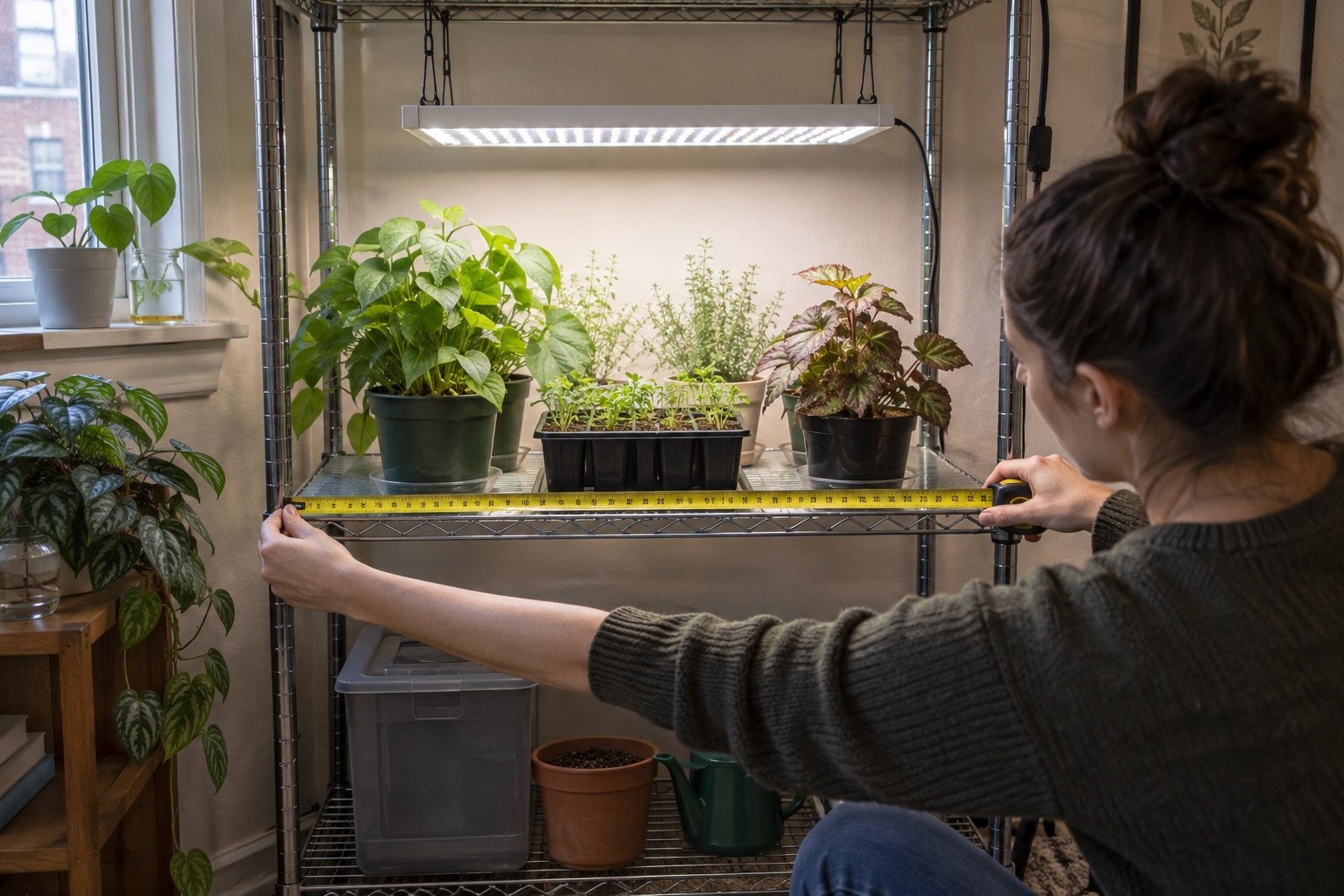
- Measure the canopy length and width.
- Choose the crop’s approximate PPFD and DLI need.
- Find a fixture map for that area and height.
- Use watts per square foot as an efficiency and heat sanity check.
- Measure the installed setup and adjust height or schedule.
Watts remain useful for power bills and heat planning. They become misleading only when treated as a direct unit of light delivered to leaves.