Selling Microgreens at a Farmers Market: 9 Lessons From My First Failure
Last updated: July 22, 2026.
Affiliate disclosure: As an Amazon Associate I earn from qualifying purchases. Links marked “paid link” may earn Fern & Shelf a commission at no extra cost to you. Read our full Affiliate Disclosure.
Start here: For a complete overview, see our How to Start a Microgreens Business.
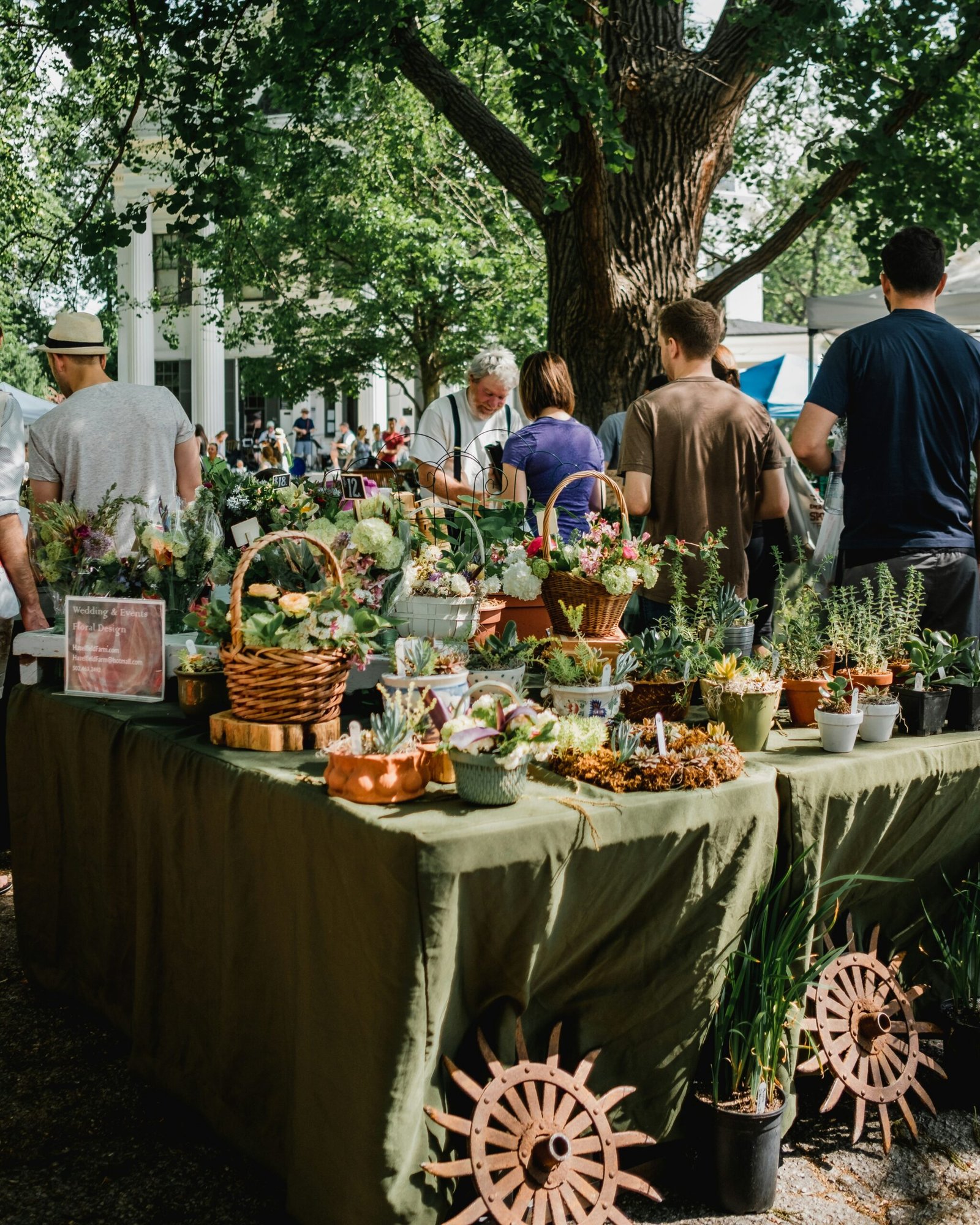
Selling microgreens at my first farmers market went badly. I sold four clamshells from a harvest of roughly thirty, made $18 in sales, and had already paid a $40 booth fee. The rest sat under a folding table in the July heat while I smiled at people who would not make eye contact.
That day taught me something the growing guides had skipped. A good crop and a good market stall are separate skills. I later changed the market, the display, the offer, and the way I planned harvests. Now I clear the table by noon most weeks, but I did not get there by growing more.
I wish someone had handed me these nine lessons before that first booth. The legal and food-safety guidance here is US-focused and was checked on July 22, 2026. Your state, county, city, and market can impose different requirements, so treat the official links as a starting map rather than permission to sell.
1. Selling microgreens starts with the market
The closest market is not necessarily the right one. My first choice was small and convenient. I had not checked whether its shoppers bought specialty produce, whether another microgreens grower already served them, or whether the market promoted vendors outside market day.
Use the USDA National Farmers Market Directory to build a shortlist, then visit each market as a customer. Count produce vendors, watch which booths stay busy, note the package sizes people carry, and ask the manager for the current vendor packet.
Before applying, ask in writing:
- Are microgreens accepted as a farm product, and must they be grown within a stated region?
- Does the market require farm inspection, insurance, permits, or sales-tax registration?
- Are packaged samples allowed, and what handwashing or food-handler rules apply?
- Can produce be cut or packaged at the booth?
- What cold-holding, labeling, tent-weight, table-cover, and signage rules apply?
- What fees remain due if weather cancels the market or you miss a date?
Do not rely on what another vendor remembers from last season. Keep the current rules and the manager’s answer with your market records.
2. Do the selling microgreens math before sowing
My first market produced $18 in sales against a $40 booth fee. That was already a $22 shortfall before seed, medium, packaging, card fees, travel, crop loss, or labor. Calling the $18 “income” would have hidden what happened.
Build the market plan in layers:
- Sales revenue: Money you collected, not packages displayed.
- Variable crop costs: Seed, medium, packaging, payment fees, and expected unsold or rejected crop.
- Market-day costs: Booth fee, variable travel, ice or cooling supplies, and any market commission.
- Labor and overhead: Growing, cleaning, harvesting, packing, setup, selling, breakdown, insurance, permits, equipment, and taxes.
The amount left after variable costs is contribution, not net profit. The SBA break-even guide shows how selling price, variable cost, and fixed cost connect. Run that calculation with your own fees and package sizes.
For a first date, grow enough to learn but not enough to fill an imaginary rush. Take preorders if the market allows them. A half-empty display can be refreshed from cold storage; thirty warm clamshells cannot be unsold back into seed.
3. Sell a clear use, not a tray of botany
Most shoppers do not arrive hoping for a lecture on cotyledons. They want to know what the greens taste like, what to put them on, how much is in the package, and how soon to use them.
My early labels leaned too hard on crop names. A better display pairs the name with a plain use:
- Radish: peppery crunch for tacos, eggs, and sandwiches;
- Pea shoots: sweet, crisp greens for salads and stir-fries;
- Sunflower: nutty, substantial greens for bowls and wraps;
- A mild mix: an easy first package for a shopper who has never bought microgreens.
Only promise uses and storage life that your crop and handling support. Avoid disease, detox, or guaranteed nutrition claims on the sign. Broccoli microgreens do not need a medical sales pitch to be worth eating.
A small bunch of edible flowers can widen the stall without adding another clamshell of greens. Before planting for sale, read our guide to selling edible flowers for profit for crop choice, handling, and market checks.
4. Set a price from your package, not an internet average
There is no reliable national farmers-market price for a clamshell. Selling microgreens in a high-cost city, at a rural market, or by the restaurant case creates three different price problems.
Start with the package’s variable cost, add the market-day cost allocated across the number you conservatively expect to sell, and decide what contribution remains for labor and fixed overhead. Then compare the result with actual alternatives at that market. If the price shoppers will pay does not support the operation, shrink the package, change the crop, change the channel, or walk away. Do not solve bad math by hiding your labor.
Bundles helped my stall because they gave a household a reason to buy more than one flavor and increased the average sale. That result is real, but the right bundle is local. Test two clearly labeled combinations and track which one sells without discounting so deeply that the extra package adds no contribution.
5. Package for handling, cooling, and a complete label
Selling microgreens in a package means that package must survive harvest, transport, the table, and the customer’s trip home. Test closure, condensation, crushing, label adhesion, stacking, and how the greens hold under your documented cold-storage routine. Don’t claim a universal seven-day or two-week life because another grower does.
For packaged foods, federal and state rules can require the product identity, net quantity, business name and address, an ingredient statement for a mix, allergen information when applicable, and other details. Review the FDA Food Labeling Guide, then send a draft label to the state or local authority and the market manager.
If you sell by declared weight, ask your state or local weights and measures office whether the scale must be an approved legal-for-trade device. A kitchen scale can be useful for crop records without being approved for retail transactions.
Search Amazon for produce clamshells (paid link)
Search Amazon for printable water-resistant labels (paid link)
6. Keep the crop cold and the booth honest
My first setup treated the table as storage. It was not. Keep only a small display quantity out, replenish it from your approved cold-holding setup, and monitor conditions rather than trusting shade alone. Follow the market and local authority’s temperature and handling rules.
Harvested microgreens are perishable. A USDA Agricultural Research Service review identifies rapid postharvest quality loss and food-safety challenges. The practical response is a validated harvest, cooling, packaging, transport, and display routine, not a guessed shelf-life sticker.
Use a cleanable table covering, secure the tent as the market requires, keep personal items away from product, and separate money handling from food handling as much as the workflow permits.
Search Amazon for a six-foot folding table (paid link)
7. Treat samples and live cutting as regulated activities
Samples improved my sales because shoppers could taste the difference between a mild mix and radish. That does not mean every vendor may hand out open food.
Ask the market manager and the state or local retail-food authority about sampling before market day. Requirements may cover food-handler training, handwashing, utensils, portion protection, temperature control, waste, and where the sample was prepared. The FDA Food Code is a model used by jurisdictions, not a single permit that overrides local adoption.
The same caution applies to cutting a living tray at the booth. It may look fresh, but it introduces a cutting tool, food-contact surface, exposed product, handwashing needs, waste, and a question about whether on-site preparation is permitted. Prepackaged product is the simpler starting workflow unless the market and authority approve another one.
8. Check the farm and food rules before calling it cottage food
Selling microgreens isn’t automatically covered by a state’s cottage-food law. Raw agricultural products, packaged produce, samples, cut produce, and food prepared at a booth can fall under different state or local programs.
FDA guidance distinguishes microgreens grown in substrate and cut above it from sprouts subject to the sprout-specific Subpart M requirements. Microgreens can still be covered produce under the Produce Safety Rule unless an exclusion or exemption applies. Start with the FDA Produce Safety Rule overview and the SBA licenses and permits guide, then identify the state, county, city, and market contacts for your exact activity.
If you market a crop as organic, review USDA organic labeling rules. A small-operation certification exemption is not permission to ignore organic production, handling, labeling, and recordkeeping rules or to use the USDA seal.
9. Use the first three markets as an experiment
Don’t rewrite the entire business after one rainy Saturday. Keep the selling microgreens test small enough to compare three normal dates. Record:
- packages brought, sampled, sold, damaged, and returned;
- sales by crop, package, hour, and payment method;
- questions shoppers asked before buying or walking away;
- bundle performance and repeat customer names, with permission;
- total labor, travel, fees, variable cost, and unsold crop.
After three dates, keep the crops that sell through with acceptable quality and contribution. Drop a variety that attracts compliments but no purchases. If the market itself is wrong, change the market before adding production.
Frequently asked questions
Do I need a permit to sell microgreens at a farmers market?
Possibly, and the answer depends on the state, locality, market, growing operation, packaging, sampling, and whether food is cut or prepared at the booth. Ask the market manager and the responsible agriculture or health authority for a written list.
How much should I charge?
Use your package’s variable cost, market costs, labor goal, and local alternatives. A copied national range cannot tell you whether the package contributes enough in your market.
Should I sell living trays?
Only after confirming the market rules, labeling, handling, and what the customer is expected to do. Do not promise a universal shelf life. If you plan to cut at the booth, get specific approval for that food-handling process.
Which microgreens should I bring first?
Start with a mild option, a clearly different peppery option, and at most one crop aimed at a known local customer. The crop profitability guide explains how to test each one with your own sell-through and labor.
What I would tell first-market me
Grow less. Visit the market first. Put the product in a tested cold-holding routine, bring one sentence that explains each flavor, and know the break-even point before opening the tent.
The four-clamshell day was embarrassing, but useful. It forced me to stop treating selling microgreens as the final step of growing them. Selling microgreens is its own system, and it improves only when you measure it.