How to Grow Sunflower Microgreens (The Chef Favorite, Step by Step)
Last updated: 09.07.2026.
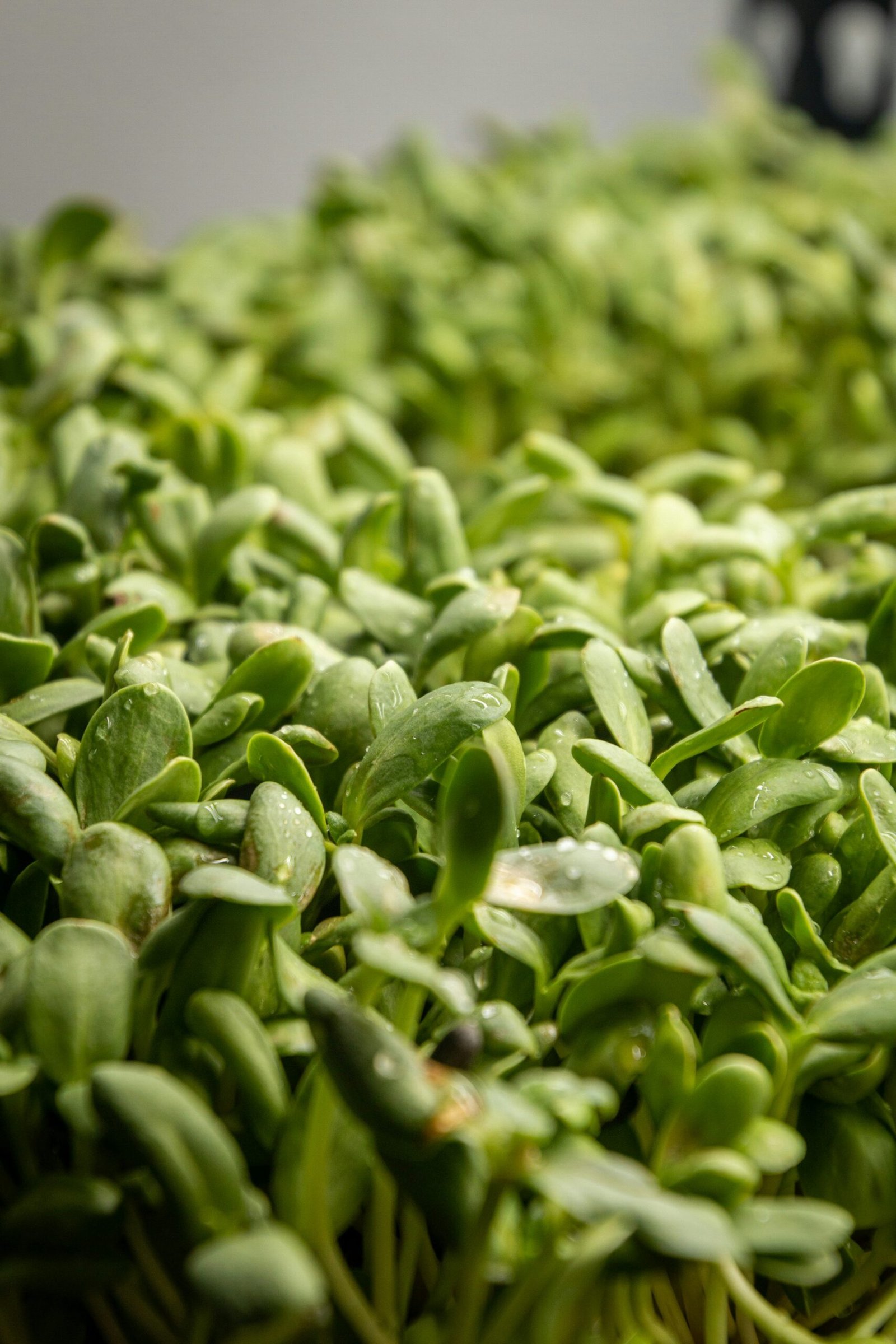
Sunflower microgreens are the ones chefs ask for by name. Nutty, crunchy, almost meaty, they hold up on a plate without wilting and look striking with their thick stems and split-seed leaves. They are also one of the highest-yielding and most profitable microgreens to grow, which is why they belong in almost every grower’s starting lineup. The good news: they are genuinely easy once you know the two things that trip people up. Here is the full method.
Start here: For a complete overview, see our How to Grow Herbs Indoors Without Sunlight.
What you need
Nothing exotic. The basics for one tray:
- Black oil sunflower seeds. This is the specific seed for microgreens, not the striped snacking kind. A bag of black oil sunflower microgreen seeds is cheap and lasts many trays.
- Two 10 by 20 inch (25 by 50 cm) growing trays, one with holes and one without, for bottom watering.
- A light, fine growing medium such as coco coir or a seed-starting mix.
- A light source: a bright windowsill works, but a full-spectrum grow light gives more even, reliable results.
The two tricks that matter most
Sunflower fails for people who skip these:
1. Soak the seeds first. Black oil sunflower seeds have a hard shell and germinate unevenly if planted dry. Soak them in room-temperature water for 8 to 12 hours before sowing. This one step is the difference between a full, even tray and a patchy one.
2. Use a weighted blackout. After sowing, sunflower does best with a few days in the dark under a little weight (a second tray with a brick or a few cans on top). The seeds push up against the resistance, which gives you thicker, stronger, more uniform stems and helps pop the hulls off.
Get those two right and everything else is easy.
Step by step
1. Soak. Cover the seeds in water and leave them 8 to 12 hours.
2. Prepare the tray. Fill a no-hole tray with about an inch (2 to 3 cm) of moist growing medium, leveled but not packed.
3. Sow densely. Spread the soaked seeds in a single even layer across the surface, close together but not piled up. Sunflower is sown thick.
4. Blackout with weight. Mist the seeds, cover with an inverted tray, and add a light weight on top. Leave in the dark for 3 to 4 days, misting once a day if the surface looks dry.
5. Uncover and light. Once the shoots are pushing the top tray up (about 2 inches / 5 cm tall), remove the cover and weight and give them strong light. Many hulls will fall off on their own now, and you can gently brush off the rest.
6. Bottom-water. From here, water by pouring into the tray below (or a solid tray under the holed one) so the roots drink from below and the leaves stay dry. Dry leaves mean less mold and longer shelf life.
7. Harvest. Sunflower is ready 8 to 12 days from sowing, once the first true leaves start to appear. Cut just above the medium with clean scissors or a sharp knife.
Common problems (and quick fixes)
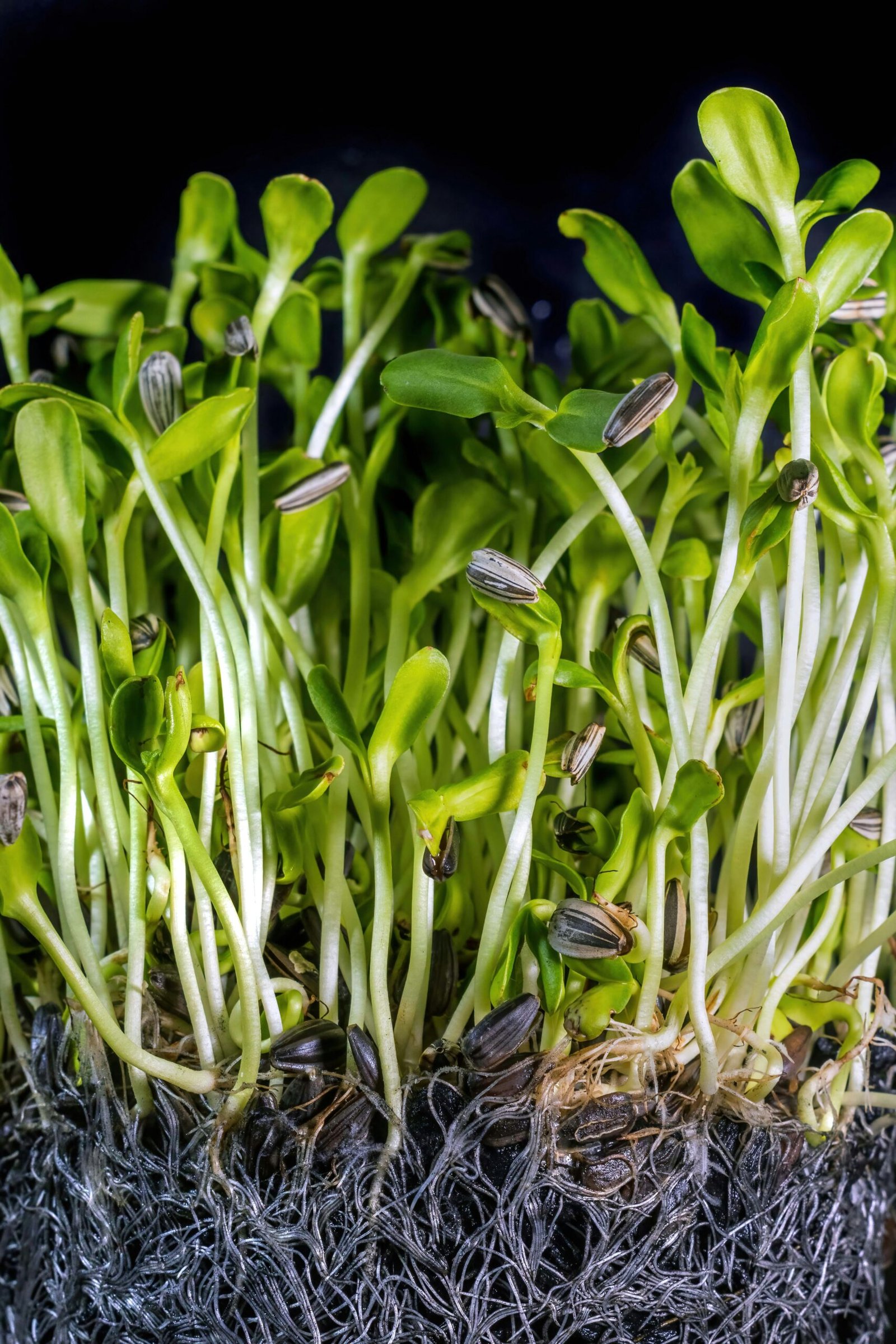
- Hulls stuck on the leaves: the blackout was too short or too light. Next time weight it more and leave it a day longer. For a stuck tray, a gentle mist and a soft brush by hand removes most.
- Mold (white fuzz on the medium): usually overwatering or poor airflow. Bottom-water, ease off the moisture, and get a little air moving. Note that fuzzy white root hairs near the base are normal and not mold.
- Leggy, thin stems: not enough weight in the blackout, or too little light after. Weight them more and brighten the light.
- Uneven germination: you skipped or shortened the soak. Always soak sunflower.
Harvest, storage, and yield
A single tray of sunflower yields a lot, often around 1 lb (roughly 450 g), one of the highest on any microgreen. After cutting, they keep well for up to a week in the fridge in a breathable container, which is part of why chefs like them. Rinse and dry gently before storing.
Selling sunflower microgreens
If you are growing to sell, sunflower is a workhorse: broad appeal across upscale restaurants, sandwich shops, salad bars, and farmers markets, plus that high yield. Wholesale runs roughly $25 to $40 per pound. It pairs perfectly with the other three starter varieties in our lineup, and the full economics of each are in the most profitable microgreens breakdown. For where to actually sell them, see selling microgreens to restaurants and selling at farmers markets.
Sunflower is the microgreen I would start any new grower on: forgiving, high-yield, and in constant demand. Soak the seeds, weight the blackout, keep the leaves dry, and you will have thick, sweet, restaurant-quality shoots in under two weeks. Once you have this one dialed in, the fastest-growing microgreens guide and the step-by-step guide to starting a microgreens business are the natural next reads.