How to Grow Pea Shoots Indoors (High Yield, and They Regrow)
Last updated: 09.07.2026.
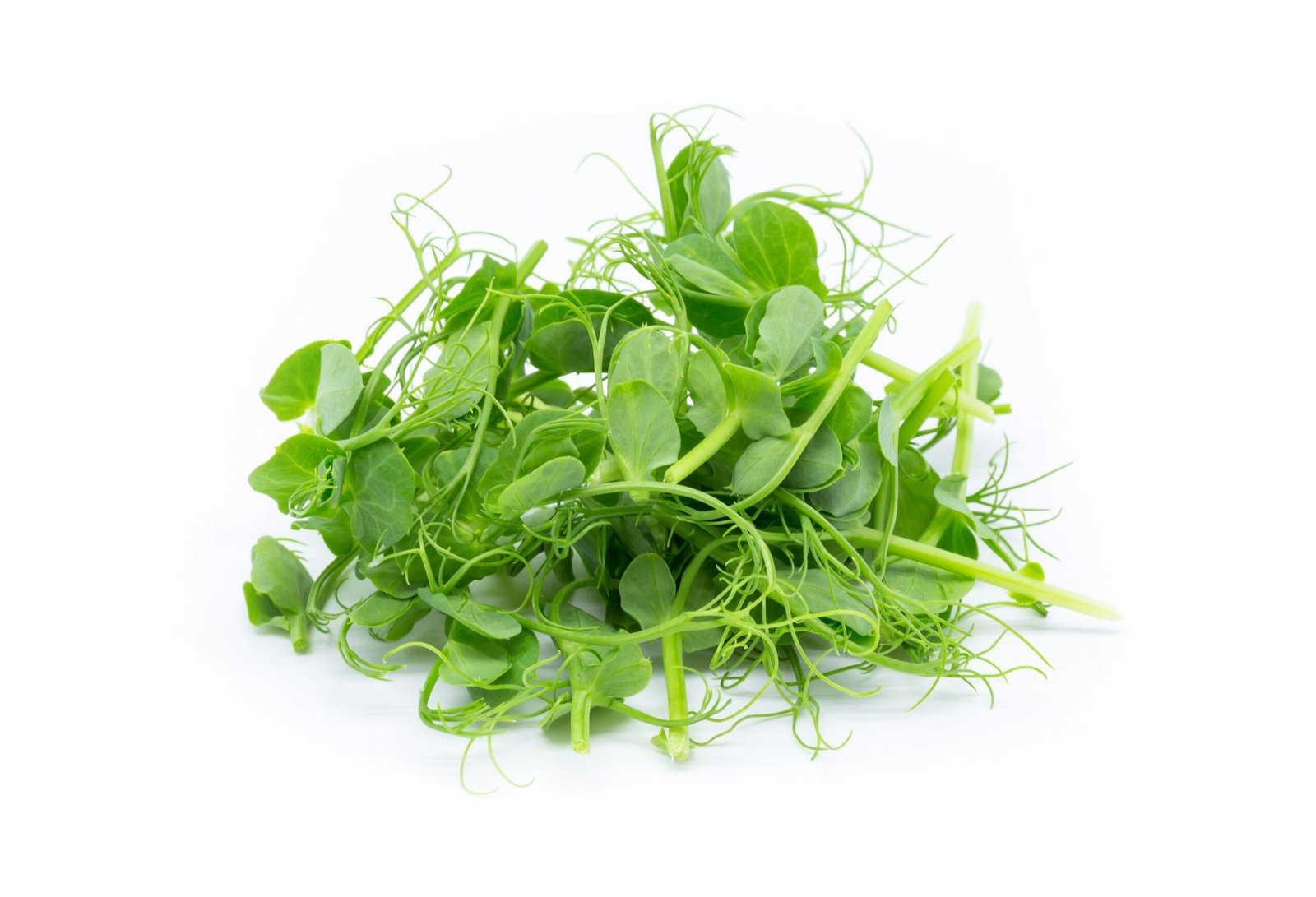
Pea shoots have a secret that no other common microgreen shares: cut them, and they grow back. That single trait, plus a huge yield per tray and a sweet flavor that chefs reach for again and again, makes them one of the most profitable microgreens to grow for anyone selling to restaurants. They are also genuinely beginner-friendly. Here is exactly how to grow them, and how to get that second harvest.
Start here: For a complete overview, see our Indoor Gardening for Absolute Beginners.
What you need
- Pea seeds for shoots. Speckled pea and dun pea are the standard varieties. A bag of pea shoot seeds goes a long way since peas are large.
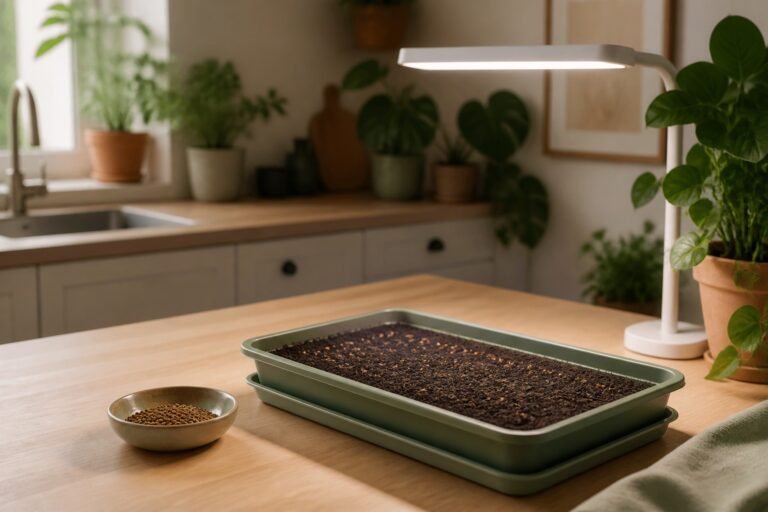
- 10 by 20 inch (25 by 50 cm) growing trays, holed and solid, for bottom watering.
- A light growing medium like coco coir.
- Light: a bright window or a grow light.
The one must-do: soak the peas
Pea seeds are large and hard, and they need a good drink before they will germinate evenly. Soak them in room-temperature water for 8 to 12 hours before sowing. Skip this and germination is slow and patchy. This is the single most important step with peas.
Step by step
1. Soak the peas 8 to 12 hours. They will swell noticeably.
2. Fill the tray with about an inch (2 to 3 cm) of moist medium.
3. Sow densely. Spread the soaked peas in a thick, even, single layer. They should nearly cover the surface.
4. Blackout. Cover with an inverted tray to keep them dark for 3 to 4 days. Peas do not need heavy weight the way sunflower does, but a light cover helps them root. Mist once a day if dry.
5. Uncover and light. When the shoots are a couple of inches (about 5 cm) tall and pushing the cover, uncover and give them bright light. They green up fast.
6. Bottom-water from the tray below to keep the foliage dry and reduce mold risk.
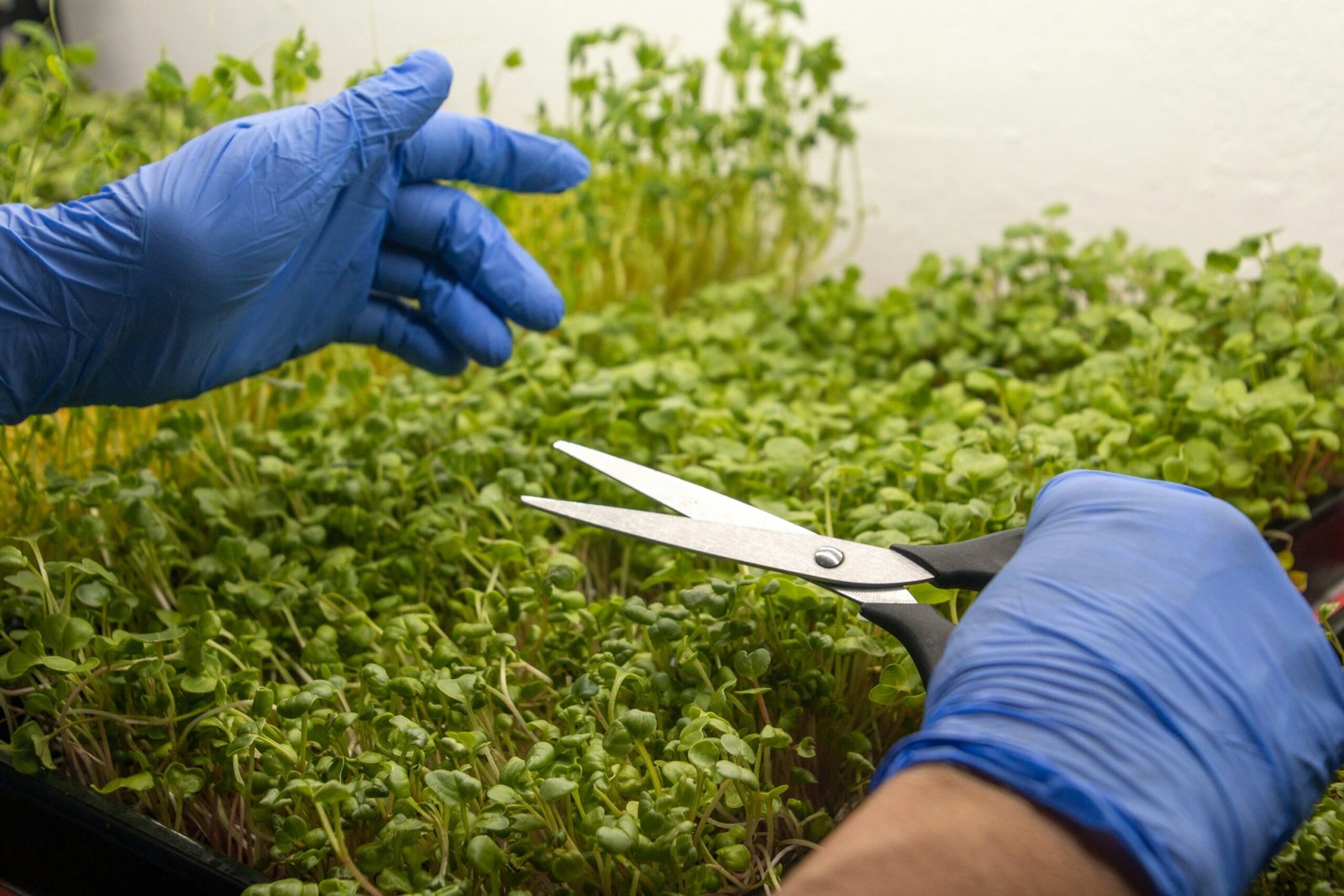
7. Harvest at 10 to 14 days, when the shoots are 3 to 4 inches (8 to 10 cm) tall with tendrils forming. Cut with clean scissors just above the lowest set of leaves if you want a second cut (see below), or at the base if not.
The regrowth trick (free second harvest)
Here is what makes peas special. If you cut the shoots above the lowest leaf node rather than at soil level, and keep watering the tray, many of them will push out a second flush of growth in about a week to ten days. You will not get quite the volume of the first cut, but it is essentially free extra product from the same tray, which is why peas often out-earn their per-pound price suggests. Not every stem regrows, so the second harvest is a bonus, not a guarantee.
Common problems
- Slow or patchy germination: almost always a skipped or too-short soak. Soak the full 8 to 12 hours.
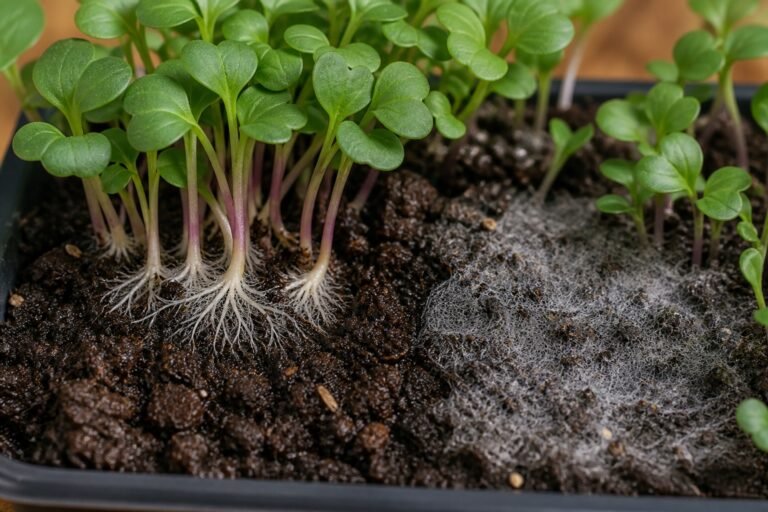
- Mold or a sour smell: overwatering or crowding with no airflow. Bottom-water, ease off, and add a little air movement.
- Roots lifting the medium (root mat): normal for peas, they root vigorously. Just keep them watered from below.
- Thin, pale shoots: more light after the blackout.
Harvest, storage, and yield
Pea shoots yield heavily, often around 1 lb (450 g) or more per tray on the first cut, before any regrowth. They store well for about a week refrigerated in a breathable container. Their sweetness makes them an easy sell and an easy sample at a market booth.
Selling pea shoots
Pea shoots are a favorite of Asian restaurants (Vietnamese, Thai, and Chinese kitchens use them in soups, stir fries, and salads) and they reorder consistently. Wholesale runs roughly $20 to $35 per pound, and the regrowth stretches your margins further. They are one of the four varieties I would build a starting lineup around, alongside sunflower, radish, and broccoli. The full profit comparison is in the profitable microgreens guide, and the selling to restaurants playbook covers how to land those Asian-kitchen accounts specifically.
Pea shoots are close to the perfect beginner microgreen: forgiving, high-yield, sweet, and the only one that gives you a second harvest. Soak the seeds, sow them thick, cut above the node, and you get more from a single tray than almost any other variety. For quick-cash-flow varieties to pair them with, see the fastest-growing microgreens, and for the full setup, the guide to starting a microgreens business.