How to Grow Herbs Indoors Without Sunlight (Complete 2026 Guide)
Last updated: 24.05.2026.
Affiliate disclosure: As an Amazon Associate I earn from qualifying purchases. Links marked “paid link” may earn Fern & Shelf a commission at no extra cost to you. Read our full Affiliate Disclosure.
Almost every guide to growing herbs indoors starts the same way: “Place on a sunny south-facing windowsill that gets 6+ hours of direct sunlight per day.” Helpful — if you live in a Mediterranean villa.
If you live in a north-facing apartment, a basement, a deep interior room, or anywhere that just doesn’t get real sunlight, those guides are useless. The good news: with the right setup, you can grow a full herb garden indoors without a single ray of sunlight reaching it. Better, in some cases, than people growing on actual windowsills.
Here’s exactly how.
The honest reality of “no sunlight”
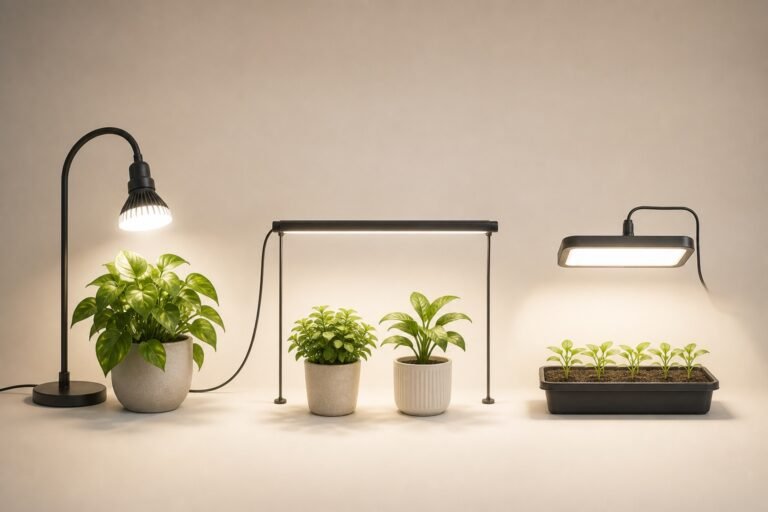
Plants need light to photosynthesize — there’s no working around that. But “sunlight” and “light a plant can use” aren’t the same thing. Modern LED grow lights produce exactly the light spectrum plants need, in any room, on any schedule, for pennies of electricity per day.
So when this guide says “without sunlight,” it means: without natural sunlight from a window. The plants will still get light — just from a different source.
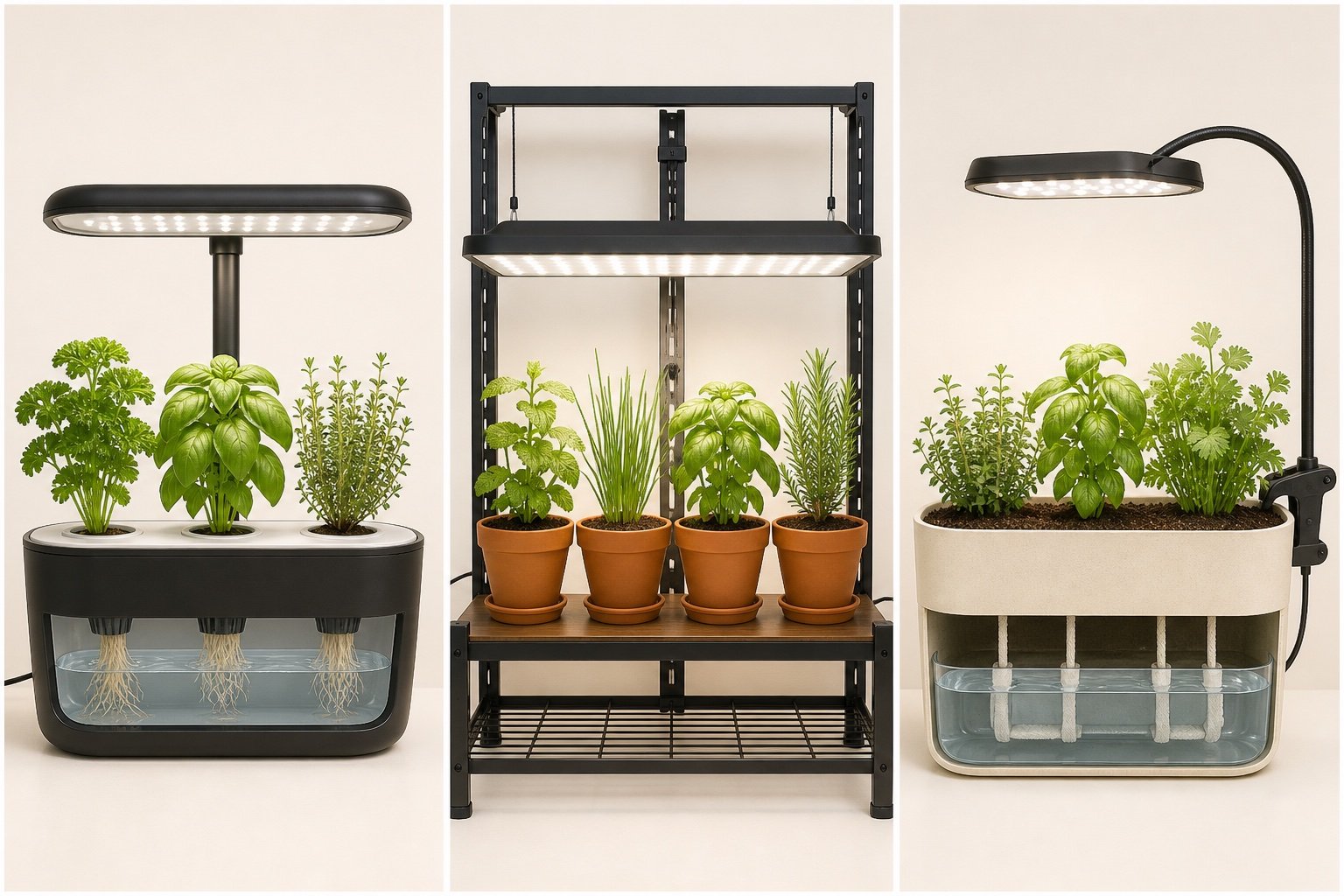
There are three viable methods for sunless herb growing, and they suit different people:
- Hydroponic countertop garden (easiest, most foolproof)
- Grow light + soil pots (most flexible, cheapest long-term)
- Hybrid: self-watering planter under a grow light (in-between option)
Let’s walk through each.
Method 1: Hydroponic countertop garden (easiest)
If you’ve never grown anything indoors and just want fresh basil, this is the right starting point. A countertop hydroponic system bundles everything — light, water reservoir, growing medium, schedule — into one self-contained unit. You drop seeds (or pre-seeded pods) into slots, fill the water tank, and plug it in.
What you need:
- A hydroponic system like a Click & Grow Smart Garden, AeroGarden Harvest, or LetPot LPH-Max. (We’ve reviewed all three: Click & Grow vs AeroGarden vs LetPot and a broader Best Hydroponic Systems for Beginners.)
- Basil, parsley, mint, or any other herb seeds (or proprietary pods, depending on the system).
- A spot to put it — any countertop will do, since the system provides its own light.
Expected timeline: Basil and lettuce sprout in 5–7 days, ready to harvest in 4–5 weeks. Some herbs (rosemary, thyme) take significantly longer.
Cost: $80–$200 for the system, plus a few dollars in seed pods per growing cycle.
Best herbs for hydroponic: Basil, parsley, mint, cilantro, dill, chives, oregano, thyme. Skip rosemary in beginner hydroponics — it’s stubborn.
Method 2: Grow light + soil pots (most flexible)
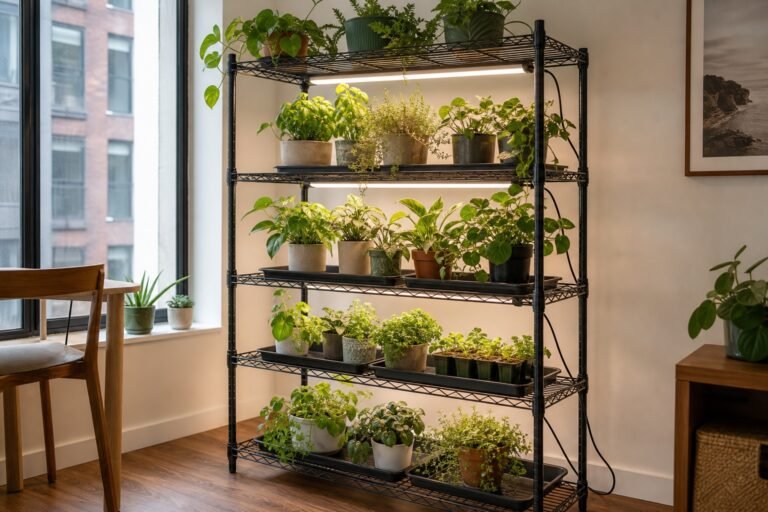
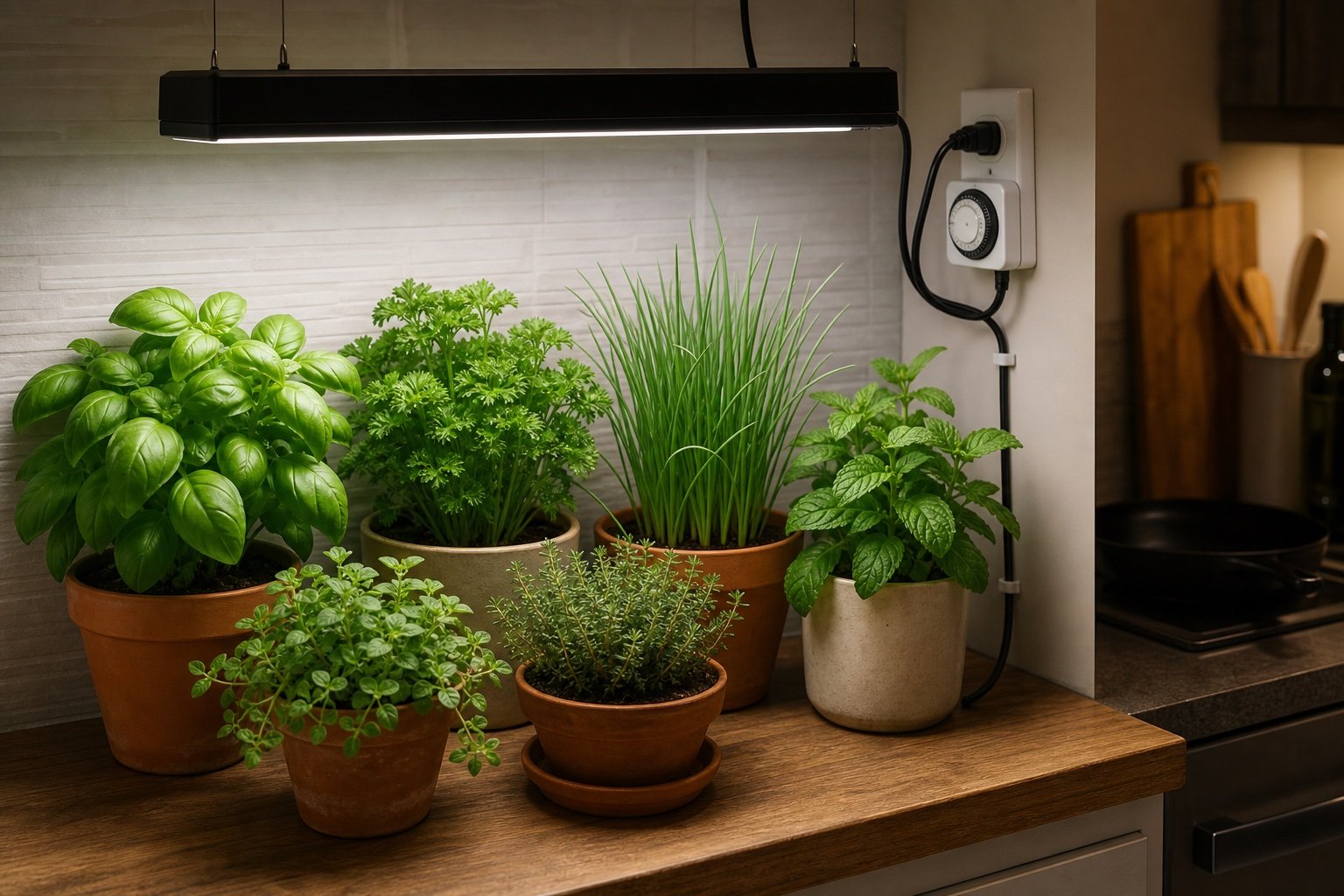
If you want more control, more plant variety, or you already have herb pots and just need to add light — this is the right approach. You grow herbs in standard pots with standard soil, but you replace the sun with a grow light overhead.
Green onions are the inexpensive exception: if you want to start from kitchen scraps instead of seed, the guide to grow green onions indoors from scraps explains when water is enough and when to move them to potting mix.
What you need:
- 3–6 small to medium pots with drainage. Standard 4-inch pots work for most herbs. Search Amazon for 4-inch terracotta pots (paid link)
- Standard indoor potting mix.
- A grow light positioned 8–16 inches above the plants. For 3–6 herbs, options:
- Cheap and effective: a Sansi 36W full-spectrum bulb in a desk lamp aimed at the plants.
- Better: a small panel LED like the Mars Hydro TS 600 or Spider Farmer SF-1000. See our Best Grow Lights for Apartment Windows guide.
- Aesthetic: a Soltech Aspect pendant hanging over a row of pots, if you’re growing in a visible spot.
- A simple smart plug timer to run the light 14 hours per day. Search Amazon for a basic smart plug with a timer (paid link)
Expected timeline: Same as outdoor — basil ready to harvest in 5–6 weeks, parsley 8–10 weeks, mint 6–8 weeks.
Cost: $50–$200 depending on grow light, plus a few dollars for pots and soil.
Best herbs for this method: Anything. Basil, parsley, mint, oregano, rosemary, thyme, sage, chives, cilantro, dill — all work in pots under good light.
Method 3: Hybrid — self-watering planter under a grow light
If you want the “set it and forget it” of hydroponic systems but want to grow in soil with a wider plant selection, this hybrid setup works. A self-watering planter handles the water; a grow light handles the light. You barely touch it.
What you need:
- A self-watering planter sized for herbs (the Glowpear Urban Garden is purpose-built for this — see our Self-Watering Planters guide).
- A grow light positioned above.
- A smart plug timer.
Cost: $80–$180 total.
Best for: People who travel, or who keep forgetting to water but don’t want to commit to a proprietary hydroponic system.
The 7 herbs that thrive indoors under artificial light
Some herbs love indoor conditions; others struggle. Here are the ones that consistently do well:
If you want to try it anyway, the guide to how to grow rosemary indoors covers the brighter light, drier mix, and slower pace it needs. For the slower germination, pot size, light, and harvest cuts, see the complete guide to how to grow parsley indoors.
Basil — The single best indoor herb. Fast-growing, productive, and forgiving. Genovese is the standard; Greek basil is more compact and disease-resistant.
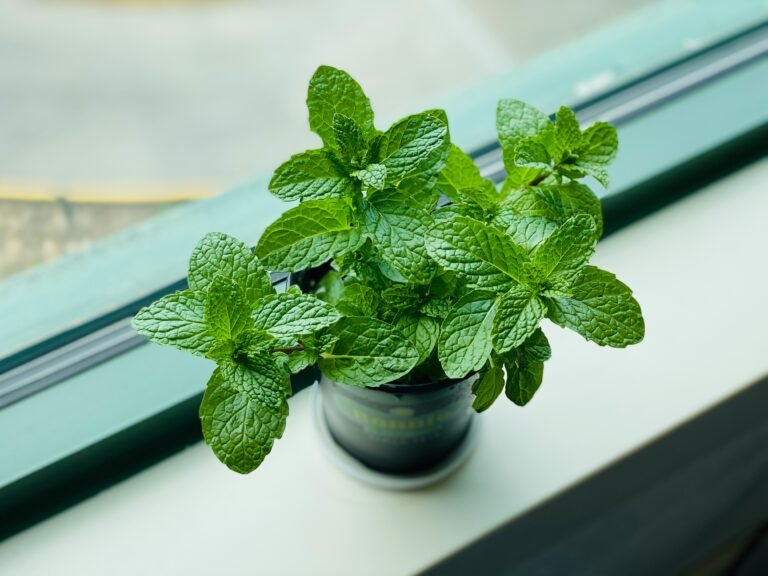
Mint — Aggressively easy. Grow in its own pot or it’ll take over neighboring herbs. Peppermint and spearmint are the most useful in cooking.
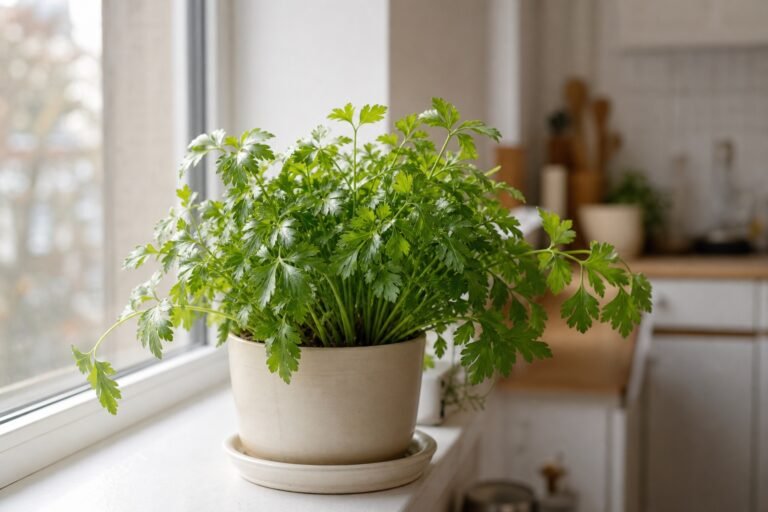
Parsley — Slow to start (germination takes 2–3 weeks) but extremely productive once established. Flat-leaf has more flavor than curly.
Cilantro — Bolts quickly (goes to flower and seed within 6–8 weeks). Plant fresh batches every 3–4 weeks for continuous supply.
Cilantro needs a cooler, more specific routine than the other herbs here. Our indoor cilantro guide covers container depth, sowing, light, and succession planting before the first batch bolts.
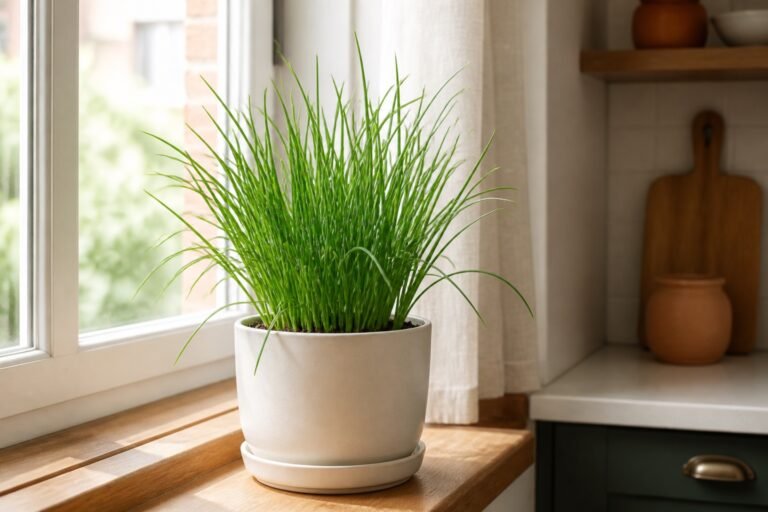
Chives — One of the easiest. Survives almost anything. Snip with scissors as needed; regrows constantly.
Oregano — Grows slowly but lasts for years once established. Excellent dried.
Thyme — Slow grower, prefers slightly drier conditions than the others. Worth it for the flavor.
Worth mentioning, but harder: Rosemary (woody Mediterranean herb that wants more light and drier conditions), sage (similar), and tarragon (finicky). These can all work indoors but expect lower yields and slower growth.
Step-by-step: setting up a sunless herb garden from scratch
For most readers, here’s the simplest viable setup, end-to-end:
Hardware (~$120 total):
- One AeroGarden Harvest 360 or equivalent ($100 on sale). See our hydroponic systems guide for alternatives.
- Or: 4 small pots with drainage + bag of potting mix + a $30 Sansi grow light bulb in a desk lamp.
Plants:
- Start with basil, parsley, and chives. They’re the most productive and the most likely to succeed your first time.
Setup steps (15 minutes):
- Place hydroponic system on a counter, or position pots and grow light on a shelf.
- Plant seeds (or insert pods) according to system / packet instructions.
- Fill water reservoir (hydroponic) or water soil (pots).
- Set light schedule: 14–16 hours on, 8–10 hours off. A timer or smart plug handles this.
- Walk away.
First two weeks:
- Check water level every few days.
- Most seeds sprout in 5–10 days.
Weeks 3–6:
- Harvest leafy herbs by snipping the top sets of leaves (this encourages bushier growth).
- Top up water as the reservoir lowers.
That’s it. You’ll have fresh herbs in your kitchen on a continuous basis.
Frequently asked questions
Will indoor herbs grown under artificial light taste as good?
Yes. Hydroponic and grow-light herbs taste identical to soil-grown windowsill herbs in blind tests for most cooks. The flavor depends on the variety and how fresh you cut it, not whether the light came from the sun.
How many hours of grow light per day do herbs need?
14–16 hours is ideal. Less than 12 and growth slows noticeably. More than 18 doesn’t help.
Do I need to fertilize?
Hydroponic systems handle nutrients via their solution — top up monthly. Soil-grown herbs need light feeding every 4–6 weeks with a diluted liquid fertilizer, but not in their first month.
Can I grow herbs in a bathroom or closet?
Yes. Bathrooms are actually good (humidity loves herbs). Closets work if you can hang a grow light. The only requirements are: a flat surface, an electrical outlet, and any minor airflow.
What happens to grow lights in summer? Do I still need them?
If your apartment never gets direct light, yes — year-round. If you get some seasonal light from a window, you can dim or reduce hours in summer.
Related guides and tools
The bottom line
Growing herbs indoors without sunlight is no longer the niche, technical project it used to be. The two paths are simple: buy a countertop hydroponic system (easiest) or set up pots under a grow light (most flexible).
Both work. Both produce real, fresh, kitchen-quality herbs. Both will get you basil better than what your grocery store sells, in less time and for less ongoing cost.
The hardest part of indoor herb growing in 2026 is choosing what to plant. Start with basil. Everything else gets easier from there.