Indoor Gardening for Renters: The Complete Apartment-Friendly Guide
Last updated: July 23, 2026.
Affiliate disclosure: As an Amazon Associate I earn from qualifying purchases. Links marked “paid link” may earn Fern & Shelf a commission at no extra cost to you. Read our full Affiliate Disclosure.
Most indoor gardening advice quietly assumes you own your home. “Mount a grow light to the ceiling.” “Install a window shelf.” “Convert that closet into a grow room.” Useful if you can drill, paint, and modify freely. Pointless if your lease says “no holes in the walls.”
This guide is the opposite. Every recommendation here is designed for renters: no permanent installations, no damage to walls or floors, nothing that requires landlord approval, and easy to disassemble and move when your lease ends.
You can grow a thriving indoor garden as a renter. You just need to know the right gear and the right approach.
The five rules of renter-friendly indoor gardening
1. Nothing permanent. Every piece of your setup should be removable in 10 minutes with no trace beyond a normal cleaning.
2. Floor-based or tension-based. Use floor-standing furniture, tension rods, freestanding shelves. Avoid anything that requires drilling, screwing, or adhesive removal that might damage paint.
3. Protect your floors. Water spills happen. Use saucers, trays, mats — protect carpet, hardwood, and rented furniture proactively. A $30 boot tray under a plant shelf saves you a $300 carpet cleaning charge at move-out.
4. Limit weight per spot. Twenty pots on a single windowsill can damage the wood underneath over time. Spread weight; use trays.
5. Think about moving day. Choose plants and systems that can survive a 30-minute drive in a hot or cold car. Avoid anything fragile.
With those in mind, here’s the full renter-friendly setup.
Plants that survive moving
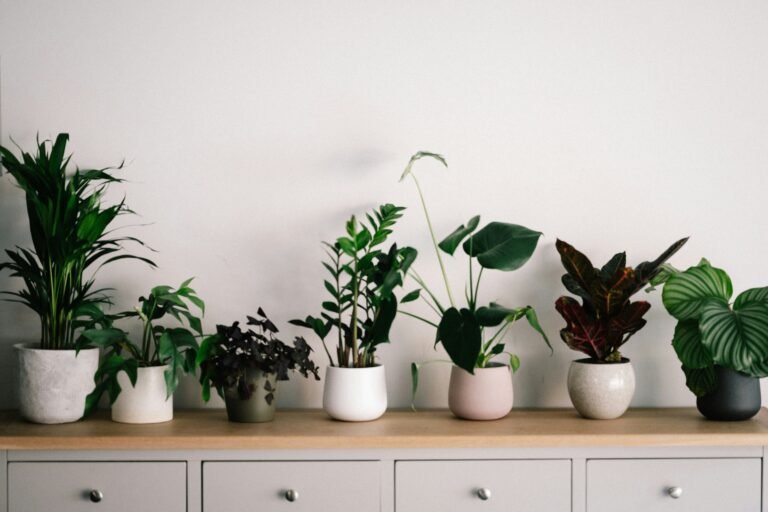
Some plants tolerate the upheaval of moving — being boxed, jostled, exposed to temperature swings — better than others. For renters who’ll move every 1–3 years, prioritize:
- Pothos and heartleaf philodendron: Will survive almost anything.
- Snake plant: Indestructible, slow-growing, low-water.
- ZZ plant: Same.
- Spider plant: Bounces back from anything.
- Peperomia: Small, lightweight, easy to box up.
- Air plants (Tillandsia): Genuinely portable — no pots, no soil, easily transported in a plastic container.
Avoid (until you own your space):
- Large floor trees: Hard to move, often die in the process.
- Mature fiddle-leaf figs: Drama queens that hate change.
- Mature orchids: Sensitive to temperature swings during transport.
See 9 Easiest Indoor Plants for full details on the easiest renter-friendly plant choices.
Pots and planters that won’t damage anything
Every pot should sit in a saucer or tray. Always. Even if you’re careful. Drainage water always finds the surface eventually.
Tabletop and shelf plants: A simple terracotta pot in a glazed ceramic saucer is the safest combination. Search Amazon for terracotta pots with saucers (paid link)
Larger floor plants: Use a self-watering planter (much less water spill risk) sitting on a felt pad or a cork mat. Search Amazon for felt pads for planters (paid link)
Hanging plants: Hard to do as a renter, since most hanging requires ceiling hooks. The workaround: tension-rod plant hangers that grip between a window frame or a closet doorway, or freestanding plant stands designed to look like hangers.
Avoid: any pot without a saucer; any pot without drainage; any heavy pot sitting directly on hardwood.
Lighting setups that don’t require drilling
If your apartment has decent natural light, you may not need grow lights at all. If it doesn’t, you have several lease-friendly options.
Floor-standing grow light: A tall lamp with a grow bulb in it. Looks like a normal floor lamp, costs about $40–80 plus the bulb. The Sansi grow bulb in a basic floor lamp works perfectly for one large plant or a 2-foot row.
Tabletop grow lamp: A standard desk lamp with a grow bulb, sitting on a side table near plants. Cheapest possible solution.
Clamp-on grow lights: Clip to any shelf or windowsill. No installation, no holes. Aimable. Best for windowsill plants or a small shelf collection. (See Best Grow Lights for Apartment Windows for specific picks.)
Tension-rod hanging: A tension rod across a window frame can support a small panel grow light without any installation. Works particularly well for closet gardens.
Avoid: Ceiling-hung grow lights (require drilling), shelf-mounted lights that require screws.
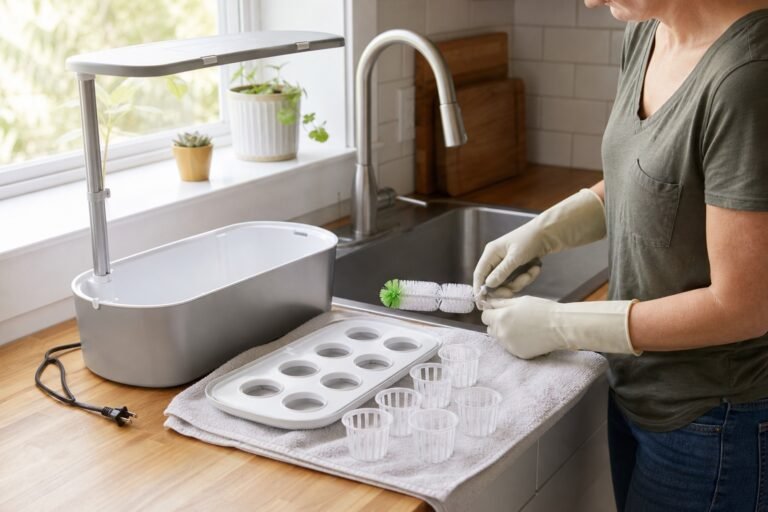
Hydroponic systems: ideal for renters
For renters, countertop hydroponic systems are often the perfect indoor gardening solution. They:
- Sit on any counter, no installation
- Bring their own light, so no window dependency
- Travel well (drain the reservoir, throw it in the car when you move)
- Leave zero trace at move-out
A Click & Grow or AeroGarden is one of the most rental-friendly indoor gardens you can buy. See our Best Hydroponic Systems for Beginners and the Click & Grow vs AeroGarden vs LetPot comparison for picks.
Renter-friendly plant furniture
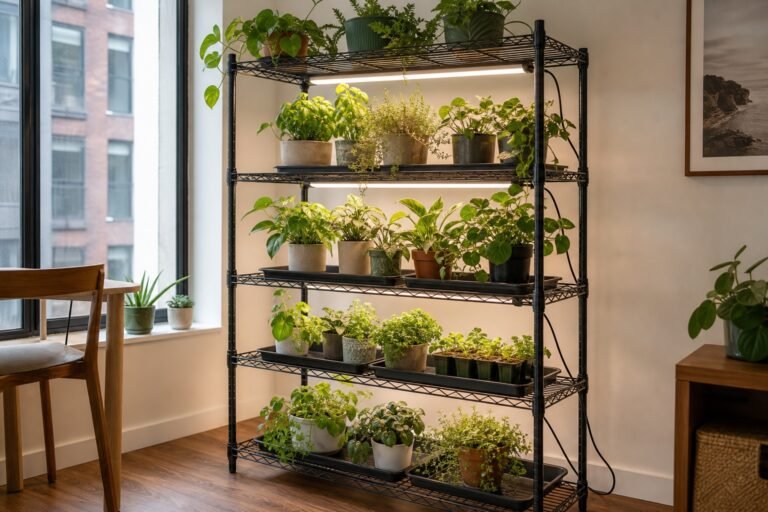
Some of the best indoor plant setups in apartments use freestanding plant furniture rather than wall-mounted shelves:
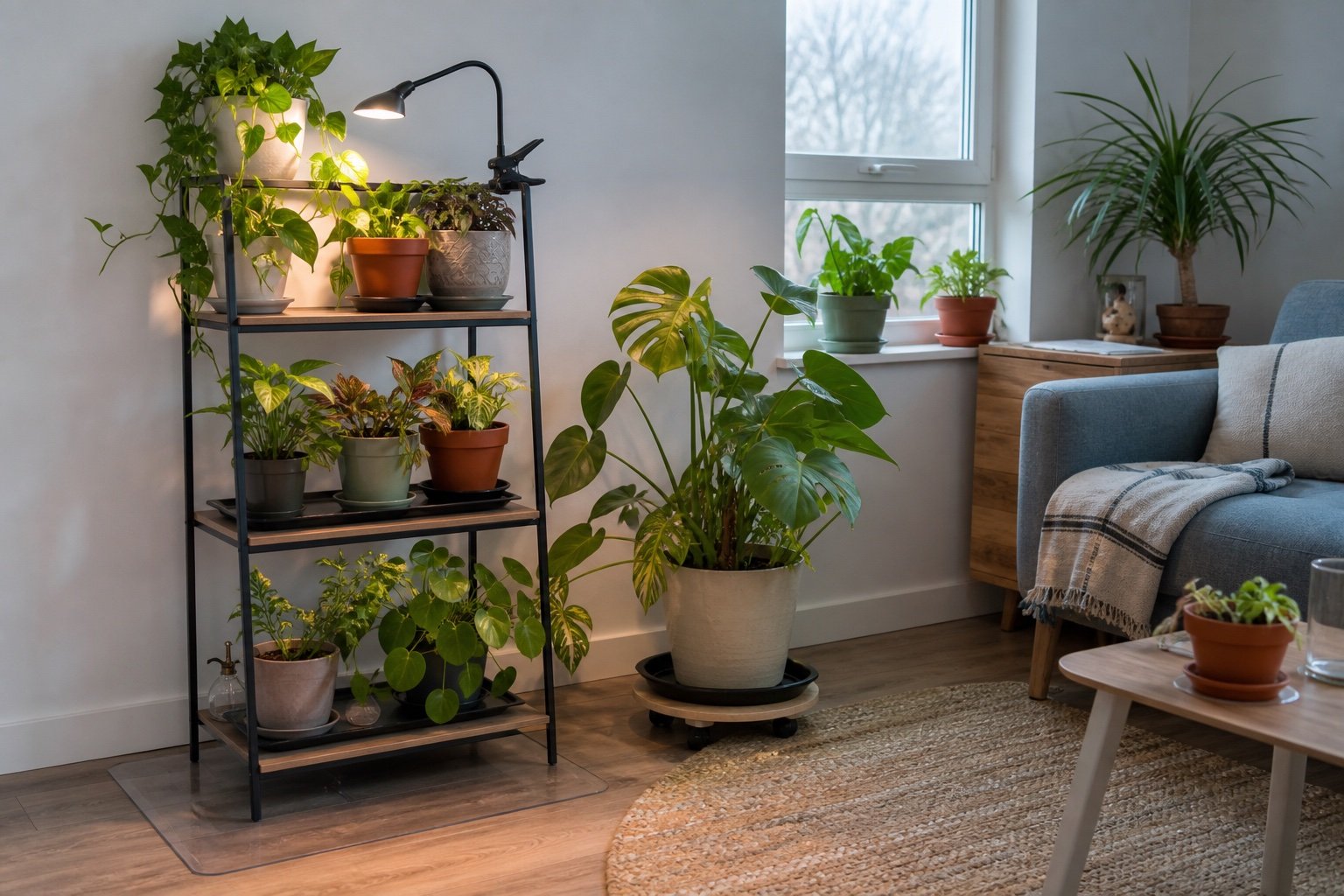
Plant stands: A simple 3-tier wooden plant stand can hold 6+ small plants in less than two square feet. Freestanding, no installation. ~$30–80.
Bookshelf as plant shelf: A normal bookshelf (IKEA Billy is the classic) doubles as plant storage. Combine with clip-on grow lights.
Rolling plant carts: A small rolling kitchen cart works as a movable plant station, easy to wheel into different light at different times of year. Easy to move on moving day.
Window stands: Floor-standing tiered stands that sit in front of a window, holding multiple plants at different heights. Some are designed specifically for this — search “window plant stand.”
Protecting your floors (the most important detail)
This is the part most renters underestimate, and it’s the part landlords are picky about.
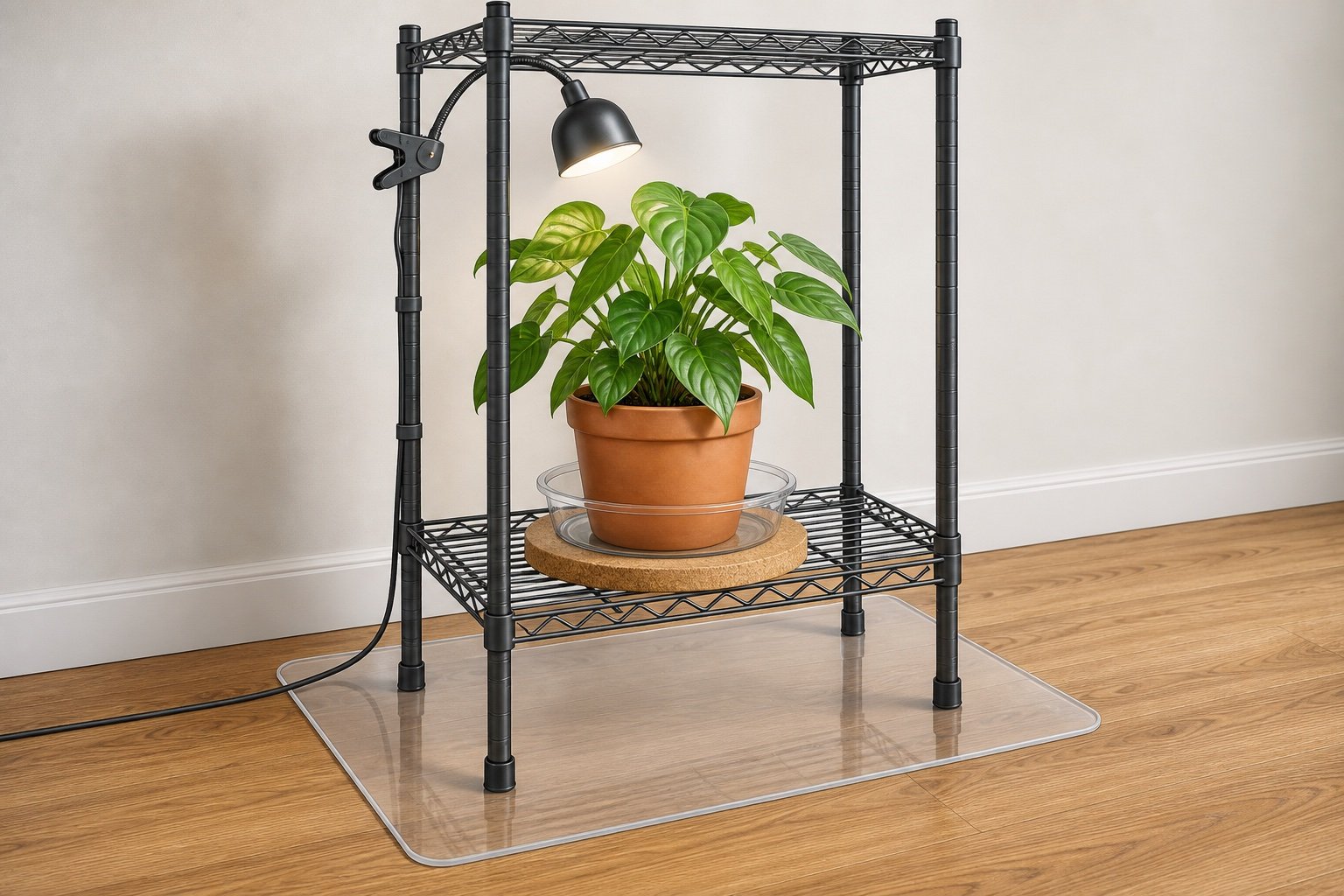
Hardwood floors: Every pot needs a saucer, and every saucer needs a felt pad or cork mat under it. Standing water under a planter — even briefly — can damage hardwood and stain it permanently.
Carpet: Use a boot tray or large plastic catchment tray under any cluster of plants. A $25 tray prevents an $800 carpet replacement.
Tile or vinyl: Saucers are sufficient. These are forgiving floors.
Check under your plants every time you water. Wipe up any drips immediately.
What to do when you move
A good moving routine for plants:
- Two weeks before: Stop fertilizing. Let plants rest.
- One week before: Water all plants normally for the last time.
- Day before: Do not water. Wrap pots in plastic bags around the soil to prevent dirt spills.
- Moving day: Plants travel in a sturdy box, ideally in the cabin of the car (not the back of a moving truck — temperature swings are brutal). Use towels to brace pots and prevent tipping.
- At the new place: Set up plants in their final spots within 24 hours. Resume normal watering after 2–3 days.
Hydroponic systems: drain the reservoir completely. Wrap with a towel inside a box. Reassemble at the new place.
What to do about pets (more important for renters)
Many rental leases allow pets but charge pet deposits. Curious dogs and cats can damage plants — and some plants can damage them.
Pet-safe plants for renters:
- Spider plant
- Cast iron plant
- Peperomia
- Boston fern
- Air plants
- Most prayer plants (Calathea, Maranta)
Plants toxic to pets — avoid if you have chewers:
- Pothos and philodendrons
- ZZ plant
- Snake plant
- Lilies (extremely toxic to cats)
- Most monsteras
See 9 Easiest Indoor Plants for People Who Kill Plants for the toxicity rating on each easy plant.
Frequently asked questions
Can I have a balcony garden if I’m renting?
In most leases, yes — outdoor planters on a balcony are fine. Use planters with drip trays so water doesn’t fall onto neighbors below. Don’t attach anything to the railing without permission. Self-watering planters are particularly good here because they minimize overflow.
If you want to grow food instead of keeping only ornamentals, our practical balcony vegetable garden starts with load, wind, light, and container depth before choosing crops.
My landlord says “no pets.” Can I have plants?
Yes — leases that restrict pets virtually never restrict plants. Plants are not pets, regardless of how attached you get.
What if I damage the floor or walls?
Be honest with your landlord. Small marks can usually be cleaned or touched up. Major damage (water-warped flooring) may be deducted from the security deposit. The best approach: prevent damage proactively with saucers, mats, and trays. The cost of prevention is always less than the cost of damage.
Can I install grow lights in a rented closet?
Sort of. You can put a freestanding plant stand or shelf in a closet, with a grow light on top of it or on a tension rod — no installation required. Avoid screwing anything into the closet walls or ceiling.
Will my plants survive me forgetting them while I’m dealing with moving?
Some will, some won’t. Snake plants, ZZ plants, and pothos can go 3+ weeks without water in a pinch. More demanding plants may not. If you know a move is coming, switch your collection to forgiving plants ahead of time.
Related guides and tools
The bottom line
Renting is not an obstacle to indoor gardening. The right setup — freestanding furniture, drip protection, plants that move well, hydroponic systems that travel — gives you almost all the benefits of homeowner indoor gardening with none of the lease-violation risk.
Start small. Pick three forgiving plants and one hydroponic system. Add protection (saucers, mats, trays). Build from there. When you eventually own a home, you’ll arrive with skills, gear, and plants — not a fresh start.