Best Indoor Vertical Garden Systems: 6 Tested Picks for Apartments
Last updated: July 23, 2026.
Affiliate disclosure: As an Amazon Associate I earn from qualifying purchases. Links marked “paid link” may earn Fern & Shelf a commission at no extra cost to you. Read our full Affiliate Disclosure.
The best indoor vertical garden systems use height well, but none of them erases the space around the hardware. Leaves spread. Reservoirs need access. Lights spill into the room for hours. Pumps make some noise, even when the spec sheet calls the system quiet.
We used all six systems in this guide in a one-bedroom apartment over four months. Gardyn Studio was the easiest system in the group to live with and still produced useful greens. Lettuce Grow gave us the most useful size choices. Mr. Stacky was the cheap, simple option for a sunny spot, but it is a soil planter rather than an automated indoor garden.
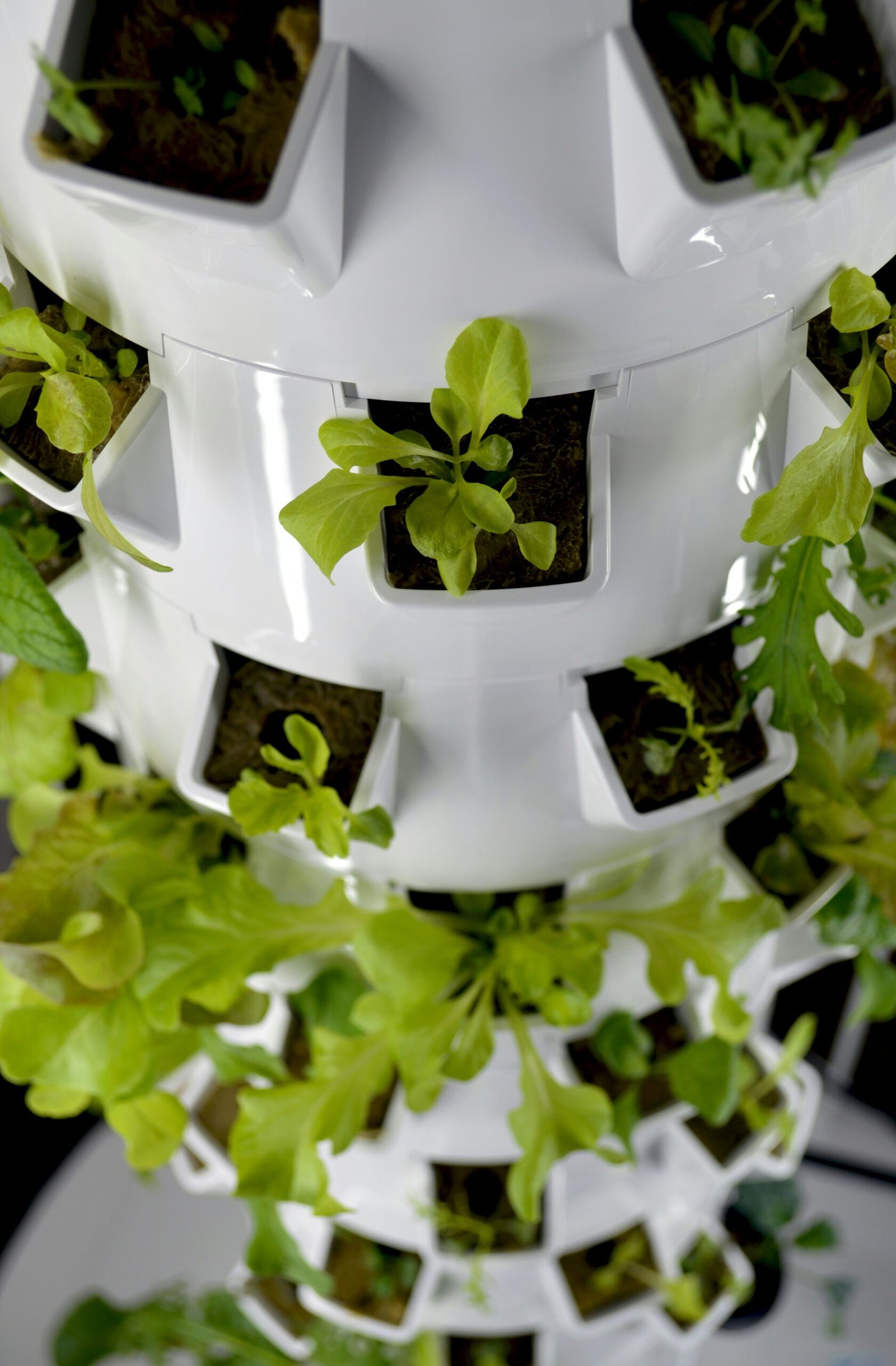
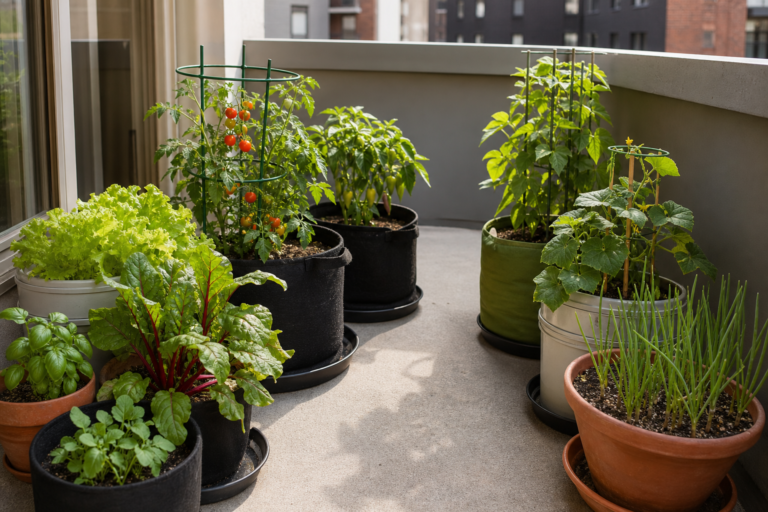
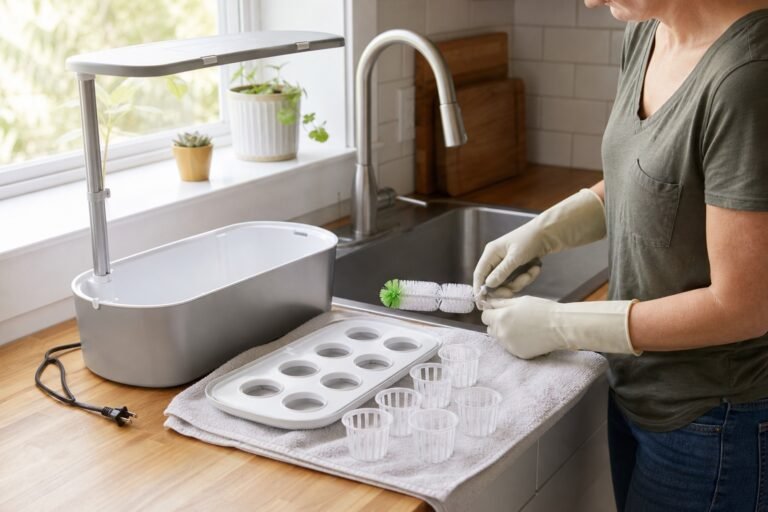
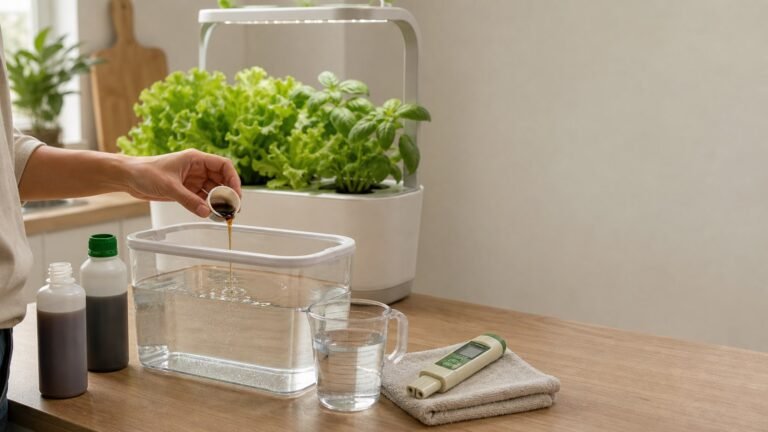
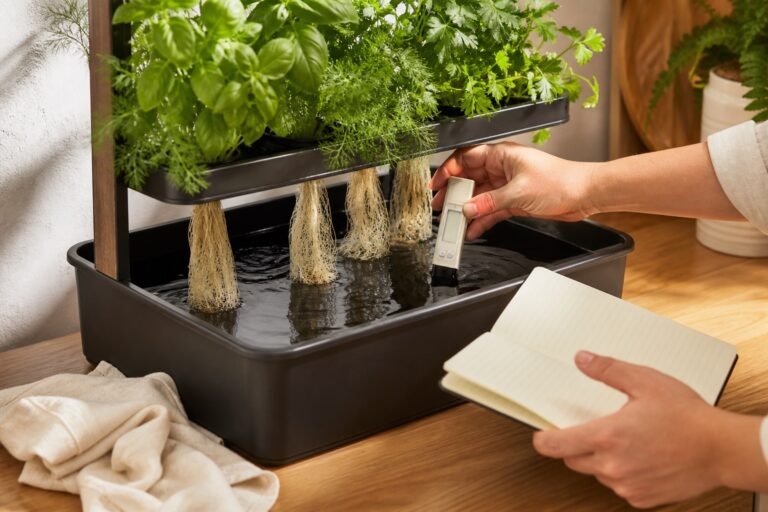
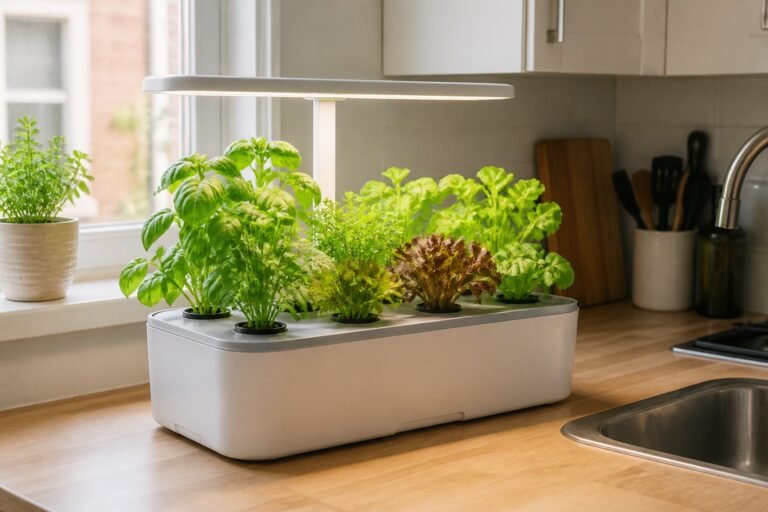
The image above illustrates the product category. It is not a photograph of a specific system reviewed below.
Specification and price note: We checked the US manufacturer pages on July 23, 2026. Prices can change without notice, and indoor light packages can turn an inexpensive outdoor base into a much larger purchase. Use the exact model name in the table when comparing listings.
How we tested the best indoor vertical garden systems
| Evidence type | What it covers | What it does not prove |
|---|---|---|
| Four-month apartment test | Assembly, occupied room space, reservoir access, perceived pump noise, light spill, routine upkeep, and whether harvests felt useful in our kitchen | Laboratory yield, long-term reliability, exact sound level, measured PPFD, or metered electricity |
| Current manufacturer pages | Plant capacity, hardware dimensions, tank size, listed power, included equipment, and displayed US price | Future price, delivered cost, stock, promotions, or identical hardware across every generation |
| Our verdict | Which home and grower each system suited during the test | A guarantee that every crop, room, water supply, and routine will produce the same result |
We did not run six identical crops under controlled light and weigh every harvest. That would be a different test. Plant age, crop choice, planting density, and room conditions varied. Our harvest comments describe practical kitchen use, not a grams-per-watt ranking.
Our test of the best indoor vertical garden systems was about daily life with the hardware. We cared more about filling a tank without moving furniture than winning a theoretical capacity contest.
The tested Gardyn and the current Gardyn Studio 2 are not presented as identical generations. Hands-on observations stay labeled as test notes. Current capacities, dimensions, and prices come from the manufacturer pages listed at the end.
Indoor vertical garden comparison
| System | Plant sites | Hardware size | Reservoir | Indoor light and listed power | Official price or status |
|---|---|---|---|---|---|
| Gardyn Studio 2 | 16 | 17 × 12 × 54 in; 1.4 sq ft | 4 gal | Included 52W LED; 26 kWh per month estimate | $549 |
| Lettuce Grow Original Farmstand | 18, 24, or 36 | 22 in diameter; maker asks for 4 sq ft; height depends on size | 20 gal | Glow Rings with indoor configuration; outdoor base has no grow lights | From $574 for outdoor base; indoor total varies |
| Tower Garden FLEX | 20 | 30 × 30 in; official page lists both 50 and 55 in height | 20 gal | Separate 125W LED kit | $670 tower; $325 light kit |
| Aerospring Indoor | 27 | 77 in high; 31 in across parallel sides; 34 in corner to corner | 75 L, about 20 gal | 138W lights plus 23W pump | No reliable direct US price displayed when checked |
| Click & Grow 25 | 25 | 29.7 × 16.9 × 20.1 in | 9 L | Included 38W lights; 18.24 kWh per month listed | $949.95 |
| Mr. Stacky 5-Tier | 20 | 13 in planter diameter; assembled height not published on product page | None; soil planter | None | $36.95 |
The Tower Garden page contains its own height discrepancy: the product details say 50 inches, while the FAQ on the same page says 55 inches. We have not chosen one number and hidden the other. If ceiling or shelf clearance is tight, ask the manufacturer to confirm the current assembled height before ordering.
How to choose before reading six reviews
- Tape the base dimensions on the floor, then add 8 to 12 inches for leaves and maintenance access.
- Price the complete indoor configuration. An outdoor tower without lights is not an indoor comparison.
- Check the filled weight. Twenty gallons of water alone weighs about 167 pounds, before the tower, plants, and hardware.
- Decide how much monitoring you want. Some systems use apps, sensors, or proprietary pods. Others ask you to manage nutrients, pH, and cleaning yourself.
- Plan for the light. A grow light that runs 14 hours can be more intrusive than a small pump, especially near bedrooms or screens.
If you are still deciding whether a full tower makes sense, the cost and space tradeoffs are covered in our guide to whether vertical garden towers are worth it.
1. Gardyn Studio 2: best overall for a small apartment
During the test, Gardyn gave us the best balance of useful salad and herb harvests, manageable footprint, and furniture-like appearance. It still cast bright light into the room, and the proprietary plant cubes made repeat cost part of the decision.
The current Studio 2 holds 16 plants in a 17 by 12 inch base and stands 54 inches high. Gardyn lists a four-gallon tank, one 52W LED light, and estimated use of 26 kWh per month. The app can control light and water without a paid membership. Membership adds plant credits and monitoring features, but the manufacturer says it is not required.
Our hands-on unit was a Gardyn Studio, while the current page sells Studio 2. We are carrying forward the living-with-it observations, not pretending the camera, seals, and every other component are the same. The table uses Studio 2 specifications.
Buy it for a compact, integrated indoor setup. Skip it if you dislike proprietary consumables, app-connected appliances, or a bright vertical light in your living room.
Check Gardyn Studio listings on Amazon (paid link)
2. Lettuce Grow Original Farmstand: best range of sizes
The Farmstand was easy to understand and offered more capacity choices than the other towers. In our apartment, the broad base and mature leaves took more room than the sculptural product photos suggested. It worked better in an open corner than beside a desk.
The current Original Farmstand comes in 18, 24, and 36-plant versions. All use a 22-inch-diameter base and a 20-gallon tank. Lettuce Grow asks for four square feet of level space. Outdoor versions depend on sun. Indoor configurations include removable Glow Rings, and the final price changes with size and lighting.
The entry price in the table is the outdoor base, not a claim that you can grow lettuce in a dark apartment for that amount. Compare a complete indoor configuration. Also check the height for your chosen size, since the large model with indoor rings is over six feet tall.
Check Lettuce Grow Farmstand listings on Amazon (paid link)
3. Tower Garden FLEX: best for a balcony or dedicated grow area
The FLEX felt like garden equipment rather than decor. That was a fair trade in a dedicated growing area, where access and capacity mattered more than disguising the pump and tank. In a narrow living room, it was harder to ignore.
The current FLEX has 20 planting ports, a 20-gallon reservoir, and a 30 by 30 inch base. The indoor light kit is separate and rated at 125W. The tower page lists a 23W standard pump. Extensions can add sites, but they also change height, plant spread, pump needs, and cleaning work.
For an indoor purchase, budget for the tower and the light kit. A support cage, dolly, extension, or extra consumables may raise the checkout total again. On a sunny balcony, the base system makes a cleaner comparison.
Check Tower Garden FLEX listings on Amazon (paid link)
4. Aerospring Indoor: best enclosed large setup
Living with Aerospring felt closer to managing a compact grow tent than using a countertop garden. It was the most contained large setup in the group, and the tent helped with light spill, but the whole unit claimed a dedicated corner.
The manufacturer lists 27 plant sites, 77 inches of height, 31 inches across the parallel sides, and 34 inches corner to corner. Its current FAQ specifies 138W of lighting for 14 to 16 hours a day and a 23W pump. The reservoir is 75 liters, or about 20 gallons.
We could not verify a direct US price for the complete indoor configuration on the current manufacturer store. That is why the table says to confirm it, rather than repeating an old number. Ask for the delivered total, warranty terms for your region, and an itemized list of the tent, lights, fan, timers, wheelbase, and tower.
Search Aerospring 27-plant systems on Amazon (paid link)
5. Click & Grow 25: best for scheduled salad cycles
Click & Grow’s tray system made staggered planting easy to understand. It was tidy and quiet because watering is passive. The wide cabinet shape used more wall space than the word vertical suggested, and the pod system limited experimentation compared with a generic hydroponic tower.
The current product page lists 25 pod spaces, a 9-liter tank, 38W power draw, and 18.24 kWh per month. It measures about 29.7 inches wide, 16.9 inches deep, and 20.1 inches high. Up to three units can be stacked with the appropriate setup.
An older support article gives different tank and annual energy figures. We use the current product page in the comparison because it is the active US sales specification. Buyers should still confirm the manual supplied with their exact unit.
Check Click & Grow 25 listings on Amazon (paid link)
6. Mr. Stacky 5-Tier: best low-cost pick for sun
Mr. Stacky was the easiest way to try vertical growing without buying an appliance. It also depended most on our own conditions. There was no built-in light, pump, sensor, or automatic feeding to cover a poor location or missed watering.
The current 13-inch five-tier kit has 20 planting sites and weighs five pounds empty. It is a stack of soil planters. Water enters at the top and moves through the tiers. The product page does not publish a total assembled height, so we have left that cell blank rather than estimating it from photographs.
This is the sensible budget choice for a sunny balcony or a genuinely bright indoor spot with a separate light. It is not a direct substitute for an automated hydroponic tower, and the comparison table says so.
Check Mr. Stacky 5-Tier listings on Amazon (paid link)
Which indoor vertical garden should you buy?
Choose Gardyn Studio 2 if you want the smallest polished indoor package and accept the consumable ecosystem. Choose Lettuce Grow if capacity choice matters and you have four square feet plus plant spread. Tower Garden FLEX fits a balcony or a dedicated grow corner better than a tight path through a living room.
Aerospring is the enclosed option for someone willing to give up a full corner and confirm regional price and support. Click & Grow 25 suits a planned cycle of leafy greens and a wide piece of wall. Mr. Stacky is the inexpensive experiment when strong light is already available.
The best indoor vertical garden systems are the ones you can refill, clean, and live beside after the novelty fades. A smaller system that stays planted is more useful than a 36-site tower that becomes expensive furniture.
If none of those descriptions sounds comfortable, start smaller. Our beginner hydroponic system guide covers countertop choices, while the hydroponic cleaning guide shows the maintenance that glossy product pages tend to skip.
Frequently asked questions
Can an indoor vertical garden replace grocery-store produce?
It can replace part of your herb and salad buying when crops are healthy and staggered. It will not reliably replace the whole produce section. Household size, crop choice, planting schedule, failures, and how much lettuce you eat change the result. Gardyn produced the most useful kitchen output in our test, and we still bought produce.
How much electricity will a vertical garden use?
Use the maker’s current wattage or monthly kWh figure for the exact configuration, then multiply by your electricity rate. Gardyn estimates 26 kWh per month for Studio 2. Click & Grow lists 18.24 kWh per month for the 25. Tower Garden’s separate light kit is rated at 125W. Aerospring lists 138W for lights plus a 23W pump. Those systems should not share one generic cost estimate.
How often will I refill the reservoir?
Tank size is only half the answer. Mature crops, room temperature, humidity, and planting density change water use. Check at least weekly until you know the pattern. Never let a submersible pump run dry.
Can I use my own seeds?
Mr. Stacky takes ordinary seed and potting mix. Gardyn sells seedless yCubes for a grower’s own varieties. Many hydroponic towers accept generic seed in compatible plugs, but the plug size, nutrient plan, warranty, and support rules vary. Click & Grow is designed around its Plant Pods and also sells experimental pods for your own seed.