
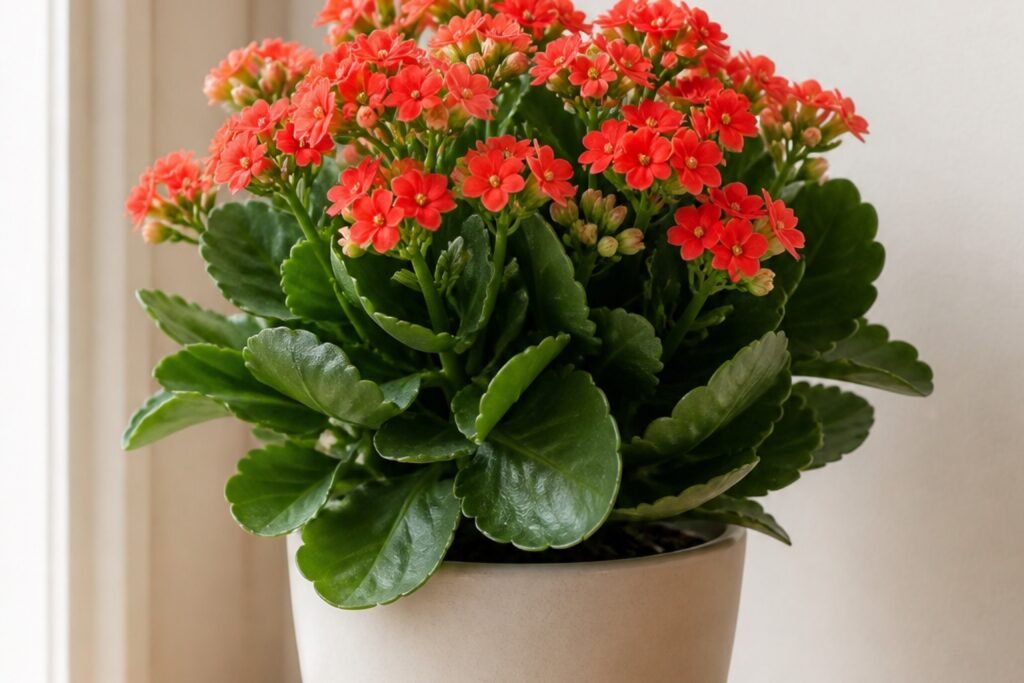
Kalanchoe blossfeldiana care gets easier once the plant is treated as a succulent, not as a disposable bouquet. Flaming Katy stores water in its thick leaves and prefers a bright window, a small draining pot, and a proper dry interval. The clusters of red, pink, orange, yellow, or white flowers can last for weeks.
This profile covers Kalanchoe blossfeldiana and its common florist cultivars. The name kalanchoe also covers many other species, so keep the label if one came with the plant. Growth is naturally compact, with fleshy scalloped leaves below the flower clusters.
Kalanchoe blossfeldiana care snapshot
| Care point | Practical indoor target |
|---|---|
| Light | Very bright light with several hours of gentle sun |
| Water | Let most of the mix dry, then soak and drain |
| Soil | Fast-draining succulent mix in a small pot |
| Humidity | Average household humidity |
| Temperature | Roughly 60 to 80 F indoors |
| Indoor size | Usually 8 to 18 inches tall and wide |
| Growth rate | Moderate in strong light |
| Pet safety | ASPCA lists Kalanchoe species as toxic to cats and dogs |
Keep it close to a bright window
An east or bright south or west window usually suits a flowering plant, provided hot midday sun is introduced gradually. In weak light, stems stretch, new leaves become smaller, and the next flower display is poor. A plant sold in bloom can coast on stored energy for a while, which makes a dim shelf look more successful than it is.
Rotate the pot every week or two while vegetative growth is active. Once flower buds form, avoid repeated moves between rooms with different temperatures. If no window provides enough usable light, check whether the plant needs a grow light before extending the day at random.
Let the succulent leaves guide watering
Check below the surface with a skewer or finger. Water when most of the mix is dry and the pot feels light, then soak the entire root ball and drain it. Do not leave water inside a decorative sleeve. A few firm lower leaves are a better sign than a wet calendar reminder.
Soft yellow leaves over damp soil suggest that the roots are short of air. Wrinkled lower leaves over dry mix suggest that watering is late. Wrinkling over wet mix can follow root damage, so confirm both moisture and root condition. The guide to watering indoor plants explains how pot weight changes with season and root density.
Flowering plants use water faster in bright, warm conditions. Cool winter rooms slow the opposite way. Keep the cue the same and let the interval change.
Use a small draining container
A coarse succulent mix and a drainage hole reduce the time roots spend saturated. Choose a pot only slightly wider than the root ball. Too much unused wet mix is a common reason a healthy gift plant declines after repotting.
Repot after flowering if roots fill the container, the mix has collapsed, or the nursery medium no longer wets evenly. Do not bury the stem deeper to hide a leggy base. The houseplant repotting guide covers root inspection and pot sizing.
Feed lightly during active leaf growth with a complete fertilizer used according to its label. Stop trying to force growth when light is weak. Salts can collect in a small pot, so occasionally water enough to flush the mix.
Remove old flowers and preserve good foliage
Cut each spent flower cluster back to the first healthy pair of leaves. This keeps decaying petals out of the crown and reveals the compact foliage beneath. If stems have stretched, prune above a leaf pair after flowering. New shoots can branch from the remaining nodes.
Healthy stem tips root readily. Let a clean cut dry briefly, then place the lower node into lightly moist, airy mix. Keep the cutting warm and bright but out of harsh sun while roots form. The general water propagation guide is useful for node anatomy, although succulent stems are often simpler to root directly in mix.
Reblooming depends on long, uninterrupted nights. In fall, the plant needs about six weeks of short days and roughly 14 hours of darkness each night. Ordinary room lights can interrupt that dark period. Once buds are obvious, return the plant to its display spot and continue normal bright-light care. Cool nights can support flowering, but protect the plant from cold glass and drafts.
Common Kalanchoe problems
| Symptom | Likely checks | First sensible move |
|---|---|---|
| Soft yellow lower leaves | Wet mix or root damage | Let the mix dry and inspect roots before watering |
| Tall open growth | Light too weak | Move closer to a bright window in stages |
| Flowers fade quickly | Heat, low light, or aging bloom | Provide bright light and remove spent clusters |
| No new buds | Nights interrupted by light | Give six weeks of reliably long nights |
| White cottony patches | Mealybugs in leaf joints | Isolate and inspect the crown and stem nodes |
Dense flower clusters can hide aphids, while mealybugs settle beneath leaves and along stems. Inspect a new gift plant before placing it among other houseplants. If cottony insects appear, use the repeated treatment steps in the mealybug guide.
Collapsed dark stem tissue needs faster action. Unpot the plant, remove rotten sections with clean tools, and keep only firm roots and stems. The overwatered plant rescue guide explains what can be saved and when a cutting is the better option.
Pet safety needs a clear label
ASPCA lists Kalanchoe species as toxic to cats and dogs because they contain cardiac glycosides. Most ingestions cause vomiting and diarrhea, while larger exposures can affect heart rhythm. Keep the plant and fallen flowers away from pets, and contact a veterinarian or poison service after a known ingestion. Do not wait for symptoms.
This is a genus-level veterinary record applied conservatively to K. blossfeldiana. It is not a claim that every kalanchoe has identical concentrations. The pet-safe plant guide has alternatives for homes with determined chewers.
Frequently asked questions
Why is my Flaming Katy losing flowers?
Old blooms naturally fade, but heat and weak light shorten the display. Keep it in bright light away from heating vents, remove spent clusters, and avoid keeping the mix wet.
Can Kalanchoe blossfeldiana bloom again indoors?
Yes. Give a healthy plant about six weeks of short days and roughly 14 hours of uninterrupted darkness each night. Normal room lighting during that dark period can delay buds.
How do I know when to water a flowering kalanchoe?
Check through most of the container. Water when the mix is largely dry and the pot feels light, then soak thoroughly and empty the saucer.