
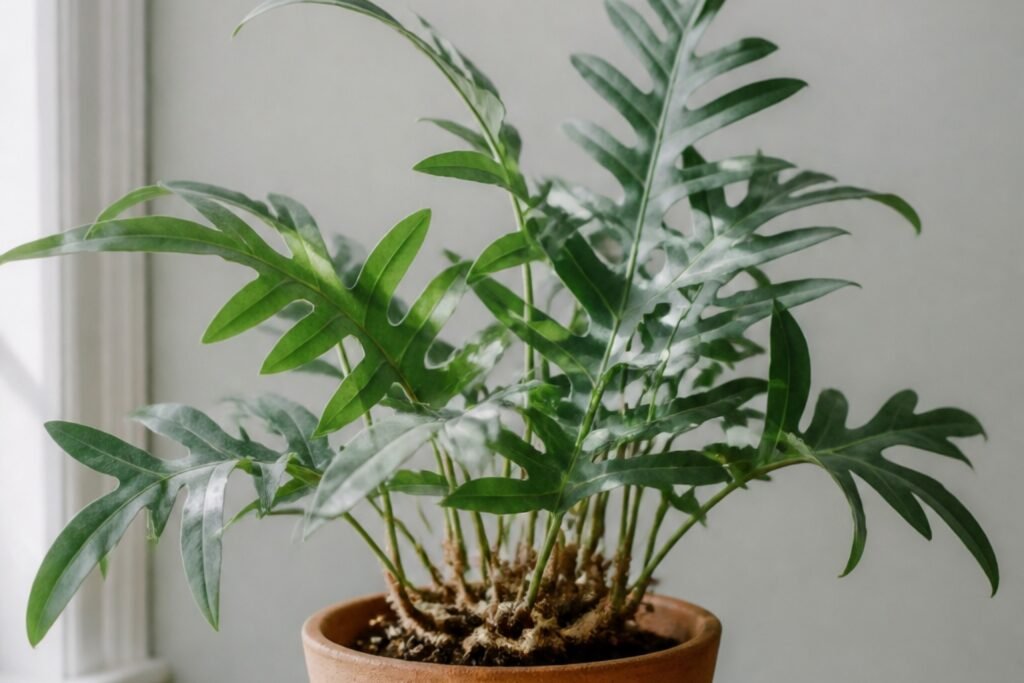
Blue star fern care is forgiving by fern standards, but the plant still dislikes a sealed, soggy pot. Phlebodium aureum is a creeping epiphyte with blue-green lobed fronds and fuzzy golden rhizomes. Older references use Polypodium aureum. The common name rabbit's-foot fern is less useful because it is also applied to Davallia species.
Those visible rhizomes are part of the plant, not exposed roots that need to be buried. Keep them at the surface and build a loose root zone beneath them.
Blue star fern care at a glance
| Care point | Practical indoor target |
|---|---|
| Light | Medium to bright indirect light |
| Water | Water when the upper inch is dry and the pot feels lighter |
| Soil | Loose, organic, acidic mix with fast drainage |
| Humidity | Moderate to high, with air moving around the fronds |
| Temperature | About 60 to 80 F |
| Mature indoor size | Roughly 18 to 36 inches tall and 2 to 4 feet wide |
| Growth rate | Moderate |
| Pet safety | Vetpharm classifies exact Phlebodium aureum as non-poisonous |
Blue star fern care starts with the rhizome
The thick golden rhizomes creep across bark and organic debris in nature. In a container, set them on top of the mix or only barely against it. Covering them deeply encourages rot and makes it harder to see whether the growing tips are firm.
A shallow, slightly wide pot suits the spreading habit better than a deep oversized container. Hanging baskets can work because they expose the root zone to air, but they also dry faster. Check the actual mix rather than assuming every basket needs water on the same day.
Use a loose blend that holds some moisture without compacting. Fine heavy soil suffocates the rhizome, while a pot filled only with coarse bark may dry too abruptly in a heated room. The potting soil comparison explains how to balance organic material with pore space.
Medium light keeps the fronds blue-green
An east or bright north window is often a comfortable position. A few feet back from stronger south or west glass can also work. Hot direct sun may bleach patches and crisp the edges. Very dim light slows the plant and leaves the mix wet for longer.
The blue cast varies by cultivar and growing conditions. A greener frond isn't automatically sick. Judge new growth, firmness, and overall color before moving the pot. If winter light becomes weak, the grow light guide helps decide whether a small supplement is worthwhile.
Leave enough space around the fronds for air to move. This fern likes humidity, but a crowded wet crown can still develop rot.
Water when the top inch dries
Feel the upper inch and lift the container. Water when that layer is dry and the pot has become lighter, while the deeper mix is not hard and shrunken. Wet the substrate thoroughly, avoiding a forceful stream against the fuzzy rhizomes, then let every excess drop drain.
Blue star fern tolerates a little drying better than many delicate ferns. That doesn't mean leaving it dry until every frond curls. The cue-based routine in how often to water indoor plants accounts for light, pot material, root mass, and season.
Curled fronds can come from underwatering or very dry air. A soft crown and sour, wet mix point the other way. If the center stays wet for many days, improve drainage and light before adding a more frequent watering reminder.
Humidity helps, but clean airflow matters too
Moderate household humidity may be enough when watering is steady. A humidifier helps in a dry heating season, especially if frond edges keep browning while the roots look sound. Set it far enough away that droplets do not sit on the crown all day. The humidity guide covers approaches that change the room rather than briefly wetting a leaf.
Do not scrub the golden fuzz from the rhizome. It is normal plant tissue. Dust on the fronds can be rinsed gently with lukewarm water, followed by time to dry in moving air.
Feed lightly during active growth, following the product label. A fern in weak light needs very little fertilizer. Flush the pot if mineral crust gathers around the rim.
Repot when rhizomes have reached the container edge, the inner mix has broken down, or water no longer moves through evenly. Keep the rhizomes at the same surface level. The measured approach in the repotting guide avoids burying the crown in an oversized pot.
Propagation is easiest by division. Cut a healthy rhizome section with roots and at least one active growing point, then set it on a small pot of airy mix. Spores are possible, but division is the practical household method.
Common Blue Star fern problems
| Symptom | Likely checks | First sensible move |
|---|---|---|
| Brown frond edges | Dry air, uneven moisture, or salt buildup | Stabilize humidity and root moisture, then watch new growth |
| Fronds curl inward | Dry mix, low humidity, or heat | Feel the root zone before watering |
| Yellow soft fronds | Saturated substrate or crown rot | Check the center of the pot and rhizome firmness |
| Pale bleached patches | Direct sun through glass | Move out of the hot beam gradually |
| Speckling or distorted growth | Mites, thrips, or other pests | Isolate and inspect both sides of the fronds |
Pest damage can resemble dry-air damage at first. Use the houseplant problem diagnostic to compare the pattern before treating. Fungus gnats usually point to a mix that remains wet, but their presence alone does not prove root rot.
Pet and household safety
The University of Zurich Vetpharm database identifies exact Phlebodium aureum, including the older name Polypodium aureum, and classifies it as a non-poisonous plant. It also notes that the literature it reviewed contained no animal poisoning cases. That record says the fern is not suitable as feed, so the plant should still be treated as ornamental.
Keep loose substrate and frond pieces away from pets that chew. Any plant material can create digestive or mechanical trouble. The pet-safe indoor plant guide explains how exact species names reduce common-name mistakes.
Frequently asked questions
Why are my Blue Star fern fronds turning brown?
Check whether the mix is drying hard, the room air is very dry, or salts have collected in the pot. Wet damaged roots can also brown fronds, so feel below the surface before adding water.
Should Blue Star fern rhizomes sit above the soil?
Yes. The fuzzy golden rhizomes naturally creep along the surface. Rest them on the mix and keep their growing tips uncovered rather than burying them like ordinary roots.
Can a Blue Star fern grow in low light?
It tolerates shade, but indoor growth is better in medium filtered light. A very dark position slows water use and raises the risk of keeping the center of the pot wet for too long.