
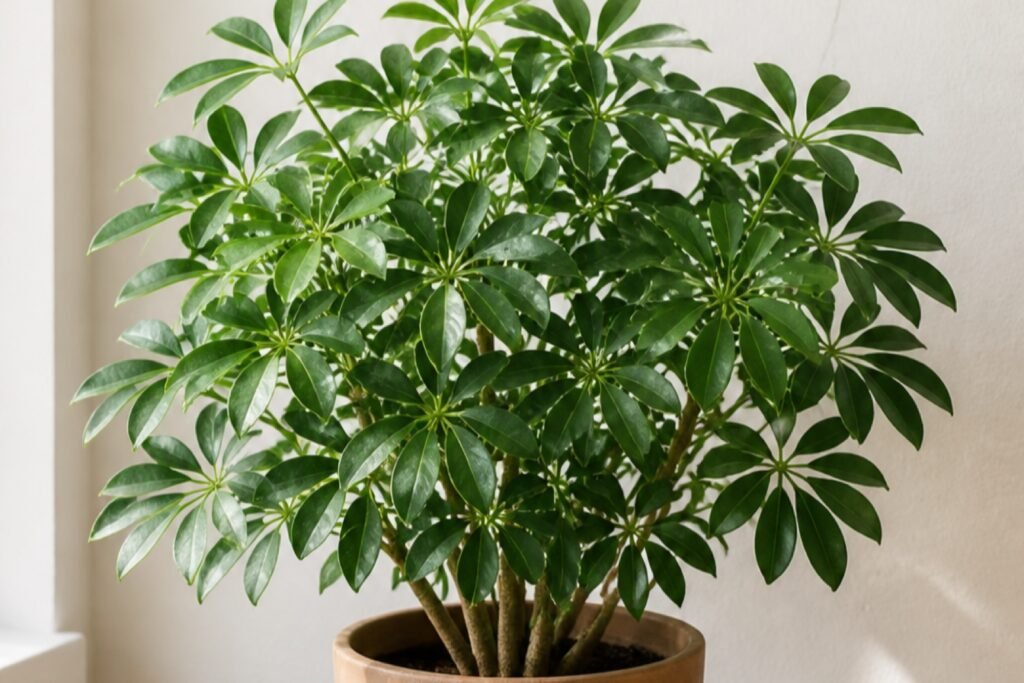
Dwarf umbrella tree care indoors starts with a useful distinction: this compact houseplant is Heptapleurum arboricola, still widely sold under its older name, Schefflera arboricola. Each leaf is a circle of glossy leaflets held like the ribs of a small umbrella. It can become a handsome floor plant, but weak light and wet soil quickly turn a dense canopy into a lanky one.
The common name umbrella plant is unreliable by itself. It may point to a much larger umbrella tree or even an unrelated sedge. Match the label and leaf form before using a care guide.
Dwarf umbrella tree care indoors at a glance
| Care point | Practical indoor target |
|---|---|
| Light | Bright indirect light; gentle direct morning sun is welcome |
| Water | Soak and drain after the upper 1 to 2 inches of mix dry |
| Soil | Loose indoor mix in a modest pot with a drainage hole |
| Humidity | Average household humidity, with good air movement |
| Temperature | Roughly 60 to 80 F; avoid cold drafts |
| Mature indoor size | Commonly 3 to 6 feet, smaller with pruning |
| Growth rate | Moderate in bright light |
| Pet safety | Toxic to cats and dogs if chewed |
Give the canopy enough light to stay compact
Place the plant close to an east window, beside a bright north window, or a few feet from stronger south or west light. A sheer curtain can soften harsh midday sun. Variegated cultivars need especially good light because the pale parts of the leaf contain less chlorophyll.
The first sign of a dim position is often shape, not color. New stems stretch, leaf clusters spread farther apart, and the plant leans toward the window. Rotate the pot by a quarter turn every week or two, but do not expect rotation to replace light. If the room is naturally dark, compare it with the placements in our low-light houseplant guide before assuming the umbrella tree will adapt.
Water the root ball, then let it breathe
Push a finger or wooden skewer 1 to 2 inches into the mix. When that layer is dry and the pot feels lighter, water until excess runs from the drainage hole. Empty the saucer. A large drink followed by a drying interval wets the full root ball without keeping it airless.
Drooping can be confusing. Dry roots can make the leaflets hang, but so can roots damaged by wet soil. Check the mix before reaching for the watering can. If it is still damp several days after watering, improve light and drainage instead. The step-by-step checks in how often to water indoor plants help separate a real need for water from a familiar-looking symptom.
Choose a pot by the roots, not the canopy
The leaves may spread far beyond a fairly compact root system. Move up only one pot size when roots circle densely, lift the plant from the soil, or slow drainage through an old mix. A huge decorative planter stays wet for too long around newly disturbed roots.
A loose general indoor mix is usually enough. It should accept water readily and crumble when squeezed rather than forming a heavy lump. Use the potting soil comparison to judge texture, then follow the root-ball method in the houseplant repotting guide. Do not bury the woody stem deeper to make a leaning plant look straight.
Prune for branching instead of staking every stem
Umbrella trees respond well to a clean cut just above a leaf node. When one stem races above the rest, shortening it can encourage side shoots below the cut. Prune during active growth and avoid removing most of the canopy at once. A severely stretched plant may need better light before repeated cutting will produce a compact result.
Wipe the leaflet clusters with a damp cloth while supporting each petiole. Dust and the spoke-like leaf arrangement can hide scale insects. The plain-water method in our leaf-cleaning guide avoids oily products that leave a residue.
Feed lightly during spring and summer while new leaves are opening. Follow the product label and pause if the plant is stressed, freshly repotted, or sitting in wet soil. Fertilizer cannot compensate for a dark position.
Propagation takes a healthy node
Stem cuttings need at least one viable node. Remove the lowest leaf cluster, place the node in a clean rooting medium, and keep the cutting warm with bright indirect light. A clear cover can slow moisture loss, but open it regularly so the stem does not sit in stale condensation.
Air layering is useful on a taller bare stem because roots can form before the top is removed. The method takes more setup but preserves a larger crown. Clean cuts and a stable warm rooting environment matter whichever method you choose.
Common dwarf umbrella tree problems
| Symptom | Likely checks | First sensible move |
|---|---|---|
| Lower leaves turn yellow | Wet mix, low light, or normal aging of one old leaf | Check deep moisture and the pace of new loss |
| Long bare gaps on stems | Light that is too weak | Move closer to filtered daylight before pruning again |
| Sticky leaves or brown bumps | Scale insects | Isolate the plant and inspect stems and leaflet undersides |
| Fine stippling and webbing | Spider mites | Confirm mites, rinse the canopy, and begin a complete treatment cycle |
| Sudden leaf drop | Cold draft, abrupt move, or root stress | Stabilize the site and inspect the root zone |
Pest outbreaks spread easily through overlapping leaf clusters. If stippling appears, compare it with our guide to spider mites on houseplants rather than treating every dry leaf as a mite problem. A single older yellow leaf is not an emergency. Several yellowing clusters on wet soil deserve a root check.
Pet and household safety
Kew accepts Heptapleurum arboricola, while the ASPCA record uses the familiar synonym Schefflera arboricola. That record lists the plant as toxic to cats and dogs because of insoluble calcium oxalates. Chewing can cause oral irritation, drooling, and vomiting. Keep pruned pieces and fallen leaflets away from pets and children, and contact a veterinarian if exposure causes symptoms. The pet-safe plant guide has safer alternatives for reachable shelves and floors.
Frequently asked questions
Can a dwarf umbrella tree take direct sun?
Gentle morning sun is usually useful. Strong afternoon sun through glass can scorch a plant raised in shade, so increase exposure gradually and watch the newest leaves.
Why is my umbrella tree losing leaves?
Cold drafts, a sudden change of position, wet roots, and severe dryness can all cause loss. Check temperature and soil moisture first. The recent care history matters more than one fallen leaf.
How do I make a dwarf umbrella tree bushier?
Give it bright light, then cut a healthy stem just above a node during active growth. New side shoots may develop below the cut. Repeated pruning in dim light usually creates more bare stem.